



How To Hook Up solar Panel To Battery
author: JM ENERGY
2025-11-11
Simple Guide: How to Hook Up Solar Panels to a Battery + Top Solar Batteries
Table of Contents
What You’ll Get From This Guide
- 6 simple steps to hook up solar panels to a battery (no tech jargon)
- Why our 51.2V 200Ah solar battery works for U.S. homes
- Real stories from California and Texas families using our batteries
- Quick facts about our 10-year battery factory in Dongguan
Why Solar + Battery Makes Sense for U.S. Homes
More American households are switching to solar—here’s why:
- Rising electric bills (average U.S. home pays $145/month, per EIA)
- Want to cut reliance on the grid (especially during storms)
- Goals to reduce carbon footprints
But solar only works 24/7 if you store energy—and that means knowing how to hook up solar panels to a battery. Our Dongguan-made solar batteries are built for U.S. homes: durable, space-saving, and compatible with most U.S. solar setups.

Our Top Solar Battery for Homes: 51.2V 200Ah (10KWH) Wall-Mounted Model
We’ve made lithium/sodium-ion batteries for 10 years—this new model is designed for U.S. families:
✅ Lasts 10+ years (8,000+ charge cycles at 80% DOD)
✅ Built-in BMS (stops overcharging/short circuits—critical for hot/cold U.S. climates)
✅ Compact size: 33”W x 20.9”H x 7.1”D (fits on garage/utility room walls)
✅ Works with top U.S. inverters: SMA, GOODWE, Victron Energy
How to Hook Up Solar Panels to a Battery: 6 Easy Steps
What you’ll need first:
- Solar panels (your existing setup or new ones)
- Charge controller (prevents battery damage)
- Inverter (if you power AC appliances—fridges, TVs, lights)
- Wires (match gauge to your panel’s current—check specs!)
- Fuses, connectors, and a multimeter (to test voltage)
Step 1: Safety First (Non-Negotiable!)
- Turn off your solar panels—no live current while working.
- Wear insulated gloves and safety glasses (electric shock risk is real).
- Work in a dry area (water + electricity = danger).
- Not sure? Hire a local U.S. solar installer (most charge 150–300 for this step).
Step 2: Install the Charge Controller
Think of this as a “gatekeeper” for your battery—it stops overcharging.
- Mount it near the battery (shorter wires = less energy loss).
- Use screws to attach to a dry wall (garage works great).
- Leave 2–3 inches of space around it for airflow (prevents overheating).
Step 3: Connect Solar Panels to the Charge Controller
- Find the + (positive) and – (negative) terminals on your panels and controller.
- Match terminals: Panel + → Controller +; Panel – → Controller –.
- Add a fuse between the panel and controller (protects against short circuits).
Step 4: Connect Controller to the Battery
- Again, match terminals: Controller + → Battery +; Controller – → Battery –.
- Tighten connections (loose wires = wasted energy or heat).
- Double-check! Mixing +/– will damage your battery or controller.
Step 5: Add the Inverter (If You Need AC Power)
Most U.S. appliances use AC power—batteries store DC power.
- Connect Battery + → Inverter +; Battery – → Inverter –.
- Follow your inverter’s instructions (wire size and fuses vary by brand).
Step 6: Test the System
- Turn your solar panels back on.
- Check the charge controller: It should show “charging” (look for a green light or display).
- Use a multimeter to test battery voltage—it should rise slowly (normal!).
- Test the inverter: Plug in a lamp—if it turns on, you’re good to go!

Real Stories: U.S. Families Using Our Solar Batteries
The Smiths (Los Angeles, CA)
- Problem: Summer electric bills hit $300/month (AC use skyrocketed).
- Solution: Our 51.2V 200Ah battery + local installer to hook up panels.
- Result: Bills dropped to $50/month. Battery stays cool in 100°F heat (thanks to BMS).
- Quote: “We thought solar would be a hassle—this battery made it easy. It’s rock-solid.” — Mrs. Smith
The Johnsons (Houston, TX)
- Problem: 2023 storm knocked out power for 5 days (food spoiled, no AC).
- Solution: Our 51.2V 200Ah battery + AA lithium batteries (for outdoor solar lights).
- Help from us: Our team sent a video tutorial to help hook up panels (no tech skills needed!).
- Result: 2024 Hurricane Harvey: Battery powered fridge, lights, and small AC for 3 days.
- Quote: “We expected 1–2 days of power—this exceeded our expectations. Certifications (TUV, CE, CEC) made us trust it.” — Mr. Johnson
Why Choose Our Batteries?
- 10 years of experience: We build batteries for global markets—U.S. standards included.
- Automated factories: Consistent quality (no “hit-or-miss” products).
- Custom options: Need a different size? We can make it.
- Support for U.S. customers: Email/phone help for setup (we speak English!).

Final Thought
Knowing how to hook up solar panels to a battery is simple—if you have the right guide and the right battery. Our 51.2V 200Ah solar battery is built for U.S. homes, and the Smiths/Johnsons prove it works.
Got questions? Contact us for help with:
- Hooking up solar panels to a battery
- Our lithium ion battery options
- AA lithium batteries for small solar setups
- Custom solar battery solutions
How Long Do Batteries Last
What Has Lithium Batteries
Related Article
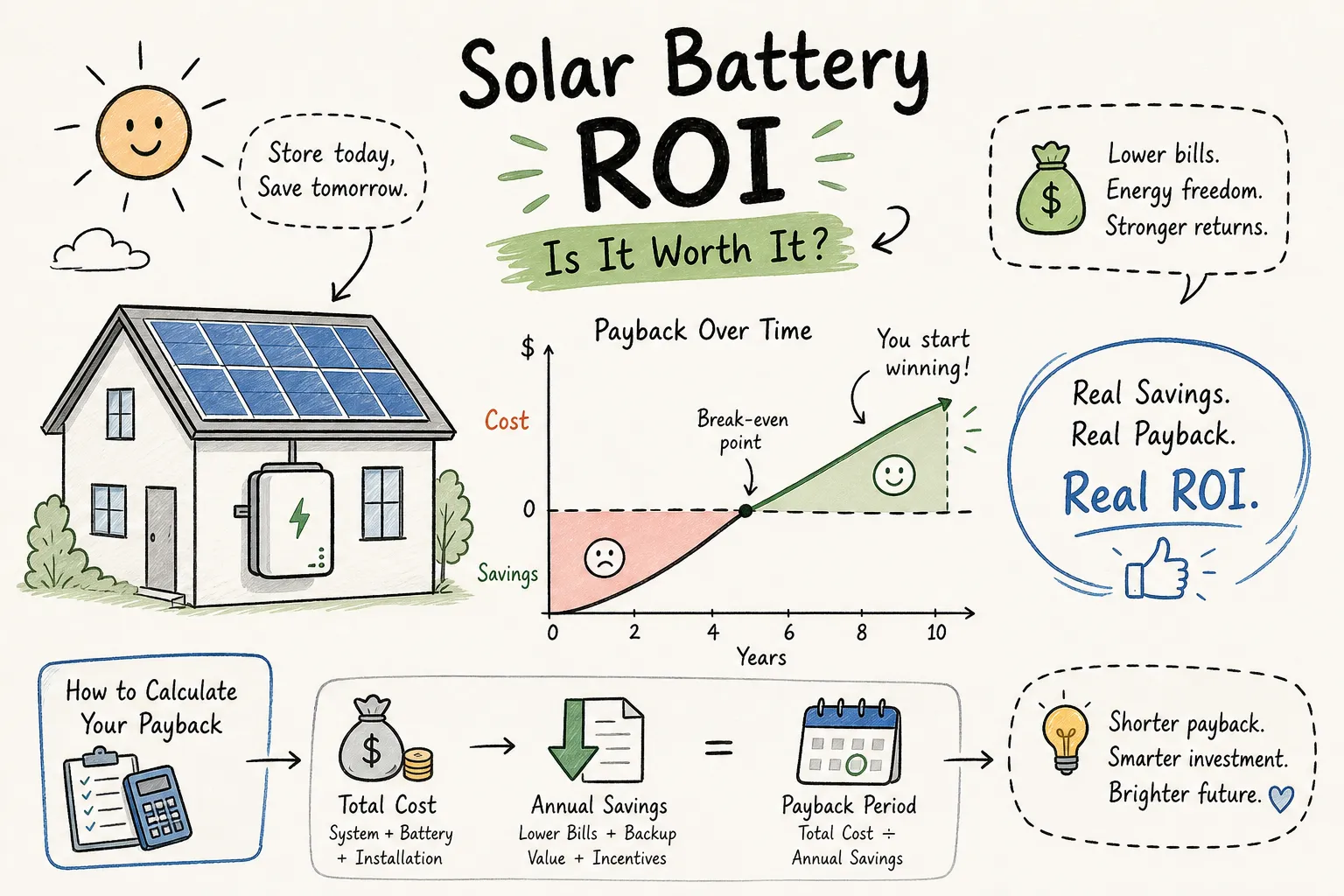
Calculate solar battery ROI with real 2026 costs, state rebates (SGIP, NYSERDA), LFP degradation, and NEM 3.0. Honest payback benchmarks for US homeowners.
Solar Battery ROI: How to Calculate Your Real Payback Period
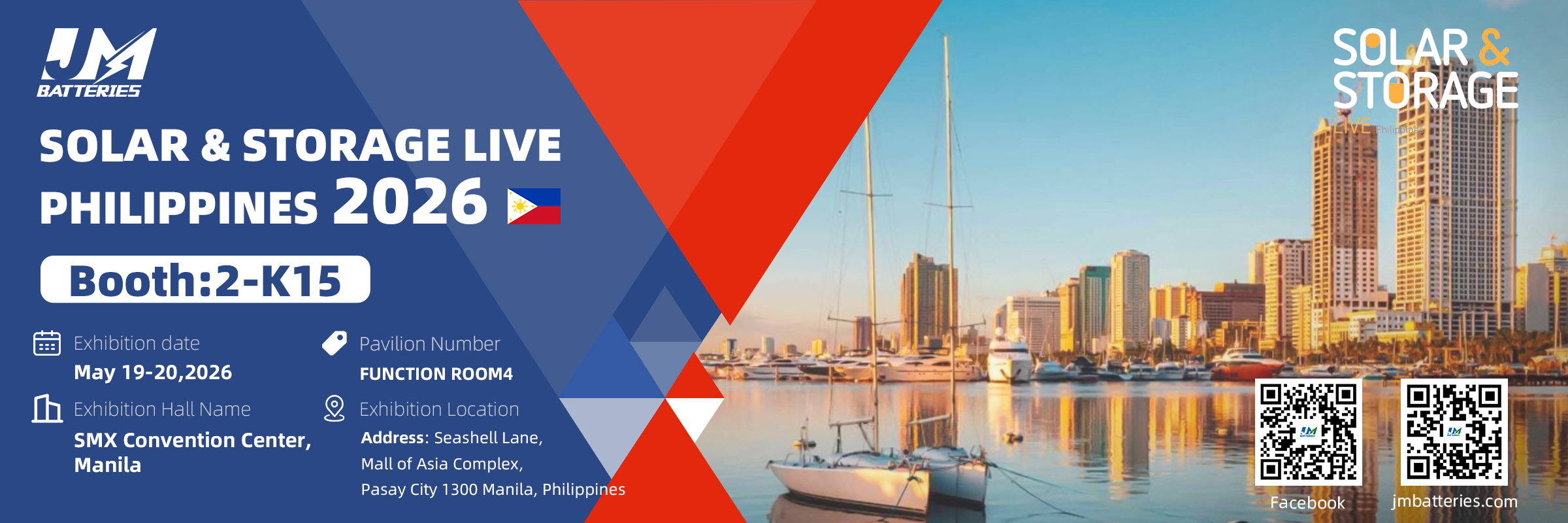
JM EnergyTech participated in Solar & Storage Live Philippines 2026 and officially entered the Philippine market. We provide reliable tropical-grade LiFePO4 home energy storage solutions for local households and businesses.
JM EnergyTech Debuts at Solar and Storage Live Philippines 2026

JM Energy Tech will attend the Indonesia Battery Show (Booth No.: [A2J4-03]), presenting our products and offering safe, efficient customized solutions to meet the needs of Indonesian households, businesses and project partners.
JM Energy Technology to Showcase Energy Storage Solutions at Indonesia Battery Exhibition
