



How To Test Batteries At Home
author: JM ENERGY
2025-11-13
Easy Step-by-Step Guide to Testing Your 48 Volt Lithium Solar Battery at Home
Table of Contents
Read real U.S. family stories about off-grid solar power systems—and why our 10KWH Solar Battery works.
Introduction
More U.S. homes are going off-grid for energy independence, and a 48 volt lithium Solar Battery is key to those systems. But even the best batteries need testing to last. We're a Dongguan, China factory with 10 years in lithium/sodium-ion batteries, and our new 51.2V 200Ah-10KWH Solar Battery is made for homes. Below, simple DIY tests you can do in 30 minutes—plus two U.S. families' success stories.
Why Test Your Solar Battery at Home?
Your 48 volt lithium Solar Battery is the heart of your off-grid system. Skipping tests means missing small issues (like voltage drops) that can leave you without power during storms. Our 10KWH battery is durable, but heat, cold, or overcharging wear it down—tests catch problems early.

5 Simple Steps to Test Your 48 Volt Lithium Solar Battery
No electrician needed—just basic tools: a digital multimeter, battery capacity tester, and temperature gauge.
1. Get Tools
A $20 multimeter from a hardware store works for voltage checks. A capacity tester simulates home use, and a gauge tracks temperature.
2. Check Voltage (OCV)
Turn off your off-grid system and disconnect the battery. Use the multimeter (set to DC voltage) on terminals. A healthy Solar Battery reads 46V (low) to 51.2V (full). Our 10KWH model stays steady even in cold weather.
3. Test Load Capacity
Connect the capacity tester to a 10A load (like a small fridge). Our 200Ah battery should last 20 hours. If it dies faster, capacity is dropping—bad for off-grid reliability.
4. Monitor Temperature
Overheating kills batteries. Check while charging/discharging—our battery stays below 86°F (30°C) with built-in cooling.
5. Check for Damage
Look for swelling, leaks, or rust on terminals. Our factory inspects every battery, but a quick monthly check helps.
U.S. Family Stories: Our Solar Battery in Action
Case 1: The Millers (Babcock Ranch, FL)
Babcock Ranch is fully solar, and the Millers use our 51.2V 200Ah battery. During Hurricane Ian, grid power was out a week. "Neighbors lost power in 2 days," John Miller said. "We tested weekly—our battery held 50V for 5 days, powering our fridge and medical gear." After 2 years, it still has 95% capacity.
Case 2: The Lopezes (Northern AZ Desert)
In 115°F summers, the Lopezes chose our 48 volt battery. "Last July, a test showed 45V—we fixed the faulty solar controller, not the battery," Maria Lopez said. Their battery stays around 82°F, and after 18 months, it still charges like new.

Why Our 10KWH Solar Battery Is Good for Off-Grid Use
We've made batteries for 10 years—here's what makes ours stand out:
- Stable 48V output (no flickers for lights/appliances)
- Works in -4°F to 140°F (great for winters/summers)
- 3,000+ charge cycles (lasts 8+ years)
- Pairs with most solar inverters (no new system needed)
Conclusion
Testing your 48 volt lithium Solar Battery at home is easy—and keeps your off-grid system reliable. The Millers and Lopezes prove a good Solar Battery + regular tests = energy independence you can trust. Our 10KWH battery is built to pass every test. Have questions? We're here to help.


Do Batteries Expire
How To Recharge A Lithium Ion Battery
Related Article
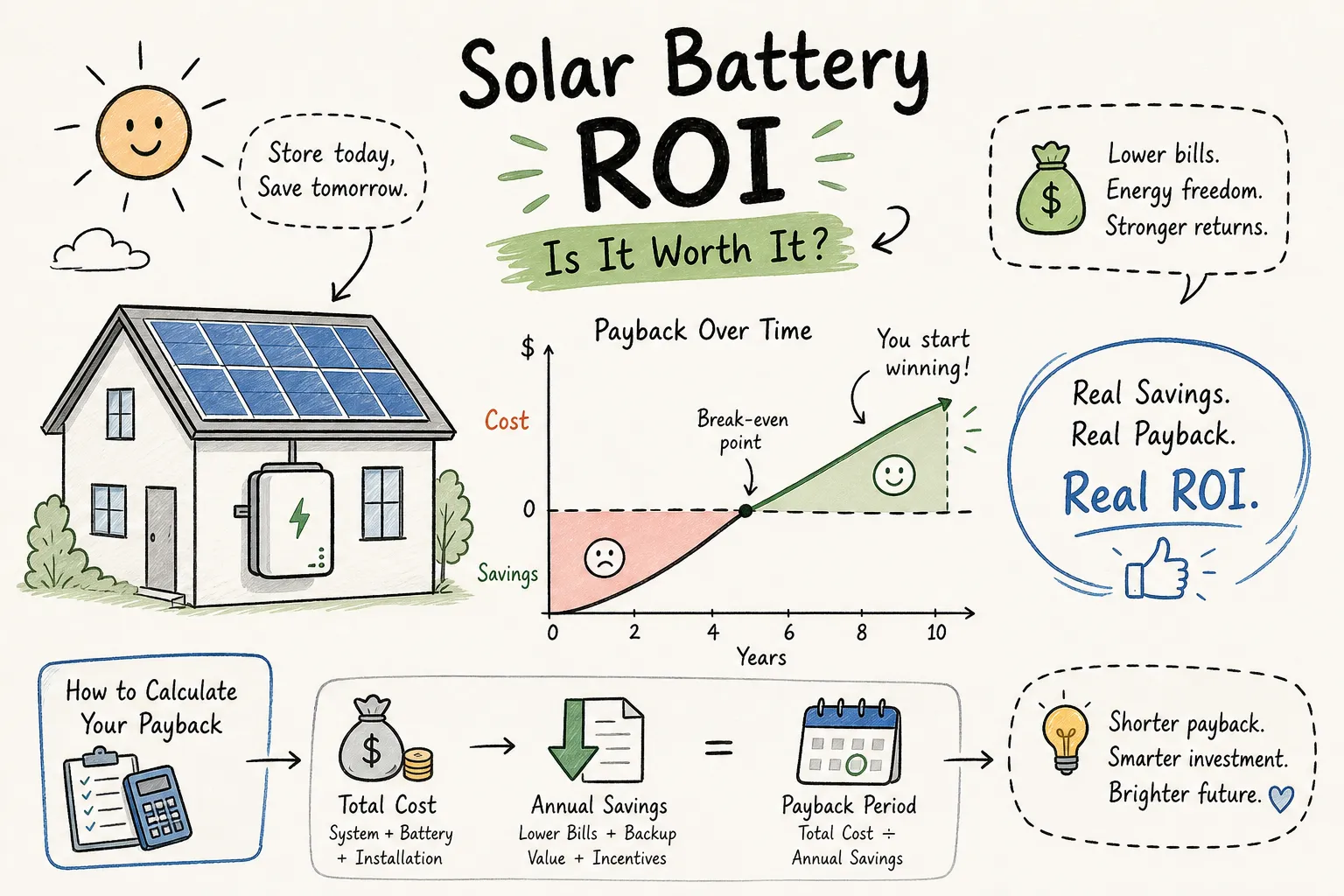
Calculate solar battery ROI with real 2026 costs, state rebates (SGIP, NYSERDA), LFP degradation, and NEM 3.0. Honest payback benchmarks for US homeowners.
Solar Battery ROI: How to Calculate Your Real Payback Period

JM EnergyTech participated in Solar & Storage Live Philippines 2026 and officially entered the Philippine market. We provide reliable tropical-grade LiFePO4 home energy storage solutions for local households and businesses.
JM EnergyTech Debuts at Solar and Storage Live Philippines 2026

JM Energy Tech will attend the Indonesia Battery Show (Booth No.: [A2J4-03]), presenting our products and offering safe, efficient customized solutions to meet the needs of Indonesian households, businesses and project partners.
JM Energy Technology to Showcase Energy Storage Solutions at Indonesia Battery Exhibition
