


How Do You Dispose Of Lithium Batteries
How Do You Dispose of Lithium Batteries? A Simple Guide for Homeowners

Quick Answer
If you have an old lithium battery at home, don't put it in the trash. Most lithium-ion batteries need to go to a battery recycling program, household hazardous-waste facility, or another collection point that accepts them.
The same rule applies to batteries from laptops, power tools, and other electronics. Large batteries used for home solar storage are different and may need to be removed and handled by a qualified installer or recycling provider.
If a battery is swollen, leaking, damaged, or getting unusually hot, don't try to open or repair it. Contact a local waste facility, battery recycler, or the battery manufacturer and ask how they want you to handle it.
Why Proper Lithium Battery Disposal Matters
Lithium batteries are everywhere now. You can find them in phones, laptops, power tools, electric vehicles, and home solar battery systems.
They are convenient because they store a lot of energy in a relatively small package. But that stored energy is also why an old battery shouldn't simply be thrown into the garbage.
A battery can be damaged during garbage collection or processing. If the terminals are shorted or the battery is crushed, it can overheat and potentially start a fire.
There is also a resource issue. Lithium batteries contain materials that can be recovered through recycling. Sending them to the right collection facility gives those materials a chance to be processed and reused.
So, when a lithium battery reaches the end of its useful life, recycling is usually a better option than throwing it away.
How to Dispose of Lithium Batteries
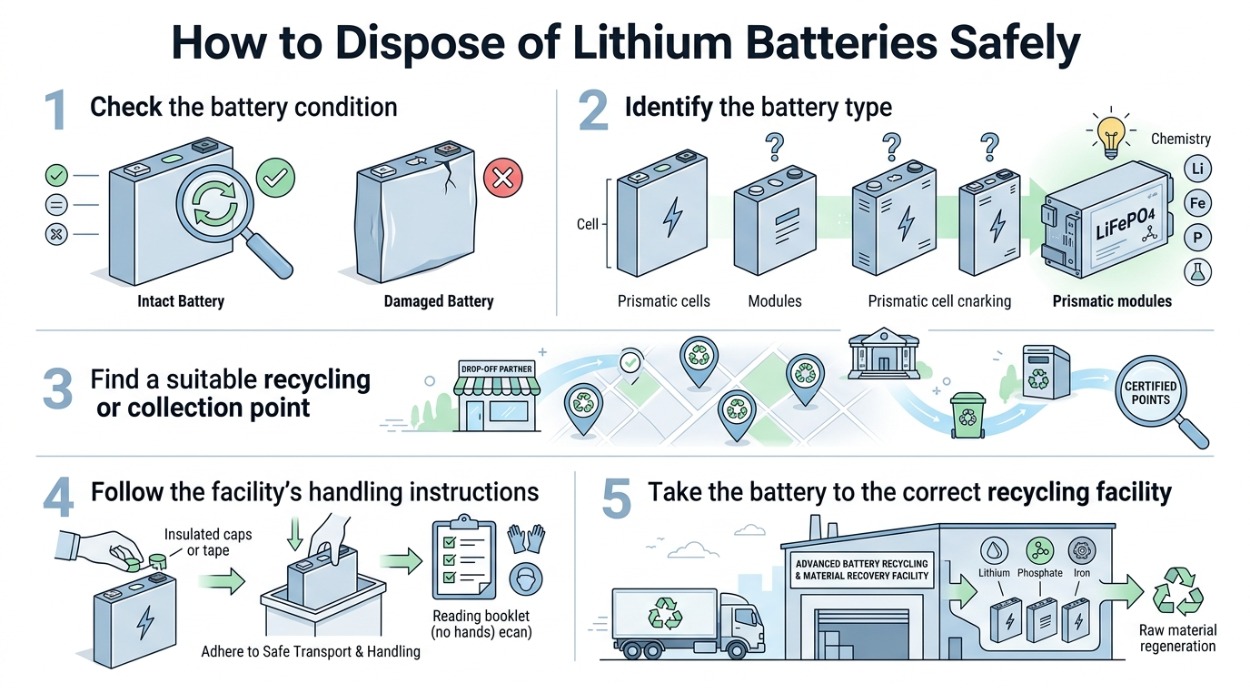
The exact process depends on the type and condition of the battery, but the basic steps are fairly simple.
1. Check the Battery
Start by looking at the battery. Don't open it or try to take it apart.
If it looks normal and isn't damaged, you can look for a local recycling or collection program that accepts lithium batteries.
If you notice swelling, cracks, leakage, unusual heat, or other damage, stop there. Damaged batteries need different handling.
2. Find a Battery Recycling Program
Look for a local battery recycling center, household hazardous-waste program, manufacturer take-back service, or another approved collection point.
If you're in the U.S., websites such as Call2Recycle and Earth911 can help you find nearby recycling locations.
Before making the trip, check that the location accepts your particular battery. Some programs only take small consumer batteries, while others handle larger battery packs.
3. Follow the Collection Site's Instructions
Every recycling program has its own rules.
For small batteries, the collection site may provide instructions for covering exposed terminals or packaging the batteries before drop-off.
Don't puncture, crush, open, or modify a battery just to prepare it for recycling.
For larger batteries, especially home energy storage systems, follow the manufacturer's instructions instead of trying to remove the battery yourself.
4. Take It to the Right Place
Once you've confirmed the facility accepts the battery, follow its instructions for drop-off or transportation.
Don't leave batteries next to a collection bin if the facility hasn't told you to do so.
And if you're not sure whether your local curbside recycling program accepts lithium batteries, check first. Don't assume it does.
What to Do With Damaged or Swollen Batteries
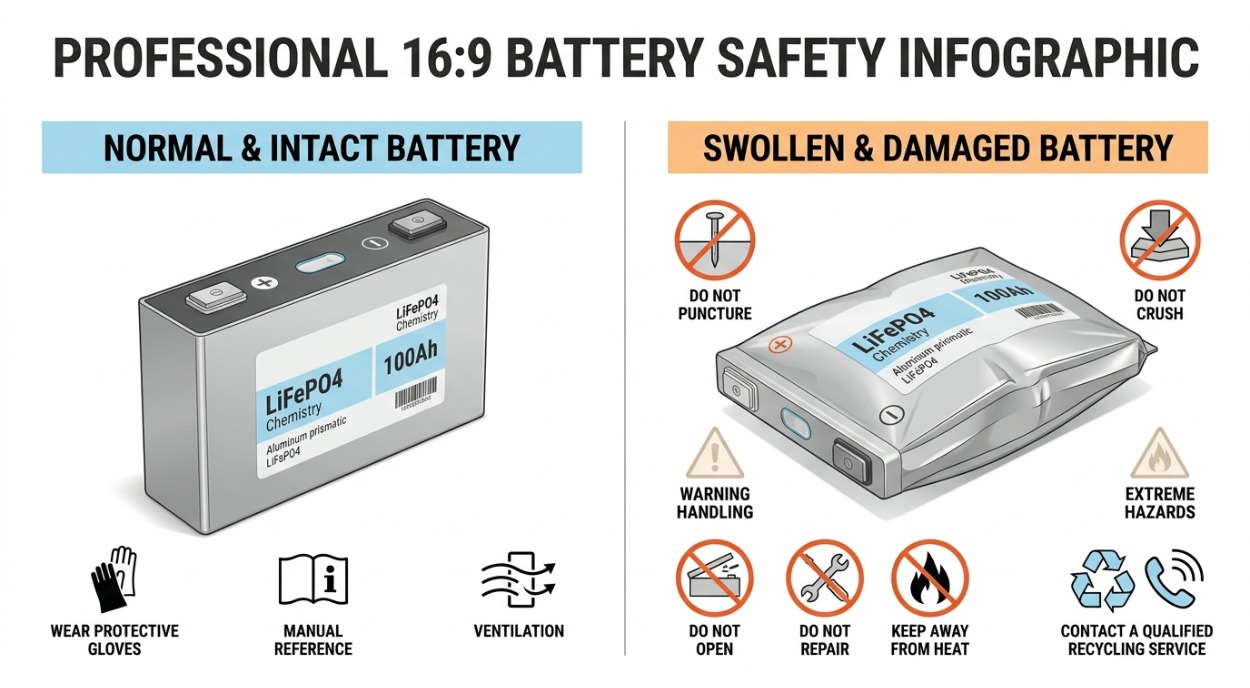
A swollen or damaged lithium battery is a different situation from a normal battery that has simply reached the end of its life.
You shouldn't try to fix it yourself.
Do Not:
- Puncture the battery.
- Crush the battery.
- Open the battery pack.
- Remove the cells.
- Try to repair it.
- Put it in the trash.
- Put it in a regular recycling bin.
- Expose it to heat or an open flame.
Instead, contact your local hazardous-waste facility, battery recycling provider, manufacturer, or another qualified service and tell them exactly what condition the battery is in.
If the battery is smoking, burning, or becoming extremely hot, don't attempt to move it yourself. Move away from the area and contact the appropriate emergency service.
How to Dispose of Home Energy Storage Batteries
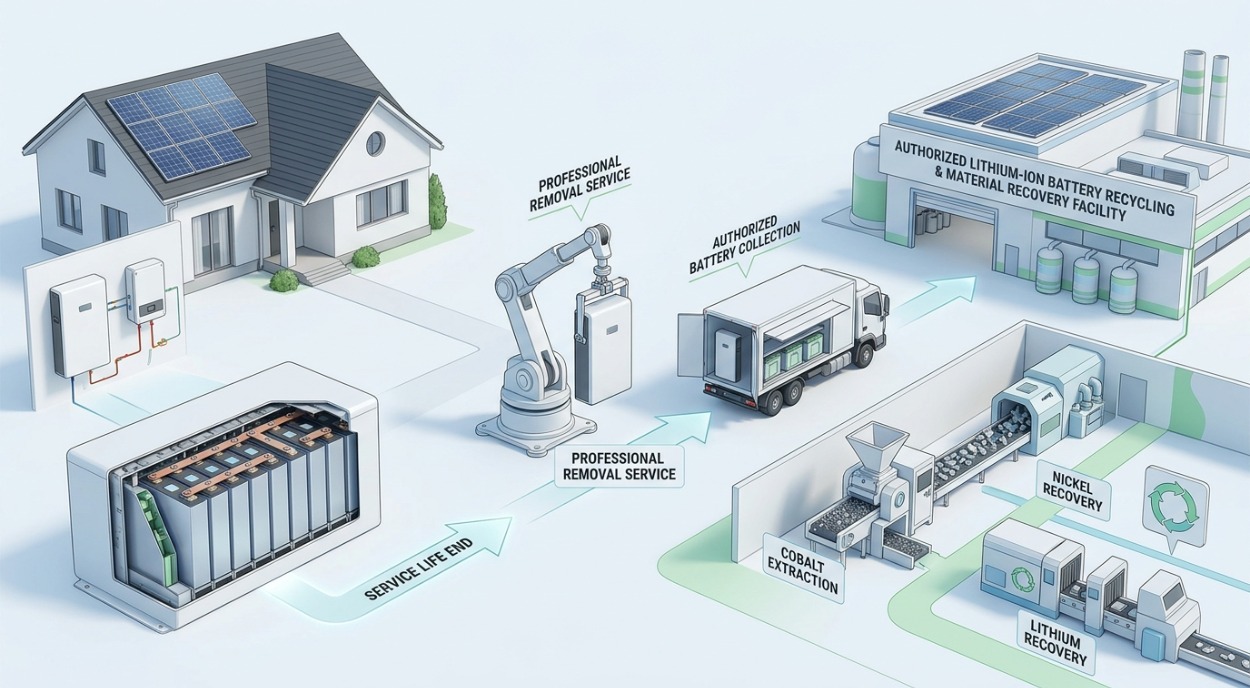
Getting rid of a home solar battery isn't quite the same as recycling a battery from a laptop or power tool.
A residential energy storage battery can hold several kilowatt-hours of energy and may be connected directly to an inverter, solar panels, or the home's electrical system.
That means removal is usually a job for a qualified professional.
If your home battery is reaching the end of its service life, start with the manufacturer or installer. Ask about the warranty, replacement process, and available recycling options.
A typical process may look like this:
- Find the battery model and chemistry.
- Check the manufacturer's end-of-life instructions.
- Contact the installer or manufacturer.
- Find out which recycling services accept the battery.
- Arrange professional removal if the system needs to be disconnected.
- Send the battery to the designated recycling or collection facility.
Don't treat a large home storage battery like a small consumer battery. The amount of stored energy is much higher, and the system may still be electrically connected even when it isn't being used.
LiFePO4 Battery Lifespan and Recycling

If you're replacing an old solar battery, it's worth looking beyond the purchase price.
A battery that lasts longer doesn't need to be replaced as often, which can reduce the amount of battery waste over time.
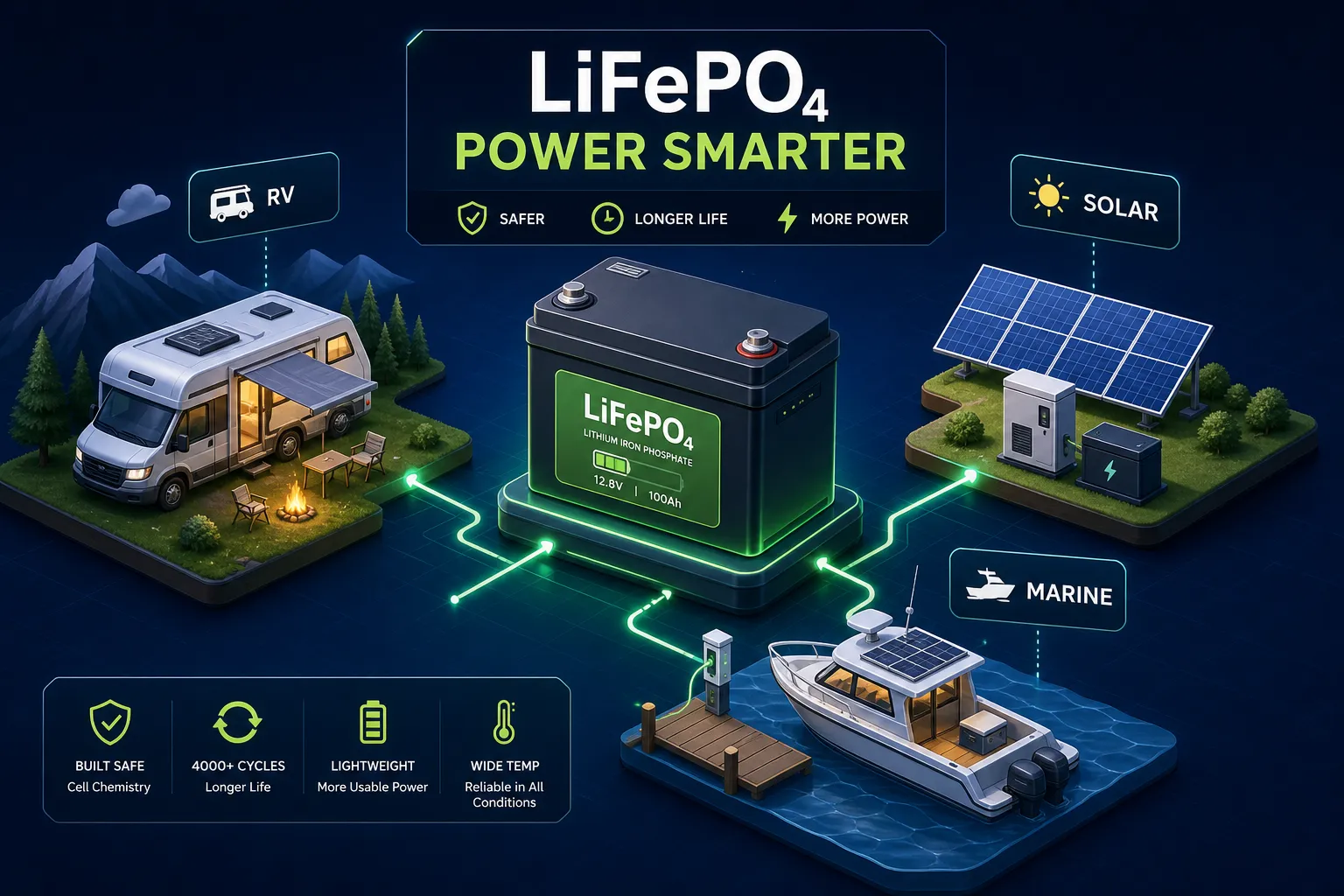
LiFePO4, also known as lithium iron phosphate, is widely used in residential energy storage. It is valued for its combination of cycle-life potential, safety characteristics, and suitability for regular charging and discharging.
Actual battery life varies from one system to another. Factors such as depth of discharge, temperature, charging conditions, cell quality, and battery management system performance can all make a difference.
That's why battery quality matters just as much as the advertised cycle count.
JM Energy Tech Home Energy Storage Batteries
For homeowners looking for a new residential battery, JM Energy Tech offers LiFePO4 energy storage systems, including the 51.2V 300Ah 15kWh model.
The battery is designed for residential solar storage and backup applications and can be matched with compatible inverter systems.
If you're replacing an existing battery, check the battery voltage, capacity, communication protocol, inverter compatibility, and installation requirements before choosing a new system.
Frequently Asked Questions
Can I throw a lithium battery in the trash?
In most cases, no. Take it to a battery recycling program or another collection facility that accepts lithium batteries. Local rules can vary, so check with your waste authority if you're unsure.
Can lithium batteries go in curbside recycling?
Usually not. Standard recycling bins aren't designed for every type of lithium battery. Check your local program before putting one in the recycling bin.
What should I do with a swollen lithium battery?
Don't puncture, open, crush, or repair it. Contact a local hazardous-waste facility, battery recycler, or the manufacturer and explain that the battery is swollen or damaged.
Can LiFePO4 batteries be recycled?
Yes. LiFePO4 batteries can be sent through appropriate battery recycling and collection programs. Large home storage batteries may require professional removal first.
How do I dispose of a home solar battery?
Start by contacting the manufacturer or installer. Because a home solar battery can be connected to the electrical system and store a large amount of energy, professional removal may be required.
How can I find a lithium battery recycling center?
Check your local government waste-management website or use a battery recycling directory such as Call2Recycle or Earth911 in the U.S.
How long do LiFePO4 batteries last?
There isn't one fixed number for every LiFePO4 battery. Service life depends on factors such as operating temperature, depth of discharge, charging conditions, cell quality, and how the battery is managed.
Is LiFePO4 safe for home energy storage?
LiFePO4 is commonly used in residential energy storage because of its favorable safety and thermal characteristics. Like any lithium battery, however, it still needs proper installation, protection, charging, and end-of-life handling.
Final Thoughts
Disposing of a lithium battery doesn't have to be complicated.
For a normal household battery, the safest approach is simple: don't put it in the trash unless your local waste authority specifically says it's allowed. Find a recycling or collection program that accepts lithium batteries instead.
If the battery is swollen or damaged, don't try to take it apart. Get instructions from a qualified recycling or waste-handling service.
And if you're dealing with a large home energy storage battery, leave the electrical work to a qualified professional.
For homeowners replacing an older solar battery, choosing a long-lasting LiFePO4 system can also mean fewer replacements over the life of the installation.
Looking for a Residential LiFePO4 Battery?
JM Energy Tech provides residential LiFePO4 battery solutions for solar storage and backup applications.
If you're planning a new system or replacing an existing battery, contact our team to discuss your requirements.

JM Wall Mount 51.2V 300Ah 15kWh LiFePO4 Lithium Battery
Residential LiFePO4 energy storage solution for solar power, backup power, and home energy storage applications.
View Product
JM 51.2V 100Ah 5kWh Stackable Solar Battery
Compact LiFePO4 battery solution for residential solar energy storage applications.
View ProductsHow Long Does The Battery Last
How Long Does A Solar Battery Last