


LiFePO4 Battery Buyer's Guide: RV, Solar & Marine
LiFePO4 Battery Buyer's Guide: RV, Solar & Marine

Buyers in 2026 are abandoning lead-acid and NMC packs faster than any previous year, and most are landing on a LiFePO4 battery for RV, solar, and marine applications. The chemistry has matured, prices have come down substantially, and the application range has expanded from weekend camping trips to whole-home solar backup to commercial microgrids. This shift isn't hype; it reflects where the engineering actually points.
This guide covers what makes lithium iron phosphate work, which specs deserve your attention, how to match a pack to your specific application, and which models are worth serious consideration right now. Manufacturers who have built their entire product lines around this chemistry chose it deliberately, JM Energy Tech among them. That focused commitment tells you something about where the industry has placed its long-term confidence.
No filler here. Just what you need to buy the right battery the first time.
What a LiFePO4 Battery Is and How It Actually Works
The Chemistry That Makes It Stable
Lithium iron phosphate uses an iron-phosphate cathode and moves lithium ions between cathode and anode during charge and discharge cycles. The iron-phosphate bond is what gives this chemistry its famous thermal stability. Unlike NMC cells, it does not release oxygen when stressed, that oxygen release is the root mechanism behind thermal runaway in less stable lithium chemistries. LFP's thermal runaway threshold sits around 270°C compared to roughly 170, 210°C for NMC, a margin that matters enormously in enclosed installations.
Why the Flat Discharge Curve Is a Real Advantage
LFP holds a steady voltage for the vast majority of its discharge cycle, dropping sharply only at the very end. Your inverter, motor, or appliance sees consistent voltage for 80, 90% of the usable range. Lead-acid batteries sag continuously from the moment discharge begins, which starves sensitive electronics and forces you to oversize the bank to compensate.
The Role of the Built-In BMS
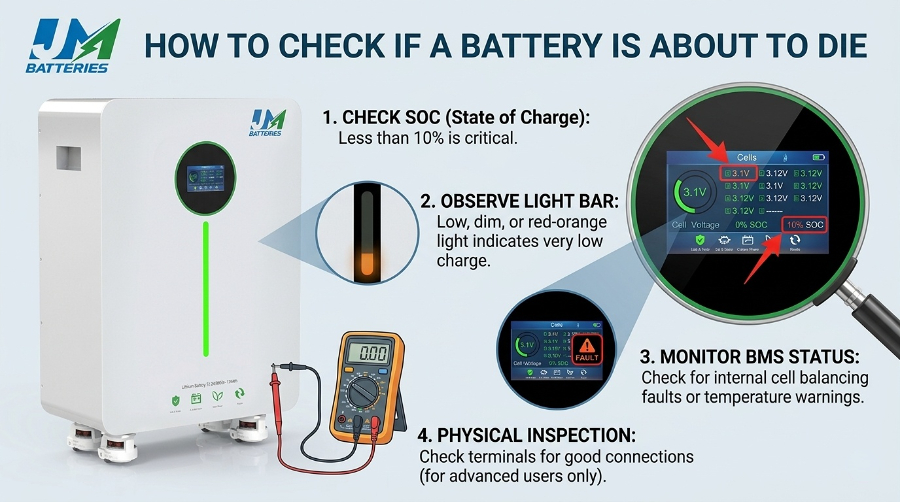
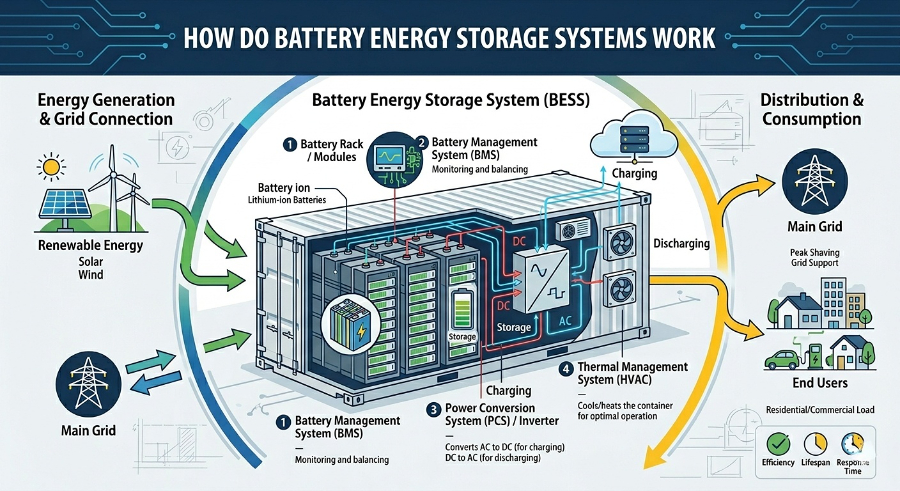
The battery management system sits between the cells and everything connected to the battery. It monitors cell voltage, temperature, and current in real time, cutting off power instantly if anything moves outside safe limits. Without a capable BMS, even a premium cell will fail before its rated cycle life. The BMS is not a secondary component; it's the layer that turns raw chemistry into a reliable product.
Why LiFePO4 Pulls Ahead: Safety, Cycle Life, and Usable Capacity
Cycle Life and Cost-Per-Cycle
Lead-acid batteries typically deliver 300, 500 cycles at 50% depth of discharge. Grade-A LiFePO4 cells from reputable manufacturers reach 3,000, 5,000 cycles at 80% DoD, and 5,000 or more at shallower cycling depths. That gap translates directly into cost-per-kilowatt-hour delivered over the battery's life. Even though the upfront price of LFP is higher, the math almost always favors it over any multi-year application.
Safety and Thermal Stability
LiFePO4 does not produce the same exothermic reaction under abuse conditions that NMC and NCA chemistries do. This makes it the correct choice for enclosed spaces: inside an RV compartment, a utility room, or a commercial cabinet installation. Lead-acid brings its own hazards, corrosive sulfuric acid, hydrogen off-gassing, and ventilation requirements that add cost and complexity to any installation. For a focused discussion on safety considerations, see Are lifepo4 batteries safe | jmenergytech.
Usable Capacity and Depth of Discharge
The Specs That Actually Matter Before You Spend
Reading the Ah Rating Correctly
Manufacturers rate batteries at a specific discharge rate, usually the 20-hour rate (C/20). A 100Ah battery at C/20 delivers 5A for 20 hours. At higher draw rates, effective capacity drops slightly. Some brands quote gross cell capacity; others quote the BMS-limited usable window. Confirm which number you're looking at before comparing prices across brands.
LiFePO4 BMS Quality: The Features That Protect Your Investment
A basic BMS handles overvoltage, undervoltage, overcurrent, and short-circuit protection. A solid LiFePO4 BMS for off-grid or mobile use adds low-temperature charge cutoff, active or passive cell balancing, and communication ports for system integration. Low-temperature cutoff is especially critical, no charging below 0°C without a self-heating circuit or the cells will suffer permanent damage. Bluetooth, CAN, or RS485 communication lets the battery coordinate with your inverter and solar controller. Without that coordination in larger systems, you're operating blind.
C-Rate and Real-World Discharge Limits
The C-rate describes how fast the battery can charge or discharge relative to its capacity. A 1C rate on a 100Ah battery means 100A continuous. Most residential and RV applications run well within 0.5C, but marine thruster loads and high-draw inverters can spike above that. Match the battery's continuous discharge rating to your actual peak load, not just your average consumption.
Picking by Use Case: RV, Marine, Solar, and Home Backup
RV and Marine: What Mobile Use Demands

Weight is the first filter for mobile buyers. LiFePO4 batteries in the 100Ah class now come in at 20, 23 lbs from several brands, compared to 60, 70 lbs for a comparable AGM. That reduction matters in a tow vehicle and matters even more on a boat. Beyond weight, RV and marine buyers need self-heating capability for cold-weather use, solid vibration tolerance, and Group 24 or Group 31 form factors that drop into existing battery boxes without modification.
For applications below 0°C (32°F), a standard LFP battery won't accept a charge until it warms up. Self-heating models include internal heating elements controlled by the BMS, which activate automatically when charging starts in freezing conditions. If you camp or travel in winter, this feature is not optional. A practical comparison of self-heating versus low-temperature protection helps explain why the feature matters in real-world mobile use: self-heating vs low-temperature protection.
Solar and Home Backup: Where Scale and Safety Converge

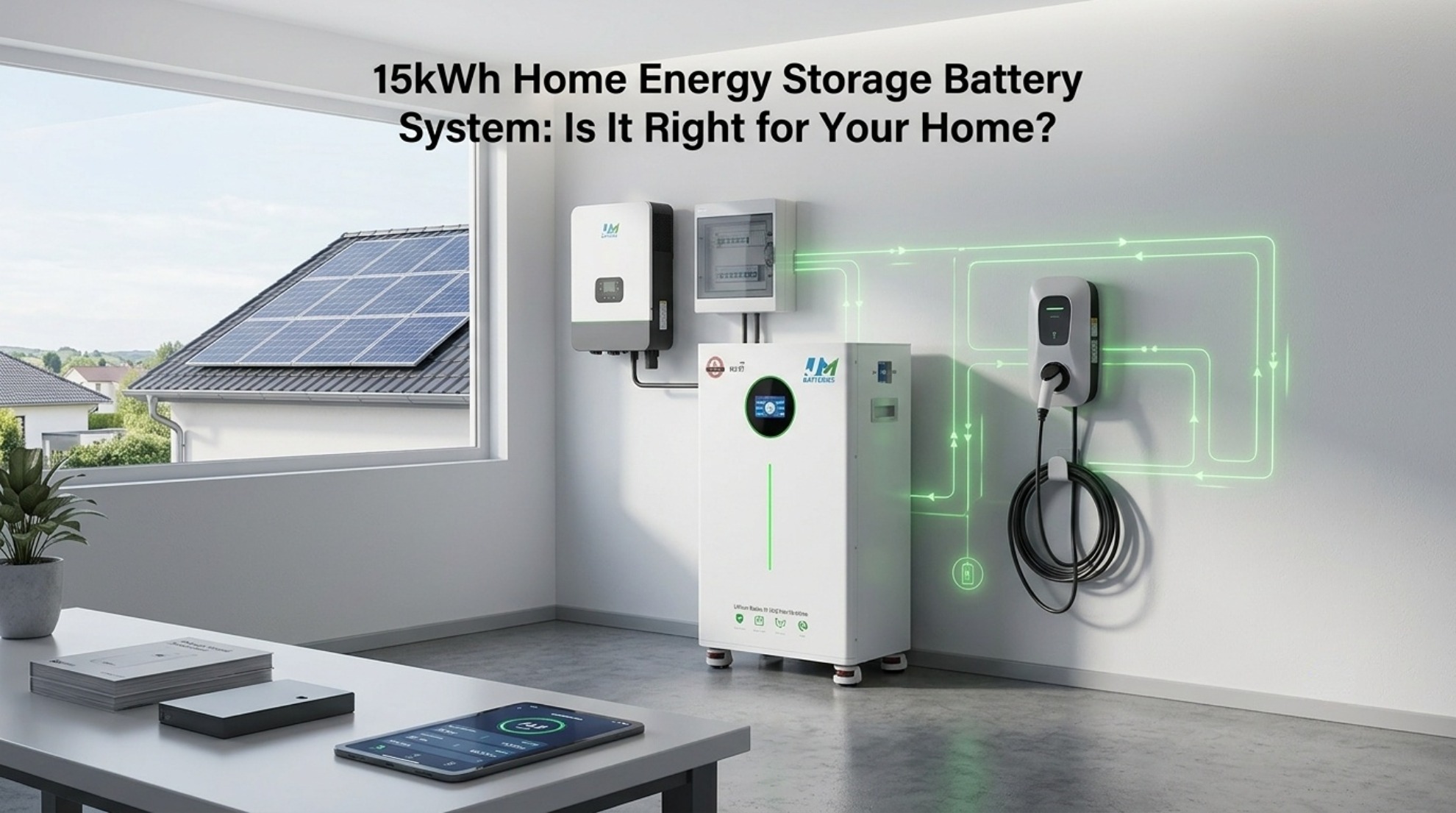
Home solar storage is where lithium iron phosphate has become the clear default. The chemistry's thermal stability makes it safe for indoor installation in garages and utility rooms without the venting requirements that disqualify other options. JM Energy Tech has built its entire residential lineup around LFP, from 25.6V and 51.2V wall-mounted powerwalls to modular stacked systems that scale alongside a growing solar array. Their plug-and-play approach reflects how far purpose-built home storage has advanced beyond stacking individual 12V batteries in a box. For a deeper look at their approach and product architecture, review Powering the Future: Why Big Capacity Lithium Batteries Are Changing the Game | jmenergytech.
Off-Grid and Commercial Applications
Larger systems for cabins, farms, or commercial facilities require rack-mounted or modular LFP configurations with BMS-to-inverter communication via CAN or RS485. Parallel battery strings need careful management to prevent imbalances, which makes BMS quality even more critical at scale. Over a 10, 15 year project horizon, LFP is the only chemistry whose cycle life makes the economics work for serious off-grid infrastructure.
Top LiFePO4 Models Worth Comparing in 2026
Best LiFePO4 12V 100Ah Options for RV and Marine Buyers
The 12V 100Ah segment is the most competitive in the market. Battle Born carries a 10-year warranty and a long track record in the RV community, retailing around $899. Dakota Lithium backs its packs with an 11-year warranty and comes in at 23 lbs. Redodo and LiTime both offer Group 24 form-factor batteries in the low-20-lb range with 4,000-plus cycle ratings and 5-year warranties at lower price points. Epoch consistently earns solid marks for overall performance and cold-weather readiness.
- Best warranty/long-term support: Battle Born (10 years) or Dakota Lithium (11 years)
- Best lightweight value: Redodo Group 24 (22 lbs) or LiTime with self-heating
- Best cold-weather readiness: Epoch or LiTime self-heating models
Higher-Capacity and Solar-Specific Picks
For solar storage above 200Ah, the OKMO 12V 200Ah at $749 offers strong value per kilowatt-hour. At the residential system scale, purpose-built wall-mount LFP systems from manufacturers like JM Energy Tech offer a cleaner integration path than stacking multiple 12V batteries. Unified BMS management, expandable capacity, and a single communication interface to your inverter make the system behave as an engineered product rather than a collection of parts, and JM Energy Tech's factory-direct model means that engineering comes without the retail markup.
Drop-In LiFePO4 Replacements: What "Compatible" Actually Means
Several brands market their 12V LFP batteries as direct lead-acid replacements. The physical fit is usually fine; the charging system is the real variable. Most lead-acid chargers, alternators, and solar controllers need to be reprogrammed or replaced to deliver the correct LFP voltage profile: roughly 14.4, 14.6V bulk absorption and 13.6V float for a 12V system. Disable equalization mode entirely, LFP cells are not designed to be equalized, and running one will damage them. Budget for charging system adjustments when comparing total cost to a lead-acid replacement. For buyers evaluating "drop-in" claims, it's worth reading a consumer-focused briefing on what manufacturers and installers mean by drop-in LiFePO4 replacements.
Installation and Compatibility: What Actually Changes
Charging System Changes You Can't Skip
LFP batteries require a lithium-specific charge profile. Standard AGM chargers with desulfation modes will damage lithium iron phosphate cells; avoid them entirely. Solar charge controllers must be set to a lithium or custom profile with the voltage parameters above. Alternator-based charging in RVs typically requires a DC-DC charger to regulate voltage correctly, since most vehicle alternators are calibrated for lead-acid chemistry. These are not optional adjustments; they determine whether the battery reaches its rated cycle life. For technical guidance on the optimal LiFePO4 charge voltage and how to set controllers, consult a detailed voltage profile reference.
Temperature, Mounting, and Safe Operating Basics
Do not charge LFP batteries below 0°C without a self-heating battery or external heating solution. Charging in sub-freezing temperatures causes permanent lithium plating on the anode, which degrades capacity and creates a long-term safety risk. For mounting, most LFP batteries can be installed in any orientation, unlike flooded lead-acid. Keep them away from direct heat sources, and ensure adequate airflow in enclosed compartments even though they don't off-gas under normal operation. For practical storage and handling recommendations, see How to store lithium batteries | jmenergytech.
Matching the Battery to the Job

The buying decision comes down to this: lithium iron phosphate is the right chemistry for most serious energy storage applications in 2026, but the right LiFePO4 battery depends on matching the specs to your actual use case. For RV and marine buyers, weight and self-heating capability are the primary filters. For home solar storage, cycle life, scalability, and installation safety determine which product actually delivers value over ten or more years. For commercial and off-grid projects, the economics only work with a manufacturer who can deliver consistent cell quality at scale across multiple battery strings.
The specs on the label only matter as much as the manufacturer behind them. JM Energy Tech is worth evaluating for anyone scaling beyond a single battery pack, from residential LFP powerwalls to industrial-scale storage systems. They build exclusively in this chemistry, with factory-direct pricing and OEM flexibility for integrators who need custom configurations, volume pricing, or direct technical support.
Know your load. Know your conditions. Match the LiFePO4 battery to both, and you won't buy the wrong one. For a broader perspective on selecting the right pack and system architecture, the JM Energy Tech overview is a useful next step: Powering the Future: Why Big Capacity Lithium Batteries Are Changing the Game | jmenergytech.
JM Energy Tech – Expert LiFePO4 solutions for RV, marine, solar & home backup.
15kWh Home Solar Storage Battery
How To Check If A Battery Is About To Die