


What Constitutes Battery
What Constitutes a Battery? Exploring Modern Energy Storage with JM Energy's Lithium Battery
Table of Contents
Introduction — what a battery really is
A battery isn’t just a black box that stores power. It’s a set of parts working together to turn chemicals into electricity, then back again. How those parts are chosen and put together decides how safe, long-lasting, and useful the battery will be.
The key parts inside a battery
Open up a typical rechargeable battery and you’ll find a few basic pieces that do most of the work:
- Electrodes: The anode and cathode — where the chemical reactions happen and electrons flow during use.
- Electrolyte: The medium that lets ions travel between electrodes so current can flow.
- Separator: A thin barrier that keeps the electrodes apart but lets ions pass — critical to prevent shorts.
- Casing: The shell that holds everything together and protects the cells.
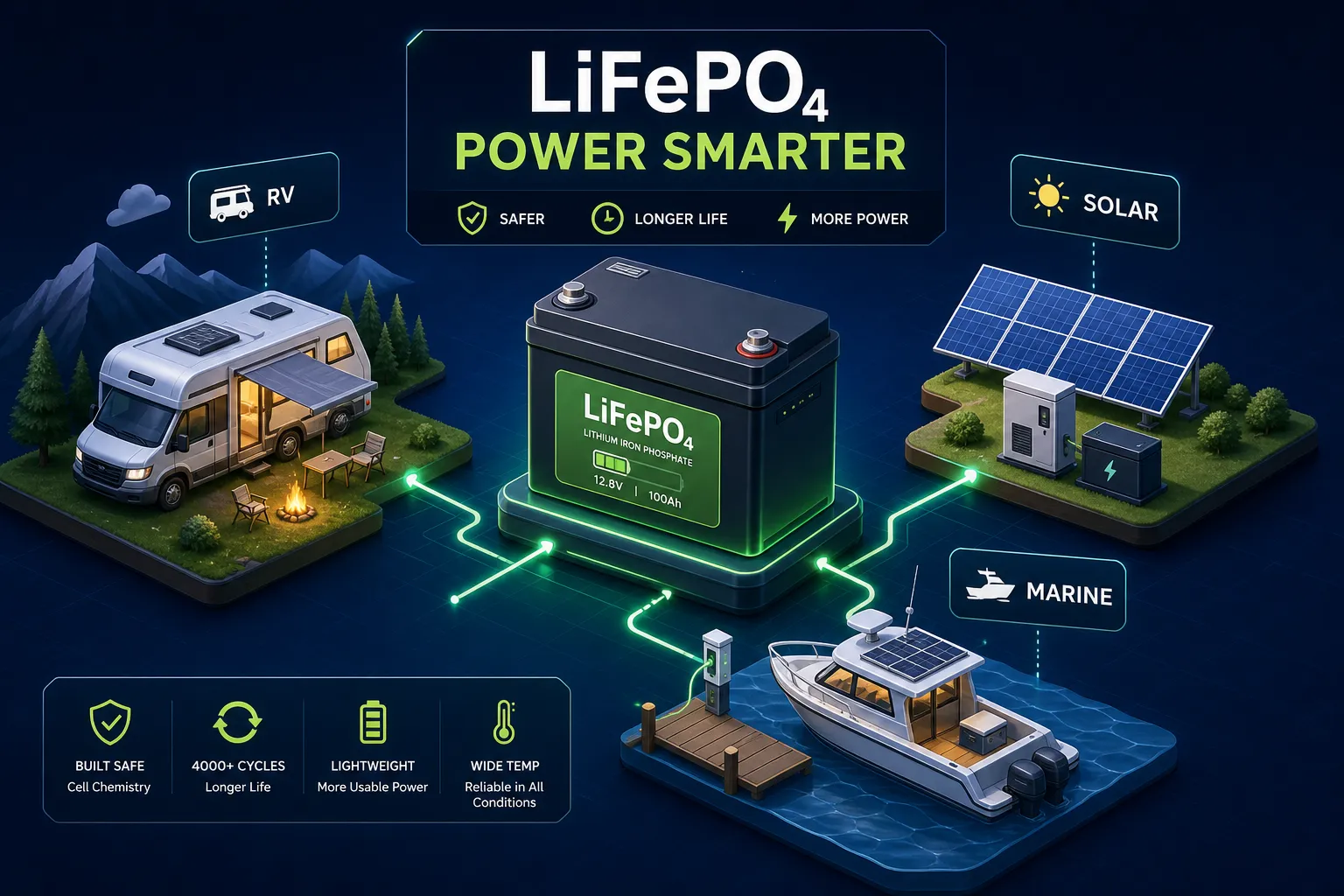
For home systems, LiFePO4 (lithium iron phosphate) is a popular choice because it’s stable and lasts a long time. That chemistry trades a bit of energy density for safety and reliability — often a good deal for household use.

Why the BMS matters
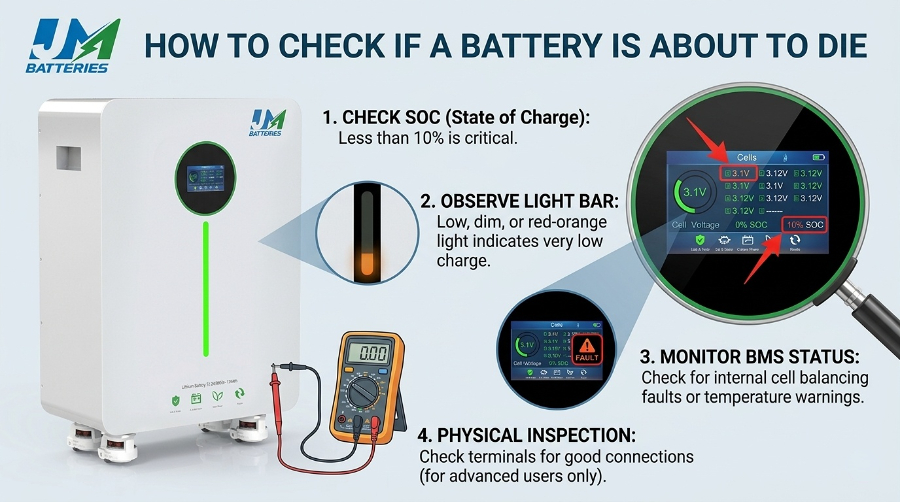
The Battery Management System (BMS) is the pack’s control center. It watches voltage, current, and temperature, balances cells so they age evenly, and prevents unsafe conditions like overcharge or overheat. A solid BMS doesn’t just protect the battery — it helps you get more useful life out of it.
About JM Energy
JM Energy is a Dongguan-based maker of lithium and sodium-ion batteries. We’ve been building packs for about ten years and ship products worldwide. Our production lines follow international safety and testing standards, and we work to keep quality consistent across batches.
The 51.2V 100Ah (5 kWh) pack
Here’s what the 5 kWh all-in-one pack is built to do — simple, practical backup and daily cycling for a typical home:
- Capacity: ~5120 Wh (5.12 kWh)
- Nominal voltage: 51.2 V
- Cell chemistry: LiFePO4 for stable temperature behavior and long life
- Operating range: -20℃ to 60℃ (storage: -25℃ to 75℃)
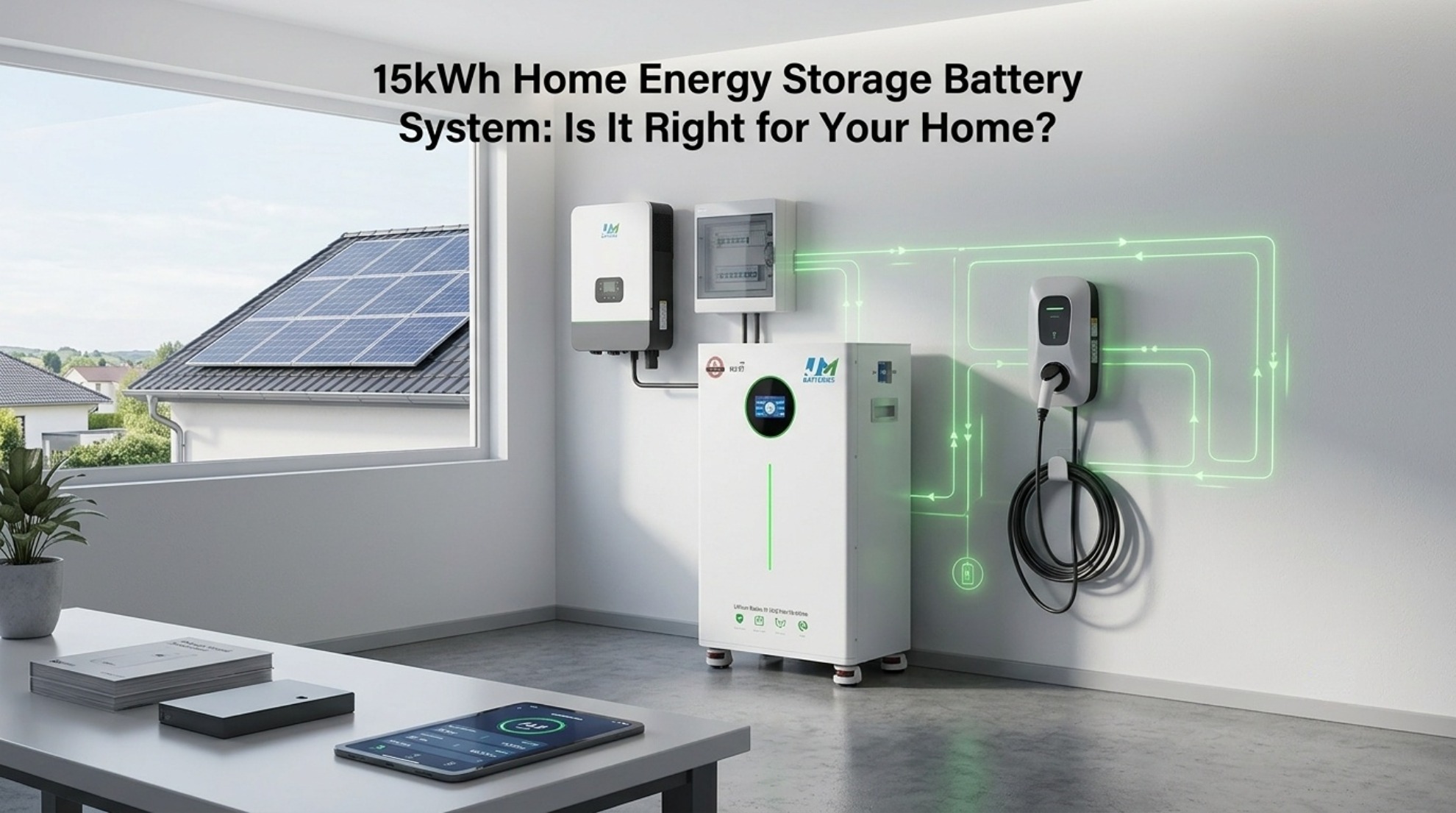
- Scale: stackable — add modules to reach 10, 15 or 30 kWh
- Warranty note: designed for long life and often paired with a 10-year warranty option
In plain terms: it’s meant to be safe, to last, and to be easy to add more capacity to as needs grow.
Inverter options
To use stored DC power with regular home appliances, you need an inverter. JM Energy offers a few approaches depending on how you want to set up your system:
- All-in-one inverter + battery: One box that combines both — quick to install and neat on the floor or wall.
- Separate battery + inverter: Gives flexibility if you plan a larger or custom system.
- Matched inverter: An inverter tuned to work well with JM battery behavior for better efficiency and communication.

Real family examples
The Smiths (California)
Wildfire seasons meant the Smiths lost grid power often. They installed the 5 kWh all-in-one pack. It was a simple install and, when the grid went down, the system switched to backup automatically. It keeps the fridge, lights, and limited AC running and lets them avoid buying power at peak prices by storing daytime solar.
The Johnsons (Texas)
The Johnson family lives outside town and upgraded to two 5 kWh modules (10 kWh total). That gives them multi-day backup when storms hit. Their panels charge the pack during the day; at night the inverter runs the house. They like the clear display and the idea of a long warranty for peace of mind.
Wrapping up
At its core, a good battery is about parts done right and managed well. Choose solid cells, a trustworthy BMS, and the form factor that matches your home. JM Energy’s 51.2V 100Ah LiFePO4 pack is built around those choices — designed to be safe, scalable, and practical for everyday backup and solar pairing.
Want datasheets or pricing? Visit JM Energy or get in touch with our sales team.
FAQs
What should I check for safety?
Look for LiFePO4 chemistry, a clear BMS feature list, relevant safety certificates, and good thermal design.
Can I expand the system later?
Yes. The 5 kWh modules are designed to be stackable so you can add capacity as your needs change.
What does Ah mean on a battery
How To Charge Battery With Solar Panel