


48V Lithium Battery: Top Pick for Solar Storage
48V Lithium Battery: Standard for Solar Energy Storage Systems

Table of Contents
- 1. 48V Solar Battery Efficiency & Low Voltage Drop Benefits
- – Reduced Current Draw & Minimal Cable Heat Loss
- – Copper Wiring Cost Savings & Easier Installation
- 2. LiFePO4 48V Battery Safety & Long Cycle Life Advantages
- – Thermal Stability & Integrated BMS Protection
- – Extended Cycle Life & Deep Discharge Capability
- 3. 48V Battery Inverter Compatibility & Scalable Storage
- – Seamless Inverter Integration & Round-Trip Efficiency
- – Flexible Parallel Expansion for Growing Energy Demand
- 4. 12V vs 24V vs 48V Solar Battery System Comparison
- 5. Maximize Value with 48V Solar Energy Storage Solutions
Across residential and commercial solar projects worldwide, installers and property owners have settled on 48V battery architecture as the go-to standard for energy storage. Older low-voltage battery setups struggle to balance power output, operational safety and long-term running costs, while a 48V lithium solar battery hits all those marks perfectly. If you’re putting together a home solar power setup and want to get the best return on your investment, understanding why this voltage format dominates the industry will help you make smarter equipment choices.
48V Solar Battery Efficiency & Low Voltage Drop Benefits
Reduced Current Draw & Minimal Cable Heat Loss
We can break down the efficiency gap between low-voltage and 48V systems using basic electrical rules: power output relies on the combined value of voltage and current, and energy loss inside wiring rises sharply as current flow increases. Take a common 5,000W load as an example: a 12V battery bank needs to push more than 400 amps of current to hit that power level, but an equivalent 48V lithium pack only draws roughly 104 amps. Cutting current flow by three-quarters slashes resistive heat loss by nearly 94%. This keeps wiring and battery internals running far cooler, lessens wear on internal hardware, and stops you from wasting usable power during peak discharge hours.

Copper Wiring Cost Savings & Easier Installation
Systems carrying massive current require extremely thick copper cables — like heavy 4/0 AWG wire — to avoid dangerous voltage drop and overheating. Switching to a 48V platform lets installers drop down to much thinner wiring such as 8 AWG or 2 AWG gauge. Heavy copper cabling and busbars make up a huge chunk of wiring expenses, and this shift can cut those material costs by over 60%, bringing down the full solar installation price tag. Lower current flow also means you can use smaller fuses and more affordable circuit breakers, simplifying the build process for DIY homeowners and professional engineering teams alike.
LiFePO4 48V Battery Safety & Long Cycle Life Advantages
Thermal Stability & Integrated BMS Protection
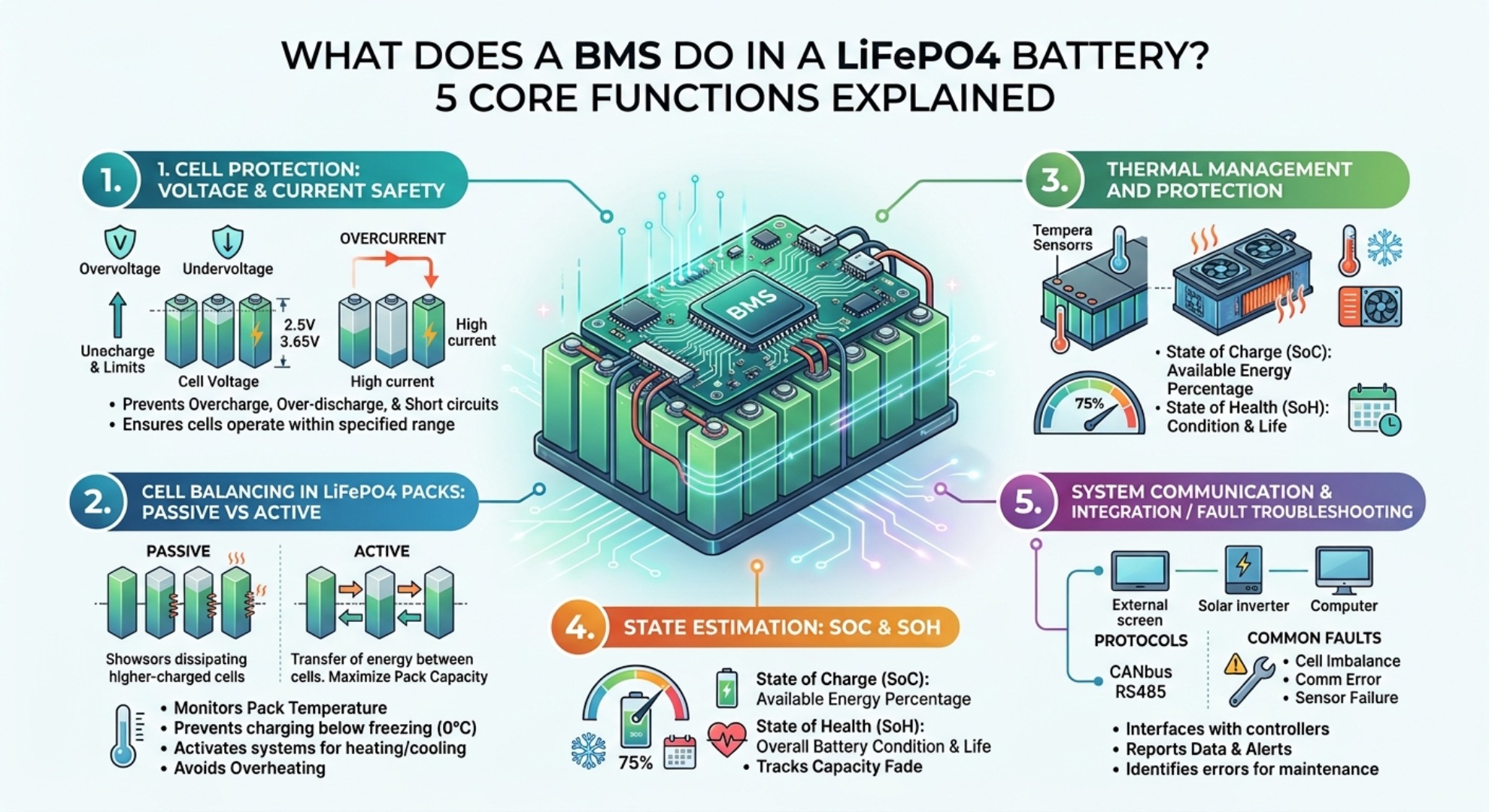
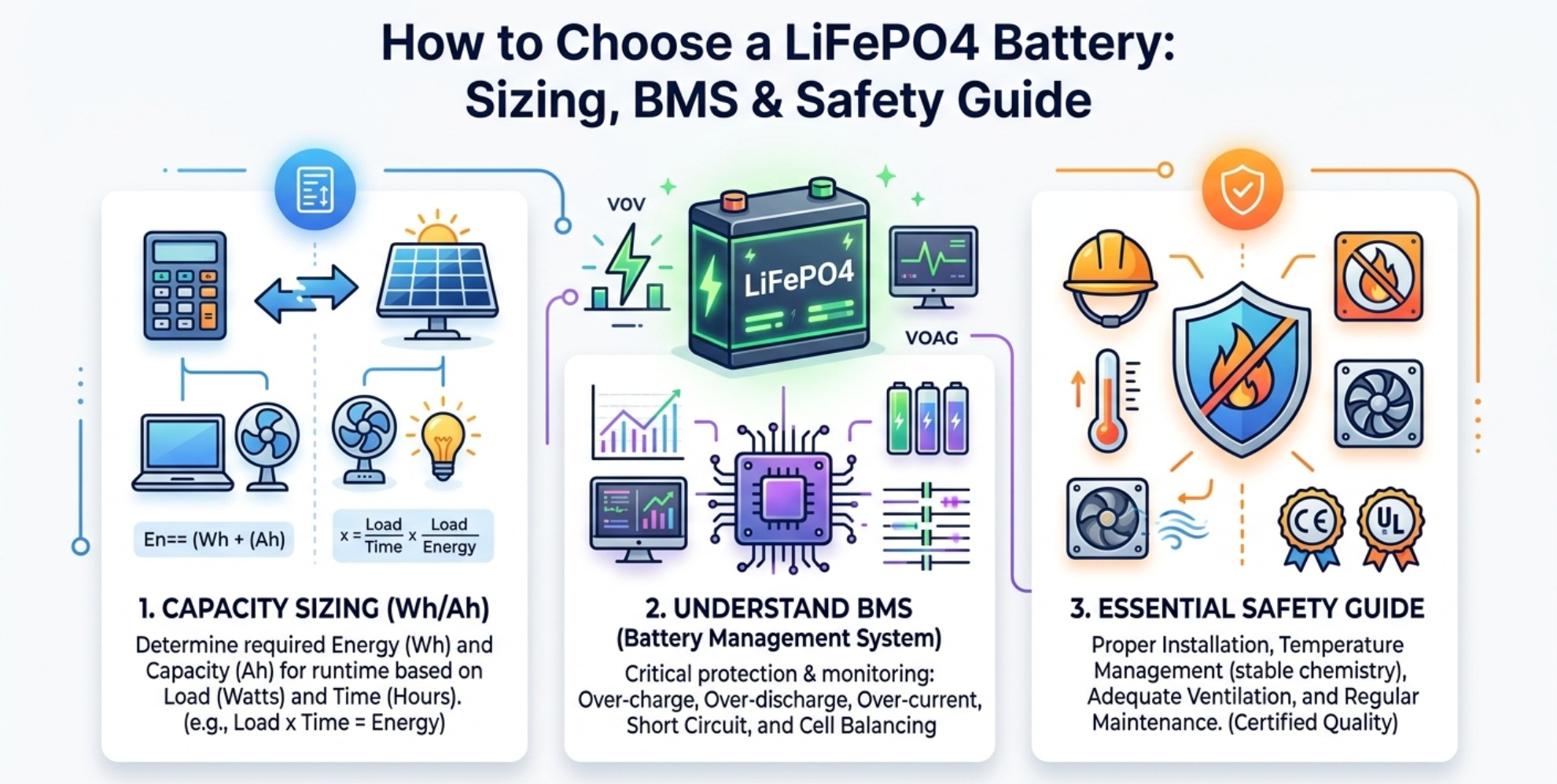
Safety is non-negotiable when you’re storing large kilowatt-hour power reserves inside homes or commercial buildings. Almost all modern 48V solar storage batteries use Lithium Iron Phosphate cells, whose tight chemical structure resists thermal runaway far better than other lithium chemistries. Every complete battery pack comes with a built-in battery management system (BMS) that continuously monitors individual cell voltage, internal temperature and safe current limits in real time. If you’re shopping for reliable storage, check out our certified, robust high-performance 48V LiFePO4 battery modules, built with layered thermal safeguards to keep operations stable and secure.

Extended Cycle Life & Deep Discharge Capability
Traditional lead-acid batteries degrade rapidly once you discharge them below half their total capacity, forcing users to leave half the battery’s power unused to preserve lifespan. Modern 48V LiFePO4 units handle regular deep discharge between 80% and 90% without accelerated capacity loss. Top-tier lithium cells deliver 6,000 to 8,000 full charge-discharge cycles before their usable capacity falls to 80% of the original rating. With this level of durability, the average service life stretches 10 to 15 years, drastically cutting replacement costs and the total cost of ownership for long-term solar storage.
48V Battery Inverter Compatibility & Scalable Storage
Seamless Inverter Integration & Round-Trip Efficiency
Major solar equipment brands design their high-efficiency hybrid inverters around the standard 48V nominal DC input, with a safe operating range spanning 44V to 58.4V. Today’s 48V hybrid inverters reach conversion efficiency between 95% and 98%. Pairing a matching 48V battery bank with an MPPT solar charge controller eliminates unnecessary DC-to-AC conversion steps, boosting overall round-trip efficiency and capturing every watt of sunlight available during peak daytime production.
Flexible Parallel Expansion for Growing Energy Demand
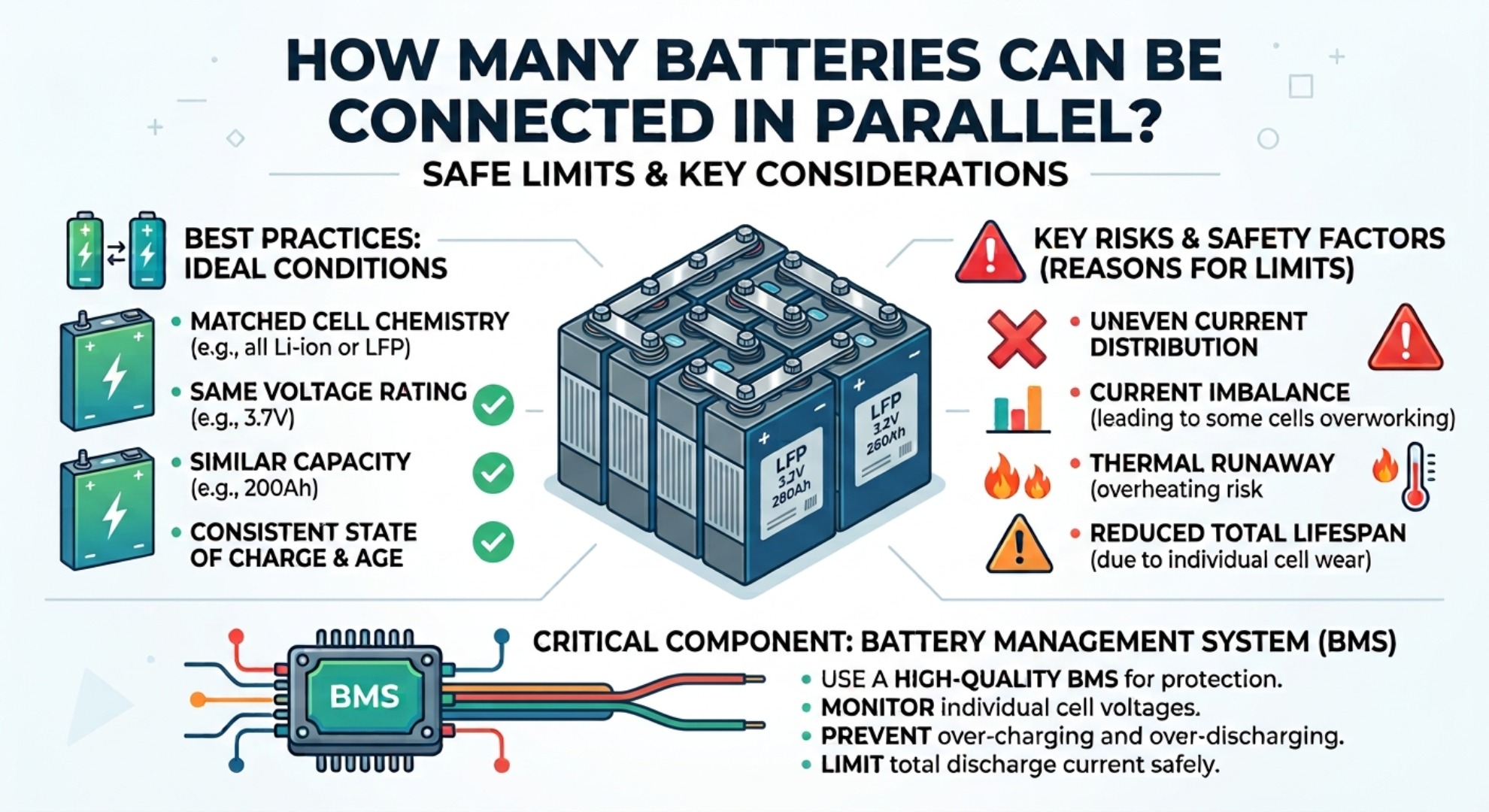
Household and commercial power consumption rarely stays static over the years, so your storage system needs room to grow without full electrical rework. Wall-mounted and rack-style 48V battery modules come equipped with standard RS485 and CAN bus parallel communication ports. This simple design lets users add extra battery banks in parallel to scale total capacity from 5kWh all the way past 50kWh. For easy plug-and-play capacity upgrades, explore our expandable scalable 48V solar storage systems.
12V vs 24V vs 48V Solar Battery System Comparison
To see exactly why 48V systems dominate residential solar storage across the globe, we’ve lined up key performance metrics for each voltage tier under identical 5,000W load conditions:
| Feature / Metric | 12V Battery System | 24V Battery System | 48V Lithium System |
|---|---|---|---|
| Current at 5,000W Load | ~416 Amps | ~208 Amps | ~104 Amps |
| Recommended Cable Gauge | 4/0 AWG (Heavy/Expensive) | 2 AWG | 8 AWG - 4 AWG (Light/Inexpensive) |
| System Energy Efficiency | ~85% | ~90% | 94% – 98% |
| Inverter Compatibility | Limited to small loads (<2kW) | Medium off-grid setups | Standard for 3kW - 15kW Hybrid Inverters |
| Scalability & Expansion | High wiring complexity | Moderate complexity | Plug-and-play parallel expansion |

Maximize Value with 48V Solar Energy Storage Solutions
Upgrading to a full 48V battery system remains the most impactful improvement you can make for off-grid homes, standalone commercial microgrids and residential solar backup power. Lower current waste, simplified wiring layouts and the inherent safety of LiFePO4 cells combine to cut routine maintenance work, raise solar energy capture efficiency, and deliver long-term independence from grid power. Browse our complete lineup of commercial and residential 48V solar lithium batteries to build a custom storage setup tailored fully to your site’s power requirements.
LiFePO4 Battery Degradation: Key Factors & Extension Guide
Battery Energy Storage Systems: Powering Renewable Energy Growth