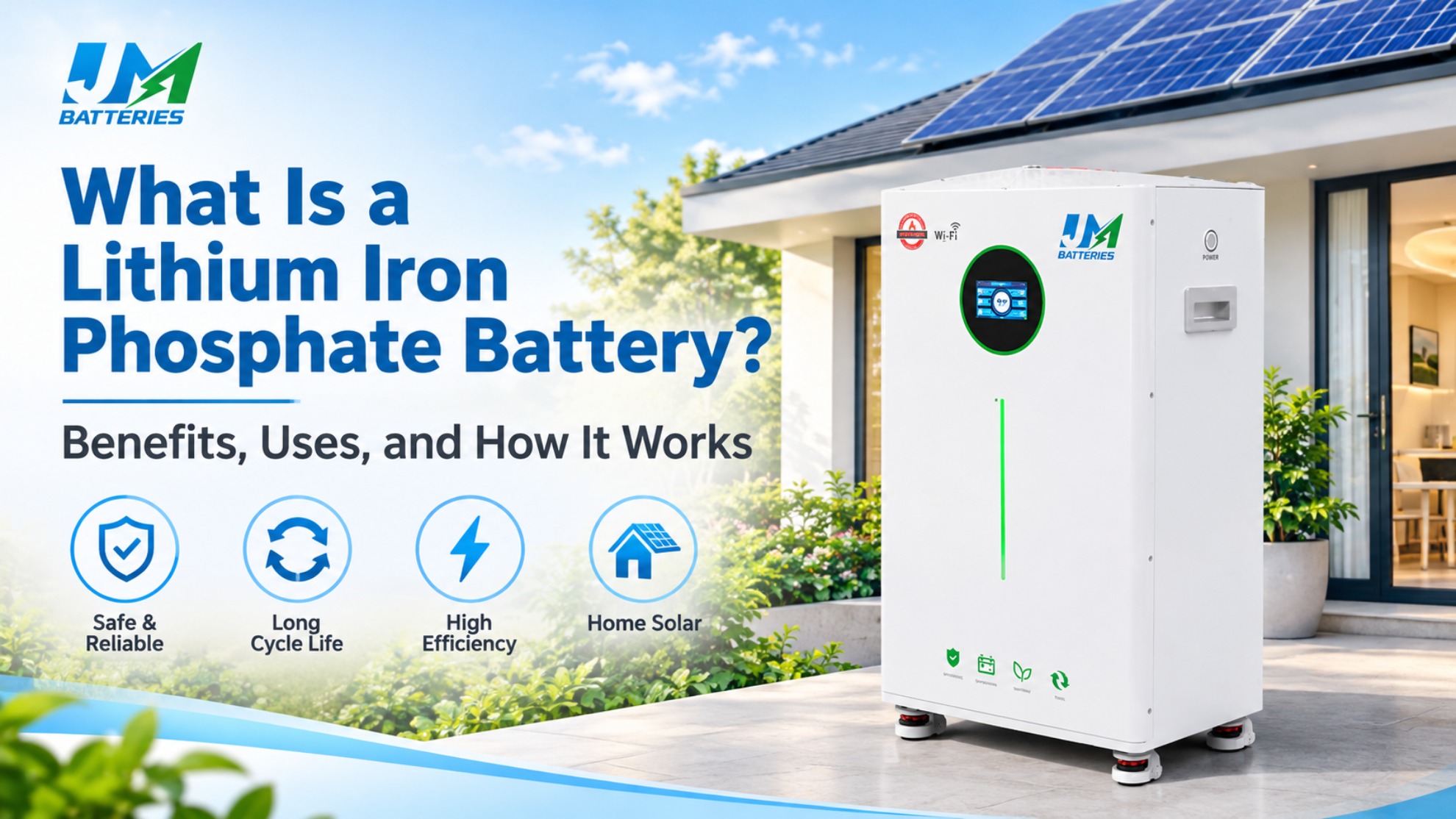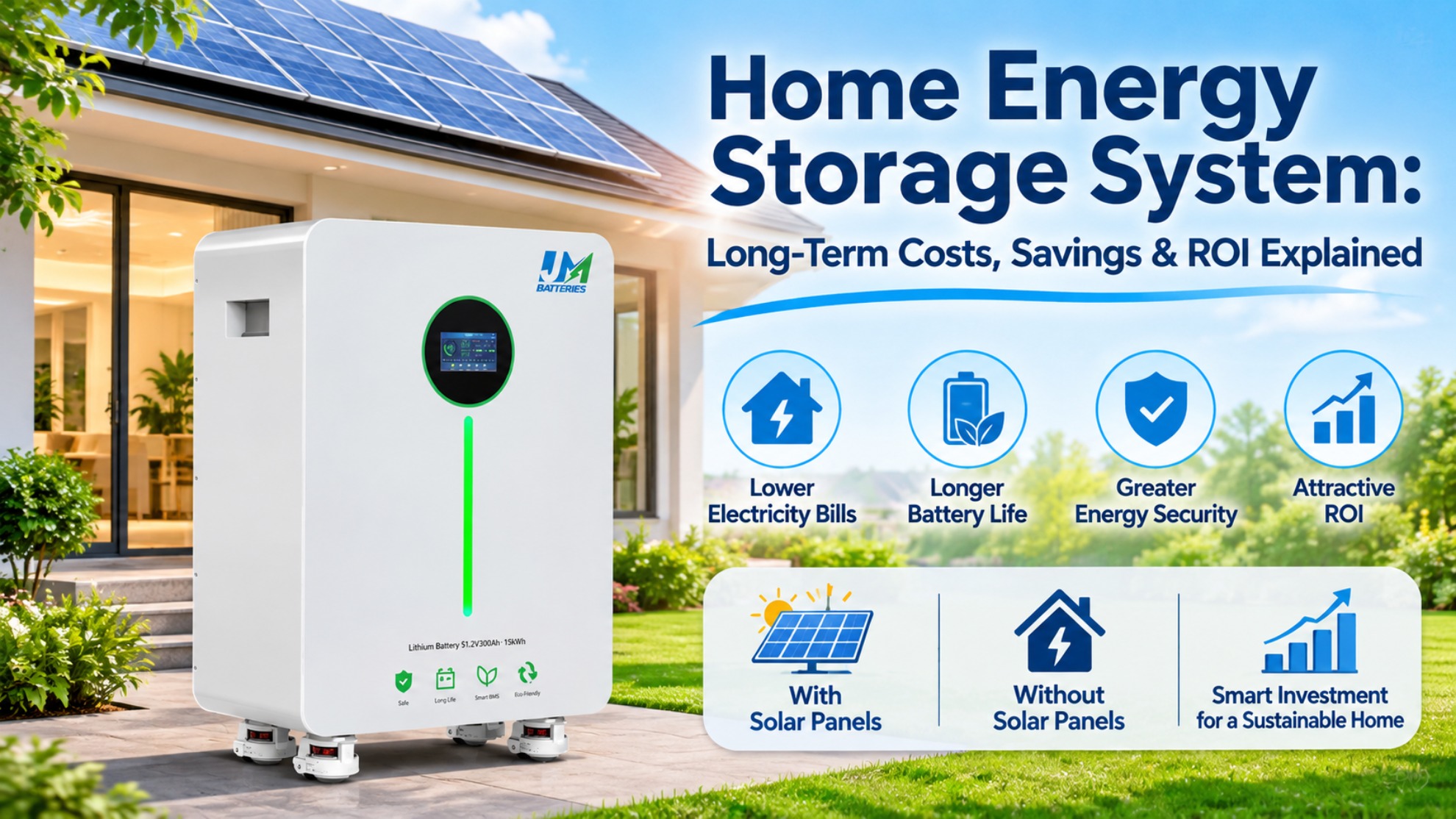



Lithium Batteries: Types, Uses, Benefits & Buying Guide
Lithium Batteries: Types, Uses, Benefits, and How to Choose the Right One
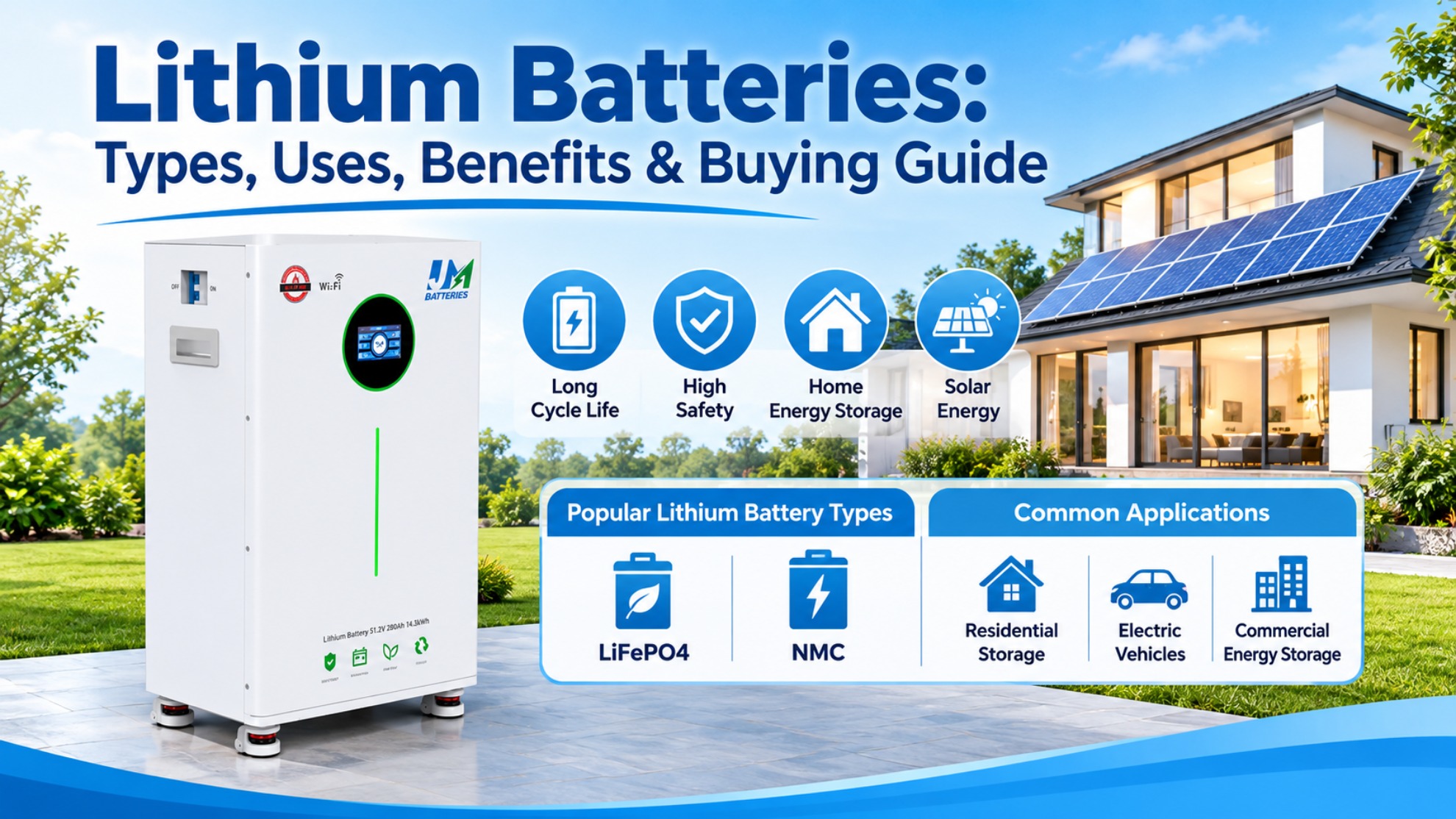
Lithium batteries are widely used in electric vehicles, portable electronics, solar energy storage, and backup power systems. Their high energy density, rechargeable performance, and flexible configurations make them an important energy storage solution.
However, not all lithium batteries are the same. LiFePO4 and NMC batteries have different characteristics, costs, and applications. Choosing the right battery requires more than checking its voltage and capacity. Buyers should also consider usable energy, cycle life, BMS protection, inverter compatibility, and warranty conditions.
This guide explains the main lithium battery types, their applications, and what to consider before purchasing one.
Table of Contents
- What Are Lithium Batteries?
- Main Types of Lithium Batteries
- Common Uses of Lithium Batteries
- LiFePO4 vs. NMC vs. Lead-Acid
- Lithium Battery Voltage and Capacity
- BMS, Safety, and Battery Lifespan
- Series and Parallel Connections
- How to Choose the Right Lithium Battery
- Battery Selection Examples
- Why Consider JM Energy Tech?
- FAQs
1. What Are Lithium Batteries?
Lithium batteries are rechargeable batteries that store and release energy through the movement of lithium ions between positive and negative electrodes.
During charging, lithium ions move toward the negative electrode. During discharge, they move back toward the positive electrode, while electrons flow through an external circuit to power connected equipment.
A typical lithium battery contains several main components:
- Cathode: Determines much of the battery's voltage and chemical characteristics.
- Anode: Stores lithium ions during charging.
- Electrolyte: Allows lithium ions to move between electrodes.
- Separator: Keeps the electrodes physically apart.
- BMS: Monitors battery conditions and provides protection.
2. What Are the Main Types of Lithium Batteries?
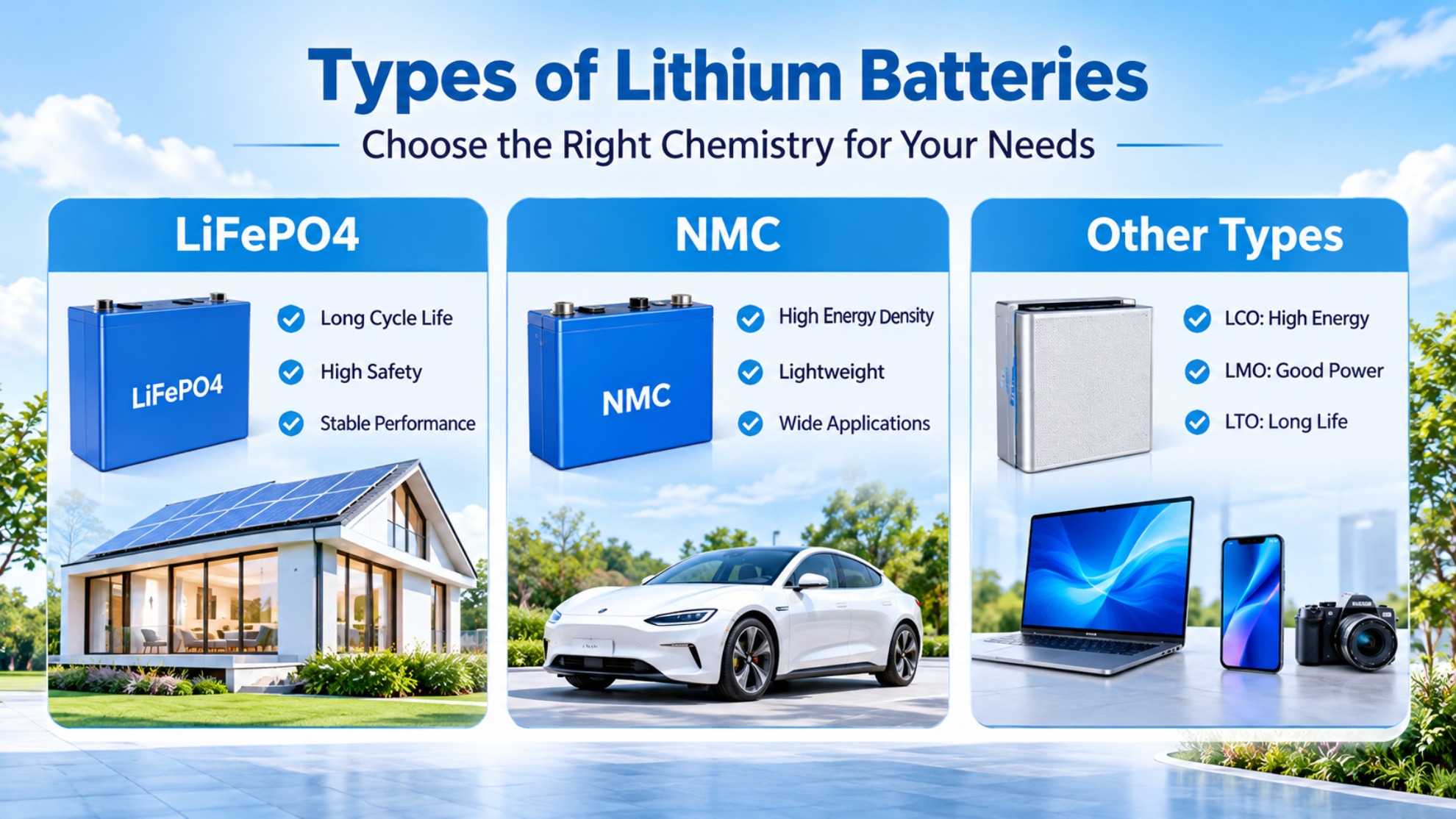
Different lithium battery chemistries offer different combinations of energy density, cycle life, thermal characteristics, and cost. The most common types include LiFePO4, NMC, LCO, LMO, and LTO.
LiFePO4 (Lithium Iron Phosphate)
LiFePO4 batteries use lithium iron phosphate as the cathode material. They are widely used in residential solar storage and stationary backup systems.
Main characteristics include:
- Good thermal stability.
- Long cycle life under suitable operating conditions.
- Suitable for frequent charging and discharging.
- Commonly used in home energy storage systems.
- Generally lower energy density than many NMC designs.
LiFePO4 is a popular choice for stationary storage, where long-term cycling and stable operation are important.
NMC (Nickel Manganese Cobalt)
NMC batteries combine nickel, manganese, and cobalt in their cathode material. They are widely used in electric vehicles and applications where compact size and high energy density matter.
Typical characteristics include:
- High energy density in many designs.
- Good suitability for weight-sensitive applications.
- Widely used in electric mobility.
- Requires appropriate thermal management and protection.
Other Lithium Battery Types
- LCO: Lithium cobalt oxide, commonly used in portable electronics.
- LMO: Lithium manganese oxide, used in selected power tools and electric vehicle applications.
- LTO: Lithium titanate, known for fast charging capability and potentially long cycle life, but with lower energy density.
Each chemistry serves different requirements. The best option depends on the equipment, operating environment, and application.
3. What Are Lithium Batteries Used For?
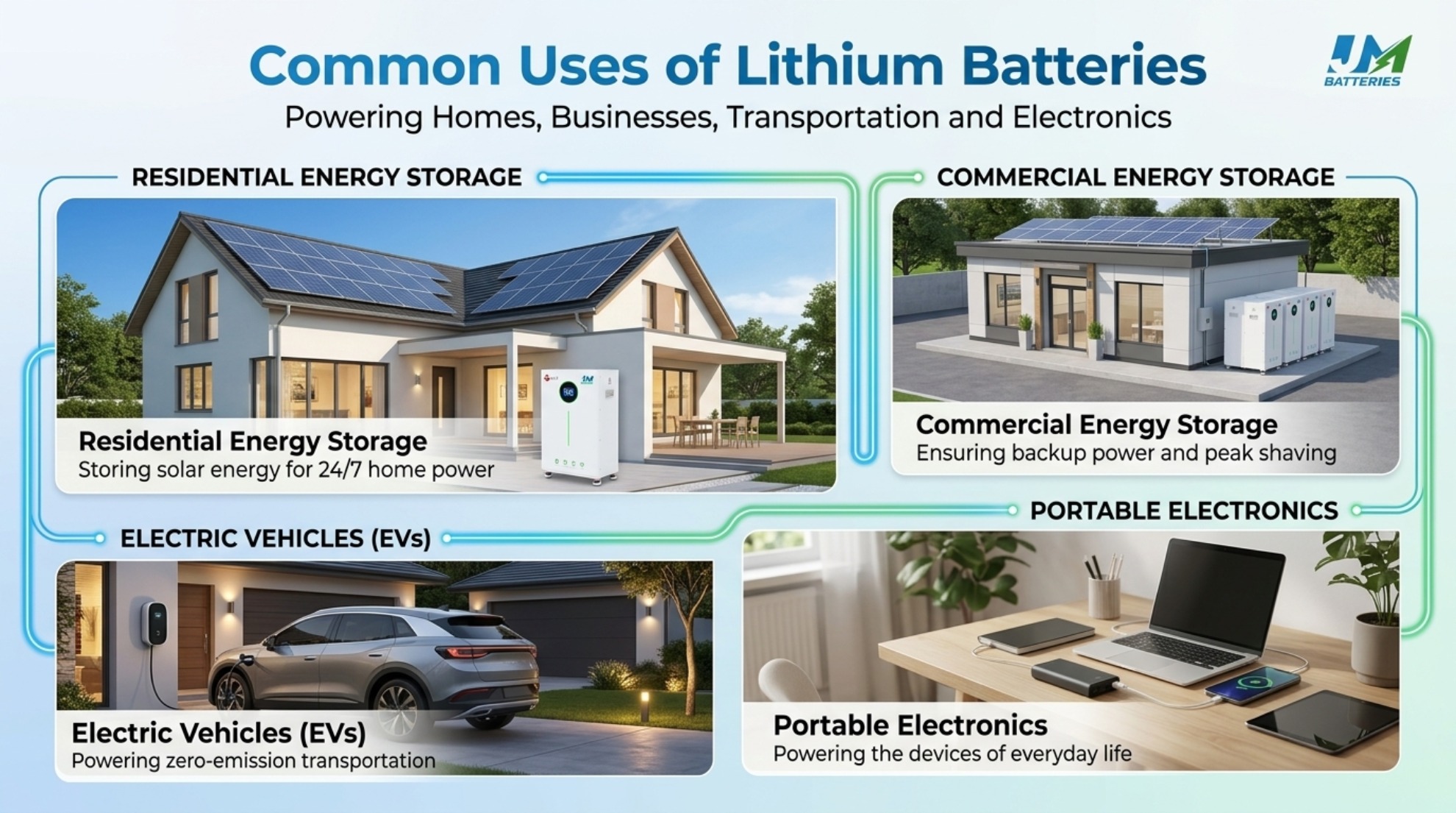
Lithium batteries support a wide range of applications, from small electronic devices to large energy storage systems.
Residential Solar Energy Storage
Homeowners use lithium batteries to store excess solar electricity for evening consumption or backup power. During daylight hours, solar panels can charge the battery. Stored energy can then supply selected household loads when solar generation is insufficient.
LiFePO4 batteries are commonly considered for this application because of their cycle-life characteristics and thermal stability.
Commercial Energy Storage
Businesses may use battery systems for solar self-consumption, peak shaving, and backup power. The required battery capacity depends on electricity consumption, operating schedules, and power demand.
Electric Vehicles and Portable Electronics
Lithium-ion batteries are also widely used in electric cars, buses, motorcycles, smartphones, laptops, and portable power stations. Energy density, weight, charging performance, and power output are important selection factors.
4. LiFePO4 vs. NMC vs. Lead-Acid Batteries
When selecting a battery for energy storage, it is important to compare more than the initial purchase price.
| Factor | LiFePO4 | NMC | Lead-Acid |
|---|---|---|---|
| Energy density | Moderate | Generally high | Low |
| Thermal characteristics | Generally strong thermal stability | Requires careful thermal management | Different ventilation and safety considerations |
| Cycle life | Often long under suitable conditions | Varies by design and conditions | Often shorter with frequent deep cycling |
| Weight | Generally heavier than comparable NMC designs | Often lighter for similar energy capacity | Generally heavy |
| Common uses | Solar and home storage | Electric vehicles | Selected backup applications |
For residential energy storage, LiFePO4 is often worth considering because of its thermal stability and suitability for repeated cycling. NMC may be more suitable when space and weight are major constraints. Lead-acid batteries may still fit certain cost-sensitive applications.
There is no universal winner. The right choice depends on the system requirements and long-term operating costs.
5. Lithium Battery Voltage and Capacity
Voltage and capacity are two important specifications when comparing lithium batteries.
Battery Voltage
Voltage describes the electrical potential of a battery. Common battery system categories include 12V, 24V, and 48V-class systems. Many products described as 48V lithium batteries have a nominal voltage of 51.2V.
Always check the battery's actual operating voltage range against the inverter or connected equipment.
Battery Capacity: Ah and kWh
Ampere-hours (Ah) describe electric charge capacity, while kilowatt-hours (kWh) describe stored energy.
For example, a 51.2V 300Ah battery has a nominal energy capacity of approximately 15.36kWh.
Nominal Energy vs. Usable Energy
The full nominal capacity is not necessarily available to connected loads. Usable energy depends on the permitted depth of discharge (DoD), BMS settings, inverter efficiency, and operating conditions.
For a 15.36kWh battery operated at 80% DoD, the theoretical discharge energy is approximately 12.29kWh before system losses.
When comparing batteries, check usable energy as well as nominal capacity.
6. Lithium Battery BMS, Safety, and Lifespan
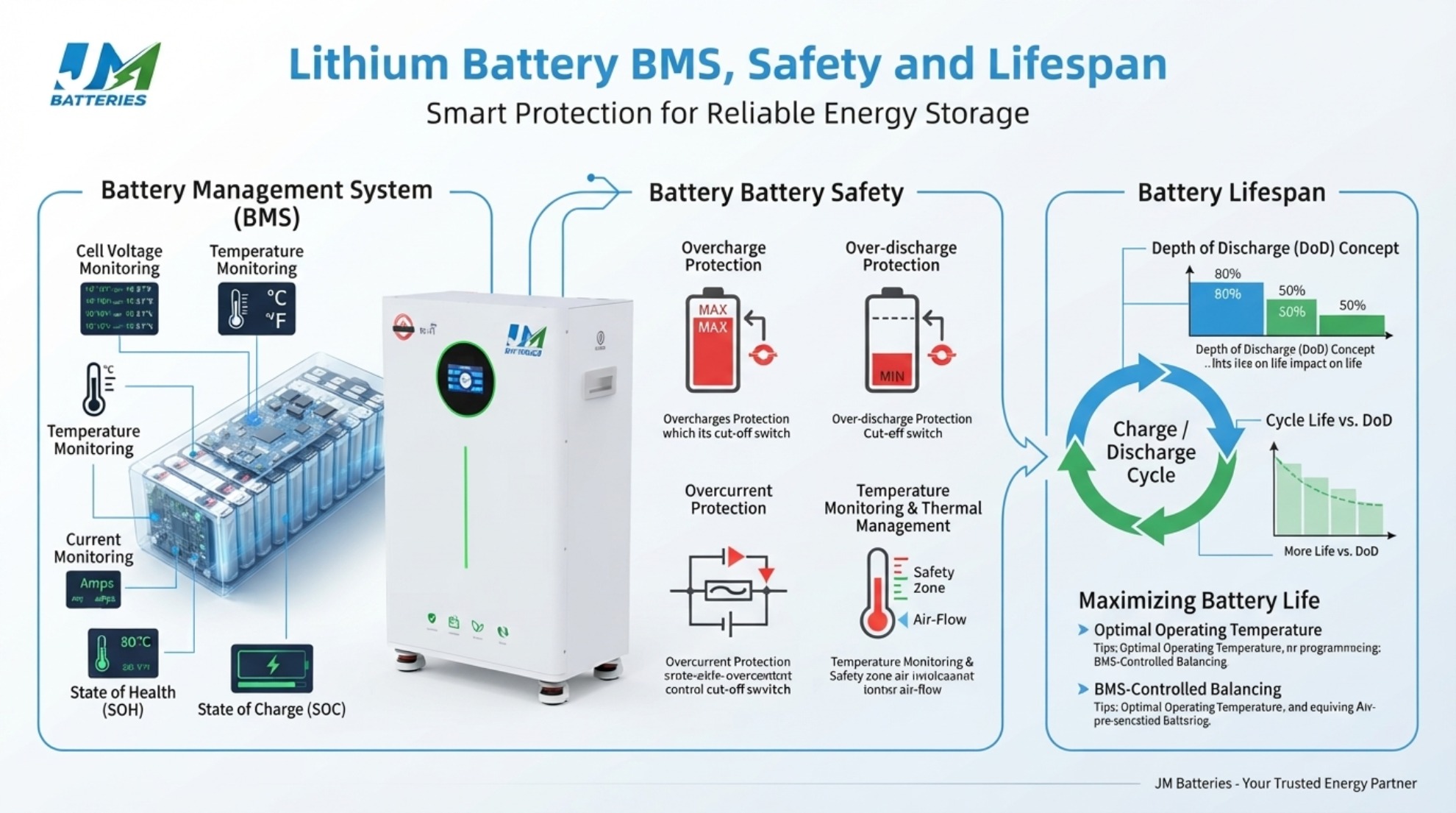
The Battery Management System (BMS) is an important part of a lithium battery. It monitors operating conditions and helps keep the battery within its specified limits.
Key BMS Functions
- Cell voltage monitoring and balancing.
- Temperature monitoring.
- Overvoltage and undervoltage protection.
- Overcurrent and short-circuit protection.
- Communication with compatible external equipment.
Some batteries support CAN or RS485 communication. However, having the same communication port does not automatically guarantee inverter compatibility. Protocols, pinouts, baud rates, firmware, and supported models must also be checked.
Before selecting a system, read our guide on why battery and inverter compatibility matters.
What Affects Battery Lifespan?
Lithium battery lifespan depends on several factors:
- Depth of discharge.
- Operating and storage temperature.
- Charging and discharging current.
- Cell quality and battery design.
- BMS configuration and installation conditions.
Cycle life and calendar life are different. Cycle life describes repeated charge and discharge performance under defined test conditions, while calendar life describes aging over time.
Always check the test conditions behind a manufacturer's cycle-life claim, including DoD, temperature, and capacity-retention threshold.
7. Lithium Batteries in Series vs. Parallel
Lithium batteries may be connected in series or parallel when the manufacturer permits the configuration.
- Series connection: Increases system voltage while keeping ampere-hour capacity unchanged for matched batteries.
- Parallel connection: Keeps system voltage the same while increasing total ampere-hour capacity for suitable batteries.
Before connecting batteries, confirm that their specifications and BMS support the intended configuration. Follow the manufacturer's limits for battery quantity, wiring, protection devices, and installation.
Improper connections can cause uneven current distribution, protection trips, or equipment damage. System expansion should follow the manufacturer's instructions.
8. How to Choose the Right Lithium Battery
Choosing the right lithium battery starts with understanding the application and its electrical requirements.
1. Define Your Application
Determine whether the battery is intended for home solar storage, commercial energy storage, or backup power. Identify the loads it needs to support and the required backup duration.
2. Select the Battery Chemistry
Compare LiFePO4 and NMC according to cycle life, energy density, thermal characteristics, installation space, and cost.
3. Calculate Required Capacity
Estimate daily energy consumption and determine how much usable energy is required. Consider the permitted DoD and system losses rather than relying only on nominal kWh.
4. Check Power Output
A battery with sufficient energy capacity may still be unable to support high-power appliances simultaneously. Check continuous discharge current, peak current, and inverter output requirements.
5. Verify Inverter Compatibility
Check voltage range, charging current, discharging current, BMS communication protocol, and supported inverter models before purchasing.
6. Review Warranty and Manufacturer Support
Review written warranty terms, technical documentation, product quality, customization options, and after-sales support. For business buyers, production consistency and delivery capability are also important.
9. Lithium Battery Selection Examples
The following are hypothetical examples to illustrate battery selection. They are not actual customer installations or verified project results.
Example 1: Residential Solar Storage
A household wants to store excess solar electricity for evening use and provide backup power for essential loads.
A 51.2V 300Ah LiFePO4 battery provides 15.36kWh nominal energy. At 80% DoD, its theoretical discharge energy is approximately 12.29kWh before system losses.
Whether this capacity is sufficient depends on household consumption, inverter output, backup duration, and the appliances being supported.
Example 2: Small Commercial Energy Storage
A small business wants to use more of its solar generation and reduce electricity purchases during expensive periods.
Before choosing a battery, the business should review its electricity consumption, peak demand, solar generation, and operating schedule. Battery capacity should match the required energy-shifting period, while the inverter must support the facility's power requirements.
10. Why Consider JM Energy Tech for LiFePO4 Battery Solutions?
For distributors, wholesalers, and solar installers, choosing a battery manufacturer involves more than comparing specifications. Product consistency, customization, technical support, and delivery capability also matter.
Established in 2017, JM Energy Tech focuses on residential and home energy storage solutions. The company operates a manufacturing facility covering more than 28,000 square meters, with a production team of more than 150 personnel.
Residential LiFePO4 Battery Solutions
JM offers a 51.2V 300Ah LiFePO4 battery with 15.36kWh nominal energy capacity. It is designed for residential energy storage applications, subject to the requirements of the complete system.
The product's stated cycle-life specification is 8,000+ cycles at 80% DoD under defined test conditions. It is also offered with a 10-year warranty, subject to the applicable warranty terms.
OEM and ODM Support
JM Energy Tech provides OEM and ODM customization options for business customers. Available configurations and technical features should be confirmed with the company according to project requirements.
Before ordering, buyers should review the product datasheet, inverter compatibility, destination-market requirements, delivery arrangements, and warranty documentation.
Conclusion
Lithium batteries offer flexible energy storage solutions for residential solar systems, commercial applications, electric vehicles, and portable electronics.
LiFePO4 is often a strong candidate for stationary energy storage because of its thermal stability and cycle-life characteristics. NMC may be more suitable where energy density and compact size are priorities.
Before purchasing, compare battery chemistry, usable energy, power output, BMS functions, inverter compatibility, warranty terms, and manufacturer support. A well-matched battery system can provide more reliable performance and better long-term value.
FAQs
1. What Are the Main Types of Lithium Batteries?
The main types include LiFePO4, NMC, LCO, LMO, and LTO. Each has different characteristics and applications. LiFePO4 is commonly used in stationary energy storage, while NMC is widely used in electric vehicles.
2. How Long Do Lithium Batteries Last?
Lifespan depends on chemistry, cell quality, DoD, temperature, and charging conditions. Check the manufacturer's cycle-life test conditions and warranty terms.
3. Are LiFePO4 Batteries Better Than NMC Batteries?
Neither is universally better. LiFePO4 is often preferred for stationary storage, while NMC offers higher energy density in many designs. The right option depends on the application.
4. Are Lithium Batteries Suitable for Home Energy Storage?
Yes. Lithium batteries are widely used in residential solar storage and backup systems. LiFePO4 is a common option because of its thermal stability and cycle-life characteristics.
5. What Is the Difference Between Ah and kWh?
Ah measures electric charge capacity, while kWh measures energy capacity. Voltage is needed to determine the nominal energy of a battery.
6. Are Lithium Batteries Safe to Use?
They can be used safely when properly designed, protected, installed, and operated within manufacturer specifications. A suitable BMS and correct electrical protection are important.
7. Can Lithium Batteries Be Connected in Series or Parallel?
Some batteries support these configurations, but this depends on the BMS and manufacturer specifications. Always confirm the permitted configuration before connecting batteries.
8. What Should You Consider When Buying Lithium Batteries?
Consider chemistry, voltage, capacity, usable energy, power output, cycle life, BMS, inverter compatibility, warranty, and manufacturer support.

JM New Energy Technology



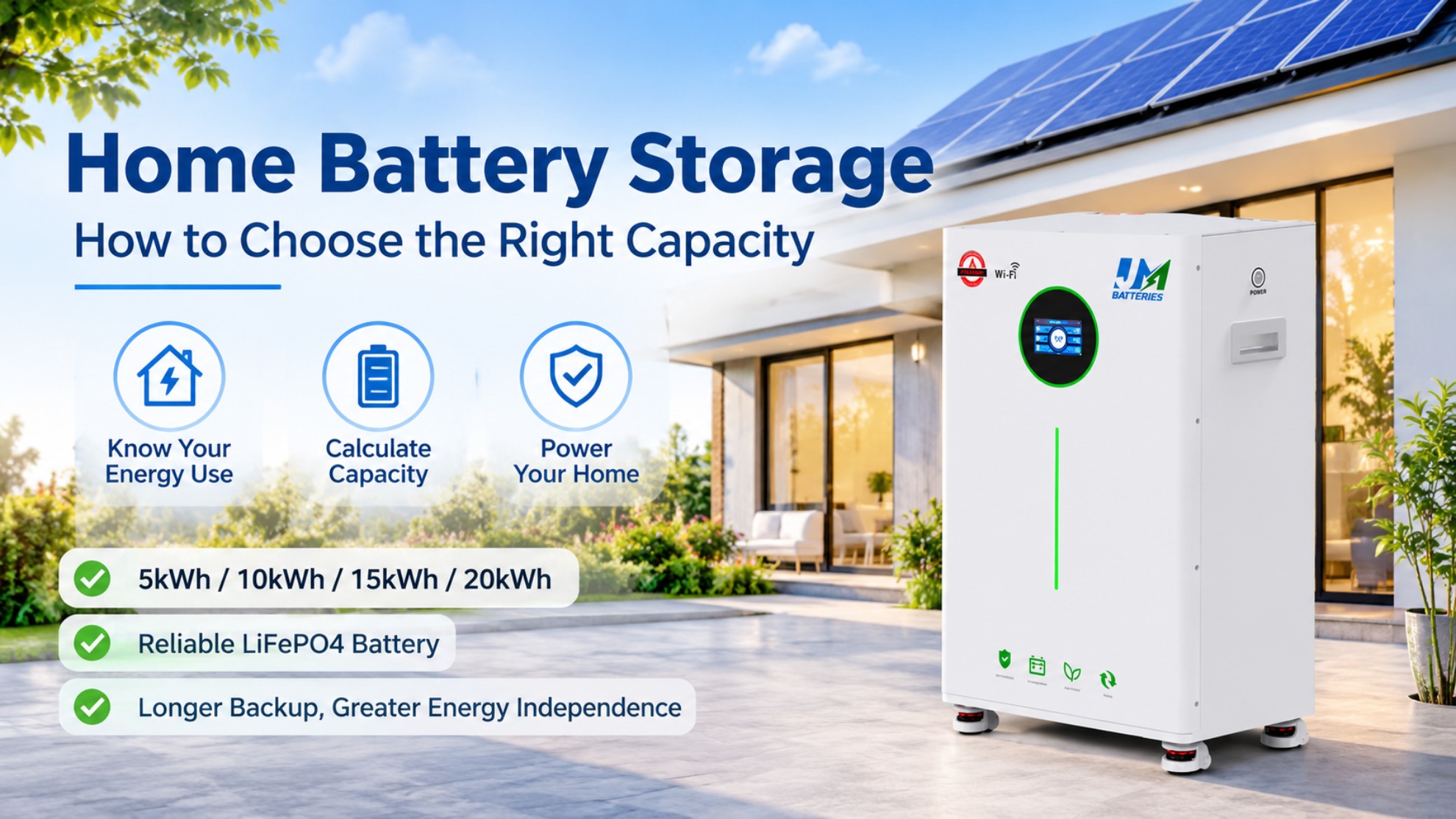
Home Battery Storage: How to Choose the Right Capacity
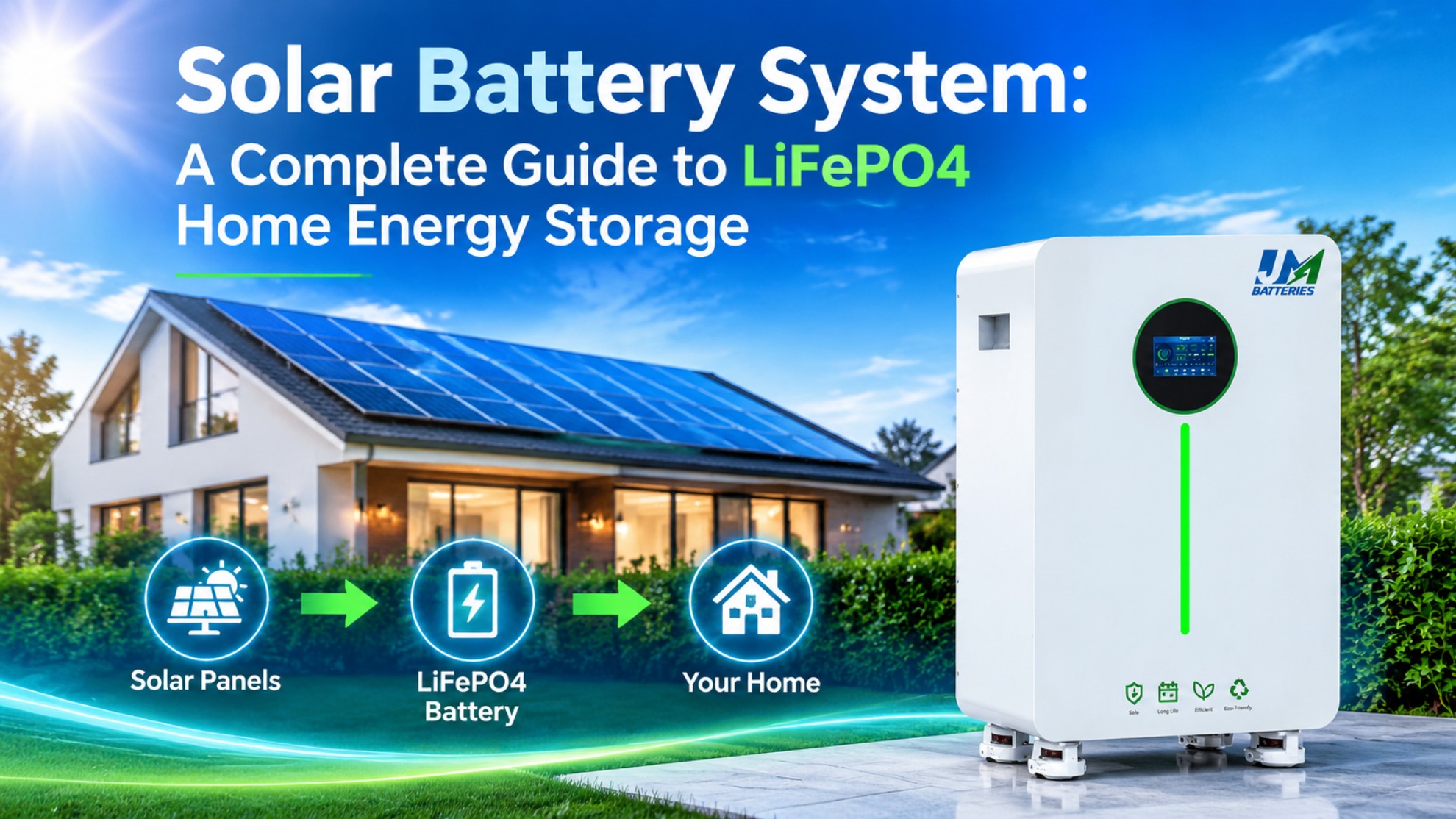
Solar Battery System: Complete Home Energy Storage Guide