


Home Energy Storage System: Costs, Savings & ROI
Home Energy Storage System: Long-Term Costs, Savings & ROI Explained
A home energy storage system can help households make better use of solar power, manage electricity costs, and maintain access to essential appliances during power outages. But buying a battery involves more than comparing its capacity or purchase price. Installation, inverter compatibility, electricity tariffs, maintenance, and battery aging all affect the long-term value of the investment.
For homeowners, the important question is not simply how much a battery costs. It is whether the system fits their daily electricity needs and whether the benefits justify the initial investment. This guide looks at the main cost factors, potential electricity savings, and practical ROI considerations, with examples for homes both with and without solar panels.
1. What Does a Home Energy Storage System Cost?
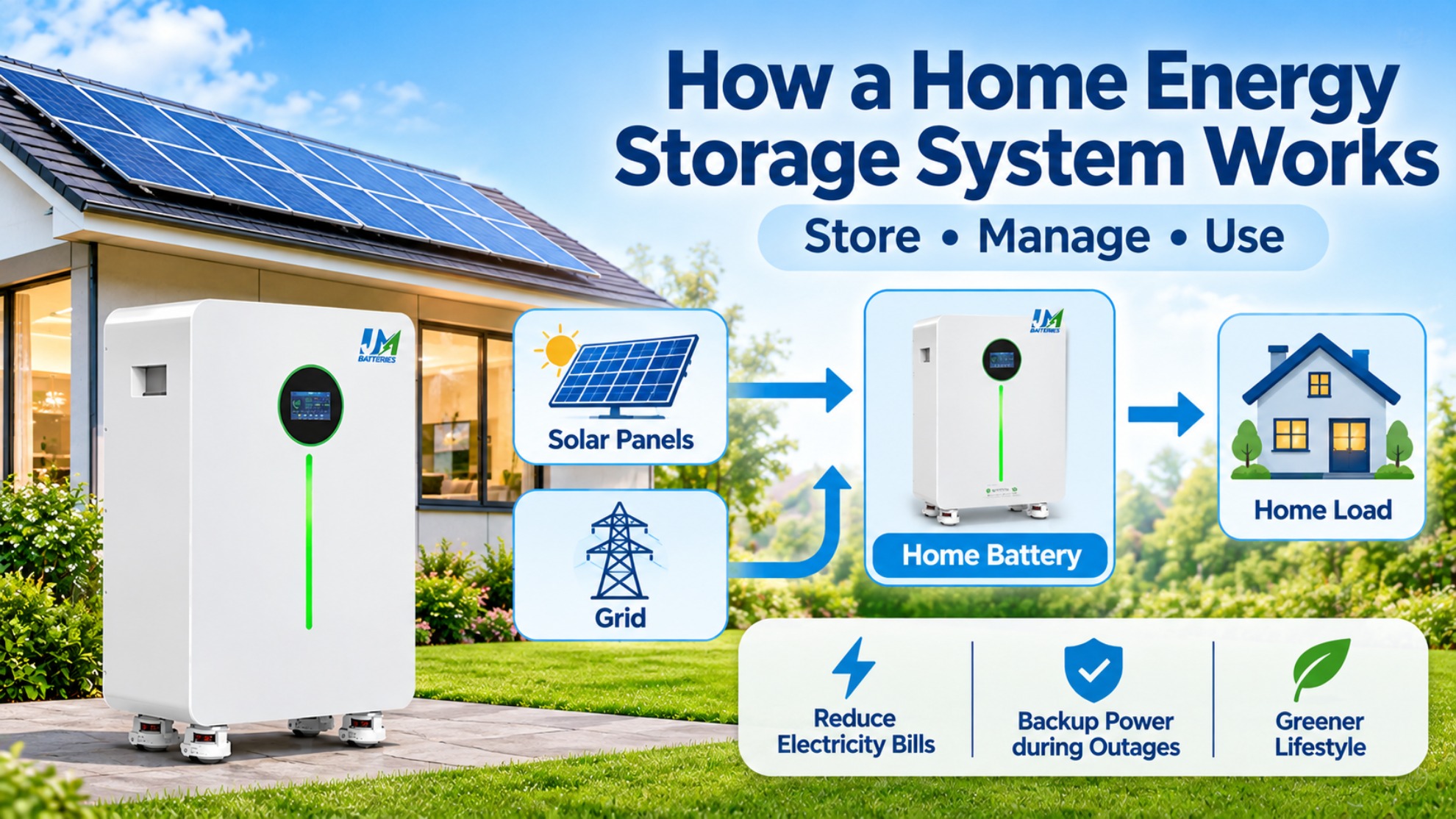
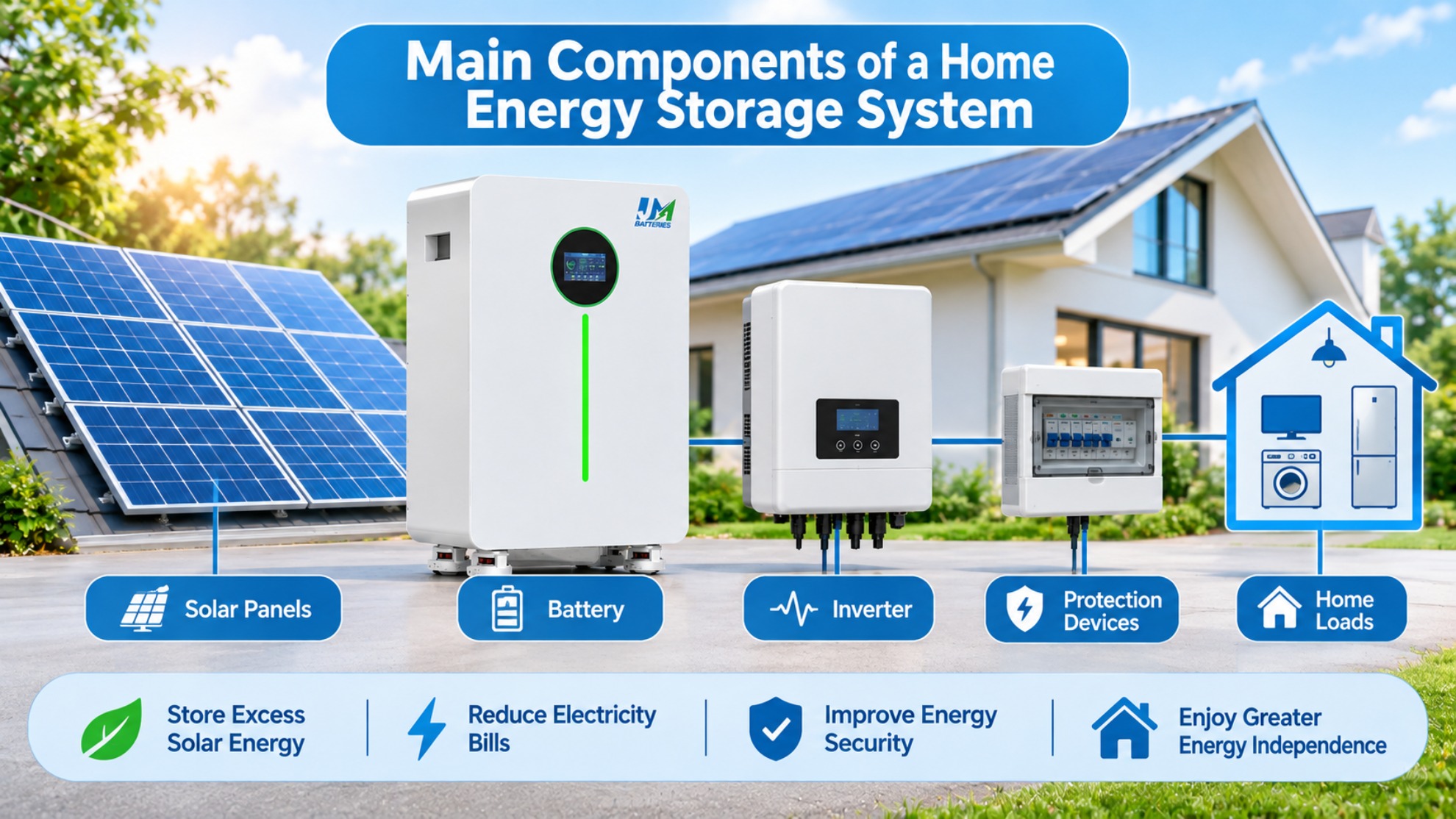
The cost of a home energy storage system depends on the equipment selected and the work required to install it. A battery is only one part of the complete system. The inverter, electrical connections, protection devices, installation labor, and any required upgrades also contribute to the final cost.
Main Components of the Initial Investment
- Battery: Capacity, cell chemistry, BMS features, and product design influence the battery cost.
- Inverter: The inverter must support the battery's voltage range, charging requirements, and discharge limits.
- Solar panels: If the household is installing a new solar system, panel and mounting costs should be included.
- Installation: Labor, wiring, electrical protection, and site conditions can affect the total project cost.
- Additional equipment: Monitoring devices, accessories, and electrical upgrades may be needed depending on the system design.
What Causes Home Battery System Prices to Vary?
Two systems with similar storage capacity may have different installed costs. Battery chemistry, cell quality, BMS functions, inverter selection, installation complexity, and local labor rates all matter. Regional electricity regulations and market conditions can also influence the final investment.
For this reason, homeowners should compare complete system quotations rather than judging a home battery storage cost by the battery price alone.
2. The Long-Term Costs of Home Energy Storage
The initial purchase is not the only expense to consider. A home energy storage system needs to be monitored and maintained throughout its operating life. Although lithium iron phosphate batteries generally require relatively little routine maintenance, the complete system still contains electrical components that need attention.
Maintenance and Monitoring
Homeowners should periodically check system alerts, battery operating conditions, inverter performance, and electrical connections. Monitoring tools can help identify unusual behavior before it develops into a larger problem. Any inspection or maintenance work should follow the manufacturer's instructions and be performed by qualified personnel where required.
Battery Degradation and Replacement Considerations
Battery capacity gradually changes with age, charging behavior, temperature, and usage. Cycle life and calendar aging are related, but they are not the same thing. A battery may accumulate fewer cycles than its published cycle-life rating and still experience gradual aging over time.
Homeowners should also consider the possible replacement of an inverter or other system components during long-term ownership. The warranty period, warranty conditions, and cycle-life specification should be reviewed separately. A 10-year warranty does not automatically mean that a battery will retain its original capacity for the entire period.
Understanding why battery and inverter compatibility matters can also help reduce system selection and integration problems.
3. How Does a Home Energy Storage System Save Money?
The financial benefit of a home battery depends largely on where the electricity comes from and when the household uses it. Homes with solar panels usually approach battery savings differently from homes that rely entirely on grid electricity.
Scenario A: A Home Battery Paired with Solar Panels
Solar panels often generate the most electricity during the middle of the day, when some households have relatively low electricity demand. Instead of sending all surplus solar power back to the grid, a home battery can store part of that energy for use in the evening or at night.
The potential savings come from reducing electricity purchases from the grid. However, the value of stored solar energy should be compared with the export compensation the household would otherwise receive. If the utility pays a relatively high rate for exported electricity, storing that energy may offer less additional financial value.
Scenario B: A Home Battery Without Solar Panels
A home energy storage system can also operate without solar panels when it is connected to a compatible grid-charging arrangement. In areas with time-of-use electricity tariffs, a household may charge the battery during lower-price periods and use the stored electricity during more expensive periods.
This approach is not automatically profitable. Charging costs, conversion losses, battery operating limits, and the difference between peak and off-peak electricity rates all affect the result. Homeowners should also check whether their utility permits the intended charging arrangement.
4. How Much Can a Home Battery Save? Practical ROI Examples
A battery's financial value depends on how often it is used and how much electricity it helps a household avoid purchasing. The following examples use a 15.36kWh LiFePO4 battery to compare two common household situations.
Example 1: A Household with Solar Panels
Consider a home with rooftop solar panels that regularly produces more electricity during the day than the household consumes. Some of that surplus can be stored and used later, reducing the amount of electricity purchased from the grid in the evening.
The net value per kilowatt-hour in this example represents the assumed financial benefit after accounting for the value of electricity that could otherwise have been exported.
| Assumption | Low | Medium | High |
|---|---|---|---|
| Equivalent full cycles per day | 0.3 | 0.6 | 0.9 |
| Annual AC energy discharged | 1,278kWh | 2,556kWh | 3,834kWh |
| Assumed net value per kWh | $0.05 | $0.12 | $0.20 |
| Estimated annual savings | $64 | $307 | $767 |
The difference between these scenarios comes down to local electricity prices and solar export policies. Where grid electricity is expensive and exported solar power receives limited compensation, storing surplus generation may provide more financial value. Where export credits are generous, the additional savings from storage may be smaller.
Example 2: A Household Without Solar Panels
A home without solar panels may still use a battery to charge during off-peak electricity periods and discharge during peak-price periods. The following estimates use net savings per kilowatt-hour after charging costs and assumed energy losses have been considered.
| Assumption | Low | Medium | High |
|---|---|---|---|
| Equivalent full cycles per day | 0.3 | 0.6 | 0.9 |
| Annual AC energy discharged | 1,278kWh | 2,556kWh | 3,834kWh |
| Assumed net value per kWh | $0.02 | $0.06 | $0.12 |
| Estimated annual savings | $26 | $153 | $460 |
A narrow gap between peak and off-peak rates may leave little room for savings after energy losses are considered. This is why households should check their actual electricity tariff before investing in a battery for price arbitrage.
What Does the Initial Investment Mean for Payback?
To show how installation costs affect the calculation, consider three hypothetical complete-system investments: $12,000, $16,000, and $20,000. These are modeling inputs only, not market averages or JM product prices.
| Scenario | Low | Medium | High |
|---|---|---|---|
| Solar system investment | $12,000 | $16,000 | $20,000 |
| Estimated annual savings | $64 | $307 | $767 |
| Simple payback period | About 188 years | About 52 years | About 26 years |
| No-solar system investment | $12,000 | $16,000 | $20,000 |
| Estimated annual savings | $26 | $153 | $460 |
| Simple payback period | About 469 years | About 104 years | About 43 years |
These results are not a prediction of what every household will experience. They show how sensitive battery economics can be to electricity tariffs, daily usage, and installation costs. They also highlight an important point: buying a battery solely to reduce electricity bills may not deliver an attractive payback under every set of conditions.
Simple payback does not include financing, maintenance, future electricity price changes, battery degradation, replacement costs, incentives, or the time value of money. Backup power and energy independence can provide additional value, but those benefits should be evaluated separately from direct electricity savings.
5. Is a 15kWh LiFePO4 Home Battery a Cost-Effective Choice?
A 15kWh-class battery can be suitable for households that want to store solar energy, reduce grid consumption, or support selected household loads during an outage. Whether it is the right size depends on daily electricity use, peak power demand, and the operating requirements of the inverter.
Understanding a 15kWh Battery
JM's 15kWh LiFePO4 home battery uses a 51.2V, 300Ah configuration. Its nominal energy capacity is 15kWh. At an 80% depth of discharge, the calculated battery-side usable energy is approximately 12.29kWh. Actual AC energy available to household appliances will also depend on inverter efficiency and other system losses.
The battery is specified with an 8,000+ cycle-life claim at 80% DoD and a 10-year warranty. These specifications should be understood in the context of the manufacturer's test conditions and warranty documentation. They do not mean that the battery will retain its original capacity throughout the warranty period.
What Affects Its Real-World Performance?
The household's load profile is an important starting point. A refrigerator, lighting, router, television, and device chargers generally require less power than a home running air conditioning, a washing machine, and other large appliances at the same time.
Battery capacity alone does not determine which appliances can operate simultaneously. The inverter's continuous output rating, surge capability, battery discharge limits, and appliance startup requirements must also be checked. Installers should verify the battery's voltage range and BMS communication protocol with the exact inverter model.
Warranty and Long-Term Value
Cycle life and warranty duration provide useful information, but neither should be treated as a guarantee of a specific remaining capacity after ten years. Battery aging is affected by temperature, charge and discharge patterns, and time. Buyers should review the official product specifications and warranty terms before making a long-term cost estimate.
6. How to Improve the ROI of a Home Energy Storage System
A well-sized system is usually a better starting point than simply choosing the largest battery available. The following considerations can help homeowners avoid unnecessary costs and make better use of stored energy.
- Review actual electricity consumption: Use electricity bills and household load data to estimate daily energy needs.
- Choose suitable battery capacity: Avoid paying for storage that the household rarely uses.
- Match the inverter correctly: Check voltage, current, output power, and BMS communication requirements.
- Make good use of solar generation: Store surplus energy when the financial value of self-consumption exceeds the export compensation.
- Understand electricity tariffs: Time-of-use pricing may create opportunities, but the actual rate difference matters.
- Compare total ownership costs: Consider installation, maintenance, warranty conditions, and possible component replacement.
7. What Should Installers and Distributors Consider?
For solar installers, wholesalers, and battery distributors, product selection involves more than nominal capacity and purchase cost. Cell quality, BMS performance, communication requirements, installation documentation, and technical support all affect the final customer experience.
Before recommending a battery, installers should confirm that its voltage and current limits match the inverter and that the required communication protocol is supported. A CAN or RS485 port alone does not establish compatibility; the protocol, pinout, and configuration must also be checked.
JM Energy Tech focuses on residential energy storage battery manufacturing and supports OEM/ODM requirements for business customers. Its manufacturing operations include in-house research and development, battery assembly, quality control, and technical support. For distributors and installers, clear product documentation and responsive after-sales assistance are important parts of a long-term supplier relationship.
8. FAQs
1. How Much Does a Home Energy Storage System Cost?
The cost depends on battery capacity, inverter selection, installation requirements, and local labor rates. A complete installation may also include electrical upgrades, wiring, and additional accessories. For an accurate estimate, compare the total installed cost rather than looking at the battery price alone.
2. Is a Home Energy Storage System Worth the Investment?
It depends on how the household uses electricity and what it pays for power. Homes with high evening electricity rates, limited solar export compensation, or frequent power outages may benefit more from battery storage. If electricity rates are low and installation costs are high, the financial payback period may be longer.
3. How Long Does a 15kWh Home Battery Last?
Operating time depends on the connected appliances and their electricity consumption. A household running essential loads such as lighting, a refrigerator, and a Wi-Fi router will generally use energy more slowly than one operating air conditioning and other high-power appliances. Actual runtime also depends on usable battery capacity, inverter efficiency, and operating conditions.
4. How Much Can a Home Battery Save on Electricity Bills?
Savings vary with electricity prices, solar generation, battery usage, and the local utility's export compensation policy. A battery paired with solar panels can store surplus daytime electricity for evening use. Without solar panels, savings may come from charging during off-peak periods and discharging during peak-price periods. Neither approach guarantees a fixed amount of savings.
5. Can a Home Energy Storage System Work Without Solar Panels?
Yes. A home battery can operate without solar panels when connected to a compatible grid-charging system. Some households charge their batteries during off-peak hours and use stored electricity when rates are higher. Whether this arrangement is economical depends on the local tariff structure, charging permissions, and round-trip efficiency.
6. How Long Does It Take for a Home Battery to Pay for Itself?
The payback period depends on the initial system investment and the annual savings it generates. Electricity prices, battery utilization, installation costs, and solar export rates all influence the result. A battery used mainly for backup power may provide valuable protection during outages without necessarily delivering a short financial payback period.
7. How Many Cycles Can a LiFePO4 Home Battery Provide?
Cycle life varies by battery design, cell quality, operating temperature, depth of discharge, and charging conditions. Some LiFePO4 batteries are specified for 8,000 or more cycles under defined test conditions. JM's 15.36kWh home battery carries an 8,000+ cycle-life claim at 80% depth of discharge. Actual service life also depends on calendar aging and operating conditions.
8. Does a Home Battery Still Save Money After 10 Years?
It can, but the answer depends on the battery's condition and the household's electricity costs. Battery capacity gradually declines with use and age, which may reduce the amount of electricity available for daily use. Warranty duration and cycle-life ratings should be considered separately from actual long-term capacity retention. Reviewing the manufacturer's warranty terms and performance documentation is important when estimating ownership costs.
Conclusion
A home energy storage system should be evaluated as a long-term investment, not simply as a battery purchase. Its financial value depends on electricity prices, household consumption, solar generation, installation costs, and how consistently the stored energy is used.
For homes with solar panels, the value often comes from using more of their own electricity instead of purchasing power from the grid. For homes without solar, time-of-use tariffs may create savings opportunities, but the price difference must be large enough to cover charging and conversion losses.
A 15kWh LiFePO4 battery can be a practical option for some residential applications, but capacity, inverter output, BMS communication, and actual household loads all need to be considered together. Comparing the complete system cost and realistic operating benefits is the best way to decide whether a home battery is suitable for a particular property.

JM New Energy Technology



Solar Battery System: Complete Home Energy Storage Guide
How Long Does It Take to Charge a Solar Battery