


What Is a Lithium Iron Phosphate Battery
What Is a Lithium Iron Phosphate Battery? Benefits, Uses, and How It Works
A lithium iron phosphate battery, commonly known as a LiFePO4 or LFP battery, is a rechargeable lithium-ion battery used in residential energy storage, solar power systems, and backup applications. It uses lithium iron phosphate as its cathode material and is valued for its thermal stability, long cycle-life potential, and suitability for frequent charging and discharging.
As more households adopt solar energy, LiFePO4 batteries have become a popular option for storing electricity. Understanding their working principle, limitations, and compatibility requirements helps homeowners, installers, and solar distributors make better purchasing decisions.
1. What Is a Lithium Iron Phosphate Battery?
A lithium iron phosphate battery is a rechargeable lithium-ion battery that uses LiFePO4 as its cathode material and typically graphite as its anode material. The name comes from the chemical formula of its cathode.
Unlike NMC batteries, which use nickel, manganese, and cobalt in their cathode chemistry, LiFePO4 batteries do not use nickel or cobalt as cathode active materials. Their stable chemical structure contributes to good thermal characteristics and long-term cycling performance.
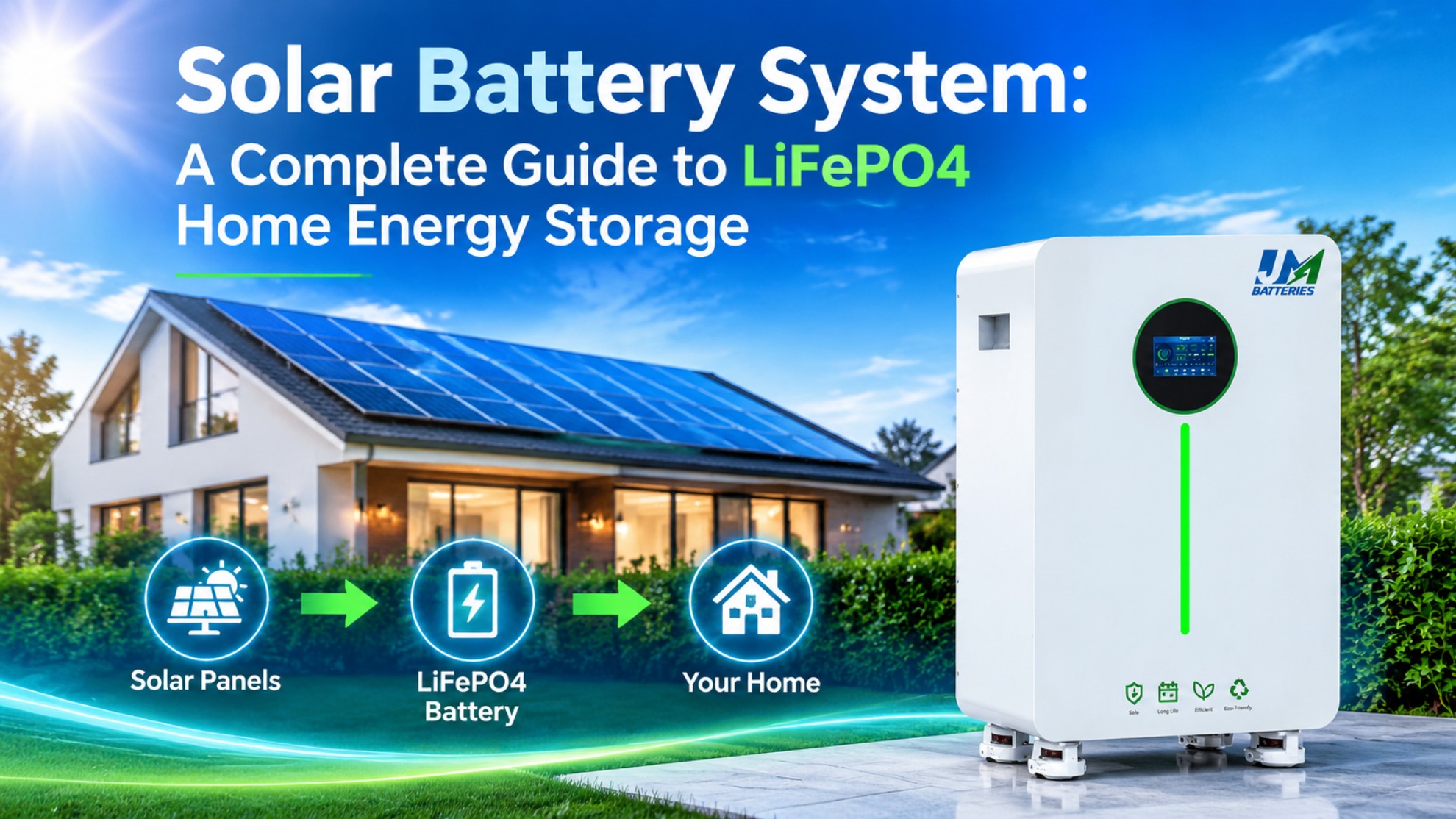
In a home energy storage system, the battery stores electricity generated by solar panels or supplied by the grid. The stored energy can then power household appliances when solar production is low or during a grid outage.
2. How Does a LiFePO4 Battery Work?
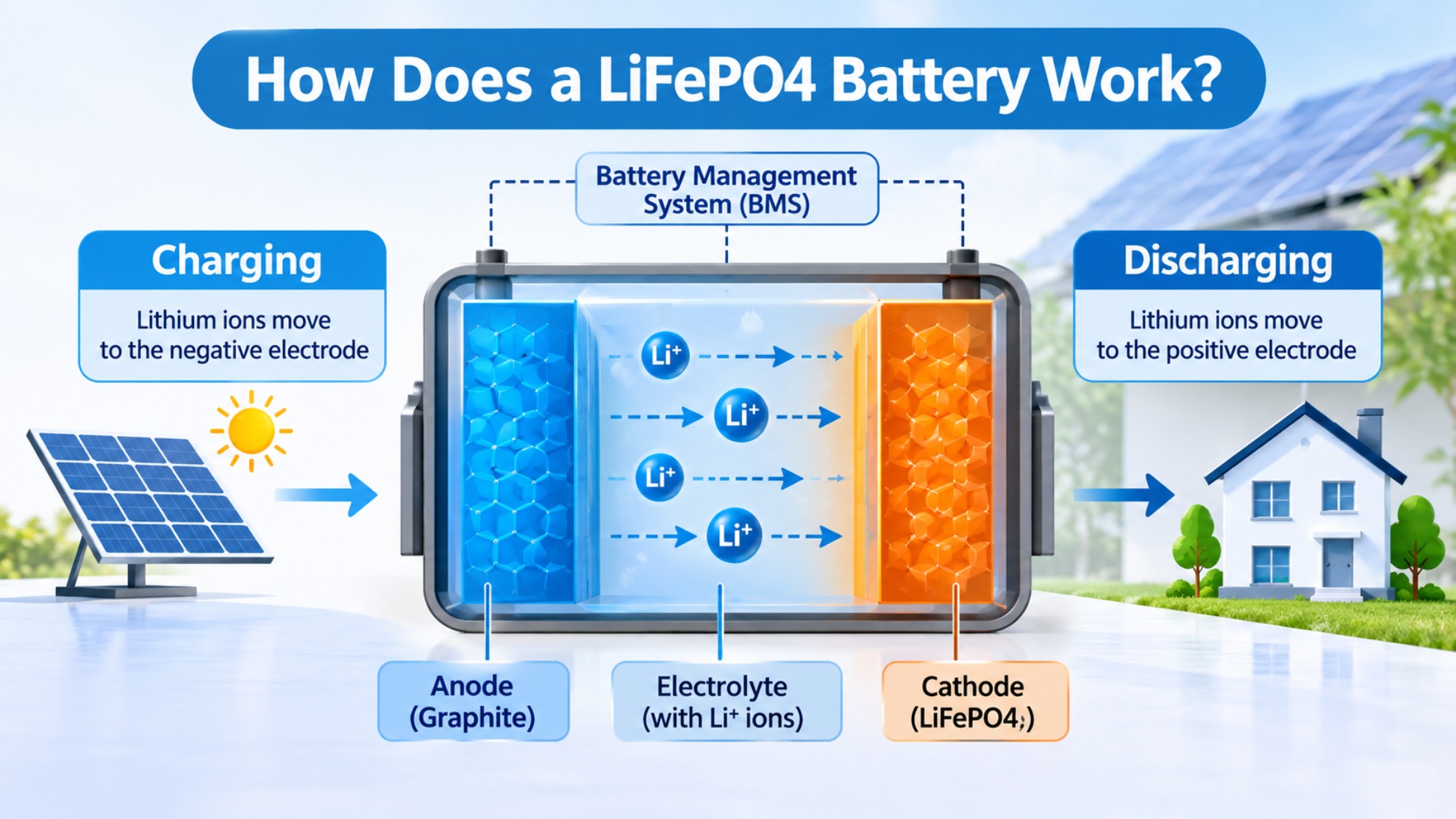
A LiFePO4 battery stores and releases energy through the movement of lithium ions between its positive and negative electrodes.
During Charging
When electricity is supplied by a charger or solar inverter, lithium ions move from the positive electrode toward the negative electrode through the electrolyte. Energy is stored through this electrochemical process.
During Discharging
When the battery powers a load, lithium ions move back toward the positive electrode. Electrons travel through the external circuit, providing electricity to connected equipment.
This process can be repeated many times, although battery capacity gradually decreases with use and age. For a broader explanation, see our guide on how lithium-ion batteries work.
3. Main Components of a LiFePO4 Battery
- Cathode: Uses lithium iron phosphate as its active material and contributes to the battery's chemical stability.
- Anode: Commonly made from graphite, where lithium ions are stored during charging.
- Electrolyte and separator: Allow ion movement while keeping the electrodes physically separated.
- Battery Management System (BMS): Monitors voltage, current, and temperature. Depending on its design, it can protect against overvoltage, undervoltage, overcurrent, and temperature-related problems.
Some batteries also use CAN or RS485 communication to exchange information with inverters. However, having a communication port does not guarantee compatibility. Protocols, pin assignments, settings, firmware, and supported inverter models must be checked.
4. Key Benefits of Lithium Iron Phosphate Batteries
Good Thermal Stability
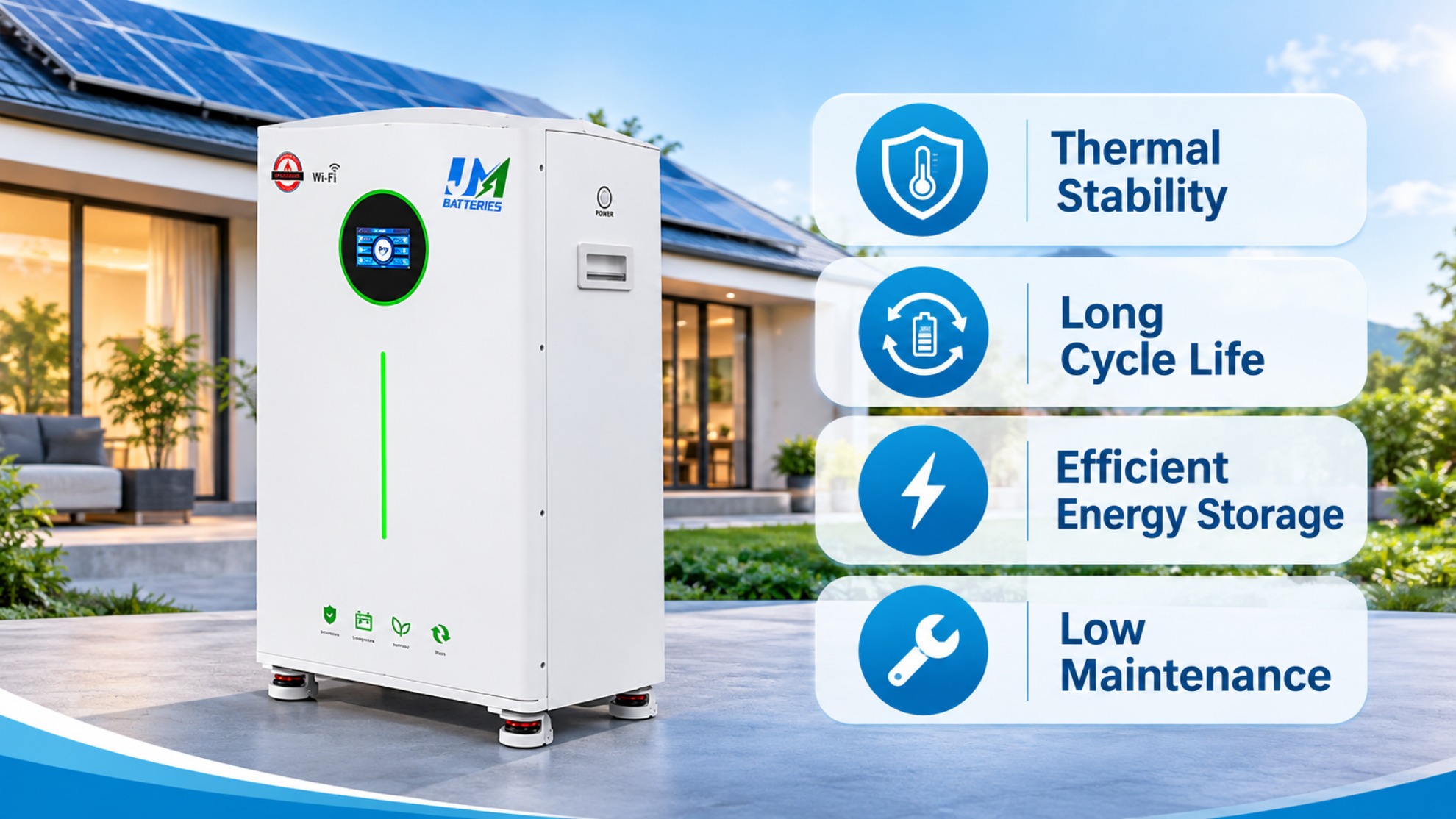
LiFePO4 chemistry generally offers good thermal stability compared with several other lithium-ion chemistries. This is valuable for residential installations. However, it does not make a battery fireproof. Proper electrical protection, BMS monitoring, and installation remain essential.
Long Cycle-Life Potential
LiFePO4 batteries can achieve thousands of charge and discharge cycles under suitable conditions. Their cycle-life performance makes them attractive for solar systems that operate regularly. Actual results depend on depth of discharge, temperature, current rates, cell quality, and end-of-life criteria.
Good Energy Efficiency
LiFePO4 batteries generally offer good charge and discharge efficiency. Actual system efficiency also depends on inverter performance, battery design, operating conditions, and auxiliary energy consumption.
Suitable for Repeated Energy Storage
Homeowners can store excess solar electricity during the day and use it in the evening. This repeated cycling is one reason LiFePO4 technology is widely used in residential energy storage.
5. Limitations of LiFePO4 Batteries
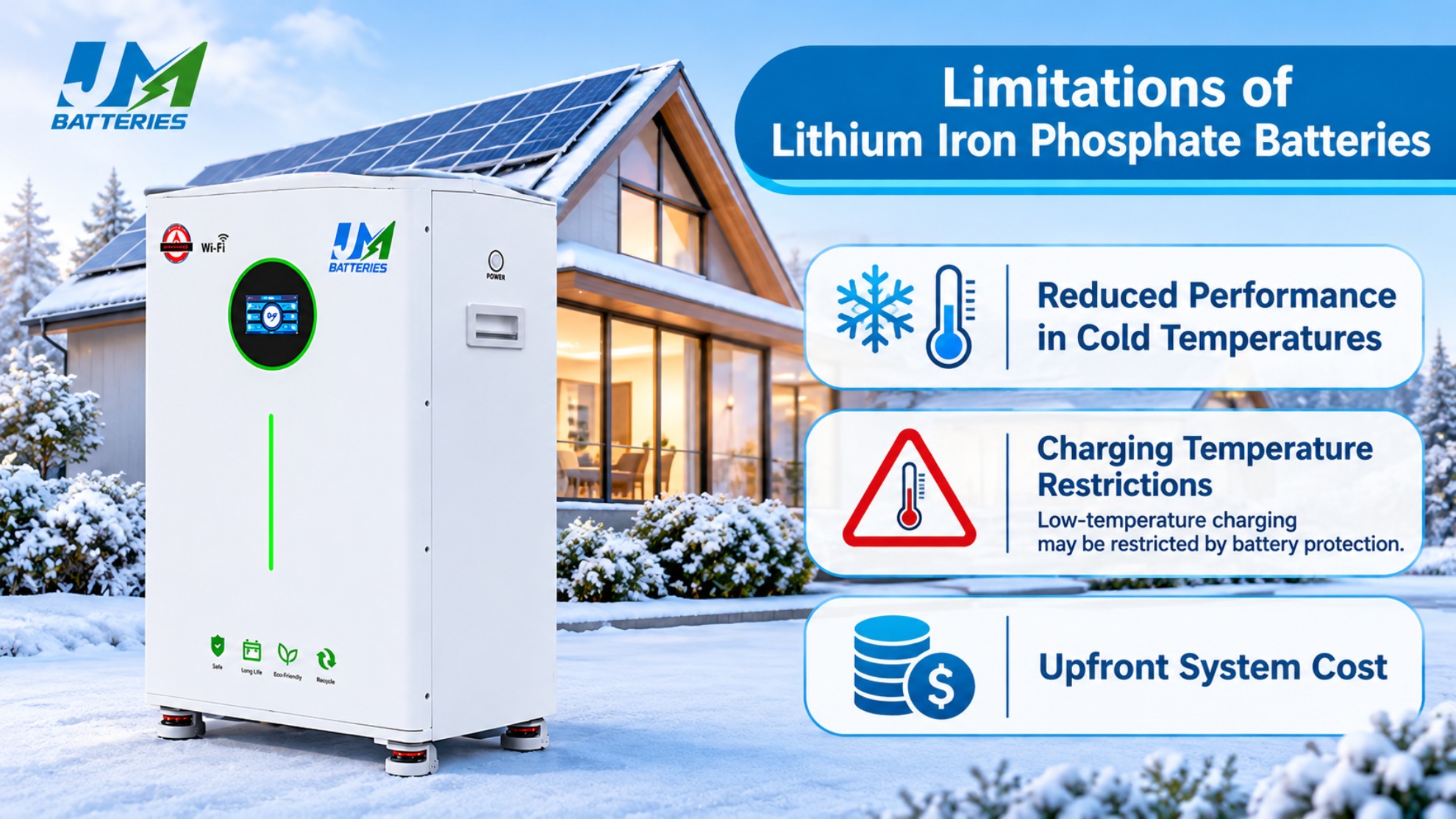
- Lower energy density than NMC: LiFePO4 batteries generally require more space or weight to store the same amount of energy as many NMC designs.
- Cold-weather charging limits: Charging below the manufacturer's permitted temperature range can cause lithium plating and damage the cells. Charging and discharging temperature limits are different.
- Higher upfront cost than some lead-acid options: The initial purchase price may be higher, so buyers should also consider usable capacity, efficiency, cycle life, maintenance, and replacement costs.
For cold-climate installations, check the minimum charging temperature, BMS low-temperature protection, installation location, and whether self-heating is available.
6. LiFePO4 vs. NMC vs. Lead-Acid Batteries
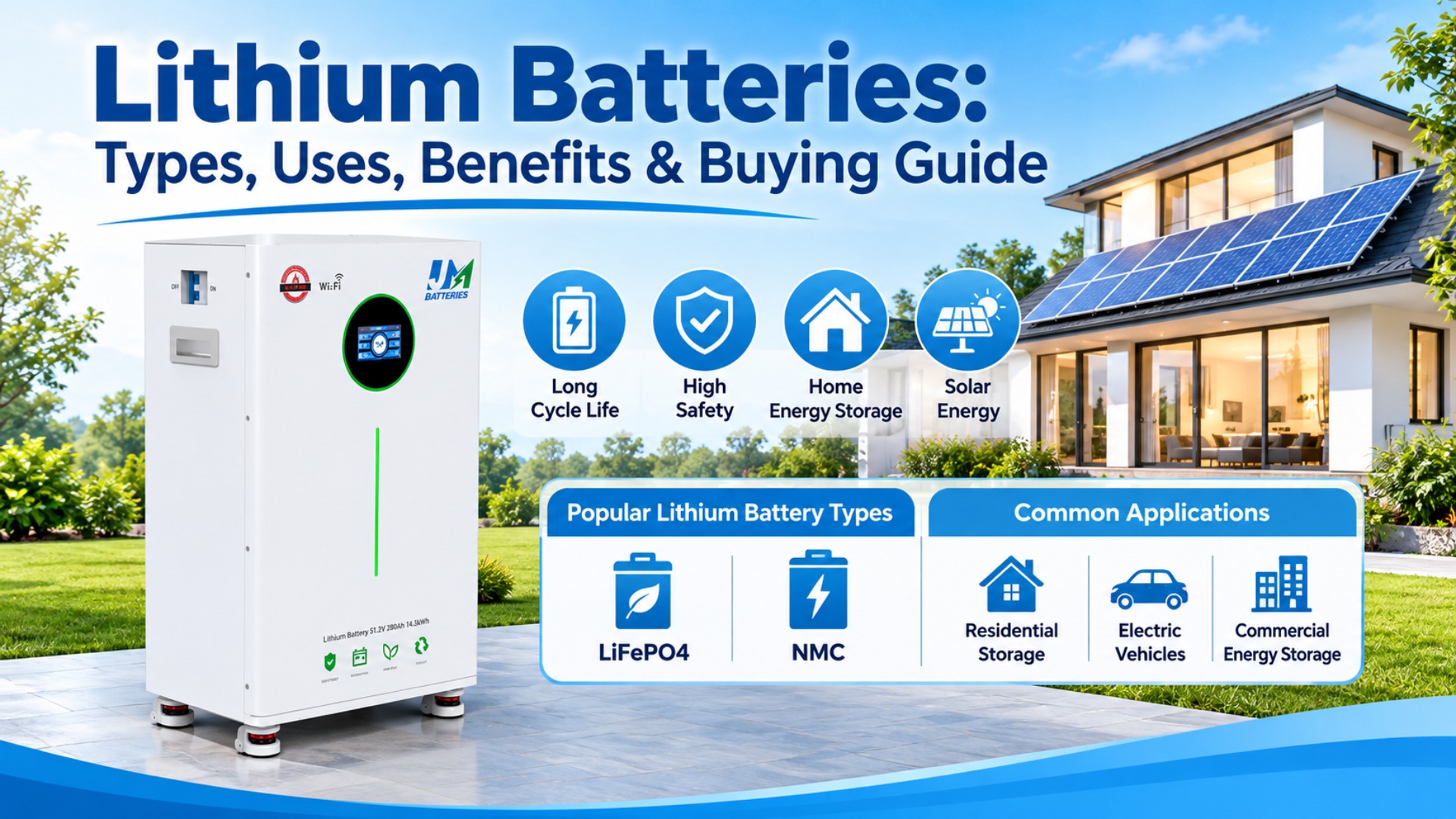
These battery types serve different needs. The best choice depends on installation space, budget, energy requirements, and operating conditions.
| Feature | LiFePO4 | NMC | Lead-Acid |
|---|---|---|---|
| Battery chemistry | Lithium-ion | Lithium-ion | Lead-acid |
| Thermal characteristics | Generally good stability | Varies by cell design | Different safety considerations |
| Energy density | Generally lower than NMC | Generally higher than LFP | Generally lower than lithium-ion |
| Cycle life | Generally long under suitable conditions | Varies by design and use | Generally shorter in frequent-cycling use |
| Common applications | Home storage and solar | Electric vehicles and compact storage | Backup and selected off-grid systems |
This is a general comparison. Actual performance varies by cell design, battery configuration, manufacturer, and operating conditions.
7. Common Applications of LiFePO4 Batteries
Residential Solar Energy Storage
LiFePO4 batteries store surplus solar electricity during the day for use at night or when solar production decreases.
Home Backup Power
A home battery can supply selected circuits during a grid outage. Depending on system design, it may support lighting, refrigerators, communication equipment, and other essential loads.
Off-Grid Systems
In off-grid installations, batteries store electricity from solar panels or other sources for periods when power generation is insufficient.
Commercial and Industrial Applications
LiFePO4 batteries are also used in selected commercial and industrial systems. Each installation requires an evaluation of capacity, power output, protection, and operating conditions.
8. Two Residential Energy Storage Examples
The following are illustrative scenarios based on common residential energy storage considerations, not verified customer installations.
Case 1: A Home with Rooftop Solar Panels
A family generates solar electricity during the day but uses most of its power in the evening. Instead of relying entirely on grid electricity after sunset, the household considers adding a LiFePO4 battery to store excess daytime energy.
Before choosing a battery, the installer should review:
- Daily electricity consumption and evening demand.
- Usable battery capacity rather than nominal capacity alone.
- Continuous discharge power for household appliances.
- Battery voltage and inverter compatibility.
The right battery should match the household's actual energy needs and inverter specifications, rather than simply having the largest capacity.
Case 2: A Home in a Cold Climate
A family uses solar panels and a LiFePO4 battery in a region with cold winters. During some mornings, the battery temperature falls below its permitted charging range. Even when the solar panels generate electricity, the BMS may restrict charging to protect the cells.
Before installation, the homeowner should check the minimum charging temperature, low-temperature protection, installation location, and availability of a self-heating function.
This example shows why charging and discharging temperature limits must be considered separately when selecting a battery for cold-weather use.
9. How Long Does a LiFePO4 Battery Last?
LiFePO4 batteries are known for their long cycle-life potential, but actual lifespan depends on how they are manufactured and operated.
Important factors include:
- Depth of discharge: How much of the available battery capacity is used in each cycle.
- Temperature: High temperatures can accelerate aging, while low temperatures can restrict charging.
- Charge and discharge rates: Current levels influence battery stress and degradation.
- Cell quality and BMS: Cell consistency and appropriate protection affect long-term performance.
When comparing cycle-life claims, check the test temperature, depth of discharge, charge and discharge rates, and capacity-retention threshold. For more details, read our guide to LiFePO4 battery degradation and lifespan.
10. How to Choose a Lithium Iron Phosphate Battery
Before purchasing a LiFePO4 battery for home energy storage, review the following points:
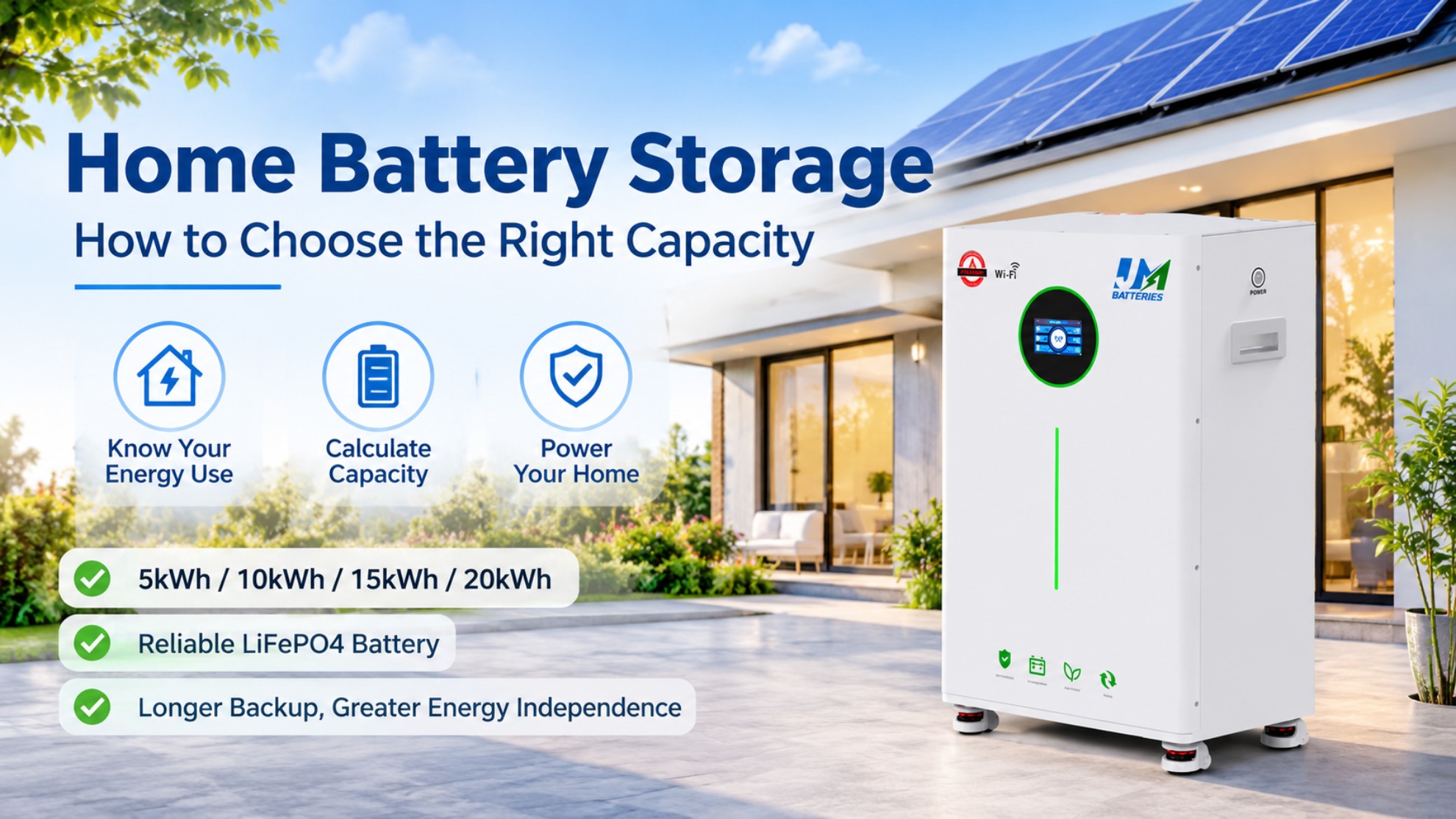
- Capacity: Compare nominal capacity with usable energy to understand how much electricity the battery can deliver.
- Power rating: Check continuous charge and discharge current against inverter requirements and household loads.
- BMS functions: Review voltage, current, temperature, and short-circuit protection, as well as monitoring features.
- Inverter compatibility: Confirm voltage range, current limits, communication protocol, pinout, and supported models.
- Temperature range: Check charging and discharging limits, especially for cold-weather installations.
- Documentation and warranty: Review relevant test reports, warranty conditions, and after-sales support.
For more guidance, read our articles on battery and inverter compatibility and how to match a battery with an inverter. You can also explore our home energy storage battery safety guide.
- Cell specifications and consistency
- Nominal and usable capacity
- Continuous charge and discharge current
- BMS protection and monitoring
- Charging and discharging temperature limits
- Inverter communication compatibility
- Product documentation and warranty terms
Conclusion
A lithium iron phosphate battery is a practical choice for many residential energy storage applications. Its thermal stability, cycle-life potential, and suitability for repeated charging and discharging make it popular for solar systems and home backup power.
However, battery chemistry alone does not determine system performance. Capacity, power output, BMS protection, temperature limits, inverter compatibility, and installation conditions all matter. Understanding these factors helps homeowners, installers, and distributors select a battery that fits the intended application.
FAQs
1. What is a lithium iron phosphate battery?
It is a rechargeable lithium-ion battery that uses lithium iron phosphate as its cathode material. It is commonly used in solar energy storage and backup power systems.
2. What are the main advantages of LiFePO4 batteries?
They offer good thermal stability, long cycle-life potential, good efficiency, and suitability for repeated charging and discharging.
3. How long does a LiFePO4 battery last?
Its lifespan depends on depth of discharge, temperature, charging and discharging rates, cell quality, and operating conditions. Many designs can achieve several thousand cycles under suitable conditions.
4. Are LiFePO4 batteries safe for home use?
They have good thermal stability, but are not risk-free. Proper BMS protection, electrical safeguards, and correct installation are essential.
5. Can LiFePO4 batteries be used with solar panels?
Yes. They can store excess solar electricity for use at night or when solar production is low, provided the battery and inverter are compatible.
6. Can LiFePO4 batteries charge in cold weather?
Charging must stay within the manufacturer's permitted temperature range. Some batteries include low-temperature charging protection or self-heating functions.
7. Do LiFePO4 batteries need a special charger?
They require a charger with a compatible LiFePO4 charging profile. Voltage, current, and charging settings must follow the battery manufacturer's specifications.
8. What is the difference between LiFePO4 and NMC batteries?
LiFePO4 is generally valued for thermal stability and long cycle-life potential, while NMC batteries often offer higher energy density. Actual performance varies by design and operating conditions.
9. Are LiFePO4 batteries suitable for backup power?
Yes. They can power selected household loads during grid outages. Required capacity and inverter output depend on the appliances and backup duration.

JM New Energy Technology



Note: The residential examples in this article are illustrative scenarios, not verified customer projects. Actual system design depends on equipment specifications and site conditions.
Home Battery Storage: How to Choose the Right Capacity