


LiFePO4 Battery Degradation: Key Factors & Extension Guide
LiFePO4 Battery Degradation: Key Factors & Lifespan Extension Guide For Solar Energy Storage
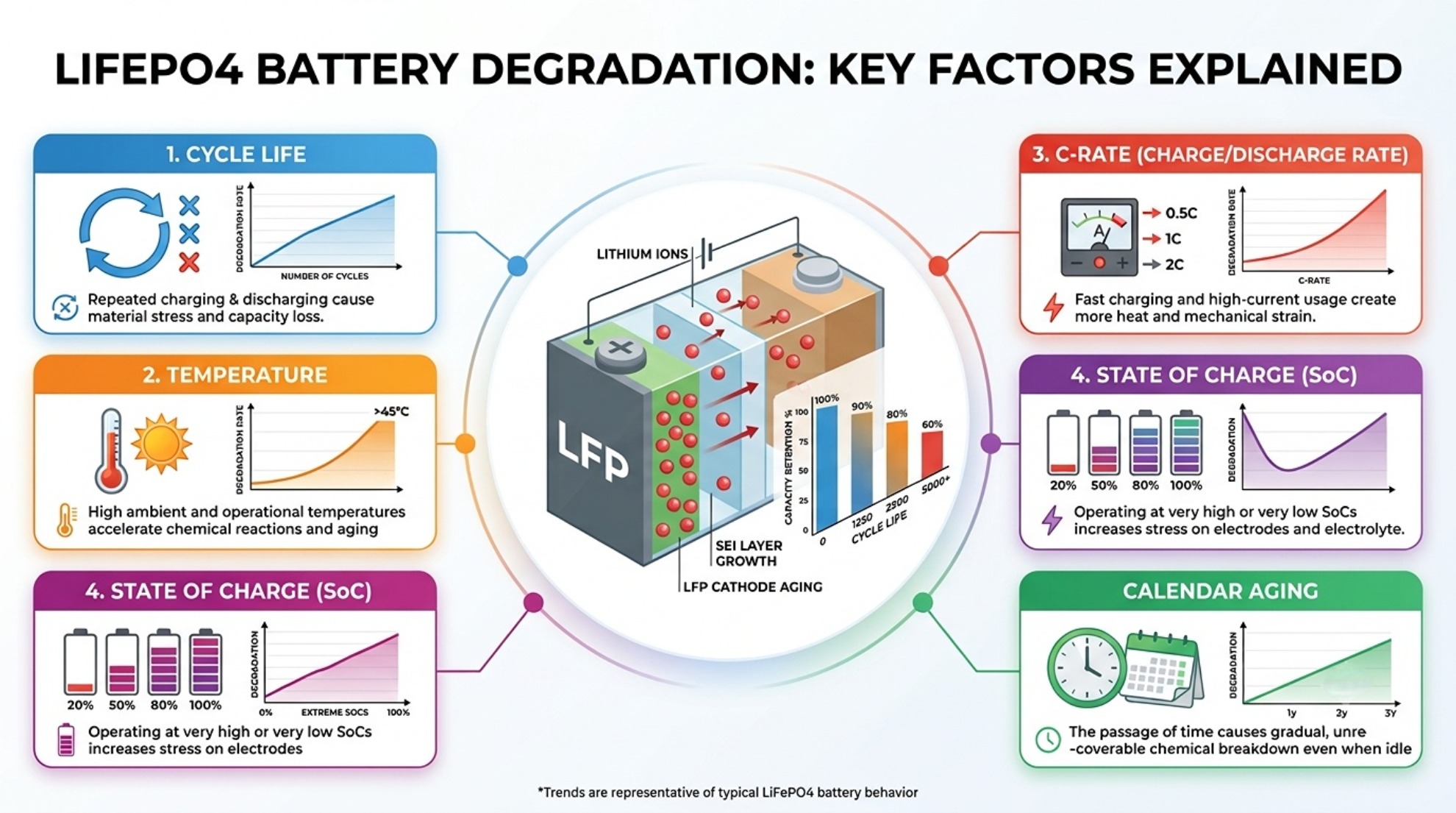
Table of Contents
JM New Energy, a Dongguan-based ESS manufacturer founded in 2017 with a 28,000㎡ production plant and annual capacity over 2.8GWh, supplies LiFePO4 battery energy storage systems to 138+ countries across North America, Africa, Southeast Asia and Europe. Our full product lineup includes wall-mounted home powerwall batteries, modular stacked storage, rack ESS, all-in-one solar storage, and commercial & industrial (C&I) cabinet energy storage built with BYD blade LFP cells, supporting full OEM & ODM customization for residential off-grid solar, microgrid, industrial peak shaving and backup power projects.
While LiFePO4 (LFP) cells deliver superior thermal safety and long cycle life for home and commercial renewable energy systems, irreversible capacity degradation will drastically cut the service life of battery packs without proper system design and operation control. This pillar page serves as a complete technical reference for global distributors, solar installers, system integrators and project investors cooperating with JM Energy, breaking down all root aging mechanisms, external trigger factors, material performance comparisons, and field-proven maintenance rules to maximize the full-cycle value of your solar storage batteries.
Electrochemical Causes of LiFePO4 Capacity Fade
Capacity attenuation of JM Energy’s LFP home and C&I storage batteries stems from two core internal aging modes that run throughout the full cycle life of BYD blade cells and standard LFP prismatic cells. The overlapping of chemical film growth and cathode mechanical damage is the primary source of premature capacity loss for wall powerwalls and rack-mounted energy storage systems deployed in residential and commercial solar sites.
SEI Layer Growth in Lithium Iron Phosphate Batteries
During the initial formation charge, a protective film known as the solid electrolyte interphase (SEI) layer develops on the graphite anode surface. While this passivation layer protects the electrolyte from continuous decomposition, progressive thermal and electrical cycling causes the SEI layer to thicken over time. This continuous growth immobilizes active lithium ions, serving as the leading chemical cause of capacity loss across the entire lithium iron phosphate cycle life.
For residential solar powerwall systems that cycle daily with variable sunlight input, steady SEI thickening gradually raises internal cell resistance. This creates a harmful loop: higher resistance generates extra heat during charge and discharge, which further accelerates SEI film expansion. Once the film cracks under high discharge loads in C&I peak-shaving scenarios, fresh graphite surfaces contact electrolyte again, consuming more active lithium and permanently reducing usable storage capacity for off-grid and grid-tied solar projects.
Micro-Cracking & Lattice Strain in LFP Cathodes
The insertion and extraction of lithium ions (intercalation) during daily charge and discharge cycles induce repetitive structural expansion and contraction within the cathode crystal matrix. Over thousands of cycles, this volumetric stress generates mechanical micro-cracks across the electrode particles. These structural fractures disconnect active cathode materials from the conductive matrix, accelerating overall battery capacity fade and raising internal resistance.
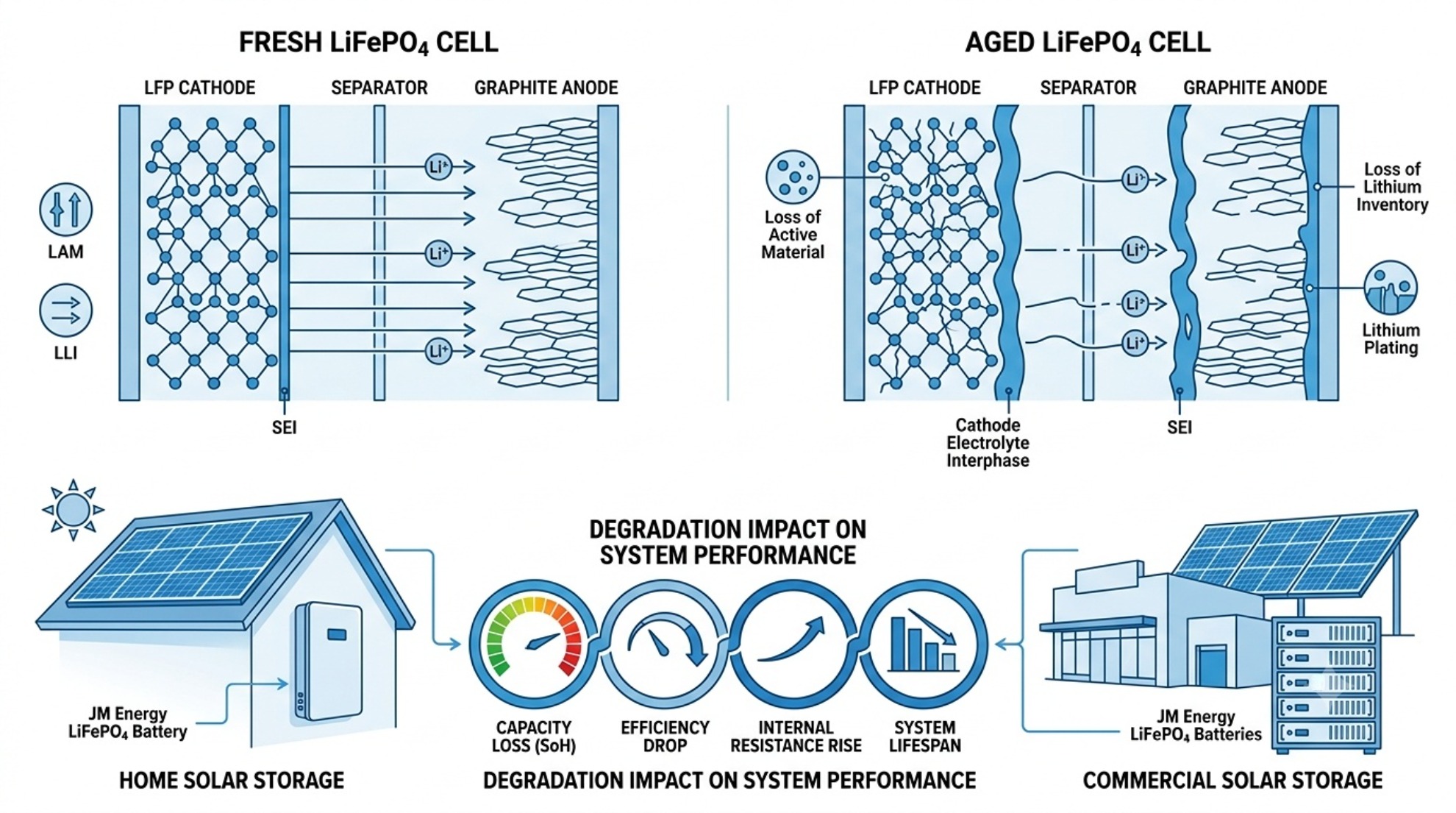
Compared with NMC ternary batteries, the LFP crystal lattice used in JM Energy’s BYD blade storage products has far stronger structural stability under standard solar charge-discharge cycles. However, frequent full depth discharge, rapid high-current charging, and low-temperature winter cycling for off-grid African residential systems will sharply amplify lattice strain, triggering cathode particle fragmentation thousands of cycles ahead of the rated design lifespan of home wall batteries and industrial cabinet ESS.
Environmental & Operational Factors Affecting LFP Life
Internal electrochemical aging is an inherent material characteristic of LiFePO4, yet external operating environments and charge-discharge parameters control how fast degradation occurs. Most premature battery pack failures reported by JM Energy’s global partners in home solar and commercial energy storage projects are caused by poor thermal management, extreme depth of discharge, and sustained high-current operation, rather than natural material aging.
Temperature Impact on LiFePO4 Battery Degradation
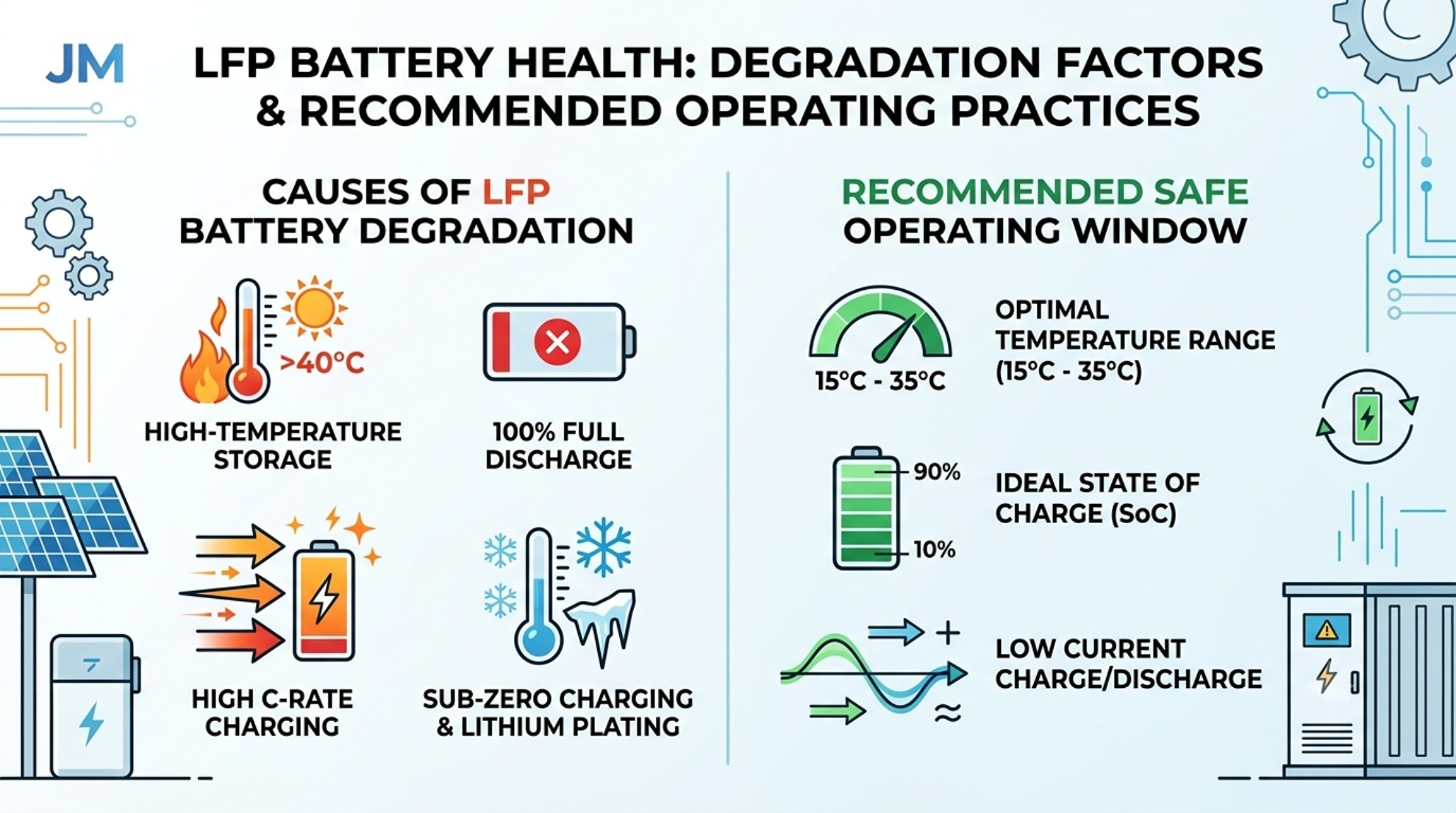
Operating cell temperature heavily dictates the rate of electrochemical decay. Ambient heat accelerates unwanted parasitic chemical reactions between the liquid electrolyte and active electrode materials. Conversely, attempting LiFePO4 low temperature charging below 0°C (32°F) slows lithium-ion diffusion, leading to metallic lithium plating on the anode surface. Plating permanently depletes usable lithium and risks short-circuiting the cell through dendrite growth.
Outdoor-installed C&I storage cabinets without constant temperature control face major aging risks: summer ambient temperatures above 35°C double the yearly degradation rate of LFP cells for commercial peak shaving. For residential solar systems deployed in cold northern regions, charging wall-mounted batteries below freezing without integrated heating modules leads to irreversible lithium plating, which cannot be recovered via BMS balancing or low-current maintenance charging.
Depth of Discharge Effects on LFP Battery Cycle Life
The depth to which a cell is cycled directly correlates with cumulative mechanical stress on electrode materials. Consistently operating at a 100% LiFePO4 depth of discharge exhausts the crystal structure to its maximum limits, shortening overall cycle count. Furthermore, maintaining a high state of charge (SoC) near 100% for extended periods accelerates cathode oxidation and electrolyte breakdown.
A common mistake from residential solar end-users JM Energy supports is fully draining wall powerwalls to near 0% SoC and leaving batteries fully charged for multiple sunny days. These two extreme operating states combine to erode LFP cycle life drastically. Restricting daily working SoC between 10% and 90% minimizes lattice strain and high-potential cathode oxidation, greatly extending the lifespan of all our home and commercial energy storage models.
C-Rate Stress & High Current Effects on LFP Batteries
Subjecting cells to continuous high C-rates increases internal ohmic heating ($I^2R$ losses) and creates sharp lithium-ion concentration gradients across the electrodes. Elevating the C-rate impact on battery life causes localized thermal hot spots, accelerates mechanical lattice cracking, and destabilizes the SEI passivation layer.
Large-scale commercial solar storage systems with high-power inverters often run at 0.5C or higher discharge current for peak shaving. Without proper parallel cell grouping and heat dissipation design in JM Energy’s industrial storage cabinets, internal hotspots develop inside modules, creating inconsistent aging speeds between single cells. The total usable capacity of the full battery cabinet is then limited by the most degraded cell in the pack.
LiFePO4 vs NMC & LCO: Degradation Rate Comparison
Comparing LiFePO4 against other common lithium-ion formulations highlights its structural resistance to chemical degradation. For JM Energy’s global project investors, solar installers and OEM clients, material aging characteristics are core criteria when selecting long-life residential and commercial renewable energy storage batteries. The table below compares cycle life, thermal runaway safety thresholds and primary aging drivers for the three mainstream lithium battery chemistries we supply to worldwide markets.
| Battery Chemistry | Typical Cycle Life (80% SOH) | Thermal Runaway Threshold | Primary Degradation Driver | JM Energy Application Scenarios |
|---|---|---|---|---|
| LiFePO4 (LFP / BYD Blade) | 3,000 – 6,000+ cycles | ~270°C (518°F) | SEI layer growth & high DoD mechanical stress | Home wall battery, C&I storage, off-grid solar, microgrid |
| NMC (Nickel Manganese Cobalt) | 1,000 – 2,000 cycles | ~210°C (410°F) | Transition metal dissolution & thermal decomposition | Short-cycle light EV, small portable power |
| LCO (Lithium Cobalt Oxide) | 500 – 1,000 cycles | ~150°C (302°F) | Lithium plating & cathode lattice degradation | Consumer electronics only |
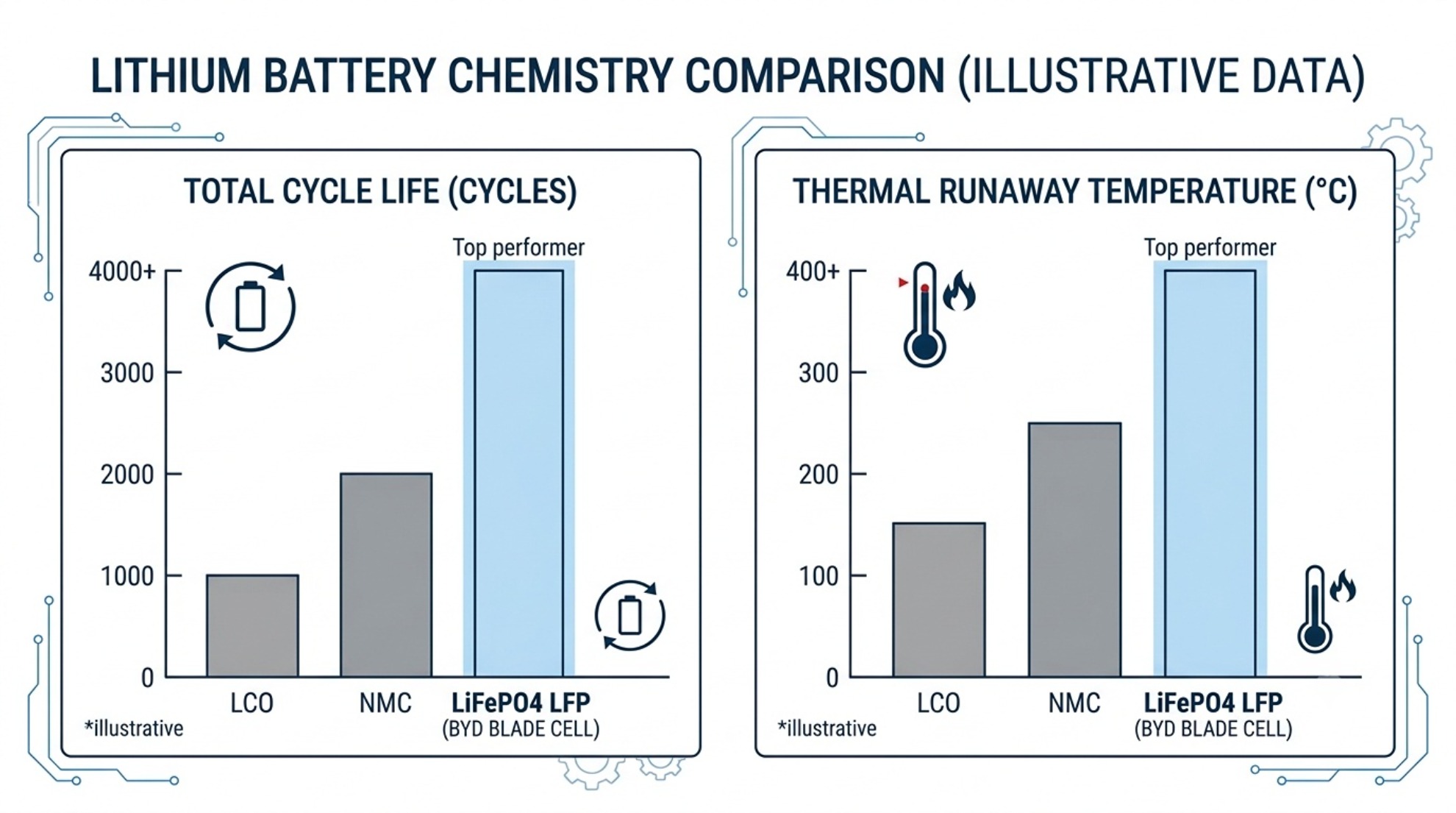
The comparison clearly proves LFP cells used in JM Energy’s full storage product range deliver unmatched advantages in cycle longevity and thermal safety, with zero risk of transition metal dissolution that plagues NMC batteries. LiFePO4 remains the most cost-effective long-cycle storage material for residential solar, commercial peak shaving, remote microgrid and industrial backup power. Critical note: LFP aging rules differ completely from ternary lithium cells, so BMS parameter settings and thermal management solutions cannot be copied from NMC battery systems for our wall-mounted or cabinet energy storage products.
How to Extend LiFePO4 Battery Life: Proven Strategies
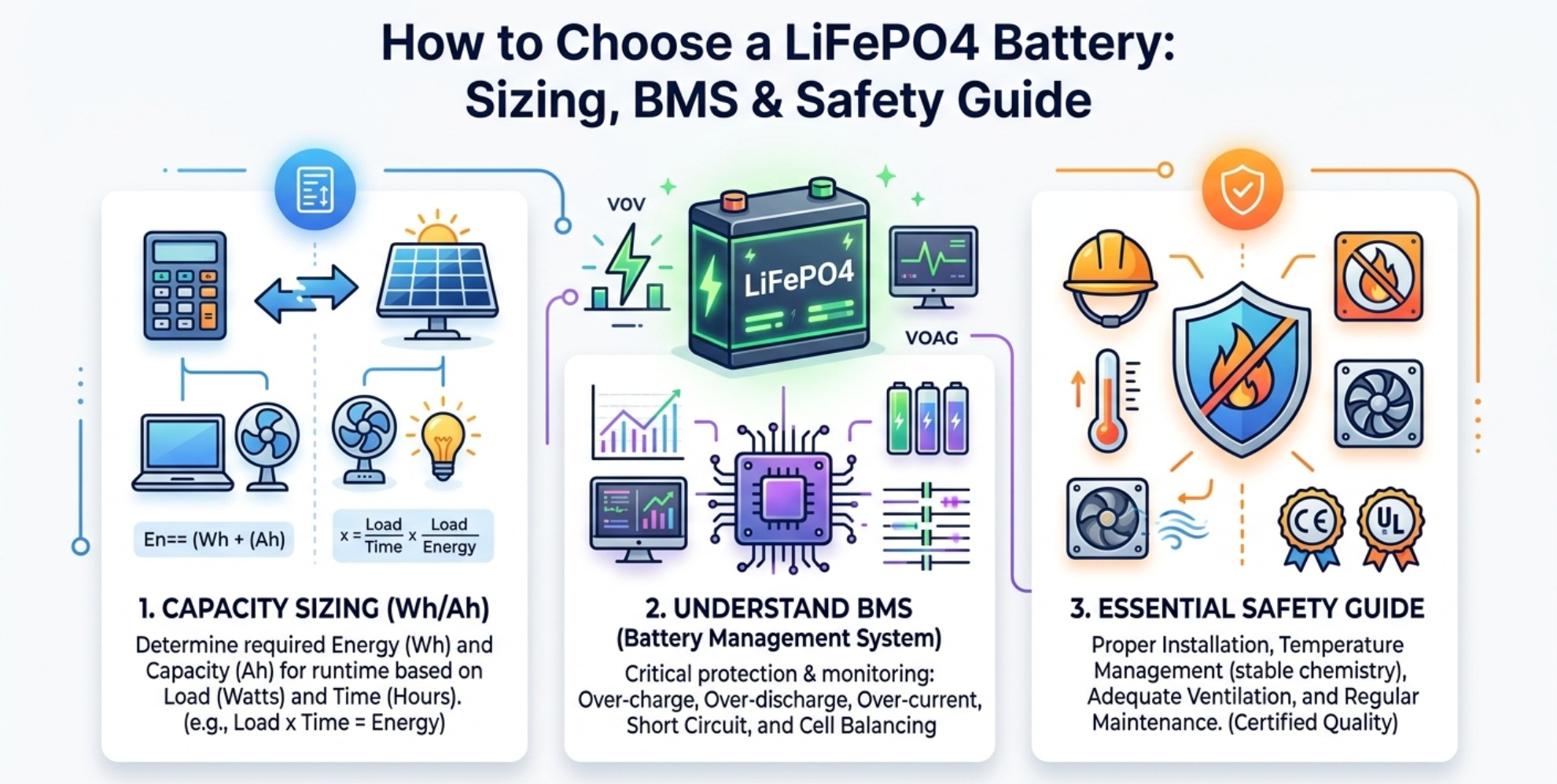
The following operation and maintenance guidelines are validated by years of field operation data from JM Energy’s global solar storage projects, covering temperature control, charge-discharge range limits, intelligent BMS configuration and long-term seasonal storage management. Following these rules slows LFP degradation significantly and maximizes total lifetime energy throughput for home powerwall and commercial C&I battery systems.
- ● Maintain Moderate Operating Temperatures: Keep cell operating environments between 15°C and 35°C (59°F to 95°F). Never charge cells below freezing without integrated heating systems, an essential feature for cold-climate OEM storage orders.
- ● Reduce Cycle Depth: Restrict daily usage to an 80% window (e.g., 10% to 90% SoC) to quadruple total lifetime energy throughput compared to full 0–100% cycling, ideal for residential solar self-consumption systems.
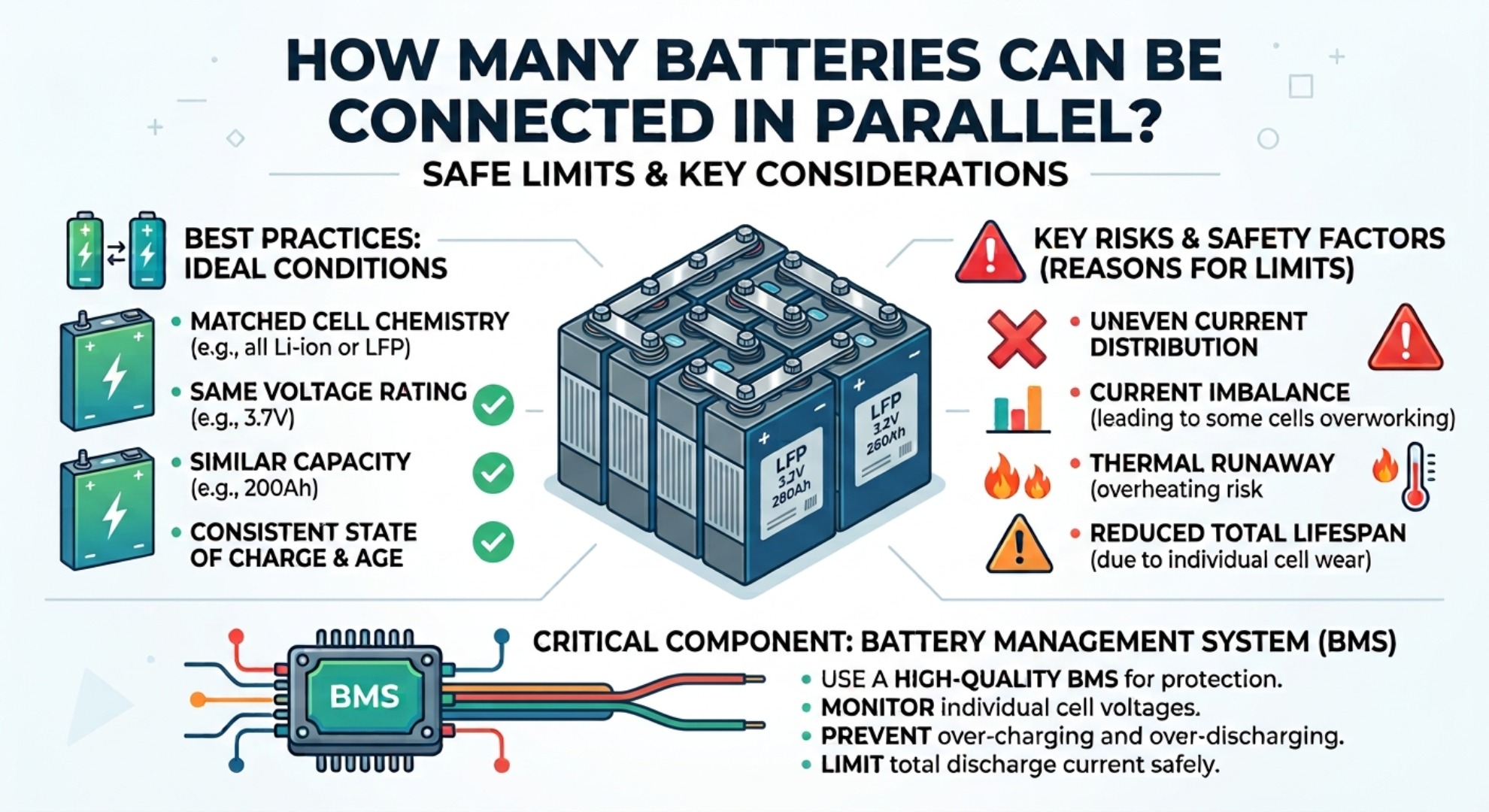
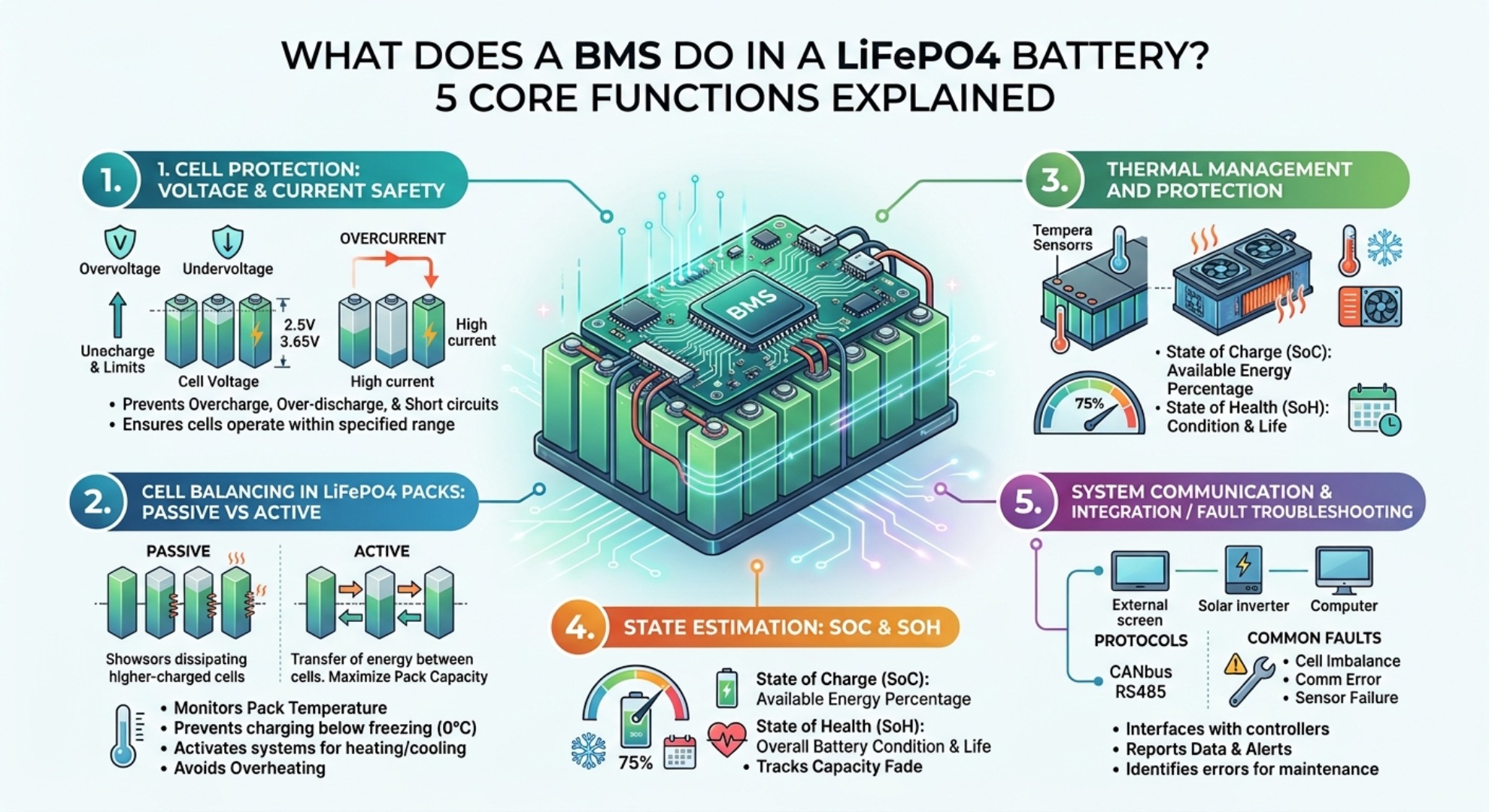
- ● Implement Smart BMS Controls: Utilize an active Battery Management System cell balancing strategy to prevent individual cell overvoltage, under-voltage, and current overloads. All JM Energy storage products come with built-in intelligent BMS for real-time cell monitoring.
- ● Set Recommended Storage Charge Levels: For long-term seasonal storage for overseas inventory or idle solar projects, Keep voltage around 3.2V-3.3V per cell,store batteries at a LiFePO4 optimal storage charge level of approximately 40% to 50% SoC inside climate-controlled warehouses.
For large commercial solar storage power stations distributed by JM Energy’s regional partners, quarterly passive pack balancing, real-time module temperature difference monitoring, and power output limit adjustment during extreme hot/cold weather are additional mandatory steps to slow overall LFP battery degradation across multi-unit cabinet systems.
Full Summary For Energy Storage Integrators & Buyers
LiFePO4 battery degradation is jointly driven by internal SEI film thickening and cathode lattice mechanical micro-cracking, while real-world operating temperature, depth of discharge and charge-discharge C-rate determine the acceleration speed of aging for JM Energy’s wall home storage and commercial industrial energy storage products. Compared with NMC ternary and LCO lithium batteries, LFP cells feature far longer rated cycle life and much higher thermal runaway resistance, making them the standard material for residential solar, off-grid microgrid, commercial peak shaving and remote industrial backup power solutions exported to 138+ countries by JM New Energy.
To maximize the full service lifespan of LFP battery packs, system designers, solar installers and end users must maintain operating temperatures within the 15–35°C safe window, avoid sustained full charge and deep discharge cycles, deploy storage systems equipped with active balancing BMS, and adopt the 40%–50% low-charge state for long-term warehouse storage. Mastering these degradation mechanisms and matching corresponding operation rules eliminates premature capacity decay for wall powerwalls and cabinet ESS, lowering total lifecycle costs for all renewable energy storage projects cooperating with JM Energy Tech.
Get Custom LiFePO4 Storage Solutions From JM Energy
As a 10-year professional LiFePO4 battery manufacturer supporting full OEM & ODM, we supply 25.6V / 51.2V wall-mounted home batteries, BYD blade cell solar storage systems, and large-scale C&I energy storage cabinets for global solar distributors and project integrators.
ENQUIRE NOW LEARN MORE PRODUCTSLiFePO4 Cycle Life vs Calendar Life
48V Lithium Battery: Top Pick for Solar Storage