


What Is Battery SoC
What Is Battery SoC? Complete Guide for Residential LiFePO4 Home Solar Energy Storage Batteries

Table of Contents: LiFePO4 Battery SoC Guide for Residential Solar Storage
- Quick Answer & Core SoC Takeaways for Home LiFePO4 Batteries
- Full Definition of Battery State of Charge (SoC) for Residential Storage
- Why Accurate SoC Monitoring Matters for Home Solar LiFePO4 Batteries
- How BMS Calculates SoC on Residential LiFePO4 Energy Storage Batteries
- Four Core SoC Estimation Algorithms for Household Battery Systems
- Key Factors Reducing LiFePO4 Battery SoC Reading Accuracy
- SoC vs SoH vs DoD: Critical Comparison for Home Solar Storage Batteries
- How Smart BMS Hardware Monitors Real-Time LiFePO4 Battery SoC
- Expert SoC Management Best Practices for Residential LiFePO4 Batteries
- SoC Application for Grid-Tied & Off-Grid Home Solar Battery Storage
- JM Energy Tech LiFePO4 Residential Battery SoC Optimization Technology
- FAQ: Common Questions About LiFePO4 Home Battery State of Charge
- Recommended SoC Ranges & Costly SoC Mistakes Shortening Battery Life
- Related LiFePO4 Home Solar Energy Storage Articles
- Final Summary: Optimize SoC for Long-Lasting Residential LiFePO4 Batteries
Quick Answer & Core SoC Takeaways for Home LiFePO4 Batteries
Quick Answer: Battery State of Charge (SoC) Basics
State of Charge, shortened to SoC, shows what percentage of usable energy remains inside a rechargeable battery. It works just like the fuel gauge on your car, letting homeowners see exactly how much power they can draw from their LiFePO4 home storage batteries at any moment. Tracking SoC lets you plan charge/discharge cycles, protect battery health and get the most out of your solar storage system.
Every modern BMS, or Battery Management System, constantly tracks voltage, current, temperature and past charge cycles to calculate real-time SoC data. Precise SoC readings make your battery safer and extend its usable service life.
Core Key Takeaways for Home LiFePO4 Battery SoC Management
- SoC is a percentage value that reflects how much usable capacity your battery has left.
- BMS prioritizes SoC as one of its core monitoring metrics for residential storage units.
- Accurate SoC readings cut energy waste, add years to battery life and lower safety risks.
- For daily home use, LiFePO4 batteries perform best when kept between 20% and 80% SoC.
- Today’s home solar storage combines voltage, current and temperature data to calculate highly accurate SoC values.
Full Definition of Battery State of Charge (SoC) for Residential Storage
Full Definition: What Is Battery State of Charge (SoC)?
SoC stands as a foundational metric in all battery technology. It measures the remaining usable energy stored in a rechargeable cell pack, displayed as a percentage against the battery’s full rated capacity.
Take a 10 kWh household LiFePO4 battery as an example: if it holds 8 kWh of usable power, its SoC sits at 80%. If only 2 kWh remains available for use, the SoC drops to 20%.
While people often compare SoC to a car fuel gauge, calculating battery remaining power is far less straightforward than reading gasoline levels. There is no direct sensor to measure stored energy inside lithium cells. Instead, onboard BMS uses complex algorithms that pull live voltage, charge current, temperature, cell chemistry and historical operating logs to estimate real SoC.
Standard SoC reference markers:
- 100% SoC = Battery fully topped up
- 80% SoC = Ideal everyday operating level
- 50% SoC = Half of total usable power left
- 20% SoC = Time to start recharging the unit
- 0% SoC = Hard discharge limit set by the BMS
For homeowners running solar storage systems, live SoC data shows exactly how much backup power they have on hand. Whether you’re storing extra solar power through the day or relying on battery power during grid blackouts, SoC lets you make practical energy management choices.

Why Accurate SoC Monitoring Matters for Home Solar LiFePO4 Batteries
Tracking SoC reliably directly impacts how efficient, dependable and long-lasting your home battery system will be. Battery capacity tells you the total power your unit can hold, but SoC reveals how much of that power you can actually use right now.
Without precise SoC tracking, you risk running out of backup power unexpectedly during outages, or draining cells too low repeatedly, which permanently cuts down your battery’s total storage capacity over time.
Modern lithium storage units use live SoC data to automate charge and discharge cycles intelligently. This lets you use more of your self-generated solar power, lower utility bills via off-peak charging, and keep your battery pack running within safe operating limits at all times.
Core Benefits of Precise LiFePO4 Battery SoC Monitoring
| Benefit | Description |
|---|---|
| Improved Battery Protection | Blocks damaging overcharging and deep cell discharge events. |
| Longer Battery Life | Keeps cells within the mild charge range that slows degradation. |
| Better Energy Management | Maximizes solar self-use and lets you schedule reliable backup power. |
| Reliable Backup Power | Prevents total power loss during grid interruptions. |
| Higher System Efficiency | Enables smart charge timing and balanced household load distribution. |
If you invest in LiFePO4 solar storage, reliable SoC tracking carries equal importance to your battery’s total capacity. A well-built BMS refreshes SoC readings continuously to deliver trustworthy power data and boost overall storage system performance.
How BMS Calculates SoC on Residential LiFePO4 Energy Storage Batteries
Unlike reading a vehicle fuel tank, calculating remaining energy inside lithium cells requires complex processing. No built-in sensor can directly measure stored kilowatt-hours, so the BMS relies on mathematical cell models paired with live operating data to estimate accurate SoC values.
Home solar storage hardware combines multiple measurement streams to cut down SoC calculation errors. Every calculation factors in cell voltage, charge/discharge current, ambient temperature, cell chemistry and long-term usage history.
High-grade LiFePO4 battery packs deliver SoC accuracy within ±3%. Premium control algorithms can narrow this margin even further under regular household operating conditions.
Engineering Insight
No single measurement method can produce accurate SoC readings in every working condition. Professional BMS units run multiple estimation algorithms side-by-side to deliver consistent, stable SoC data for the full lifespan of your battery pack.

Four Core SoC Estimation Algorithms for Household Battery Systems
Battery manufacturers deploy several distinct methods to calculate SoC, each with unique pros and cons. Most modern BMS combine two or more approaches together to raise overall reading precision.
Open Circuit Voltage (OCV) SoC Estimation Technology
The OCV method measures cell voltage once the battery sits idle long enough to stabilize. Each voltage level maps to a known SoC percentage via factory-calibrated voltage curves.
This method is cheap and simple to implement, but loses accuracy whenever the battery actively charges or discharges. It’s mainly used on system startup or after long idle stretches.
| Advantages | Limitations |
|---|---|
| Simple implementation | Needs extended battery rest time |
| Low computing resource demand | Poor accuracy during active charge/discharge |
| Good for initial baseline readings | Affected by cell aging and temperature shifts |
Coulomb Counting Real-Time SoC Calculation Method
Coulomb Counting ranks as the most widely used SoC tracking method for lithium storage. It continuously tracks all current flowing into and out of the battery, tallying total charge over time.
Charging adds stored energy to the battery, while discharging subtracts it. The BMS integrates these current flow values to update remaining capacity in real time.
While highly responsive, this method requires regular recalibration. Tiny sensor measurement errors build up gradually over months of constant operation and skew final SoC values.
| Advantages | Limitations |
|---|---|
| Excellent live-time tracking performance | Measurement error accumulates long-term |
| Standard for nearly all LiFePO4 storage packs | Needs scheduled recalibration cycles |
| Works nonstop for continuous monitoring | Relies on precise current sensor hardware |
Kalman Filter High-Precision Battery SoC Algorithm
Top-tier residential battery systems use Kalman Filter logic to boost SoC precision. Instead of relying on one single data point, this algorithm merges voltage, current, temperature and factory cell models to forecast remaining capacity dynamically.
Every new batch of operating data adjusts the algorithm’s capacity prediction, offsetting inaccuracies caused by temperature swings, cell wear and shifting household power loads.
Though it demands more processing power, Kalman Filter delivers ultra-stable SoC numbers and sees broad use in electric vehicles and premium home solar storage units.
AI Machine Learning Advanced SoC Prediction System
New-generation BMS hardware now integrates AI and machine learning to push SoC accuracy even higher.
Instead of only following fixed factory cell models, AI-driven systems learn from real charge cycles, local weather conditions, cell aging rates and unique household energy consumption habits. The prediction model grows more accurate as the system collects more operational data over time.
AI-assisted battery control remains an emerging feature for residential storage, but it will become standard hardware on smart home battery platforms in coming years.
Side-by-Side Comparison of All Battery SoC Calculation Methods
| Method | Accuracy | Complexity | Typical Applications |
|---|---|---|---|
| Open Circuit Voltage | Medium | Low | Basic Battery Systems |
| Coulomb Counting | High | Medium | Most Home Energy Storage Batteries |
| Kalman Filter | Very High | High | Premium LiFePO₄ Systems & EVs |
| AI-Based Estimation | Excellent | Very High | Next-Generation Smart Battery Systems |
Key Factors Reducing LiFePO4 Battery SoC Reading Accuracy
Even with advanced built-in BMS algorithms, multiple internal and external variables throw off SoC reading precision. Understanding these interference sources lets you interpret battery status correctly and maintain stable system performance year-round.
Ambient Temperature Impacts on LiFePO4 SoC Readings
Extreme hot or cold temperatures alter lithium cell voltage and slow internal chemical reactions. Cold environments temporarily cut usable capacity, while sustained high heat speeds up permanent cell degradation. Quality BMS adjusts all SoC calculations using live temperature sensor data to offset these shifts.
Battery Aging Effect on Long-Term SoC Calculation Precision
As LiFePO4 packs accumulate charge cycles, their maximum usable capacity slowly drops. If the BMS fails to update its internal cell model to match degraded capacity, displayed SoC values grow less reliable over years of use. Scheduled full calibration fixes this drift.
Charge/Discharge Rate Fluctuation Interfering SoC Data
Fast charging or heavy discharge loads create sudden voltage spikes and drops, which distort voltage-only SoC calculations. Advanced BMS cross-references current flow data alongside voltage measurements to minimize this type of error.
Cell Voltage Imbalance Reducing Overall SoC Accuracy
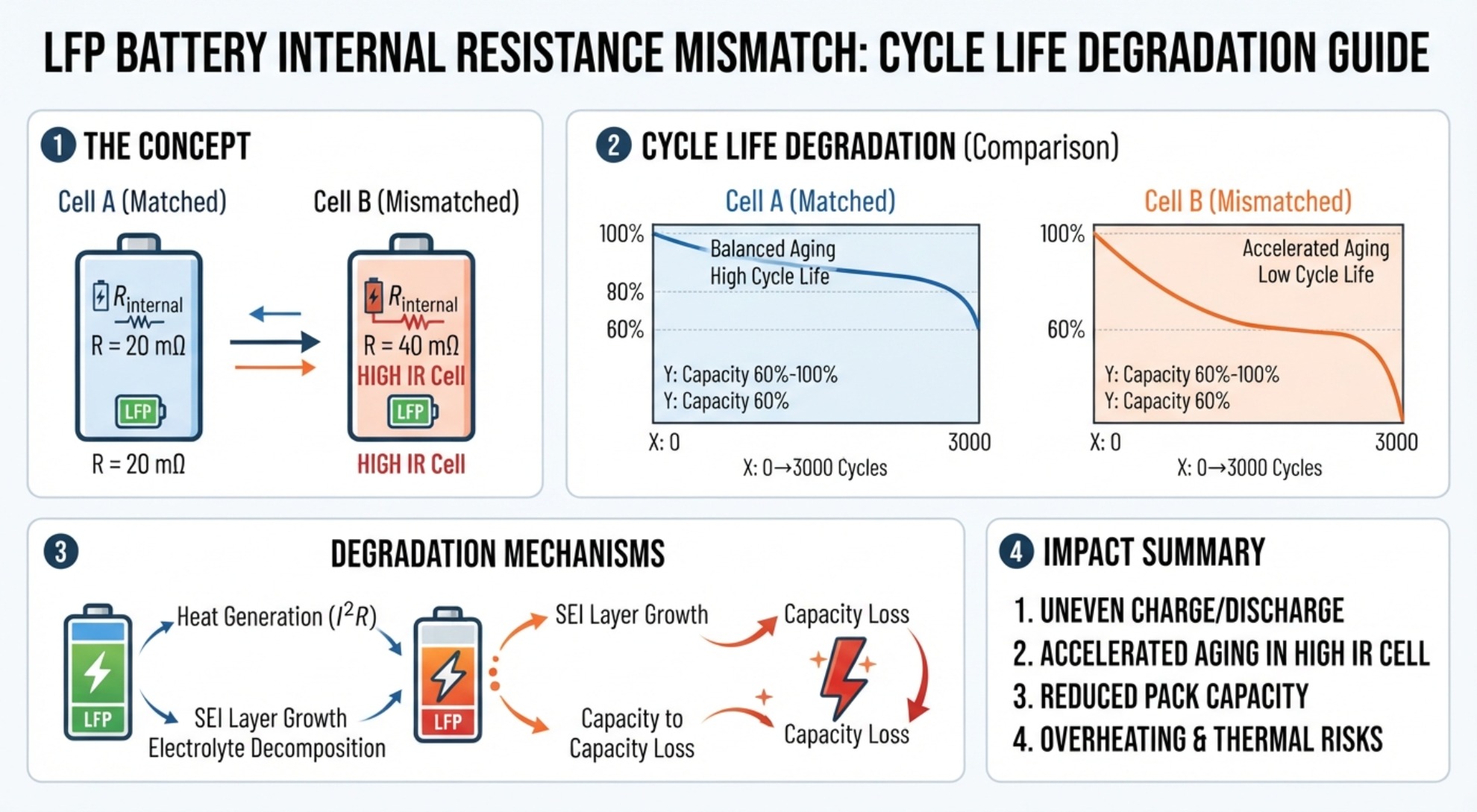
Individual cells inside a pack develop minor voltage gaps after repeated cycling. These mismatches skew the total pack voltage reading and distort SoC output. High-end BMS runs continuous cell balancing to fix voltage gaps, boosting both reading accuracy and cell lifespan.
Practical Tip for Daily Residential LiFePO4 SoC Operation
Nearly all battery manufacturers advise running household LiFePO4 storage between 20% and 80% SoC for regular daily use. This narrow operating window slows long-term cell degradation while still supplying enough power to cover standard household electricity demands.
SoC vs SoH vs DoD: Critical Comparison for Home Solar Storage Batteries

State of Charge (SoC) vs State of Health (SoH): Full Comparison
SoC and SoH relate closely to battery performance but track entirely separate metrics. Knowing the difference helps you read battery dashboards correctly and extend your storage system’s service life.
SoC tells you how much power you can draw right now, while SoH measures how much of the battery’s original factory capacity remains after years of cycling. To simplify: SoC shifts every day as you charge and drain power, while SoH creeps downward slowly over months and years of use.
| Parameter | State of Charge (SoC) | State of Health (SoH) |
|---|---|---|
| Definition | Remaining usable battery capacity at this moment | Current cell capacity vs brand-new rated capacity |
| Unit | Percentage (%) | Percentage (%) |
| Changes | Constant shifts during charge and discharge cycles | Slow, gradual decline over years of operation |
| Main Purpose | Show available backup power instantly | Track permanent battery wear and aging |
| Measured By | Battery Management System (BMS) | Battery Management System (BMS) |
| User Concern | How much backup power I have today during blackouts | How much total storage capacity I’ve lost over years |
Real-world example
Your home battery may read 80% SoC, meaning it holds 80% of its current usable power. If its SoH reads 92%, the pack still retains 92% of the full capacity it had when you first installed it.
State of Charge (SoC) vs Depth of Discharge (DoD): Core Relationship
Depth of Discharge, shortened to DoD, is another frequently confused battery metric. While SoC tells you how much power remains inside cells, DoD tracks how much stored energy you have already consumed.
These two metrics share a simple direct formula:
SoC + DoD = 100%
Example: A battery sitting at 70% SoC has a 30% DoD. If your battery hits 20% SoC, you’ve drawn an 80% depth of discharge from the unit.
| State of Charge | Depth of Discharge | Battery Condition |
|---|---|---|
| 100% | 0% | Fully Charged |
| 80% | 20% | Normal Daily Operation |
| 50% | 50% | Half Capacity Remaining |
| 20% | 80% | Recharge Recommended |
| 0% | 100% | Fully Discharged |
Most household LiFePO4 storage systems support an 80–90% safe DoD rating. This lets homeowners draw nearly all stored solar power without sacrificing the battery’s long cycle lifespan.
How Smart BMS Hardware Monitors Real-Time LiFePO4 Battery SoC
The BMS acts as the central control brain for any home solar battery pack. Its core task includes continuous monitoring and live updating of SoC values with maximum possible precision.
Rather than relying on a single sensor reading, the BMS pulls data from dozens of sensors spread across every cell inside the pack and processes all signals through optimized calculation algorithms.
Real-Time Battery Cell Voltage Sampling for SoC Reference
The BMS takes constant voltage readings from each individual cell. Lithium cells follow predictable voltage curves within standard working ranges, making cell voltage a core baseline data point to calculate remaining capacity.
High-Precision Current Sensor Coulomb Counting Module
Ultra-precise current sensors track every amp that flows into or out of the battery pack. This raw current data feeds the continuous Coulomb Counting calculation running through all charge and discharge cycles.
Temperature Compensation Algorithm for Stable SoC
Cell performance shifts drastically with temperature changes. The BMS adjusts all SoC math based on live temperature sensor data to maintain consistent reading accuracy in hot and cold installation spaces alike.
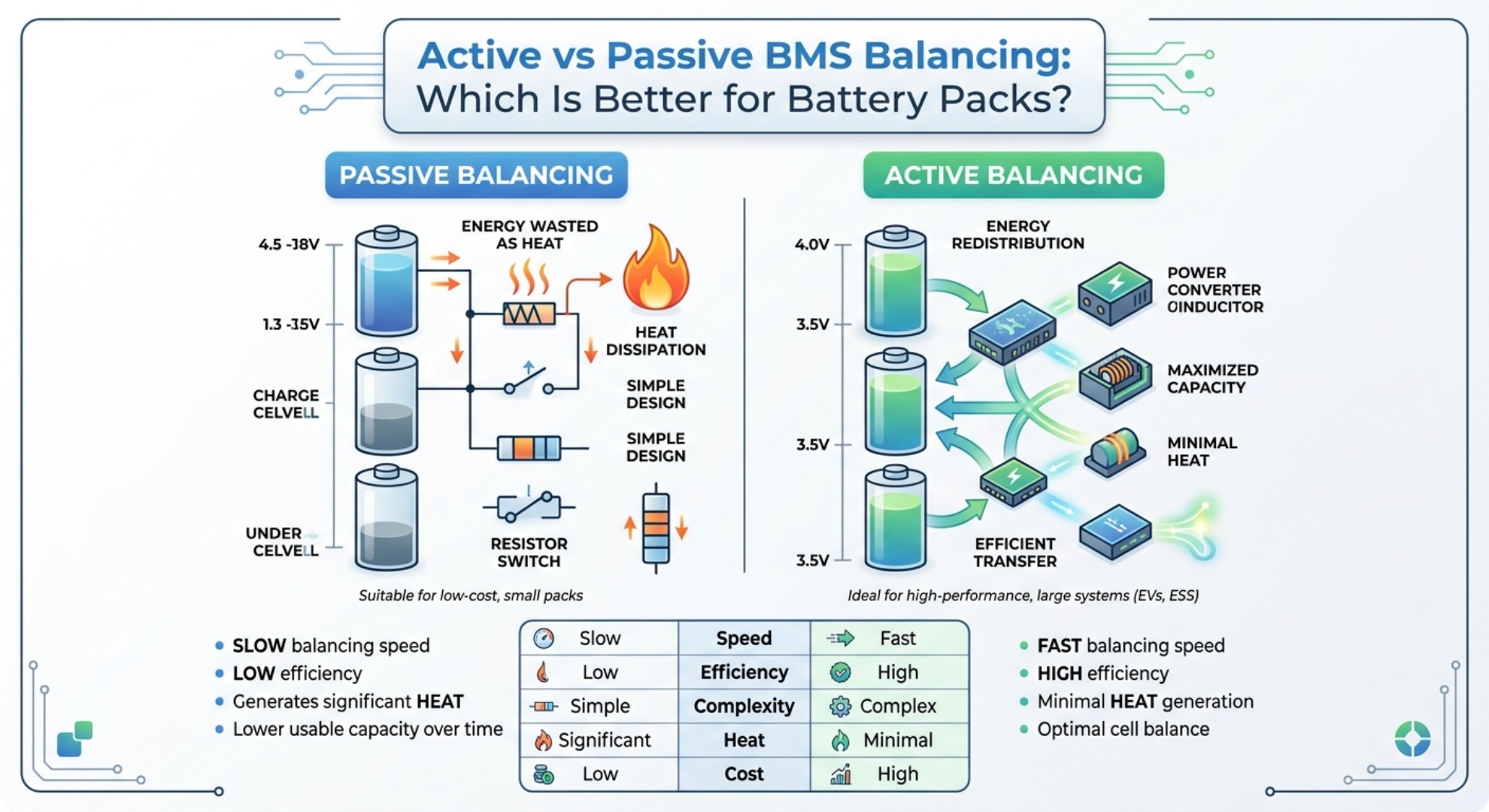
Active/Passive Cell Balancing Optimizes SoC Consistency
Repeated charging and discharging creates minor voltage mismatches between individual cells. Active or passive balancing circuits equalize cell voltage levels, creating uniform pack performance and more accurate SoC outputs.
Historical Cycle Data Calibrates Long-Term SoC Model
Advanced BMS stores all past charge cycles, discharge logs, cell aging records and environmental operating data. It uses this history to constantly refine its internal capacity calculation model for more reliable long-term SoC readings.

Expert SoC Management Best Practices for Residential LiFePO4 Batteries
Correct SoC handling boosts energy efficiency and stretches your home storage battery’s usable lifespan. LiFePO4 cells already rank among the safest, longest-lasting lithium chemistries available for residential use, but following standard charge habits maximizes their multi-year performance.
- Keep daily operating SoC between 20% and 80% whenever you can.
- Never leave a battery fully drained for weeks at a time.
- Avoid holding cells at a constant 100% SoC unless you need full backup capacity for outages.
- For multi-month storage, set battery charge level to 40%–60% SoC.
- Let the BMS run its automatic cell balancing cycles periodically.
- Install batteries in spaces matching the manufacturer’s recommended temperature range.
- Only use chargers and inverters approved by your battery brand.
Professional Recommendation for Daily LiFePO4 SoC Operation
For most standard residential solar setups, cycling your battery between 20% and 80% SoC strikes the perfect balance between available daily power and long pack life. If you rely heavily on emergency backup power, you may opt to maintain a higher baseline SoC to meet your household energy security demands.
SoC Application for Grid-Tied & Off-Grid Home Solar Battery Storage
For residential solar storage units, SoC is far more than just a percentage number on a screen. It’s a core control metric that shapes how your battery stores solar power, supplies household loads and cuts monthly electricity expenses every single day.
Smart home battery systems watch live SoC levels to trigger solar charging, switch over to battery discharge for home appliances, and reserve power for unexpected grid blackouts. Accurate SoC tracking lets you use more of your self-generated solar power and cut reliance on utility grid electricity.
No matter if your system runs grid-tied, fully off-grid, or hybrid solar, SoC data drives all core automated energy management choices.
Maximize On-Site Solar Self-Consumption via Smart SoC Control
Through daylight hours, excess power created by solar panels flows directly into your battery pack. The BMS monitors real-time SoC to judge how much extra solar energy the pack can absorb without hitting overcharge limits.
Once sunlight fades in the evening, the battery automatically discharges to run household devices until it hits your preset minimum SoC threshold.
Stable Emergency Backup Power with Reserved Minimum SoC
A top benefit of home battery storage is uninterrupted power supply during grid failures. Most homeowners configure their BMS to lock in a minimum reserve SoC (typically 20% or 30%) to guarantee backup power for critical loads.
This reserved power runs essential gear including lighting, refrigerators, internet routers, medical equipment and home security systems until grid service restores.
Time-of-Use Bill Reduction by Dynamic SoC Scheduling
Many utility providers charge tiered electricity rates that spike during daytime peak hours. Smart storage cross-references live SoC data with utility pricing to automatically charge batteries during cheap off-peak windows and discharge during expensive peak slots, lowering monthly power bills significantly.
Peak Load Shaving Control Based on Real-Time Battery SoC
Household batteries also use live SoC readings to cut down peak power draw from the grid. When home appliances draw heavy loads, stored battery power supplements grid supply, lowering demand surcharges and raising overall energy system efficiency.
JM Energy Tech LiFePO4 Residential Battery SoC Optimization Technology
Every LiFePO4 home storage battery manufactured by JM Energy Tech ships with a custom intelligent BMS built to deliver highly precise SoC monitoring. The control unit continuously analyzes cell voltage, current flow, temperature and inter-cell balance to output reliable live SoC readings while shielding the battery from abnormal operating conditions.
Accurate SoC estimation allows homeowners to make informed energy management decisions while improving battery efficiency, extending cycle life, and ensuring stable performance throughout years of operation.
JM Energy Tech LiFePO4 Battery Core SoC Optimization Features
| Feature | Benefit |
|---|---|
| Grade A LiFePO₄ Cells | Excellent cycle life and consistent capacity. |
| Smart Battery Management System | Real-time SoC monitoring and intelligent battery protection. |
| Active Cell Balancing | Improves capacity consistency and extends battery lifespan. |
| CAN / RS485 Communication | Compatible with leading hybrid inverter brands. |
| High Cycle Life | More than 6,000 charge and discharge cycles under recommended operating conditions. |
| 10-Year Warranty | Reliable long-term performance for residential energy storage applications. |
Whether installed in an off-grid cabin, hybrid solar system, or residential backup power solution, intelligent SoC monitoring helps JM Energy Tech batteries deliver stable performance while maximizing the value of every kilowatt-hour stored.
FAQ: Common Questions About LiFePO4 Home Battery State of Charge
What exactly does State of Charge (SoC) stand for?
State of Charge represents the amount of usable energy remaining inside a rechargeable battery and is expressed as a percentage of its available capacity.
Should LiFePO4 home batteries stay at 100% SoC daily?
Not necessarily. While fully charging a battery is sometimes required for maximum backup power, operating a LiFePO₄ battery between 20% and 80% SoC during normal daily use can help extend its service life.
Why does BMS show inaccurate battery SoC sometimes?
Temperature fluctuations, cell aging, unstable charging current and missing calibration cycles will affect SoC accuracy. Premium built-in BMS algorithms effectively reduce these errors.
How does residential battery BMS compute real-time SoC?
The BMS combines cell voltage sampling, precise current detection, temperature compensation, coulomb counting and mathematical cell models to calculate remaining battery capacity dynamically.
What’s the gap between battery capacity and State of Charge?
Battery capacity refers to the total energy the pack can hold when fully charged. SoC only reflects how much of that full capacity is still usable right now.
Does hot/cold temperature affect LiFePO4 battery SoC data?
Absolutely. Extreme high or low temperatures alter cell voltage and real usable capacity, so advanced BMS will add temperature compensation to correct SoC output values.
Why is precise SoC critical for residential solar storage systems?
Accurate SoC data lets homeowners boost self-consumption of solar power, set rational charge schedules, reserve power for blackouts and raise the overall energy utilization efficiency of the whole system.
Recommended SoC Ranges & Costly SoC Mistakes Shortening Battery Life

LiFePO4 batteries support deep discharge and long cycle life, but keeping the battery within proper SoC ranges for different usage scenarios can greatly extend service life and maintain steady system performance.
Recommended SoC Ranges for All Residential LiFePO4 Storage Scenarios
| Application | Recommended SoC | Purpose |
|---|---|---|
| Daily Solar Self-Consumption | 20%–80% | Extends battery lifespan while providing sufficient daily energy. |
| Emergency Backup Power | 90%–100% | Maintains maximum available energy before unexpected outages. |
| Long-Term Storage | 40%–60% | Minimizes battery aging during extended storage. |
| Off-Grid Systems | 30%–90% | Balances usable energy and long-term durability. |
| Commercial Peak Shaving | 20%–90% | Optimizes electricity cost savings. |
Common SoC Management Mistakes Shortening Battery Lifespan
Modern BMS has built-in protection mechanisms for lithium batteries, yet avoiding these bad habits can further preserve battery performance and cycle life.
- Keeping the battery at 100% charge for several months.
- Frequently discharging the battery to 0% unnecessarily.
- Ignoring high or low temperature operating conditions.
- Using incompatible chargers or inverter settings.
- Disabling automatic Battery Management System protection.
- Failing to update inverter or battery firmware when recommended.
- Storing batteries completely discharged.
Professional Tip for Extending LiFePO4 Battery Cycle Life
LiFePO4 cells outperform other lithium battery chemistries in durability. Maintaining a moderate SoC range in daily use will effectively raise total cycle counts and sustain stable energy storage performance for years.
Final Summary: Optimize SoC for Long-Lasting Residential LiFePO4 Batteries
SoC is one of the most vital metrics for all lithium storage systems. It displays real-time residual battery capacity, helping users arrange household power consumption, protect battery health and secure backup power supply during grid blackouts.
Current mainstream BMS integrates voltage detection, current sensing, temperature compensation and optimized prediction algorithms to deliver highly accurate SoC data. With reliable SoC monitoring, residential solar storage can run safely, efficiently and economically while maximizing the service life of LiFePO4 packs.
Home energy storage has become an essential matching component for modern solar power systems. Mastering the logic of SoC allows homeowners to make more reasonable energy planning and fully unlock the value of their battery investment.
JM Energy Tech Residential LiFePO4 Battery Product Inquiry
Looking for a reliable home energy storage battery?
JM Energy Tech supplies high-performance LiFePO4 household battery solutions equipped with intelligent BMS, precise SoC tracking and ultra-long cycle life, compatible with most mainstream hybrid inverters. Whether you need emergency backup power, daily solar storage or full off-grid power supply, our battery systems are engineered for safe, efficient and durable operation.
What Is Battery State of Health
What Is Round-Trip Efficiency