


How to Choose a LiFePO4 Battery: Sizing, BMS & Safety Guide
How to Choose a LiFePO4 Battery: Sizing, BMS & Safety Guide

Table of Contents
- LiFePO4 Chemistry vs Lead Acid: Safety & Advantages
- How to Calculate Battery Capacity (kWh) & Voltage
- Grade A Prismatic vs Cylindrical Cells Explained
- Essential BMS Features: Protection & Low‑Temp Charging
- Inverter Compatibility: CAN Bus, RS485 & Discharge Rate
- UL 1973 & IEC 62619 Certifications and Total Cost
- Real‑World Case Studies Collection
- Frequently Asked Questions (FAQ)
LiFePO4 Chemistry vs Lead Acid: Safety & Advantages

Picking the right energy storage takes real work. You need to weigh technical specs, safety rules, and exactly how you plan to run your gear. LiFePO4 batteries have become the go‑to pick for home solar, fully off‑grid sites, marine setups, and industrial backup power. This buying guide walks you through what actually matters so you buy something safe, cost‑effective, and fit‑for‑purpose.
To compare storage options properly, start with battery chemistry. Unlike nickel‑or cobalt‑based lithium cells, LiFePO4 uses strong iron‑phosphate bonds. This makes the cell far more stable when it gets hot. Thermal runaway is extremely unlikely. That is why it is considered the safest lithium‑ion chemistry you can install inside homes and commercial buildings.
If you have used lead‑acid batteries before, you will notice huge performance gaps. Partial discharge kills standard lead‑acid batteries through sulfation. Most installers will only discharge AGM or gel batteries down to 50% to avoid permanent damage. Good LiFePO4 packs let you run them down to 80‑100% depth‑of‑discharge. You get to use nearly all the battery’s rated capacity without cutting its service life short.
| Feature / Metric | LiFePO4 Chemistry | Sealed Lead‑Acid (AGM/Gel) |
|---|---|---|
| Recommended Depth of Discharge | 80% – 100% | 50% |
| Cycle Life (@ 80% DoD) | 4,000 – 6,000+ Cycles | 300 – 500 Cycles |
| Charge Efficiency | 95% – 98% | 75% – 85% |
| Weight per kWh | ~10 – 12 kg | ~30 – 35 kg |
| Thermal Safety Profile | High Thermal Stability (500°C) | Thermal Runaway Risk |
How to Calculate Battery Capacity (kWh) & Voltage
Work out your real energy needs before buying. Figure your total daily watt‑hours from every device you want to power, multiply by how many hours you need backup for. Always leave room for inverter losses; expect 5‑10% waste in most real‑world installations. This buffer keeps your system running through cloudy stretches or extended grid blackouts.
Your system voltage directly impacts overall efficiency. Small loads like small camp gear or trolling motors work fine on 12V or 24V. But stationary solar storage almost always runs 48V. At higher voltage, current drops for the same power output. You can run thinner copper cables, cut voltage drop, and reduce heat build‑up at terminals and connections.
Grade A Prismatic vs Cylindrical Cells Explained
Your battery pack lives or dies by cell quality. Stick to genuine Grade‑A prismatic cells. These pass strict factory checks for capacity, physical size, and low internal resistance. Refurbished or lower‑grade cells show big differences in internal resistance between individual cells. That mismatch creates cell drift, thermal throttling, and much shorter service life.
Prismatic versus cylindrical cells comes down to physical constraints and future expansion. Prismatic cells pack lots of energy into small space, perfect for wall‑mount or rack‑style home battery cabinets. Cylindrical cells handle vibration well but need many more internal connection points. Whichever form you go with, aim for modules rated for at least 6000 cycles at 80% depth‑of‑discharge.
Essential BMS Features: Protection & Low‑Temp Charging

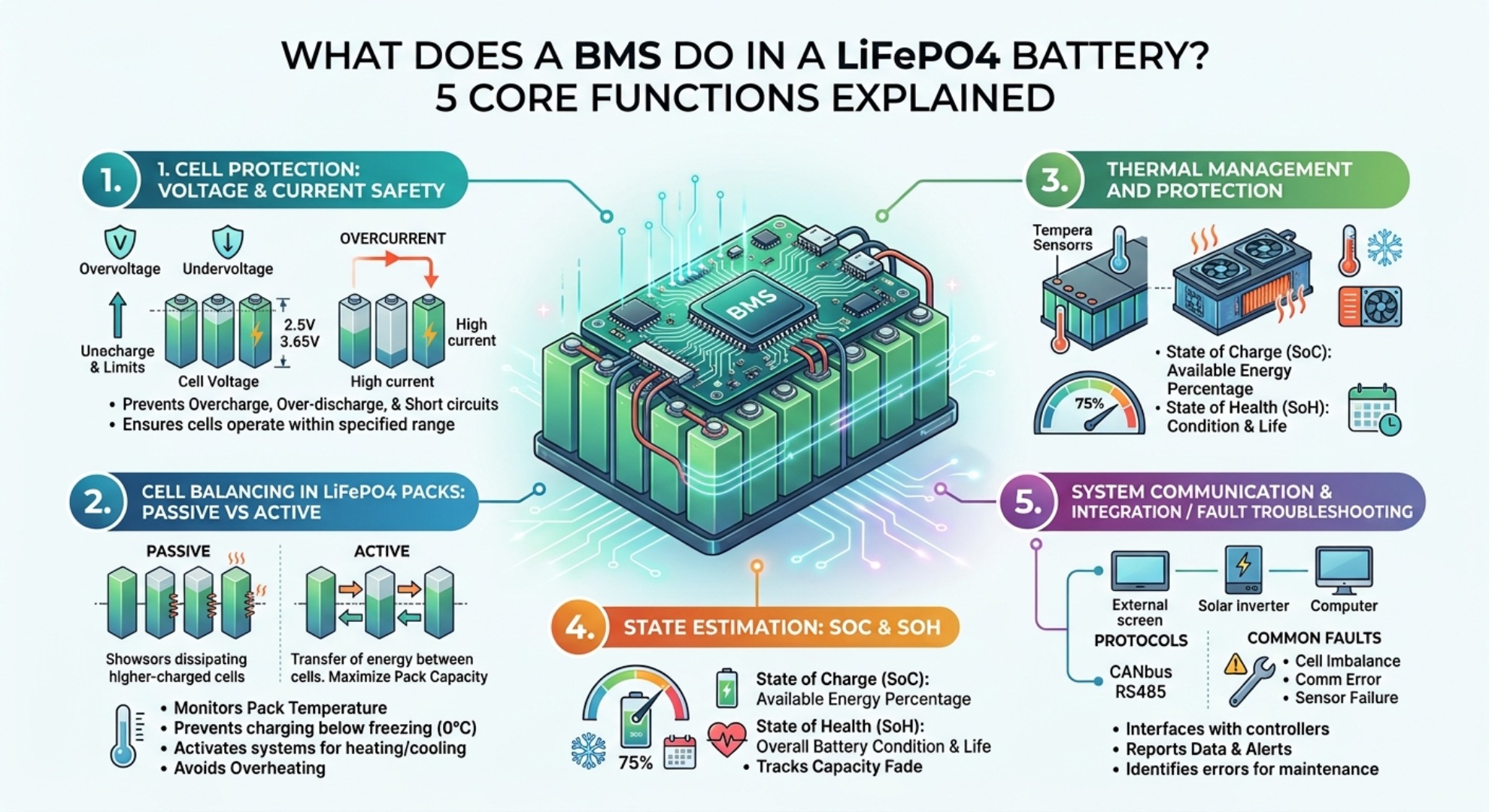
The BMS is your battery’s main safety guard. It watches cell voltage, temperature, and charge‑discharge current. It cuts power before you hit unsafe operating limits. Look for hardware protection triggers: over‑charge, deep under‑discharge, short‑circuit, and sudden current spikes.
Cold weather creates one of the most common field failures. Never charge standard LiFePO4 below 0°C (32°F). Charging in freezing conditions builds up lithium metal plating on the anode. That damage cannot be reversed; it ruins capacity and can create short‑circuit risks. Good commercial batteries add built‑in heating pads that run from solar or grid power. The pack warms itself before accepting charge. Also confirm your BMS uses active balancing to bring series‑connected cells back to matching state‑of‑charge every charge cycle.
Inverter Compatibility: CAN Bus, RS485 & Discharge Rate

For grid‑tied or off‑grid solar, you really want CAN‑bus or RS485 communication between battery and inverter. With closed‑loop communication, your BMS sends real‑time state‑of‑charge, safe current limits, and temperature readings straight to your inverter or charge controller. This stops accidental over‑charging, gets more from your solar panels, and avoids the bad SOC estimates you get from voltage‑only readings.
Do not overlook continuous and peak discharge ratings. A battery can have large total capacity yet use a low‑current BMS. That will leave you stuck when you try to fire up heavy inductive loads like air‑conditioners or water pumps. Always cross‑check your largest load startup surge against the battery’s short‑term surge rating, usually rated for three to five seconds.
- Closed‑Loop Protocol Integration: Real‑time parameter sharing prevents system over‑stress and voltage overshoot.
- Multi‑Inverter Auto‑Detection: Built‑in protocol firmware automatically synchronizes with leading hybrid inverter platforms.
- Remote Telemetry Monitoring: Wireless data channels provide live cell‑level diagnostics and firmware update capabilities.
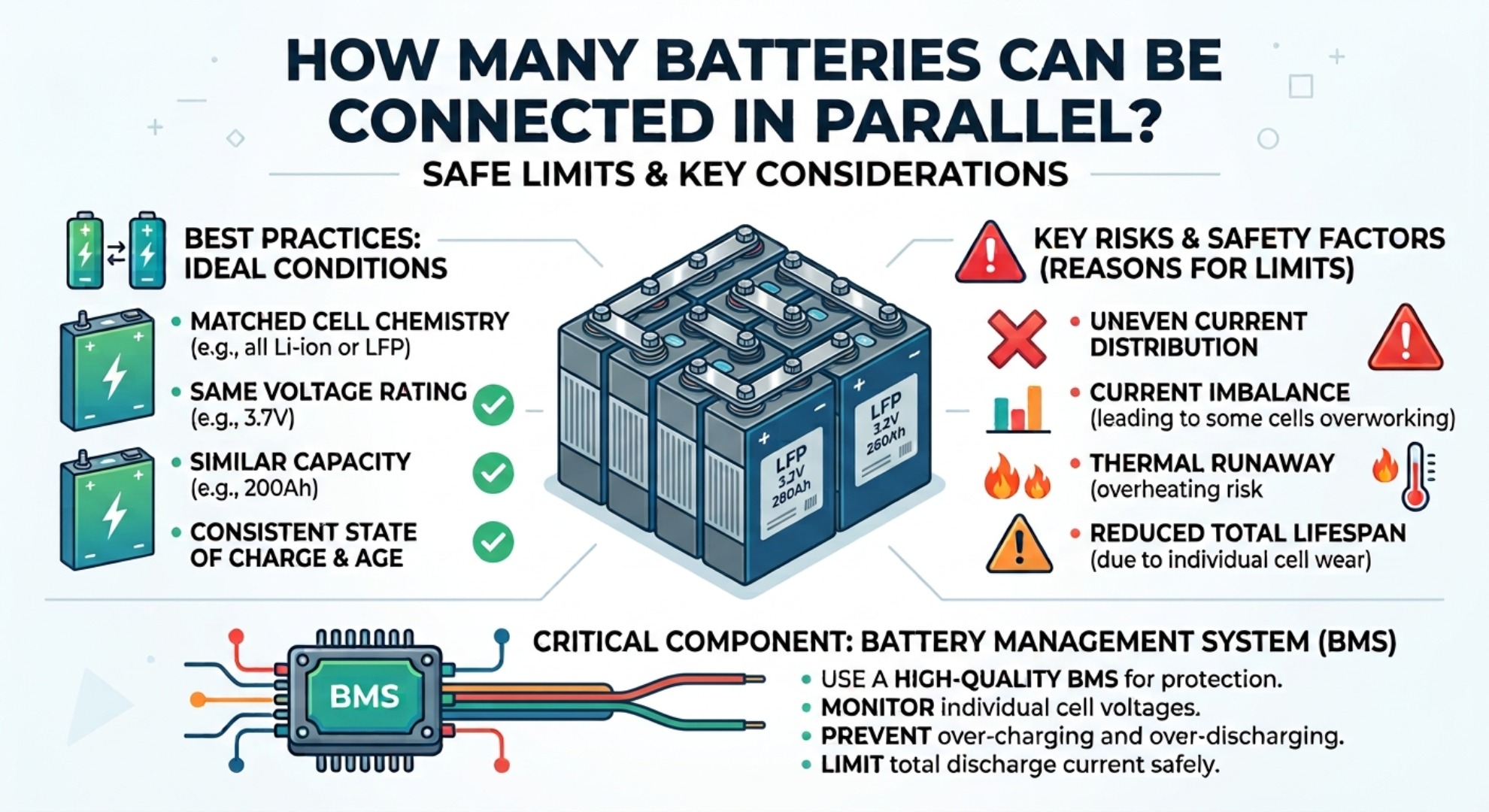
- Parallel Module Scalability: Integrated addressable switches allow seamless expansion up to multiple battery banks in parallel.
UL 1973 & IEC 62619 Certifications and Total Cost
Always look over third‑party test documents before you commit. Stationary storage batteries should carry UL 1973 certification. Industrial‑grade units should meet IEC 62619. For shipping purposes, confirm UN 38.3 test documentation. It verifies the pack holds up under vibration, impact, and altitude changes during transport.
Do not judge value only on sticker price. Calculate levelized cost of storage (LCOS). Divide total battery cost by total kWh it will deliver across its warranted lifespan. Most quality warranties run for 10 years with 70% minimum remaining capacity. LiFePO4 delivers thousands of cycles, requires zero regular maintenance, and runs high round‑trip efficiency. Over its full service life it works out as the cheapest storage option you can buy.
Real‑World Case Studies Collection
Case 1: Residential Storm Backup — Austin, Texas, USA

One local household ran AGM lead‑acid batteries for home backup. During a harsh winter storm, their lead‑acid bank died after just 12 hours. The house lost heating in freezing temperatures. They swapped to a 51.2V 300Ah LiFePO4 pack (15.36 kWh), paired with an 8 kW rooftop solar array. When another major winter storm hit months later, the LiFePO4 kept HVAC, fridge, lights and critical electronics online for three straight days. This real‑world install shows how much more usable power and runtime you get moving away from lead‑acid systems.
Case 2: Off‑Grid Agricultural Farm — Bavaria, Germany
A remote farm operates completely off‑grid. They needed reliable power for 3 kW irrigation pumps, livestock heating plus everyday household loads. Local installers built a full 48‑volt setup: a 12 kW solar array, two 48V‑400Ah LiFePO4 modules giving 38.4 kWh total storage and a 10 kW hybrid inverter. The higher‑voltage design cut required cable thickness and installation cost. The battery bank delivers three‑to‑five‑day autonomy through cloudy winter periods. The farm got rid of their noisy diesel generator and saves roughly €3000 every year in fuel and upkeep. After 24‑months of heavy daily cycling, measured capacity sat at 92% of original value with zero routine service work.
Frequently Asked Questions (FAQ)
What Does a BMS Do in a LiFePO4 Battery?
How to Charge a LiFePO4 Battery