


Home Battery Storage: How to Choose the Right Capacity
Home Battery Sizing: How to Calculate the Right Storage Capacity
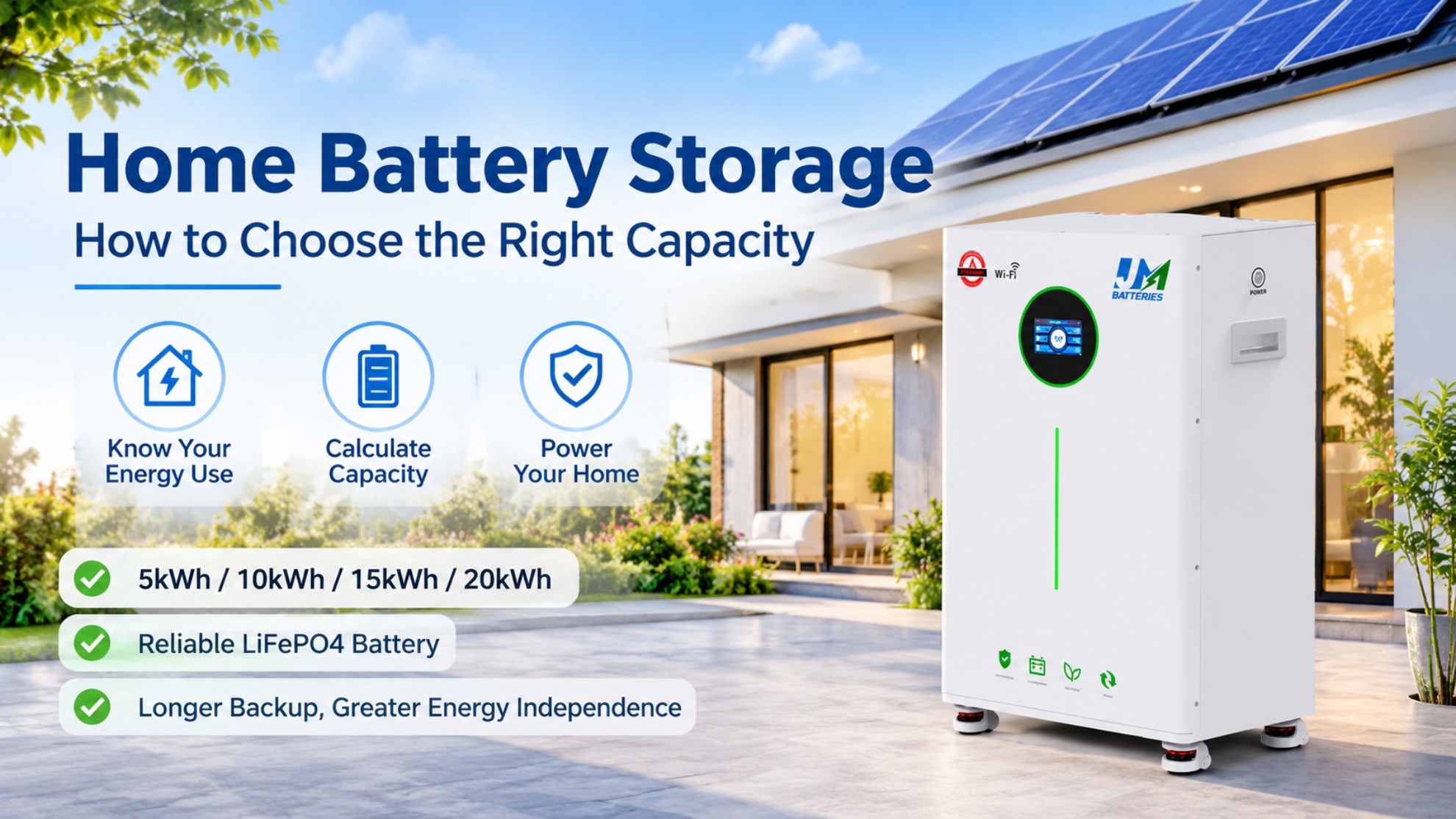
Choosing the right home battery storage capacity is not simply about buying the largest battery a customer can afford. A battery that is too small may not provide enough backup, while an oversized system can increase costs without delivering much additional value.
For solar installers and distributors, the starting point is the household's actual electricity use. Daily consumption, backup duration, appliance demand, and inverter capacity all influence the final selection. This guide explains how to estimate storage requirements and compare common residential LiFePO4 battery sizes.
1. Understanding Home Battery Storage
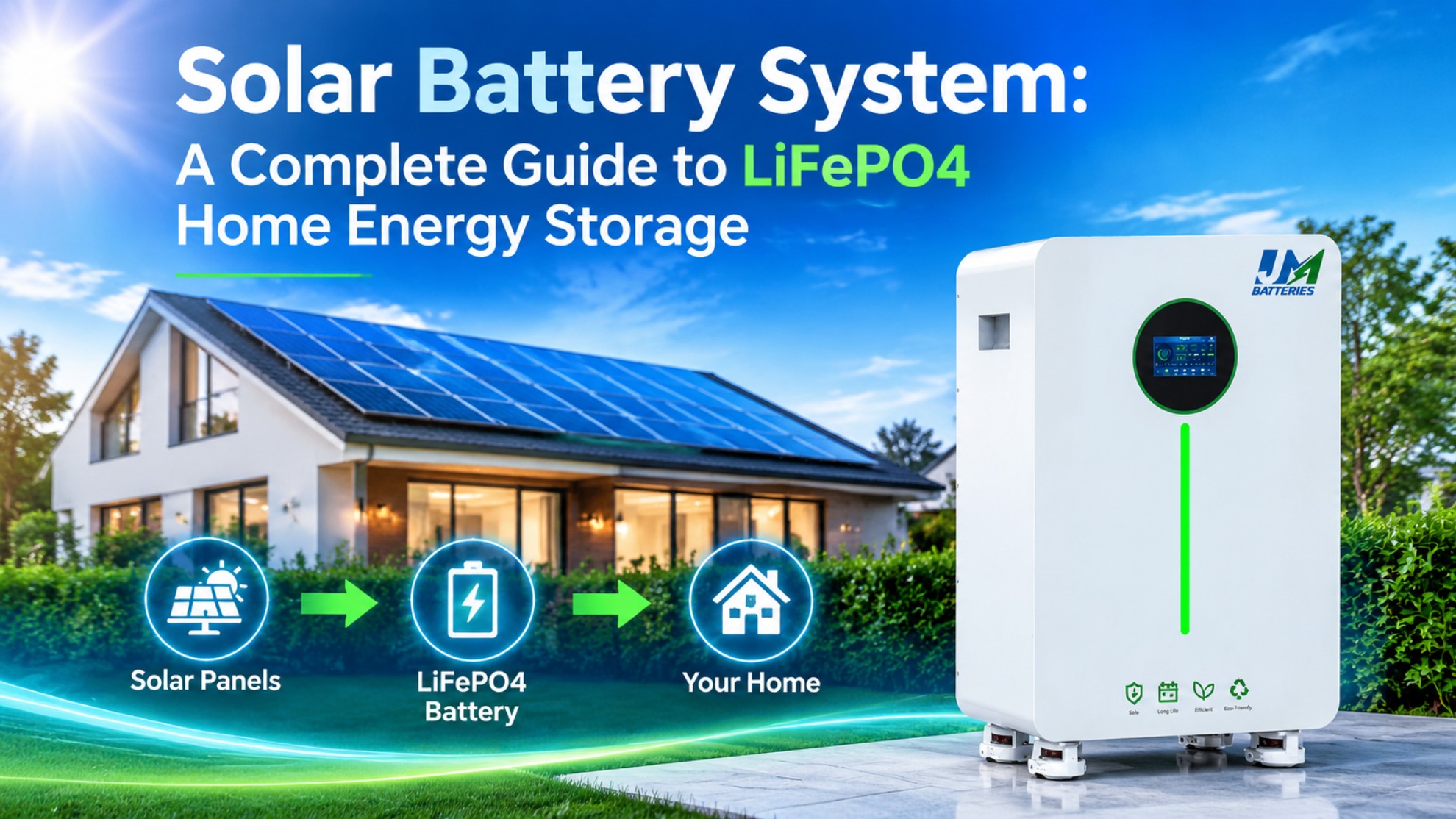
A home battery storage system stores electricity for later use. In a solar installation, it can save excess daytime generation for evening consumption or provide backup during a grid outage.
A typical system includes solar panels, a battery, an inverter, a battery management system (BMS), and electrical protection equipment.
Nominal Capacity vs. Usable Capacity
Battery capacity is measured in kilowatt-hours (kWh). Nominal capacity is the rated energy storage, while usable capacity is the amount available within the manufacturer's operating limits.
A 10kWh battery does not necessarily deliver 10kWh to household appliances. Depth of discharge (DoD), reserve settings, and energy losses affect the available energy. Installers should check usable capacity in the product datasheet rather than compare batteries by nominal capacity alone.
Capacity vs. Power
Capacity describes how much energy a battery stores. Power, measured in kilowatts (kW), describes how much electricity the system can supply at one time. A battery may have sufficient stored energy but still be unable to run several high-power appliances if the inverter output or battery discharge current is too low.
2. What Determines Home Battery Capacity?
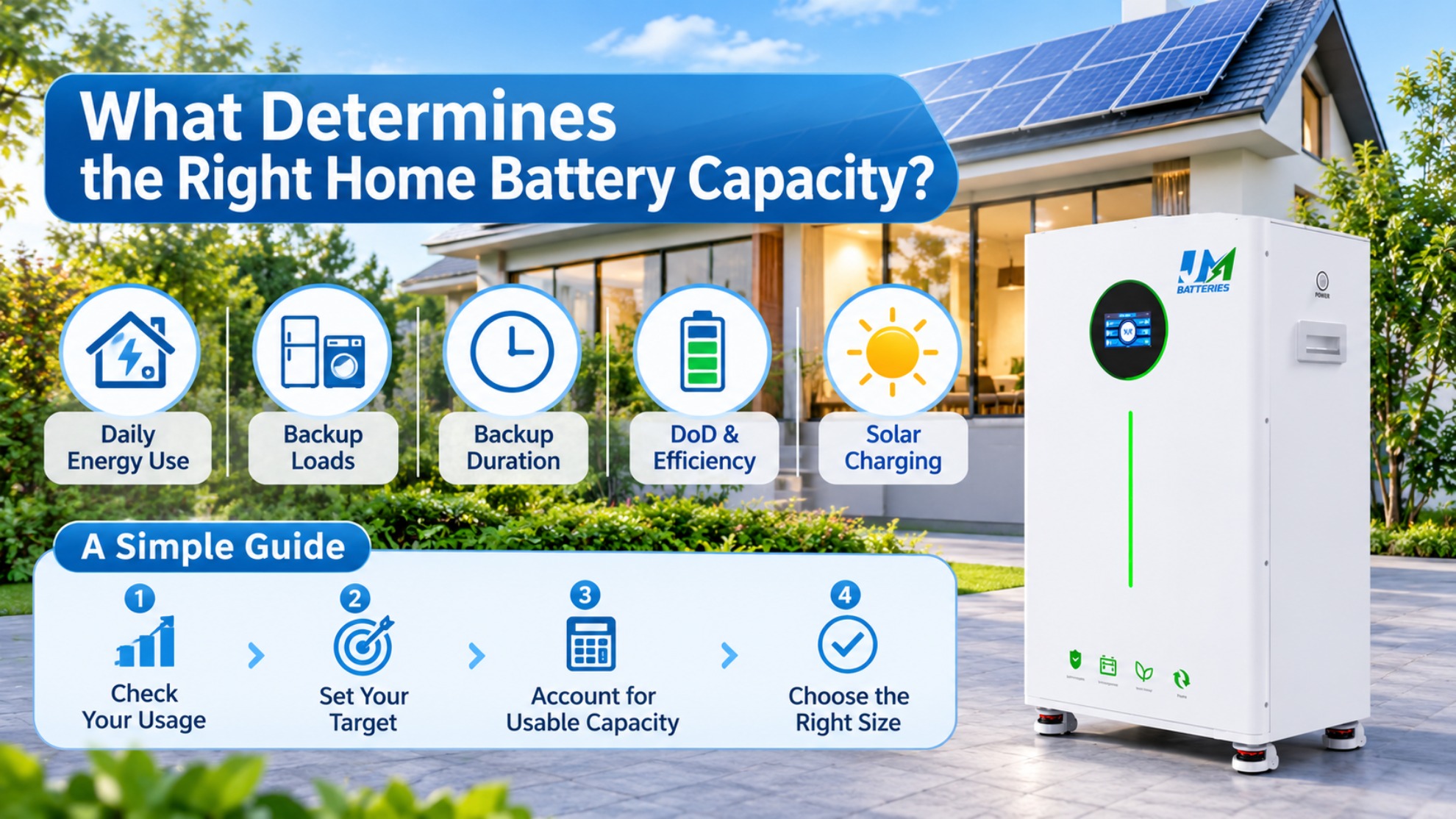
Daily Electricity Consumption
Start with the home's daily electricity use. Utility bills provide a rough estimate, while smart meter records can show when energy is consumed. A household using 8kWh per day will generally need less storage than one using 15kWh, assuming similar backup requirements.
Backup Loads and Duration
Ask which appliances the customer expects to operate during an outage. Essential loads may include refrigerators, lights, Wi-Fi equipment, and selected household electronics. Air conditioners, water heaters, pumps, and EV chargers can increase demand considerably.
A customer who needs a few hours of backup has different requirements from one who wants essential appliances running overnight. Identify the backed-up circuits before recommending a battery.
Depth of Discharge and Efficiency
DoD indicates how much of the battery's rated capacity can be discharged. This article uses 80% DoD as an example, but the permitted value must be confirmed in the battery specifications.
Energy is also lost during battery discharge and inverter conversion. The examples below use 90% as an assumed overall discharge-path efficiency. This is an illustrative calculation assumption, not a measured JM battery specification. Actual efficiency depends on the equipment and operating conditions.
Solar Charging Conditions
Battery selection should also reflect how much surplus solar energy is available for charging. Shading, roof orientation, seasonal sunlight, and daytime household consumption can all affect recharge time. Do not assume the battery will fully recharge every day.
3. How to Estimate the Required Home Battery Storage
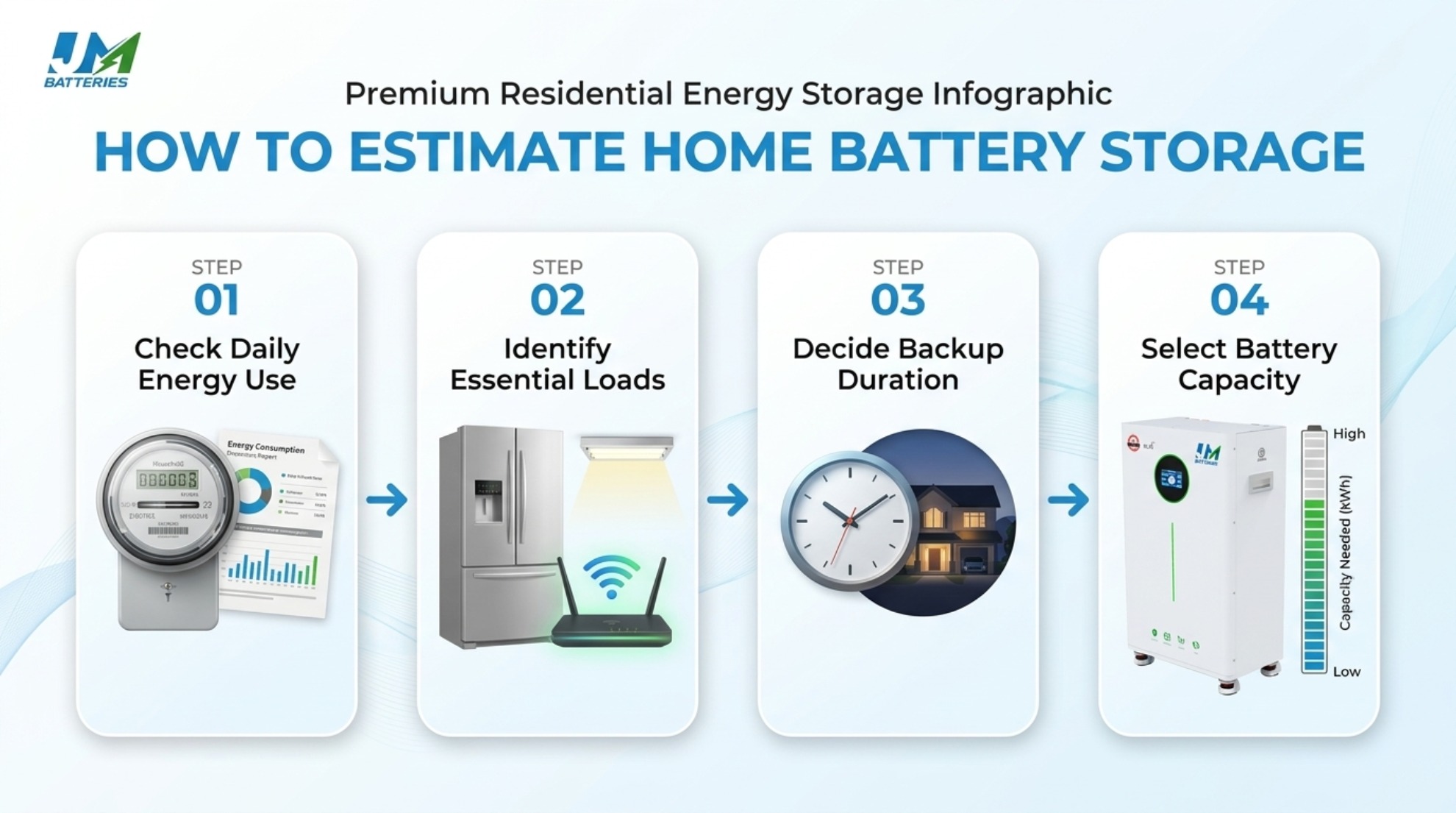
A preliminary estimate can be made by following four steps:
- Check daily energy use: Review electricity bills or monitoring records, preferably across different seasons.
- Set the energy target: Decide whether the battery will support essential loads, evening consumption, or a larger share of household demand.
- Allow for usable capacity: Consider DoD, reserve settings, and relevant system losses.
- Check available products: Compare usable capacity, discharge current, inverter compatibility, and expansion limits.
The estimate is only a starting point. Final selection should reflect the actual load profile and manufacturer specifications.
4. Comparing 5kWh, 10kWh, 15kWh, and 20kWh Batteries
These capacity ranges are useful reference points for residential projects, but they are not fixed recommendations for particular house sizes.
| Battery Capacity | Potential Application |
|---|---|
| 5kWh | Smaller systems and limited essential loads |
| 10kWh | Moderate residential storage requirements |
| 15kWh | Higher consumption or longer backup needs |
| 20kWh | Larger storage requirements and greater energy reserve |
A 5kWh battery may support basic appliances, while a 10kWh system offers more flexibility for evening use and essential-load backup. A 15kWh or 20kWh system may suit households with higher consumption or longer backup expectations.
More capacity does not automatically mean more output power. The inverter rating and battery discharge limits must still match the connected loads.
5. Practical Home Battery Sizing Examples
The following examples use a 70% daily energy coverage target, 80% DoD, and an assumed 90% overall discharge-path efficiency.
Case 1: A Household Using 8kWh per Day
A household consumes approximately 8kWh daily and wants the battery to supply around 70% of that amount. The target energy delivered to the home is about 5.6kWh.
After allowing for the assumed DoD and discharge-path efficiency, the estimated nominal battery capacity is approximately 7.78kWh. A 10kWh-class battery is therefore a reasonable starting point.
The installer should still check usable capacity, backed-up appliances, inverter output, and available solar charging. This estimate does not guarantee a full day of backup.
Case 2: A Household Using 15kWh per Day
A second household consumes approximately 15kWh daily and has the same 70% coverage target. The required energy delivered to the home is about 10.5kWh.
Using the same assumptions, the estimated nominal capacity is approximately 14.58kWh. A 15kWh-class battery may be considered.
For example, a 51.2V 300Ah LiFePO4 battery has a nominal capacity of 15.36kWh. The margin is relatively small, so the installer must verify usable energy, reserve settings, inverter losses, and the household's load profile. A larger configuration may be needed if the customer expects longer backup or additional loads.
6. Battery and Inverter Considerations
After estimating capacity, check whether the battery and inverter can support the appliances together.
High-Power Appliances
Air conditioners, pumps, ovens, and water heaters may require substantial continuous power or draw high starting currents. Check appliance running power, surge demand, and whether several large loads may operate simultaneously.
Parallel Battery Connections
Some batteries support parallel connections to increase storage capacity. For example, two identical 51.2V 100Ah batteries connected in parallel provide a combined nominal capacity of 51.2V 200Ah, or 10.24kWh, provided the manufacturer permits the configuration.
Before connecting batteries, check the supported unit limit, voltage and capacity requirements, BMS communication, cable arrangement, current sharing, and inverter compatibility. Matching nominal voltage alone does not guarantee that two batteries can operate together.
CAN or RS485 ports also do not guarantee communication compatibility. Protocols, pin assignments, baud rates, and firmware support must be verified. See Why Battery and Inverter Compatibility Matters.
7. Common Home Battery Sizing Mistakes
- Using monthly consumption alone: Monthly bills do not show which appliances need backup or when they operate. Review daily usage and essential loads.
- Ignoring usable capacity: Nominal kWh is not necessarily the energy available to household appliances.
- Overlooking inverter limits: A large battery cannot compensate for insufficient inverter output or discharge current.
- Overestimating solar charging: Seasonal sunlight, shading, and daytime consumption affect recharge opportunities.
- Forgetting future demand: Ask whether the customer plans to add air conditioning, an EV charger, or other equipment.
- Assuming all batteries can be mixed: Follow the manufacturer's rules for parallel connections, BMS communication, and model compatibility.
Conclusion
The right home battery storage capacity depends on daily energy use, backup duration, appliance demand, usable capacity, and inverter performance.
A 10kWh battery may suit one household, while another may need 15kWh or 20kWh. The capacity label alone cannot make that decision.
For installers and distributors, a proper load assessment and verification of battery and inverter specifications are more useful than choosing a system based on household size alone.
FAQs
1. How do I calculate the right home battery storage capacity?
Start with daily electricity consumption and the energy the customer wants the battery to supply. Account for usable capacity, DoD, system losses, and backup requirements. Then check inverter and battery output limits.
2. Is a 10kWh battery enough for a house?
It may be enough for moderate consumption or selected backup loads. Whole-home backup and longer outages may require more capacity. Actual performance depends on usable energy and household demand.
3. How much home battery storage does an average household need?
There is no universal size. Electricity use, appliance types, backup duration, solar generation, and budget all affect the requirement.
4. What is the difference between nominal and usable battery capacity?
Nominal capacity is the rated energy storage. Usable capacity is the amount available within the manufacturer's operating limits after considering DoD and reserve settings.
5. Is a 15kWh battery suitable for a solar-powered home?
It may suit a household with higher consumption or longer backup needs. Check usable capacity, inverter power, household loads, and solar charging conditions before selecting it.
6. Does DoD affect home battery sizing?
Yes. A lower permitted DoD means less of the nominal capacity is available for discharge, so a larger battery may be needed to deliver the same amount of energy.
7. Can multiple LiFePO4 batteries be connected in parallel?
Some models support parallel connections. Check the manufacturer's unit limit, BMS communication requirements, current limits, and inverter compatibility before expanding the system.
8. What should installers check before recommending a home battery?
Review daily consumption, backup loads, usable capacity, DoD, discharge current, inverter output, solar charging conditions, installation requirements, and future expansion plans.
What Is a Lithium Iron Phosphate Battery
Lithium Batteries: Types, Uses, Benefits & Buying Guide