


How to Calculate the Right kWh Capacity
Home Battery Sizing: How to Calculate the Right kWh Capacity
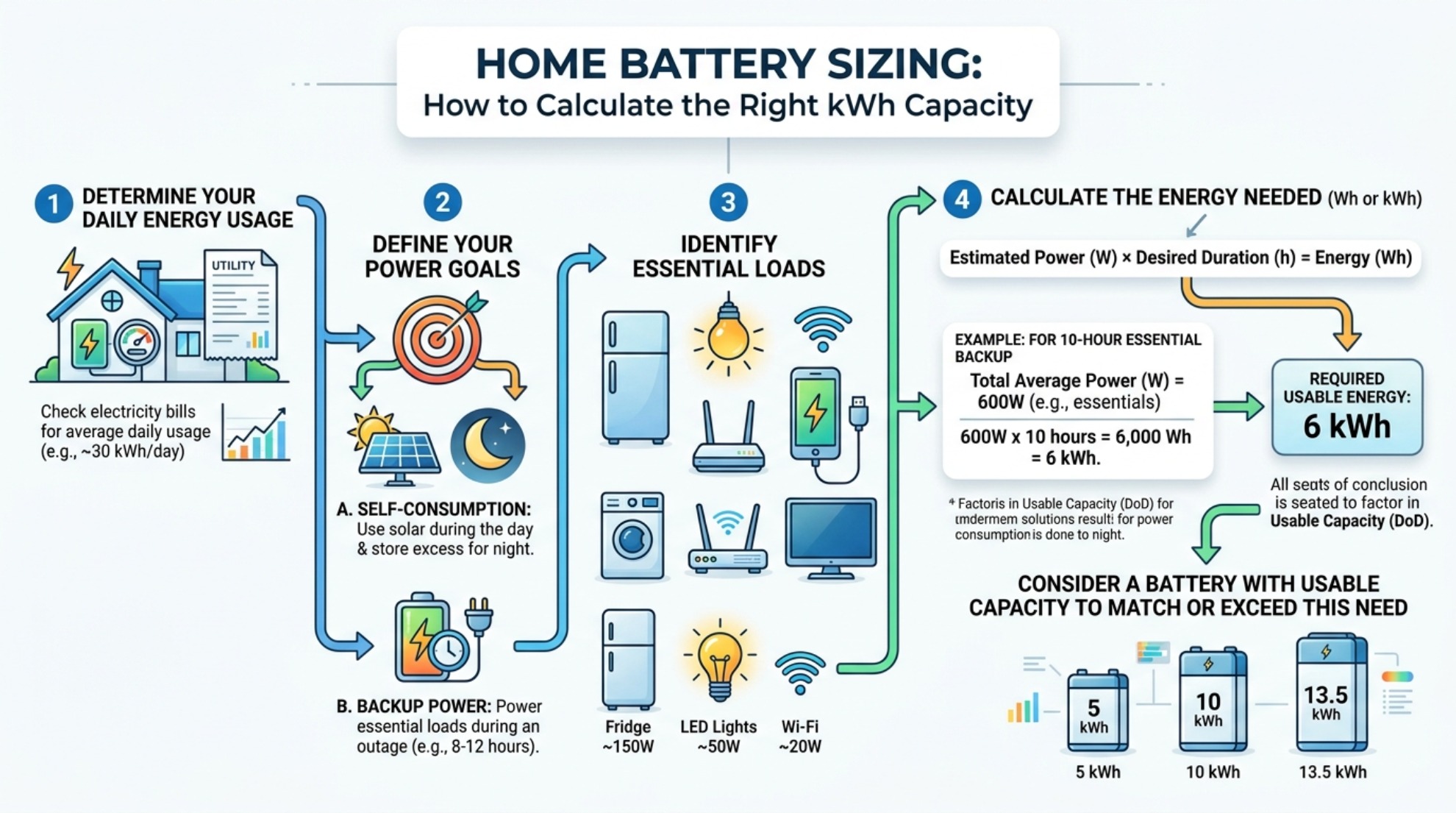
Table of Contents
- Why Proper Home Battery Sizing Matters for Cost and Performance
- How Many kWh Battery for Home? Step‑by‑Step Sizing Guide
- Usable vs Nominal Battery Capacity: Home Storage Specs Explained
- Solar Battery Sizing: Pairing Home Storage with Solar PV Generation
- Future‑Proof Home Battery: Modular Expansion and Sizing Tips
Selecting an energy storage system requires a precise evaluation of power requirements, daily load patterns, and seasonal solar generation. Choosing an improperly matched unit leads to unnecessary capital expenditure or unexpected power outages during grid disruptions. Mastering home battery capacity sizing allows homeowners to balance financial payback with reliable backup power performance.
Why Proper Home Battery Sizing Matters for Cost and Performance
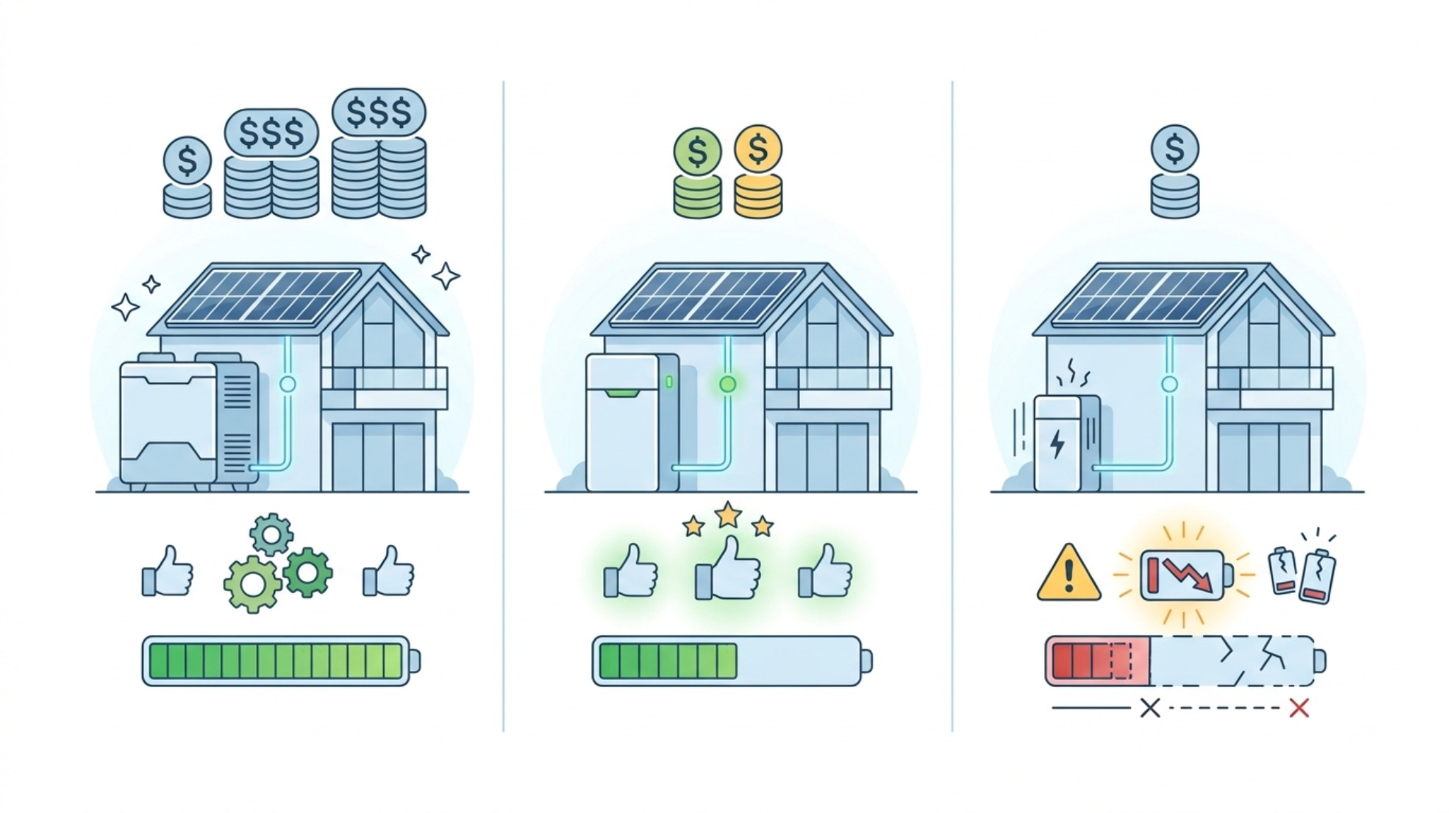
Installing a residential energy storage system without calculating peak power demands can negatively affect battery health and return on investment. Oversizing an energy storage array increases upfront installation costs without offering meaningful advantages, while undersizing subjects the battery cells to constant deep discharging. Correct initial sizing lowers the solar battery payback period by ensuring the battery operates within its optimal efficiency window.
System longevity depends on how hard the storage cells work during peak operational hours. According to technical resources from the U.S. Energy Information Administration (EIA), residential power usage shifts dramatically based on climate control demands and daily occupant schedules. Understanding these load shifts prevents thermal stress on energy cells, maintaining high round‑trip efficiency for years.
How Many kWh Battery for Home? Step‑by‑Step Sizing Guide
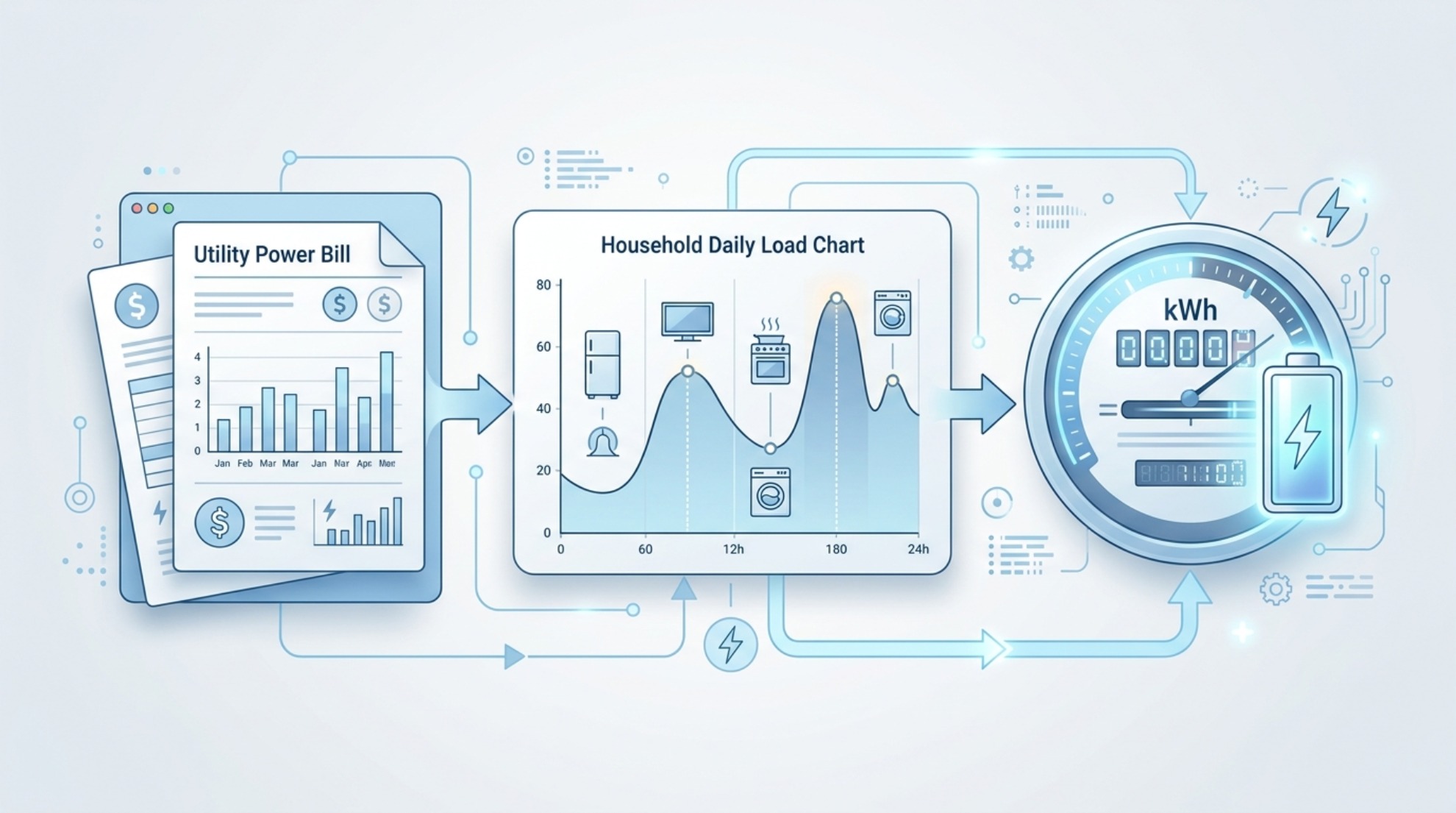
Determining how many kWh battery for home installation requires analyzing historical power bills alongside instantaneous wattage requirements. A comprehensive audit examines two metrics: continuous energy output over time (kilowatt‑hours) and instantaneous power draw (kilowatts). Combining these factors ensures the battery powers appliances smoothly without tripping circuit breakers.
Calculating Daily Home Energy Consumption in Kilowatt‑Hours
The foundation of battery capacity calculations begins with auditing average household energy usage through utility statements. Finding the average daily kWh consumption breakdown reveals baseline power needs across summer and winter months.
| Parameter | Formula / Source | Purpose |
|---|---|---|
| Daily Energy Usage | Monthly kWh ÷ 30 Days | Establishes total daily baseline energy demand |
| Nighttime Load | Daily Usage × Nighttime Share (~40–60%) | Calculates required storage capacity during non‑solar hours |
| Autonomy Factor | Desired Days of Emergency Backup | Multiplies baseline requirement for multi‑day resilience |
Dividing annual kilowatt‑hours by 365 yields an approximate daily energy baseline. However, accounting for seasonal spikes—such as summer air conditioning or winter heat pumps—is essential to prevent capacity deficits when demand peaks.
Essential Load vs Whole‑Home Battery Backup: What to Power
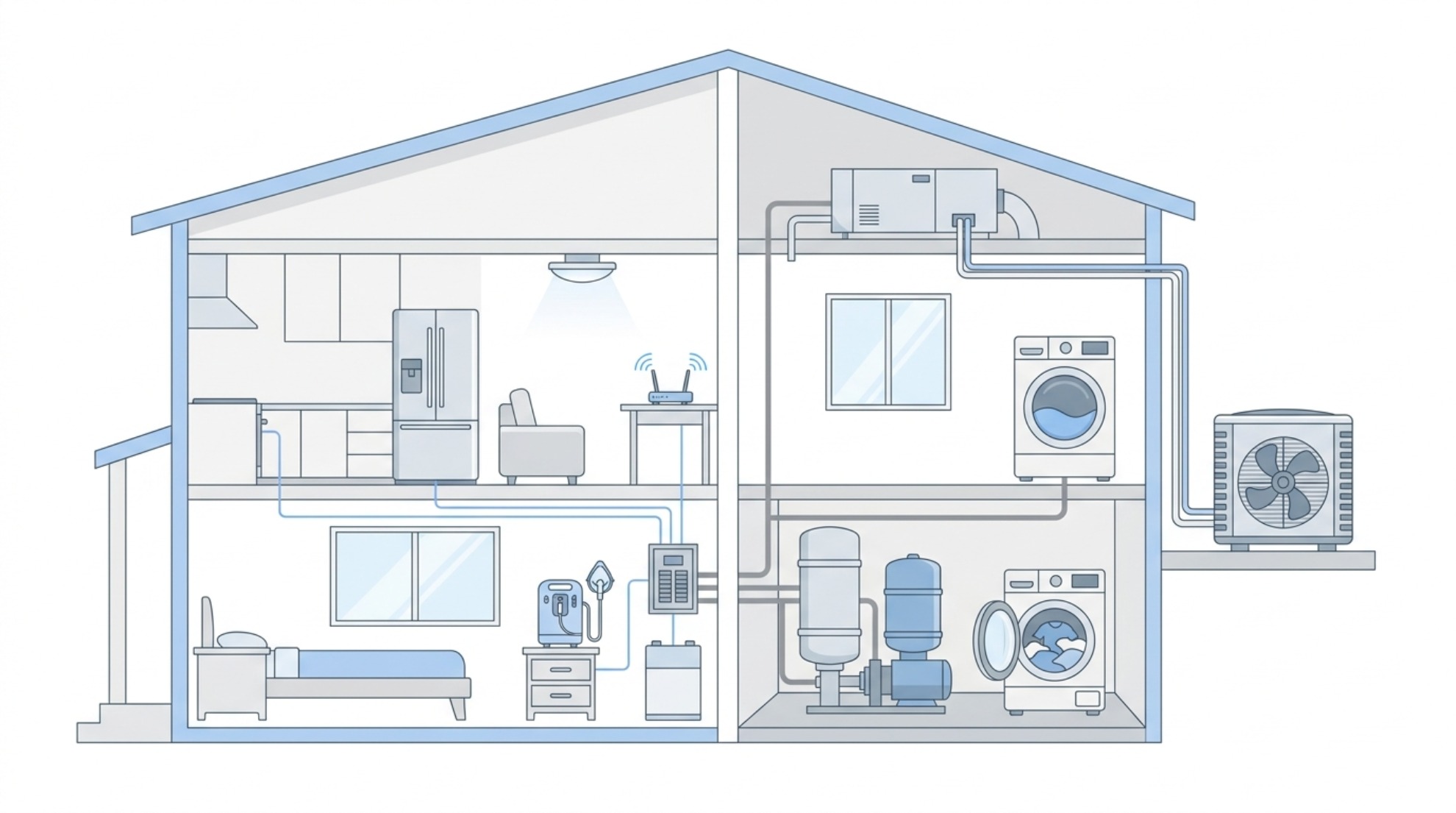
Homeowners must decide whether to deploy a whole home backup battery or limit emergency supply to a critical load panel. Essential loads typically include refrigeration, LED lighting, internet routers, and medical equipment, keeping capacity requirements within a modest range.
Heavy inductive appliances—such as central air conditioners, well pumps, and electric clothes dryers—require substantial surge power capacity upon startup. Ignoring these initial starting surges can cause an undersized battery inverter to shut down due to overcurrent protection.
Usable vs Nominal Battery Capacity: Home Storage Specs Explained 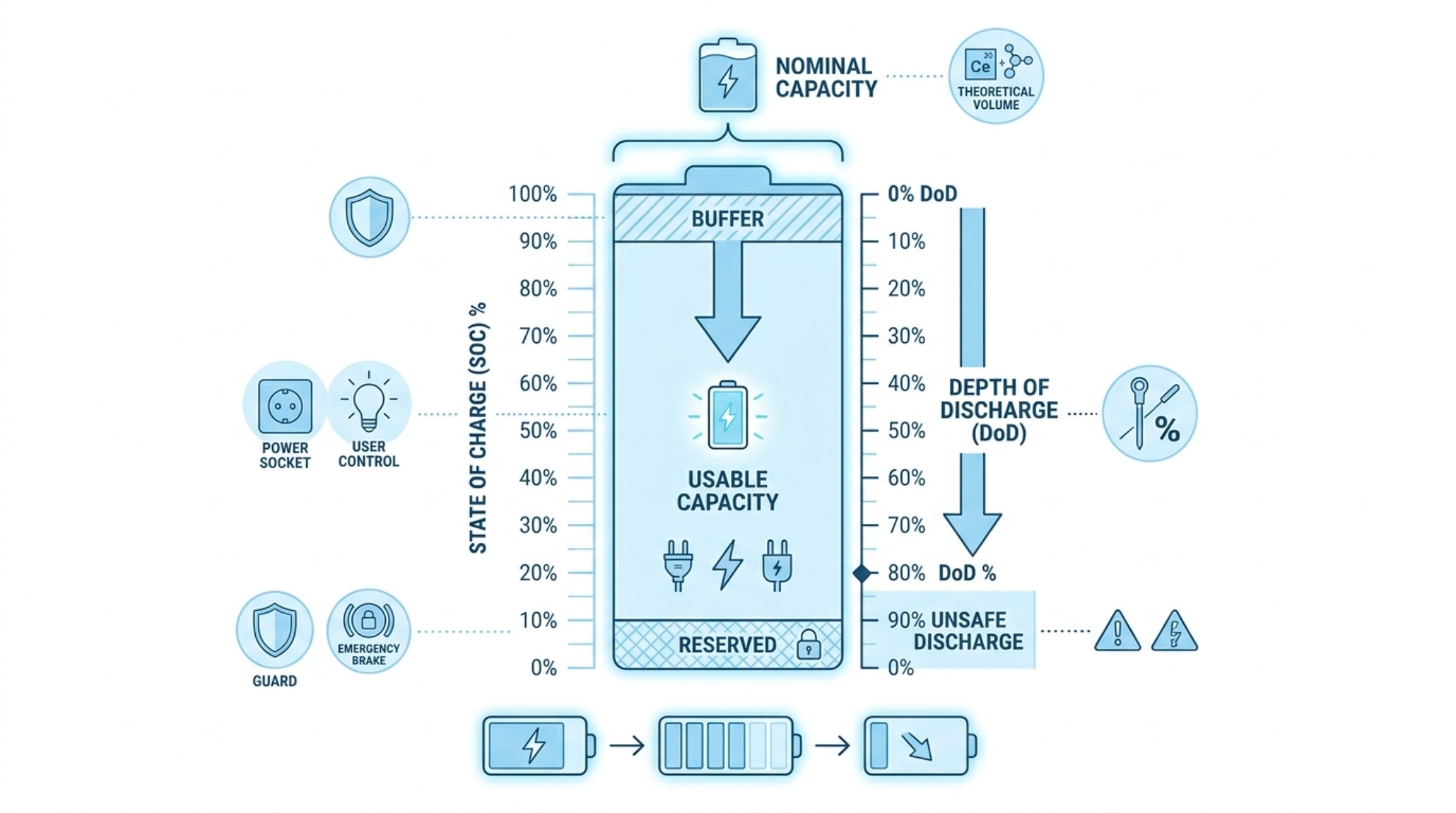
Battery spec sheets list two distinct capacity figures: total storage capability and actual deliverable energy. Evaluating usable vs nominal capacity prevents underestimating the physical hardware required for home energy security.
- Nominal Capacity: The total chemical energy stored within the battery cells under laboratory conditions.
- Usable Capacity: The maximum energy safe to extract without degrading battery lifespan or violating safety thresholds.
- Depth of Discharge (DoD): The percentage of battery capacity that can be safely drained before recharging.
Modern Lithium Iron Phosphate (LiFePO4) chemistry supports a higher depth of discharge DoD compared to legacy sealed lead‑acid chemistries. Higher allowable DoD directly improves long‑term battery cycle life, delivering a lower total cost per kilowatt‑hour stored.
Solar Battery Sizing: Pairing Home Storage with Solar PV Generation
A rooftop solar installation must generate enough daily surplus energy to charge the energy storage unit fully before sunset. Applying an accurate solar battery sizing formula ensures that the solar array and storage capacity operate in harmony without wasting generation potential.
Tools like the National Renewable Energy Laboratory (NREL) PVWatts Calculator provide localized solar irradiance data to verify whether an existing photovoltaic system can support a grid‑tied battery backup. Oversizing a battery without sufficient solar generation leaves storage reserves half‑empty during winter months, neutralizing excess solar power storage benefits.
Future‑Proof Home Battery: Modular Expansion and Sizing Tips
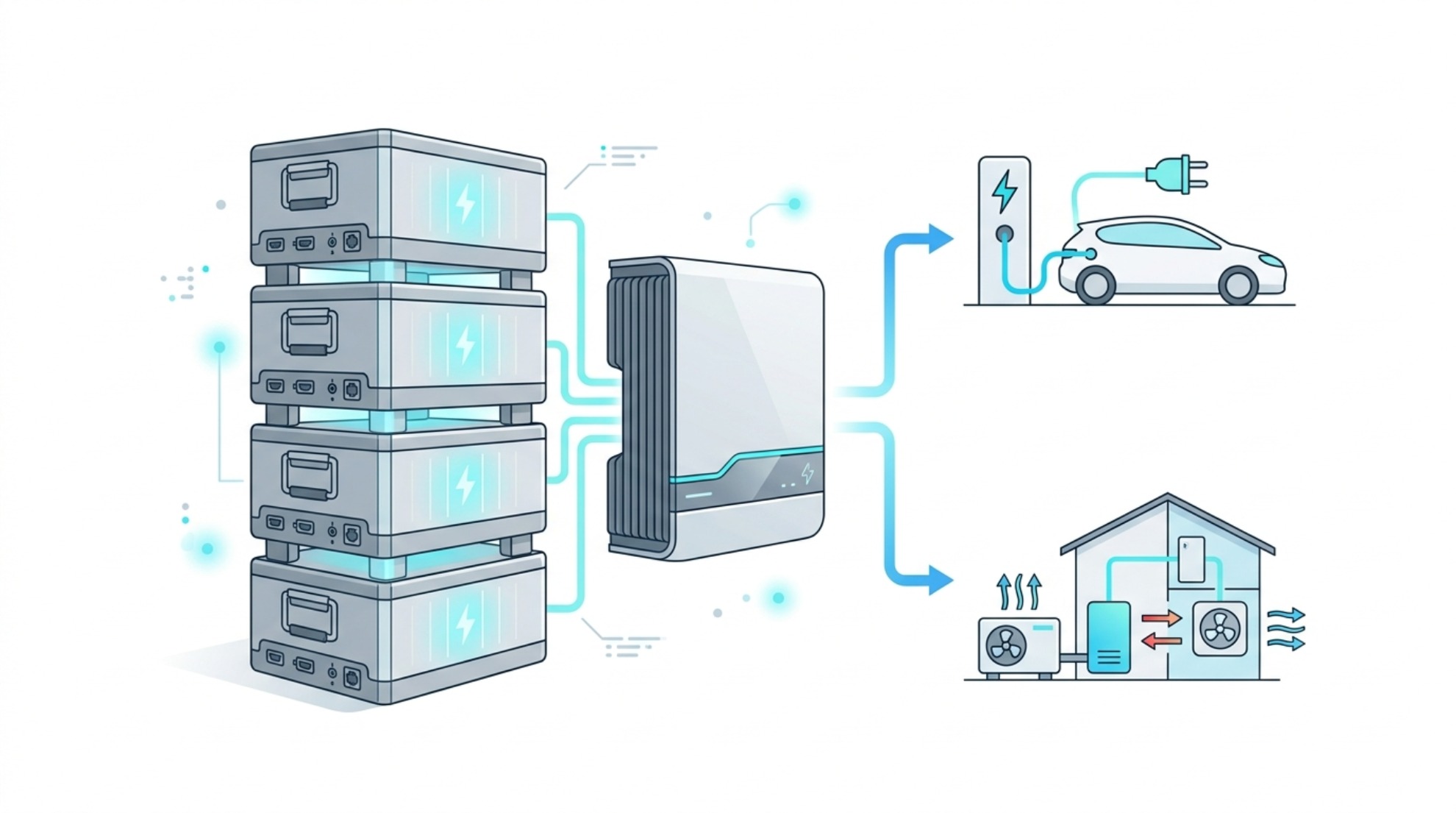
Home energy consumption patterns naturally evolve over time as households adopt cleaner technologies. Selecting energy storage units featuring modular battery expansion capabilities allows adding extra battery modules without replacing the primary inverter or system controller.
Integrating high‑draw equipment, such as an EV charger battery storage circuit or an electric heat pump, significantly changes baseline power demands. Planning for future heat pump power consumption at initial installation prevents costly rewiring and keeps the system adaptable for years to come.

JM New Energy Technology



Hybrid Inverter LFP Battery Compatibility
LFP Expansion Risks: The Voltage Gap Problem