


How to Buy LiFePO4 Batteries in Bulk
How to Buy LiFePO4 Batteries in Bulk: B2B Wholesale Sourcing Guide | JM EnergyTech
Table of Contents
- LiFePO4 Cycle Life and Thermal Stability for Industrial Use
- Total Cost of Ownership and ROI for Wholesale LiFePO4 Batteries
- How to Identify Grade A LiFePO4 Cells vs Grade B Cells
- Essential BMS Specifications for Wholesale LiFePO4 Battery Packs
- UN38.3 Certification and MSDS for Shipping Bulk Lithium Batteries
- UL 1973, UL 9540, and IEC 62619 Battery Certifications Explained
- Supplier Vetting: Factory Audits and Sample Capacity Testing
- LiFePO4 Battery Shipping Lead Times, Logistics, and Customs
- Wholesale LiFePO4 Battery Pricing, MOQ, and Tiered Discounts
- Battery Warranty Terms for B2B Bulk Purchases
- Real‑World B2B Bulk Sourcing Case Studies with JM EnergyTech
- Spotlight Product: JM‑M‑51.2V314Ah 16kWh Movable Solar LiFePO4 Battery
- Frequently Asked Questions (FAQ)
LiFePO4 Cycle Life and Thermal Stability for Industrial Use
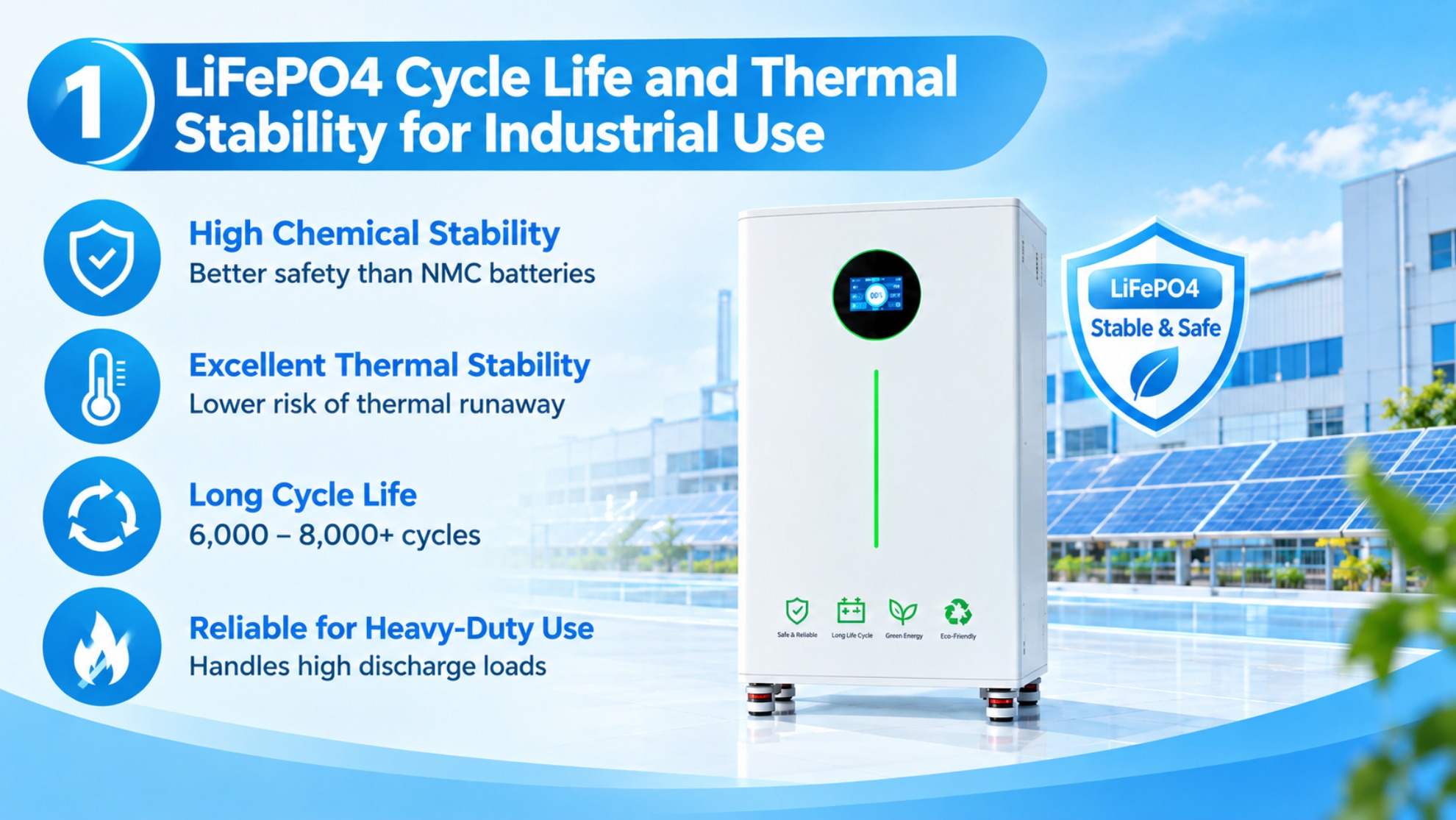
Anyone buying large‑scale energy storage needs to understand the core battery chemistry they are working with. Lithium Iron Phosphate (LiFePO4) delivers much better chemical and thermal stability compared to common NMC lithium cells. For commercial storage setups, thermal safety cannot be overlooked, as high‑discharge loads create real risk of thermal runaway. These batteries hold up well through heavy‑duty use. Most will run 3,500 to over 6,000 deep discharge cycles at 80% Depth of Discharge (DOD) (DoD). JM EnergyTech packs built on BYD blade cells can reach 8,000 cycles. This makes them a solid fit for industrial hardware, residential wall‑mount storage, rack‑mount modules, and cabinet‑style commercial energy‑storage hardware.
Total Cost of Ownership and ROI for Wholesale LiFePO4 Batteries
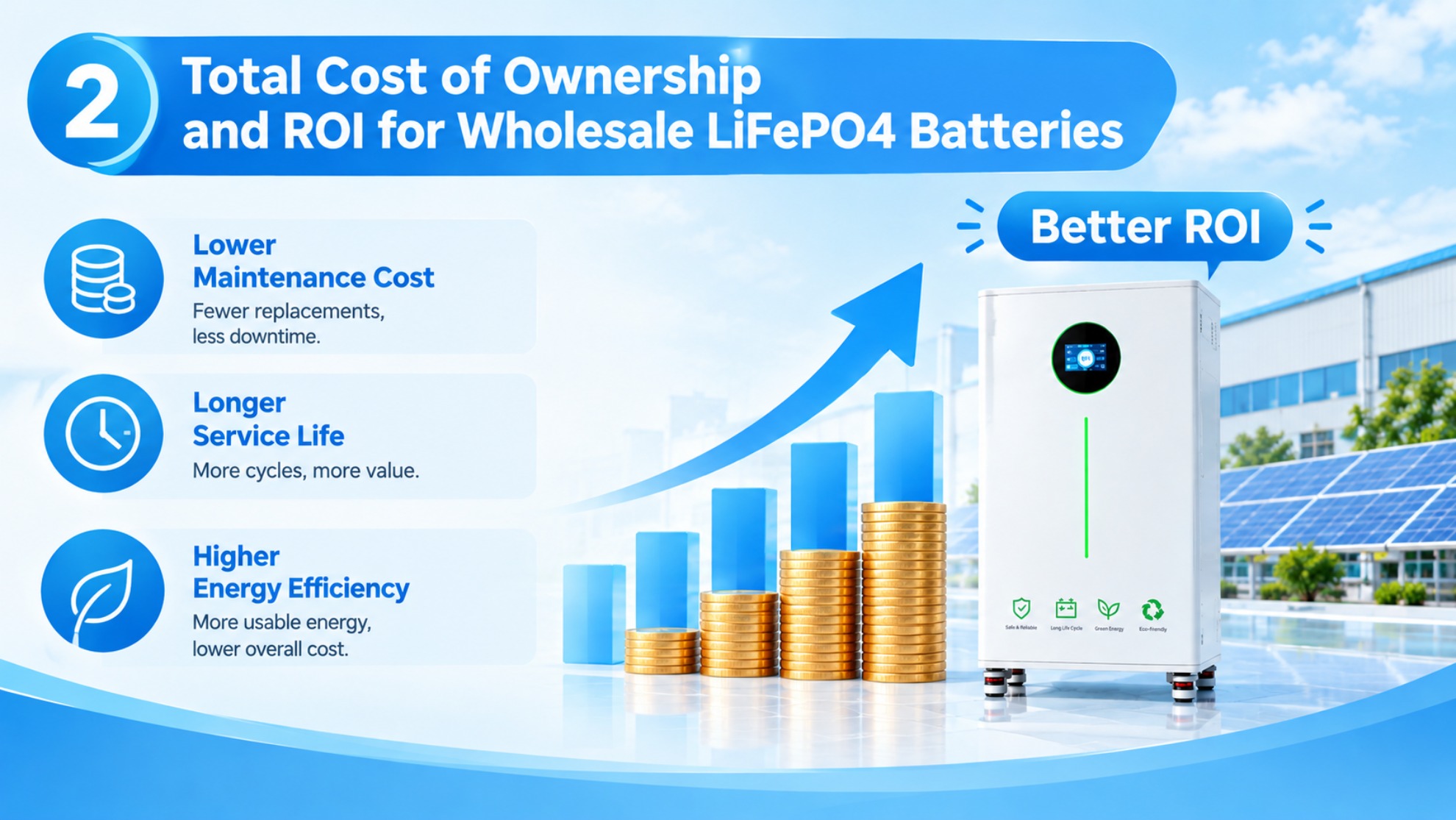
Buying bulk batteries based purely on per‑unit upfront cost will almost always create expensive mistakes down the line. When you look at full 10‑15‑year operational lifespans, LiFePO4 brings lower maintenance costs, round‑trip efficiency above 95%, and longer run hours. All of this drives down real‑world cost per kilowatt‑hour delivered. Procurement teams should run battery ROI calculations. This helps justify initial capital spend by factoring in less system downtime, fewer unit replacements, and lower thermal management work. Buying direct from a manufacturer like JM EnergyTech, with its 28,000㎡ Dongguan plant and 8000+‑unit monthly output, helps distributors and system integrators improve ROI for home and commercial solar‑storage projects.
How to Identify Grade A LiFePO4 Cells vs Grade B Cells
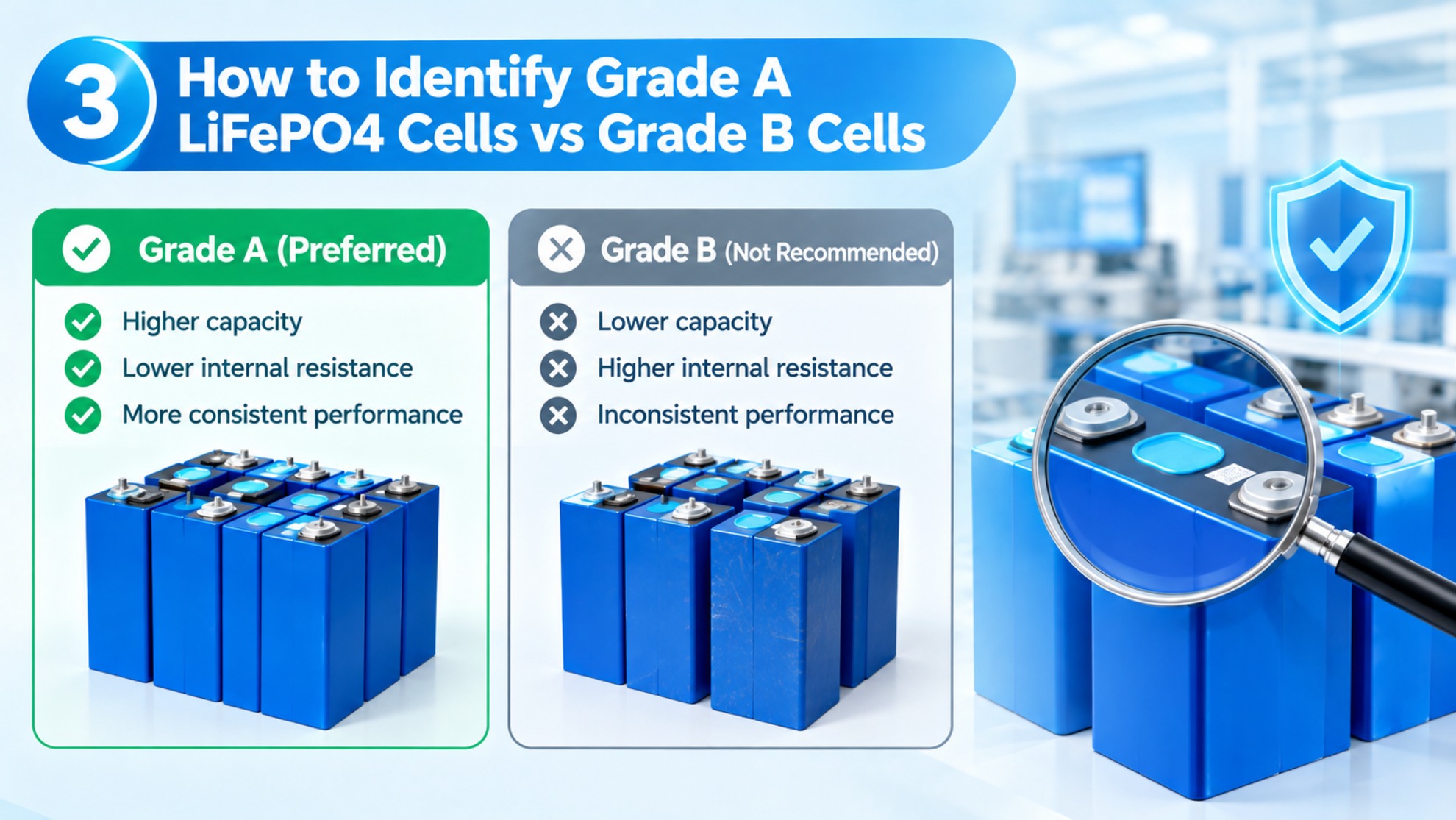
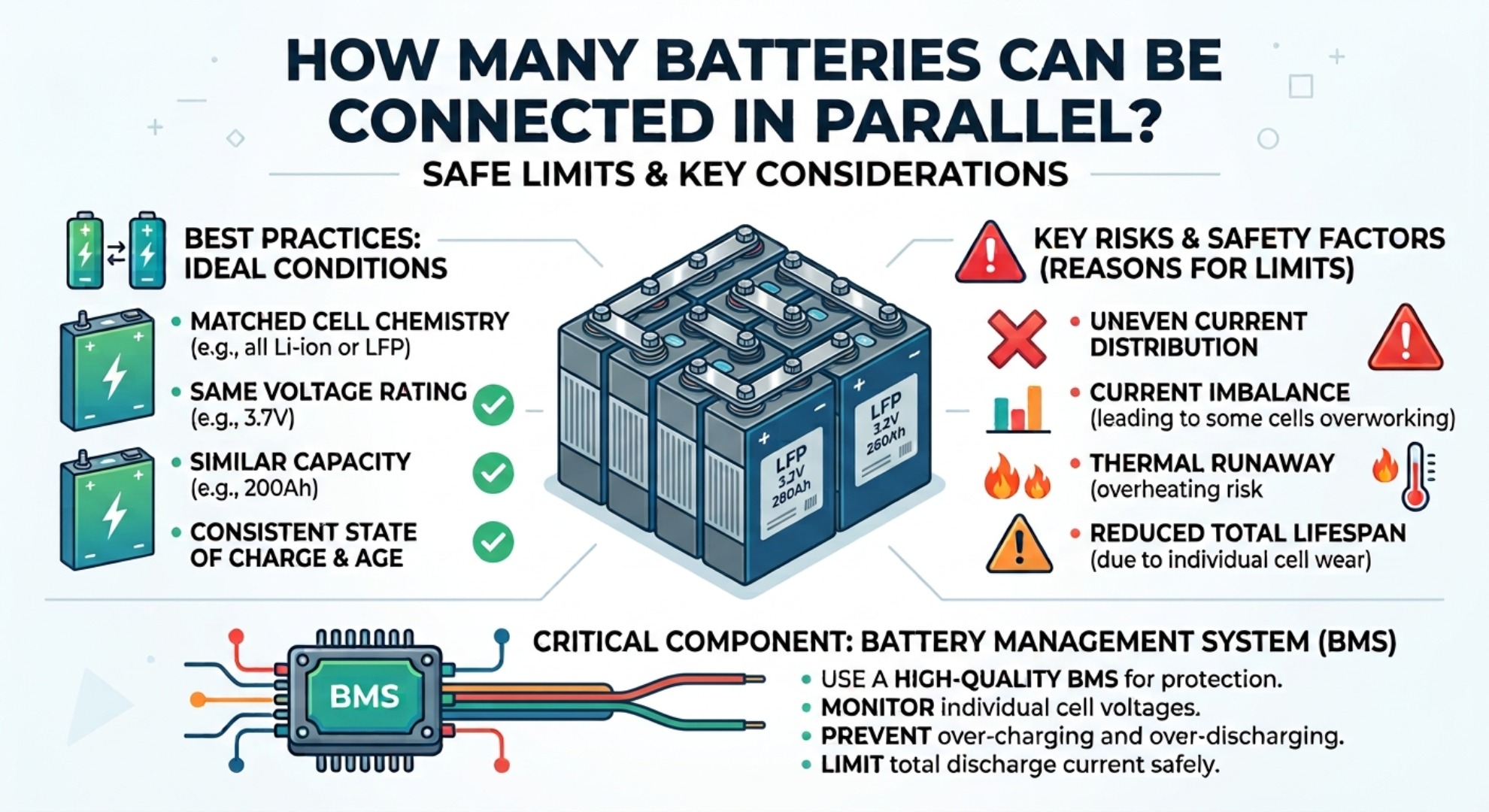
One key check while evaluating suppliers: confirm every battery uses genuine Grade‑A new cells. Many global supply channels push discounted lower‑grade or recycled cells. These show uneven capacity loss and higher internal resistance over time. To verify Grade‑A stock, inspect laser‑etched factory QR codes, review batch test datasheets, and run internal‑resistance spot checks on incoming shipments. Trusted manufacturers such as JM EnergyTech enforce tight cell‑matching rules to hold capacity variation within ±1% across all series‑parallel stacks for wall‑mount, stacked, rack‑mount and cabinet‑type ESS products; follow parallel‑connection best‑practices when expanding battery banks, sourcing genuine BYD blade Grade‑A cells for OEM and ODM orders.
| Cell Grade | Capacity & Internal Resistance | Expected Cycle Life (80% DoD) | QR Code Status | Intended Commercial Application |
|---|---|---|---|---|
| Grade A (Premium) | 100% nominal capacity, ultra‑low IR | 3,500‑6,000+ cycles; BYD blade up to 8000 | Pristine laser‑etched | Telecom, Commercial ESS, EV Power Packs, Home Wall‑mount batteries |
| Grade B (Discount) | 90%‑95% capacity, higher IR variability | 1,500‑3,000 cycles | Scratched / Defaced / Altered | Non‑critical standby, low‑duty backup |
| Grade C (Reject) | <90% capacity, unstable thermal performance | < 1,000 cycles | Missing or destroyed | Low‑end consumer novelty goods |
Essential BMS Specifications for Wholesale LiFePO4 Battery Packs
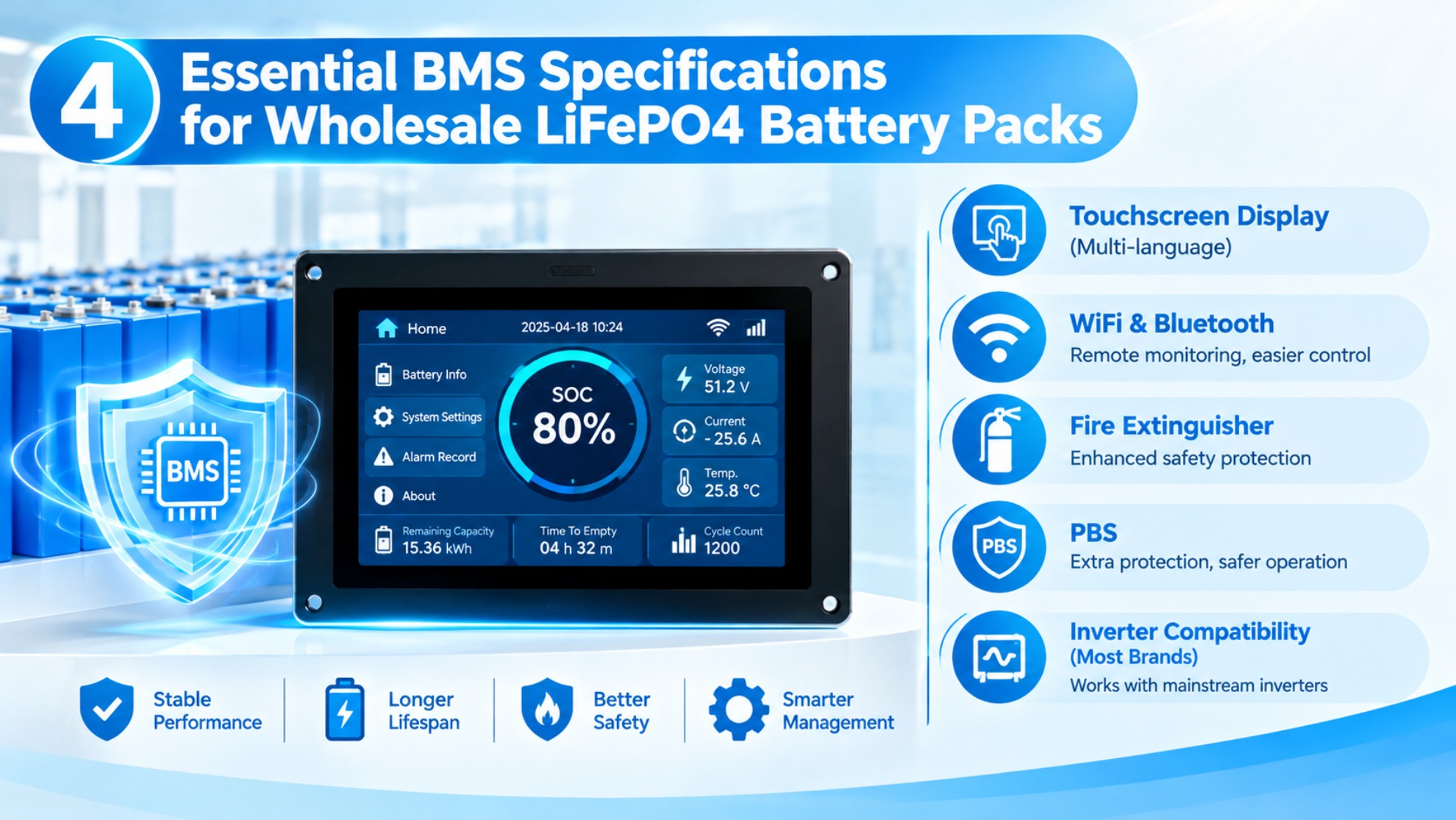
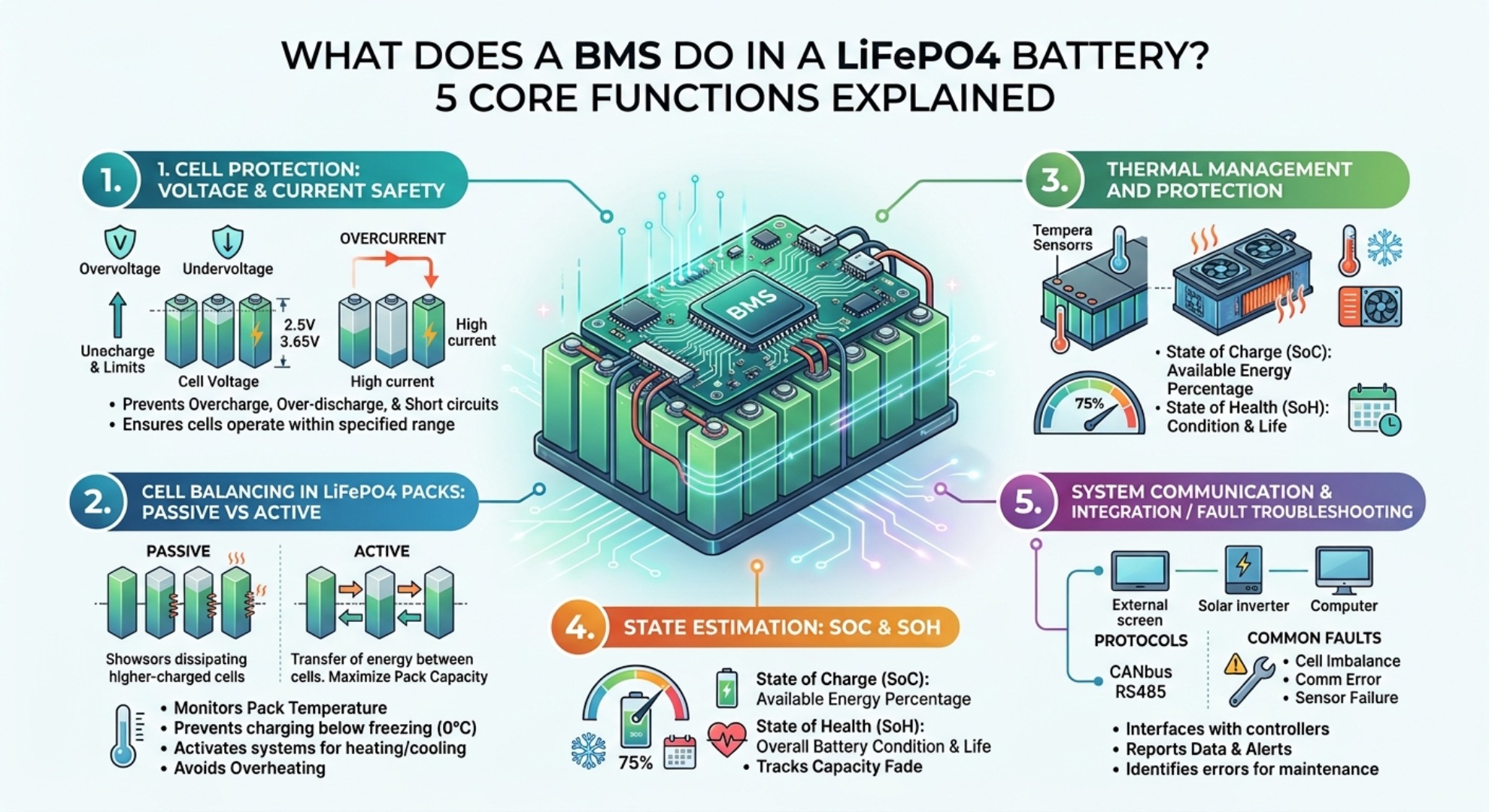
Pack performance and service life rely heavily on onboard protective electronics. A good smart battery management system (BMS) continuously tracks voltage, current and temperature. It should expose CANbus, RS485 or Modbus interfaces to talk with standard solar inverters. For large‑volume orders, prioritize units fitted with active cell balancing. Active balancing moves charge between cells instead of burning excess power off as heat through passive resistors. JM EnergyTech fits its 25.6V / 51.2V wall‑mount home batteries, stacked‑rack modules and C&I cabinet storage with smart BMS hardware. These support WiFi and Bluetooth phone‑app monitoring and work with most mainstream solar inverters for OEM‑ODM bulk projects.
UN38.3 Certification and MSDS for Shipping Bulk Lithium Batteries
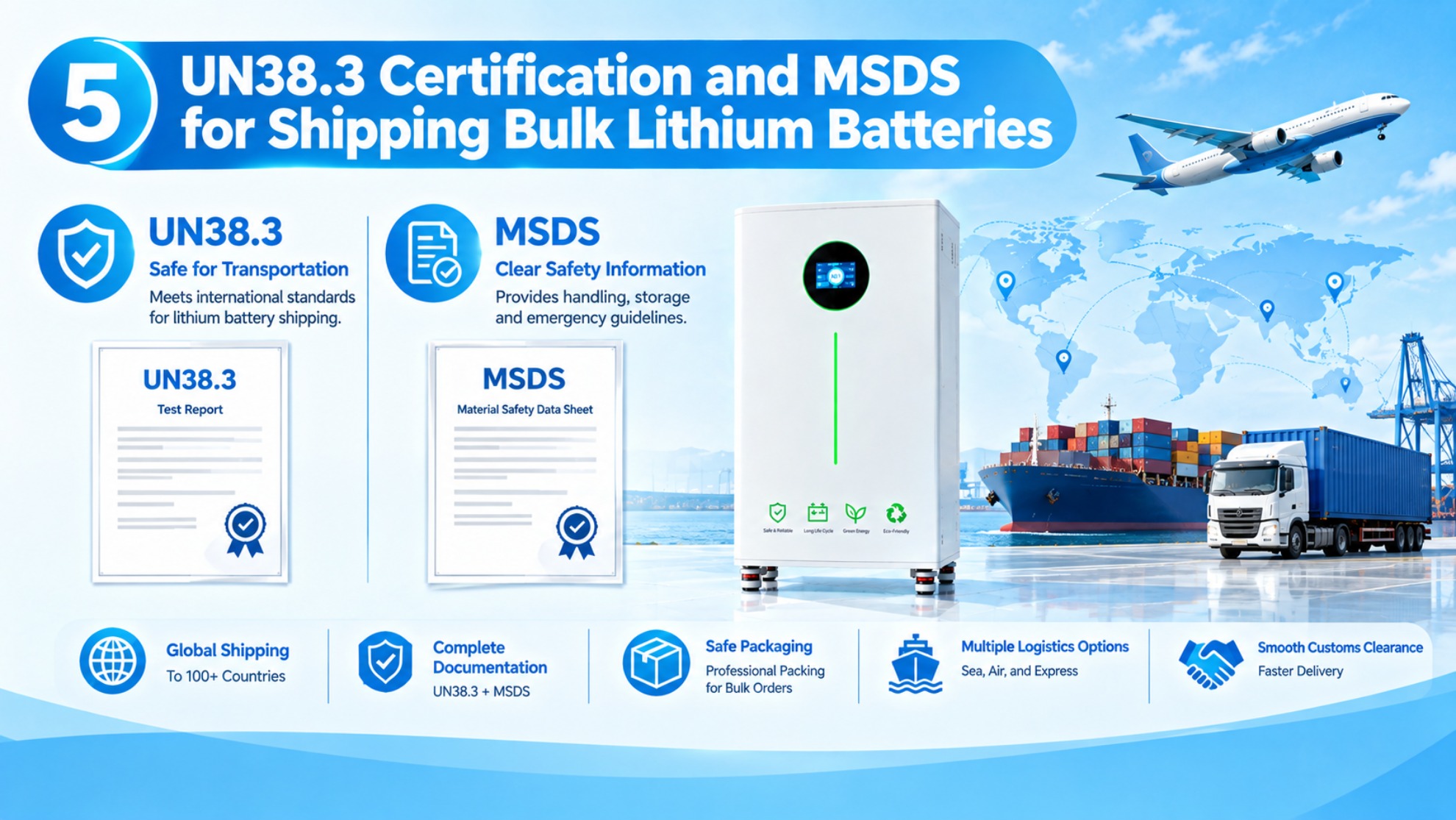
Lithium batteries count as dangerous goods under international transport rules. You need full documentation ready before goods leave the factory. A valid, up‑to‑date UN38.3 test report is mandatory for sea, air and ground freight. It proves cells passed thermal, shock, vibration and short‑circuit testing. Buyers also need to collect proper MSDS transport paperwork. Complete documentation prevents customs delays and keeps you compliant under Class 9 dangerous‑goods shipping regulations. JM EnergyTech supplies full UN38.3, MSDS, CE and RoHS documents for every bulk shipment sent to its 138+ export markets covering North America, Africa, Asia and Europe.
UL 1973, UL 9540, and IEC 62619 Battery Certifications Explained
When selling or installing in North America and Europe, certification status directly decides if a storage project can connect to the grid or secure insurance coverage. UL 1973‑certified hardware meets industrial stationary‑storage electrical and structural safety standards. If you are deploying container‑scale setups, check for UL 9540 grid‑safety compliance. Projects across European commercial sites will require IEC 62619 test compliance. JM EnergyTech fulfils IEC‑related requirements for bulk orders and can walk buyers through documentation requirements for entering North‑American markets with wall‑mount residential and C&I cabinet‑scale storage systems.
Supplier Vetting: Factory Audits and Sample Capacity Testing
Never sign high‑value purchase contracts without running structured supplier checks. Arrange formal lithium‑battery factory audits. You can visit in‑person or bring in third‑party inspectors. Audits verify automated production lines, clean‑room controls and ISO 9001 quality‑system practices. JM EnergyTech’s 28,000‑square‑meter Dongguan plant accepts both on‑site and virtual audits for B2B customers. Always request production samples first. Test sample‑cell capacity under real‑world C‑rate discharge conditions. Confirm hardware matches datasheet claims before you trigger mass production runs, including OEM‑ODM custom wall‑mount or rack‑mount units.
- Technical Requirements & RfP Issue: Define nominal voltage (25.6V /51.2V), total Ah capacity, continuous C‑rate requirements, BMS communication protocols, physical cabinet dimensions and OEM/ODM custom‑logo needs.
- Supplier Vetting & Certification Verification: Inspect and verify mandatory compliance documents, including UN38.3, UL 1973, IEC 62619, CE, RoHS and official MSDS reports.
- Golden Sample Testing: Perform rigorous capacity benchmarking, thermal tolerance evaluations, and internal resistance tests on factory sample units (wall‑mount, stacked‑rack or C&I cabinet samples).
- Contract & Warranty Finalization: Establish clear MOQ levels, structured payment milestones, linear degradation guarantees, defect replacement clauses and OEM‑ODM scope boundaries.
- Freight Logistics & Customs Clearance: Coordinate Class 9 hazardous goods packaging, UN‑certified packaging, and optimized ocean freight transit terms for full‑container or pallet‑based bulk shipments.
LiFePO4 Battery Shipping Lead Times, Logistics, and Customs
Ocean shipment for lithium batteries needs advance planning. Hazardous‑cargo vessel booking slots fill up fast. Realistic total lead‑times sit between 35‑60 calendar days. This window covers raw‑material assembly, factory cell balancing, hazard‑rated packaging, plus sea transit. For standard JM EnergyTech bulk orders, production itself usually takes 10‑45 working days before goods move to port. Work with freight forwarders familiar with lithium‑battery customs work. They handle dangerous‑goods declarations, import tariffs and UN‑approved heavy‑wood crate requirements and help you avoid port hold‑ups and penalties.
Wholesale LiFePO4 Battery Pricing, MOQ, and Tiered Discounts
Factory‑direct tier pricing sets profit margins for distributors and system integrators. To get competitive wholesale rates, align your order volumes to standard factory batch sizes, like full containers or full pallets. JM EnergyTech runs tiered pricing for wall‑mount home batteries, stacked rack‑mount modules and C&I cabinet‑storage, and supports flexible OEM‑ODM MOQ for custom‑logo or modified‑BMS projects. Negotiate flexible minimum‑order quantities. This keeps cash‑flow pressure low while you still earn volume discounts. Quarterly delivery schedules often work better than one large capital‑heavy single‑order.
Battery Warranty Terms for B2B Bulk Purchases
A manufacturer’s written warranty only counts if its contract language and local support network hold up. B2B purchase contracts need clear battery‑warranty wording. Draw a line between basic defect coverage and long‑term performance promises. Make sure your contract includes an end‑of‑life capacity guarantee. A typical clause states battery banks will hold at least 70% of rated capacity after 10 years or a set total MWh throughput. JM EnergyTech offers 10‑year‑grade performance‑focused warranty terms on bulk orders built with Grade‑A BYD blade LiFePO4 cells for residential and commercial‑industrial energy‑storage projects.
Real‑World B2B Bulk Sourcing Case Studies with JM EnergyTech
Case Study 1: Southeast‑Asia Solar Distributor Bulk Wall‑Mount Home Battery Project with JM EnergyTech
A mid‑large solar equipment distributor serving tropical Southeast‑Asia needed reliable 51.2V wall‑mount LiFePO4 home batteries for residential solar retrofit jobs. They chose JM EnergyTech as their direct factory supplier, leveraging its Grade‑A BYD blade‑cell supply, 28,000㎡ automated Dongguan facility and established export track‑record covering 138+ countries.
Procurement process: The distributor sent out an RFP calling for 51.2V wall‑mount units with active‑balance smart BMS, WiFi‑app monitoring and compatibility with popular local inverters. They reviewed UN38.3, MSDS, CE and IEC paperwork, ordered golden‑sample wall‑mount batteries for capacity and high‑temperature thermal testing. They negotiated flexible pallet‑level MOQ with tiered volume pricing and added OEM custom‑logo printing for battery housings.
Logistics & outcome: Production wrapped in 22 working days. Full palletized Class‑9 hazardous‑goods shipment reached the destination port in 48 calendar days with all customs‑ready documentation. After 12 months deployed across humid tropical households, field failure rates stayed very low. The distributor signed on for recurring quarterly framework bulk orders for its residential wall‑mount storage product range.
Case Study 2: International EPC Firm C&I Cabinet‑Scale Storage Framework Agreement with JM EnergyTech
One international EPC contractor building commercial‑industrial solar‑storage and micro‑grid projects used to buy batteries on a spot‑purchase basis. Spot buying brought inconsistent product quality, fragmented freight expense and unpredictable delivery windows that hurt project margins. They shifted to direct‑factory bulk cooperation with JM EnergyTech for rack‑mount modules and outdoor C&I cabinet energy‑storage hardware.
Procurement process: The EPC team completed a virtual factory audit covering JM’s automated assembly lines and quality‑control workflows. They validated Grade‑A cell traceability and went through IEC plus transport certification packages. They locked‑in tiered pricing under a 12‑month framework contract using quarterly forecasted order volumes. Orders mixed standard rack‑mount modules and larger outdoor C&I cabinet storage hardware, with written capacity‑retention warranty clauses in place.
Logistics & outcome: Shipments got consolidated into full containers to bring per‑unit ocean‑freight costs down. Overall end‑to‑end lead‑times landed between 40‑54 calendar days. Pre‑tested standardized cabinet‑scale storage hardware cut down on‑site commission work. Project on‑time completion rates improved and gross margins on their commercial‑industrial solar‑storage portfolio stabilized.
Spotlight Product: JM‑M‑51.2V314Ah 16kWh Movable Solar LiFePO4 Battery
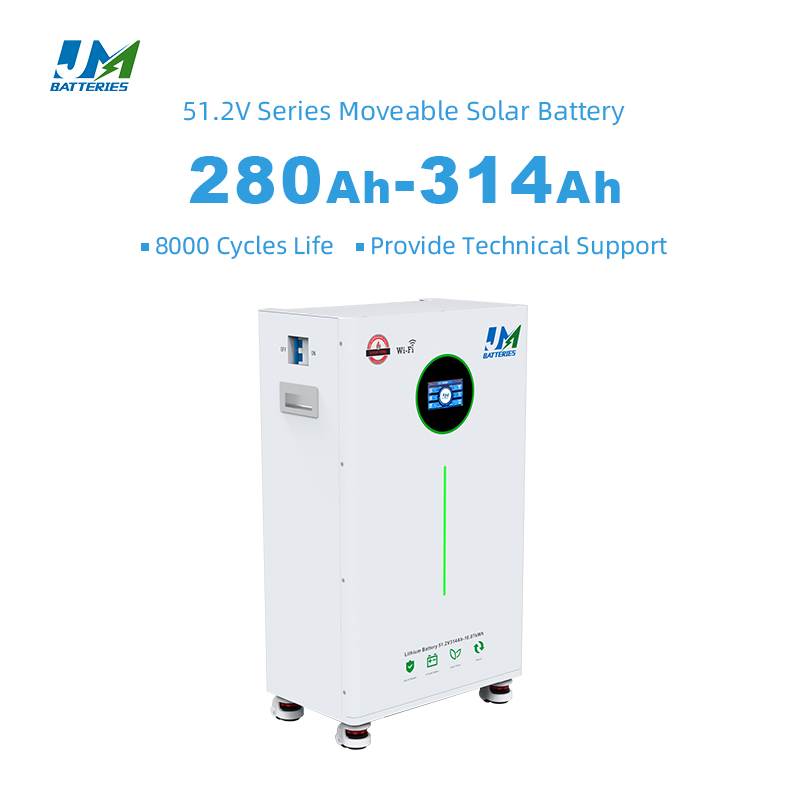
Product page reference: https://www.jmenergytech.com/products/solar‑lifepo4‑energy‑storage‑battery.html
JM‑M‑51.2V314Ah is JM EnergyTech’s high‑capacity floor‑standing movable LiFePO4 solar battery rated at 16 kWh. Built around Grade‑A LiFePO4 cells, this unit targets B2B bulk buyers: solar distributors, system integrators and EPC contractors. Common use‑cases include whole‑house backup, off‑grid houses, RV power, mobile shops and remote micro‑grid sites. Hardware supports floor‑standing movable installation as well as wall‑mount set‑up for flexible project layouts.
| Item | Specification |
|---|---|
| Model | JM‑M‑51.2V314Ah |
| Nominal Voltage | 51.2V (48V compatible) |
| Capacity / Energy | 314Ah / 16kWh |
| Cycle Life (80% DoD) | ≥8000 cycles |
| Max Charge / Discharge Current | 200A |
| Communication | CAN / RS485 / RS232, WiFi & Bluetooth remote APP monitoring |
| Max Parallel Quantity | 15 units |
| Working Temperature | ‑20℃ ~ +60℃ |
| Warranty | 10‑year |
| Certifications | UN38.3, MSDS, CE, RoHS, IEC |
B2B Bulk Sourcing Notes for this product:
- Available capacity variants: 280Ah / 300Ah / 314Ah (14.36kWh‑16kWh)
- OEM / ODM supported: custom logo, touch‑display language adjustment, BMS parameter tuning for bulk orders
- Before large orders, B2B buyers should request golden sample units to run capacity, thermal and inverter compatibility tests
- All units come with full UN38.3 & MSDS documentation for Class‑9 dangerous‑goods ocean shipment
- Suitable for mixed container loading together with other JM EnergyTech residential or commercial‑industrial storage products
This movable battery works with 95% mainstream solar inverter brands. It ships widely for residential backup, mountain off‑grid locations, pasture micro‑grids and mobile commercial power deployments.
Frequently Asked Questions (FAQ)
A: MOQ changes per product type. Standard wall‑mount home batteries can start at pallet‑level quantities. Full‑container orders unlock larger tiered discounts. OEM‑ODM custom‑logo projects carry slightly higher minimum‑order thresholds. Quarterly phased delivery schedules are available to lower upfront capital pressure.
A: Grade‑B cells deliver shorter cycle‑life and inconsistent performance. They fit only non‑critical, low‑duty standby systems. JM EnergyTech uses Grade‑A cells (including BYD blade cells) for all bulk residential and C&I storage product lines. Keep Grade‑B hardware out of grid‑tied ESS, telecom or heavy‑duty applications.
A: UN38.3 and MSDS are non‑negotiable for ocean freight anywhere in the world. JM provides CE, RoHS and IEC documents as standard deliverables. Buyers targeting North America must separately review UL‑series certification rules for grid‑tied deployments.
A: Passive balancing burns surplus energy away as heat. JM EnergyTech fits most bulk‑order wall‑mount, stacked‑rack and C&I storage units with active‑cell‑balancing BMS. This moves charge from higher‑voltage cells to lower‑voltage cells and improves long‑term cycle‑life on large wholesale battery deployments.
A: Production takes 10‑45 working days depending on whether you order standard stock or custom OEM‑ODM builds. Adding factory balancing, hazardous‑goods packaging plus sea transit, total lead‑time normally runs 35‑60 calendar days. Port booking and customs work can add extra delays.
A: Yes. Custom‑logo printing, BMS‑parameter tuning, housing mechanical changes and voltage‑capacity re‑configuration are available for bulk orders covering wall‑mount home batteries, stacked‑rack modules and C&I cabinet‑scale storage systems. All custom work gets formalized inside procurement contracts.
A: Valid B2B contracts need manufacturing‑defect coverage alongside capacity‑retention guarantees. For Grade‑A‑cell products the standard benchmark is minimum 70% rated capacity after 10‑year service. Contracts must also state clear defect‑replacement procedures in writing.
CAN vs RS485 for Solar Batteries