


LiFePO4 Battery Heater vs. Insulation
LiFePO4 Battery Heater vs. Insulation: Winter Protection Guide
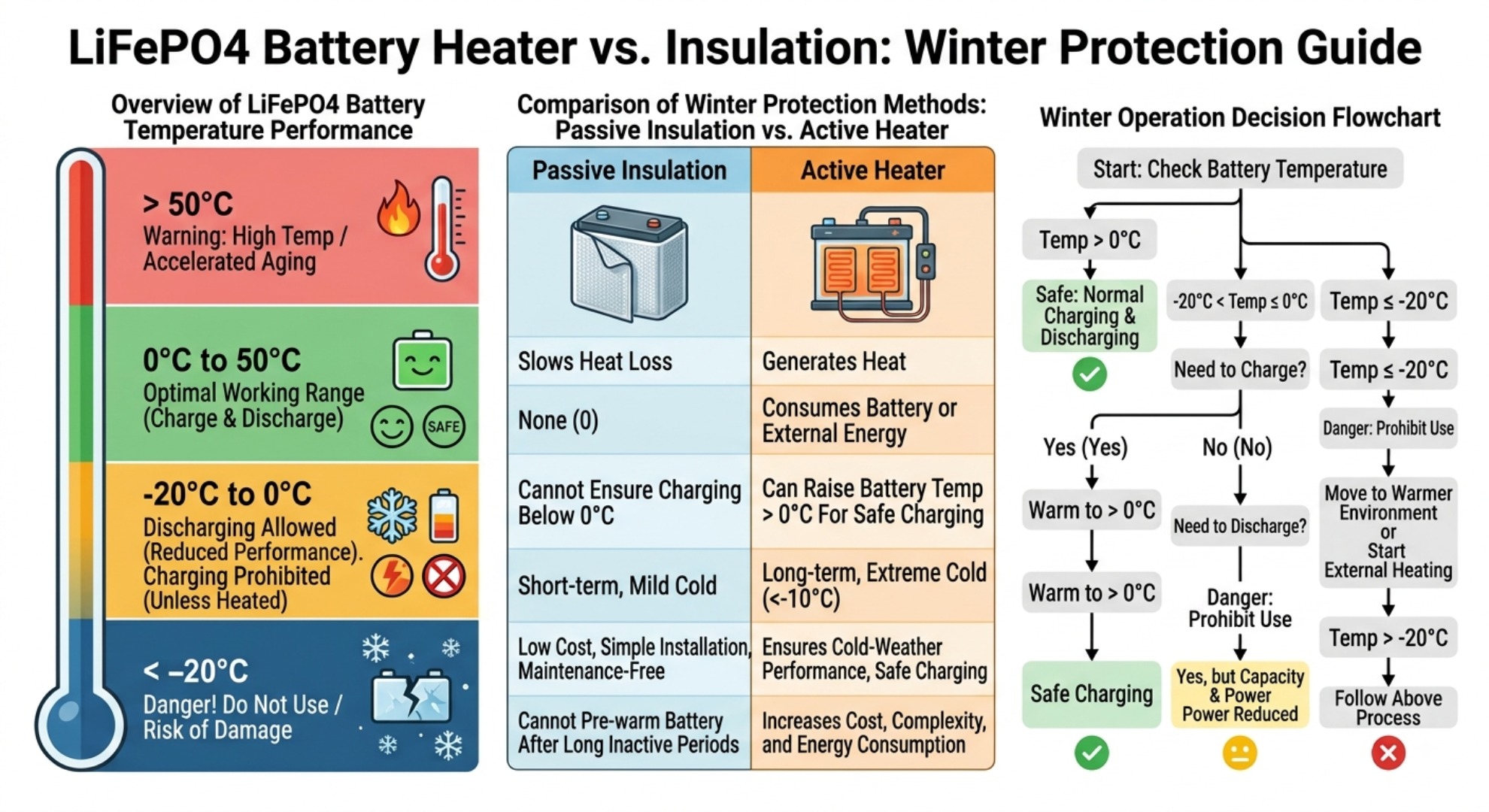
Table of Contents
LiFePO4 cells last thousands of cycles and hold plenty of energy, but cold weather slows down the chemistry inside them. If you try charging these batteries below 0°C (32°F), lithium plates onto the anode—permanent damage that cuts capacity and creates a real safety risk. Anyone running off-grid solar systems through harsh winters needs a solid thermal management setup to keep power reliable when temperatures drop hard.
For homeowners relying on solar storage up north, winter battery performance makes or breaks daily power access. One single cold charging cycle can undo months of careful maintenance, and multi-day ice storms can leave critical loads offline if your battery bank refuses to accept solar charge. Before picking insulation, heating pads, or a hybrid setup, you first need to understand exactly how freezing temperatures break lithium iron phosphate cells, and the core differences between passive and active thermal protection.
Why LiFePO4 Batteries Fail in Freezing Cold
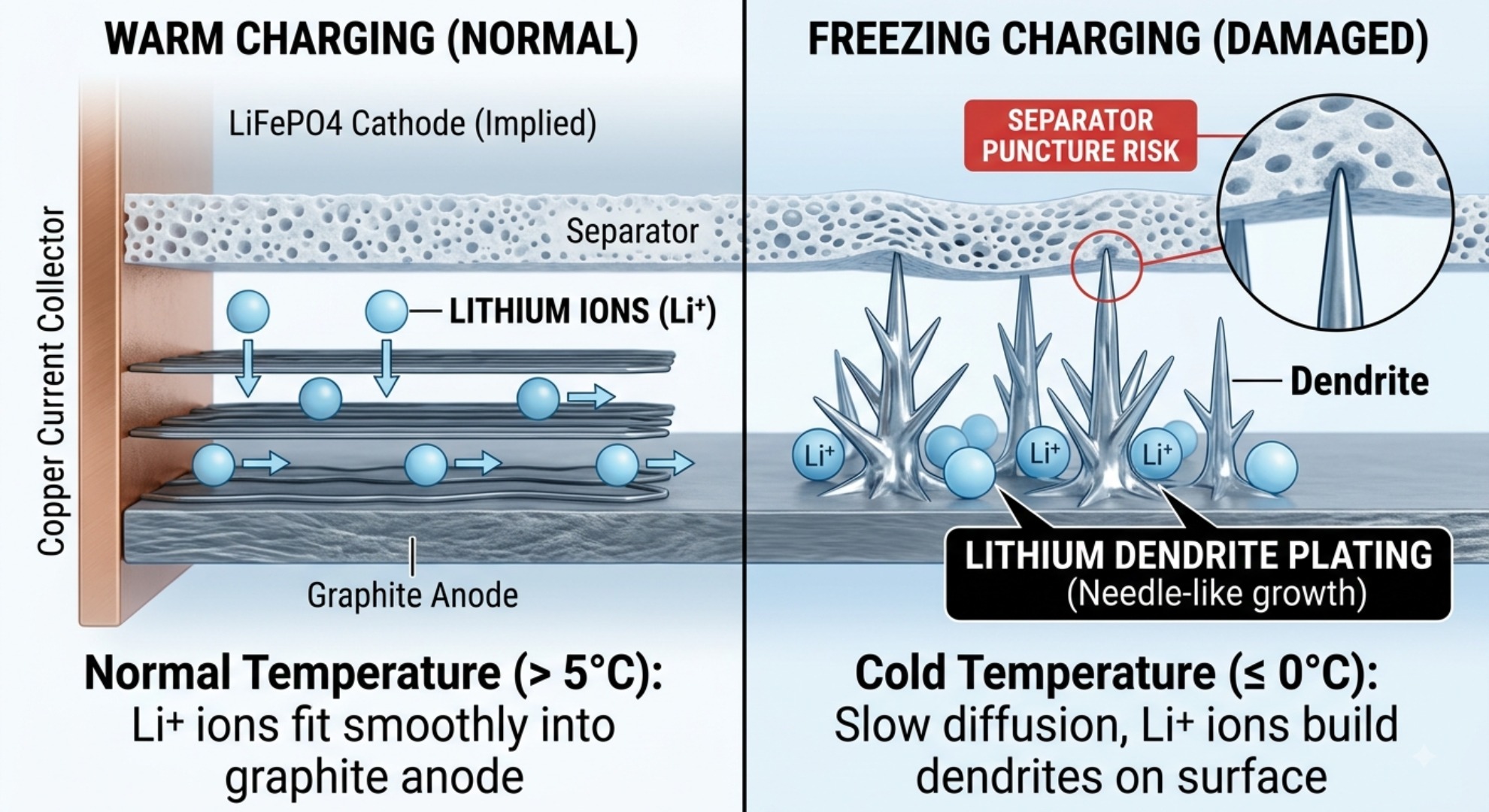
Cold air raises a battery’s internal resistance and slows its core electrochemical reactions. You can still discharge most deep-cycle LiFePO4 packs down to -20°C (-4°F), though output power will drop slightly as the temperature falls. The real danger only appears when you send charging current through frozen cells.
When temperatures sit below freezing, lithium ions can’t slot smoothly into the graphite anode at normal charging speeds. Instead, they stick to the anode surface as sharp metallic lithium crystals called dendrites. Standard battery management systems come with low-temperature charge cutoffs to stop instant catastrophic failure, but relying only on this auto-shutoff creates a major headache: your entire solar storage system goes completely offline during long cold snaps, even when sunlight hits your panels.
This plating damage adds up fast over one winter season. Repeated cold charging without pre-warming reduces usable cell capacity by 10 to 30 percent. Those needle-like dendrites also risk piercing the internal separator sheet inside each cell, which leads to internal short circuits and serious fire hazards. Most quality BMS units block charging entirely once cell readings hit 5°C (41°F) as a safety buffer, meaning your solar array can generate power all day long with nowhere to send it if the battery stays too cold.
Battery Insulation: Passive Winter Protection
Passive battery protection works by trapping whatever heat already exists inside the battery enclosure—residual warmth from regular charging and discharging cycles, or mild ambient heat from surrounding space. Builders create insulated thermal boxes using closed-cell foam sheets, flexible neoprene wraps, or reflective radiant barrier foil. None of these materials draw power from your battery bank, they just slow down how fast stored heat escapes into cold air.
Passive Thermal Wrap Benefits and Limitations

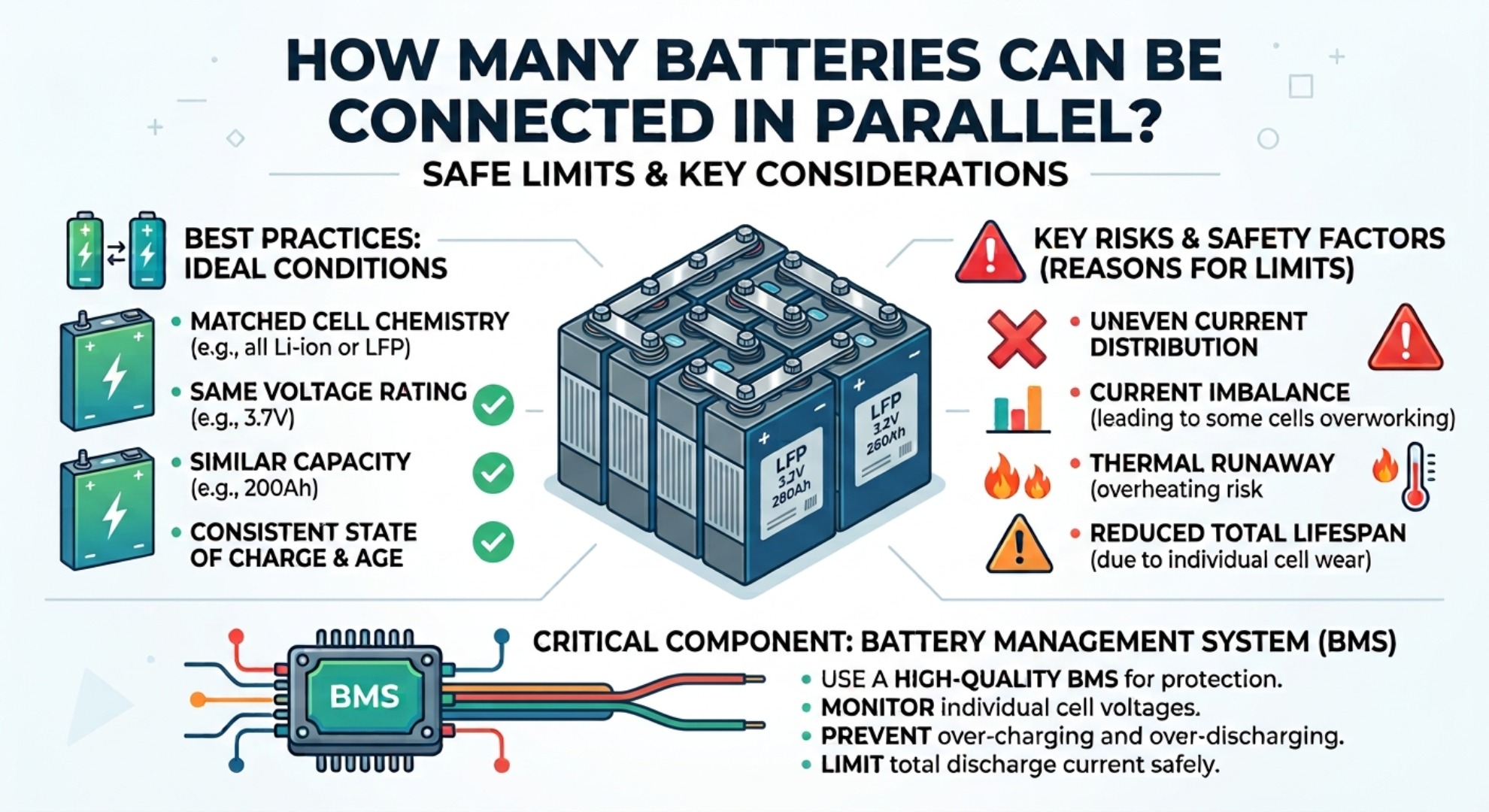
A foam wrap or sealed insulated box is a cheap starting point if you live in an area with only light, brief freezing weather. The big catch is simple: insulation cannot create new heat on its own. It only delays heat loss, rather than generating warmth for cold cells.
If your battery sits unused for multiple straight days in temperatures that stay below zero, every layer of insulation will eventually fail to hold heat. The internal cell temperature will slowly match the freezing outdoor air, leaving your bank unchargeable until ambient temperatures rise again. This makes passive insulation alone unsuitable for long-term off-grid storage in sustained sub-zero climates.
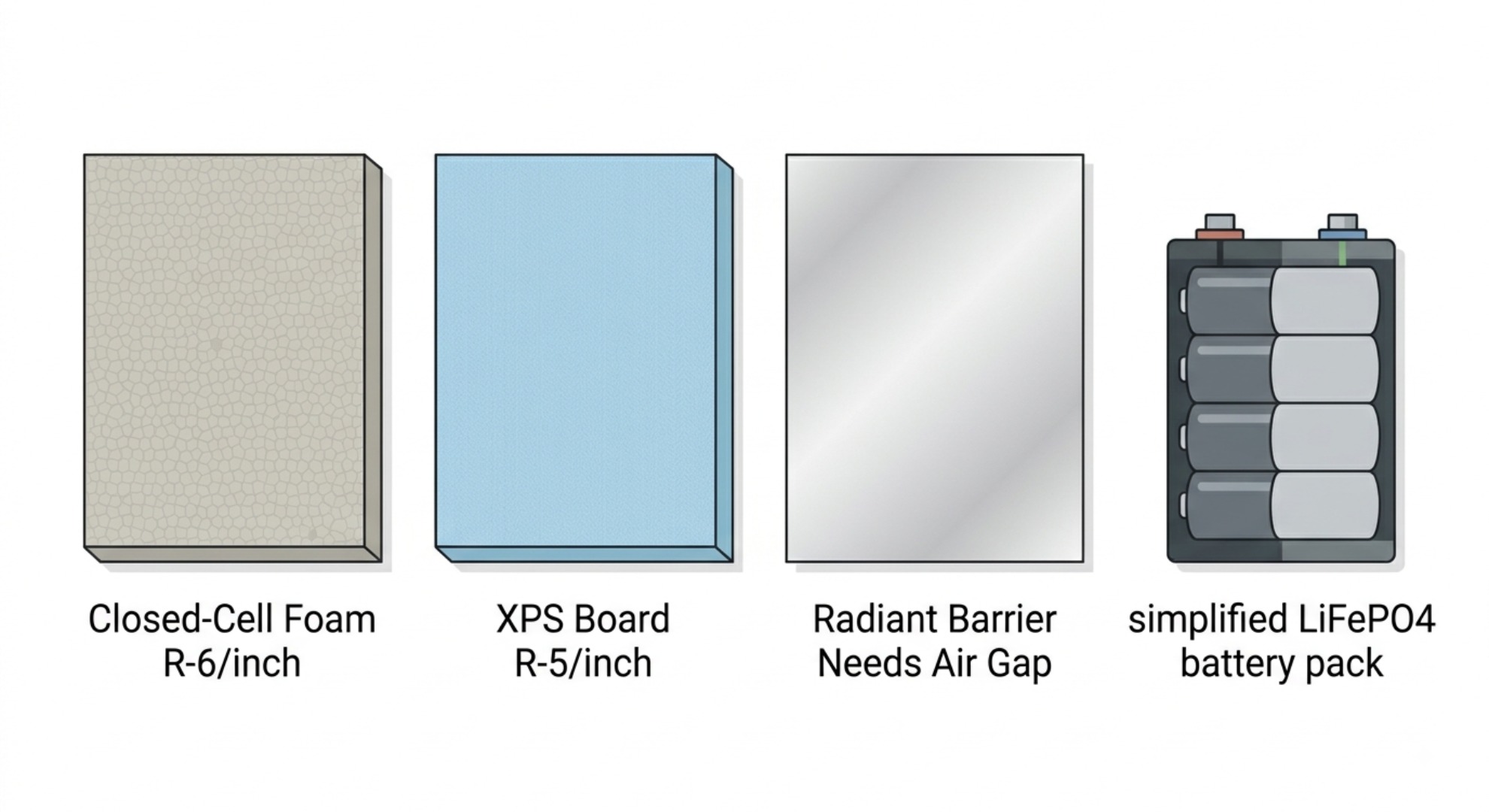
Not all insulation materials perform equally for battery builds. Closed-cell spray foam delivers strong thermal resistance at roughly R-6 per inch, but it’s messy to install and permanent once applied. Extruded polystyrene (XPS) foam boards hit R-5 per inch at a far lower cost, cut easily to fit custom battery boxes, and can be removed or replaced later. Reflective radiant foil barriers only work if you leave an air gap between the foil and battery surface; they do almost nothing when pressed flat against cell casings.
For DIY off-grid builders, a plywood box lined with two inches of XPS foam and a tight sealed lid balances low cost, durability, and basic cold resistance better than most other passive setups.
Active Battery Heaters: Low-Temp Charging Safety
An active heater does what insulation cannot: it generates controlled heat to warm cell packs before charging current flows through the system. Modern self-heating battery pads use thin internal heating film, powered either by auxiliary shore power, excess daytime solar output, or small draws from the battery bank itself.
How Built-In Heating Elements Safeguard Cells
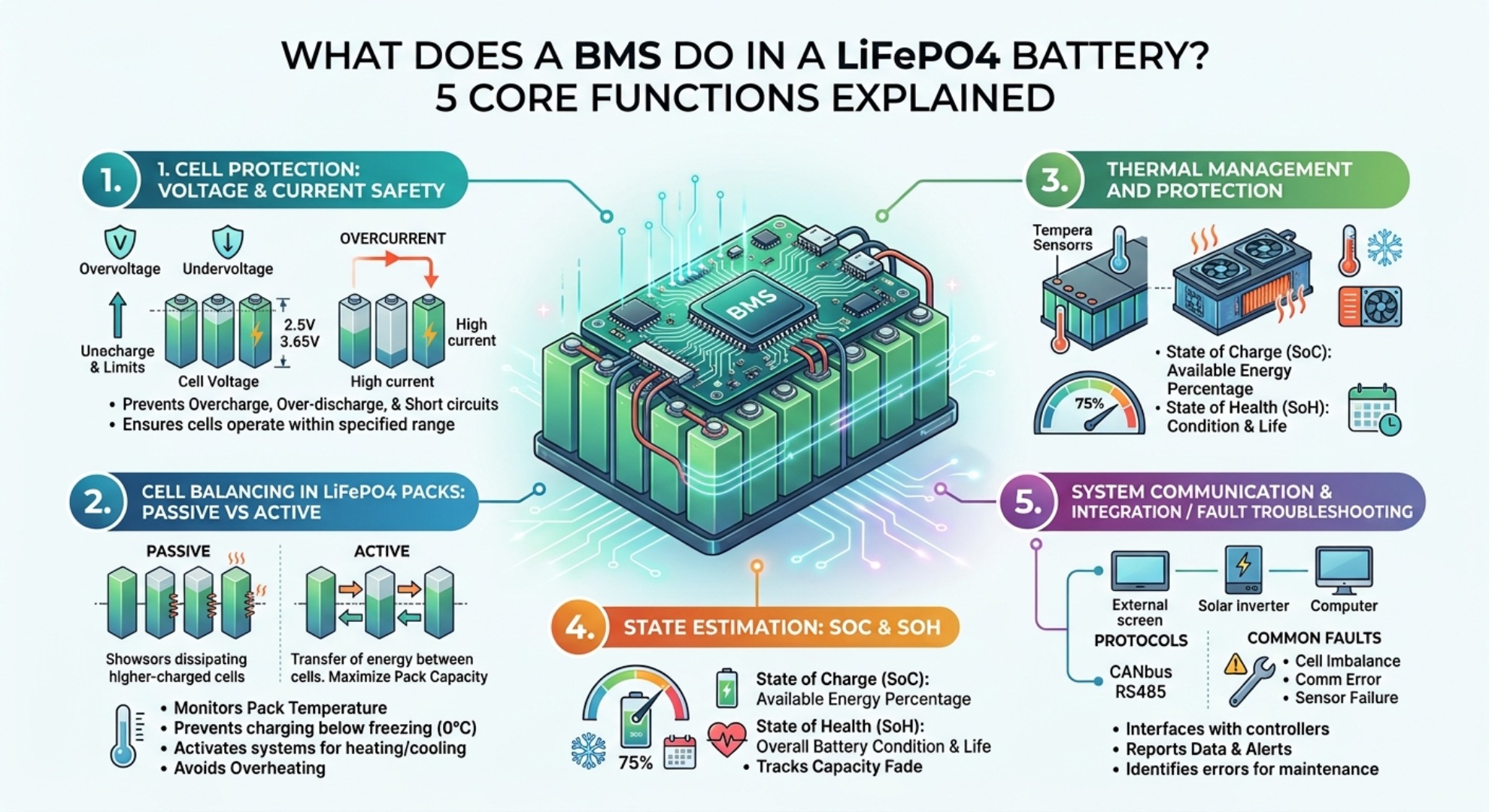
When the charge controller detects incoming solar power while cell temperatures sit below safe charging limits, the built-in heating circuit activates first. Heating elements spread warmth evenly across the full cell pack until internal readings reach 5°C (41°F). Only once this safe threshold hits will the main charging circuit unlock and start feeding power to the lithium cells.
This fully automated process removes the need for manual temperature checks or human intervention, and eliminates the risk of lithium plating from rushed cold charging. Heating systems pull 30W to 60W while warming the battery pack. On a standard 48V 100Ah storage bank, this translates to a continuous draw of 1 to 1.5 amps during pre-heat cycles.
A full two-hour pre-warm cycle uses 60–120 watt-hours of stored energy, which equals less than three percent of a standard 5kWh LiFePO4 battery’s total capacity. If you run the heater off surplus midday solar generation, this energy draw adds zero net cost to your system. Factory-built batteries with integrated heating film outperform separate aftermarket heating pads, as their heating circuits are calibrated to the exact thermal mass of each cell pack and distribute heat evenly without hotspots on individual cells.
Insulation vs Heater: Which Protects LiFePO4 Best?
Passive Thermal Insulation
Works reliably down to around -5°C (23°F), uses zero stored battery power, and carries minimal upfront cost. Performance fully relies on leftover heat from daily battery cycling or mild surrounding temperatures.
Active Battery Heater
Built to withstand harsh sub-zero weather as low as -30°C (-22°F). Runs automatically when cold charging is needed, pulls small amounts of power during warm-up phases, and delivers complete year-round low-temperature protection.
Hybrid Thermal Protection
Pair closed-cell foam insulation with a low-wattage heating pad for maximum energy efficiency. Insulation holds onto generated heat, cutting down how often the heater needs to turn on to maintain safe cell temperatures.
Your final choice hinges on two key details: the lowest sustained winter temperature in your location, and how often your battery bank cycles power each day. If your area rarely drops below -5°C and you use stored solar power daily, a well-sealed insulated box might hold enough residual heat to skip a dedicated heater entirely.
For locations with consistent temperatures below -10°C, or systems that sit idle for days at a time with no discharge cycles, an active heating pad becomes non-negotiable. Most long-term off-grid owners in cold northern regions end up using the hybrid method; insulation cuts heater runtime, while the heating element eliminates the risk of unchargeable frozen batteries during extended cold snaps.
Winter Battery Enclosure & Storage Best Practices
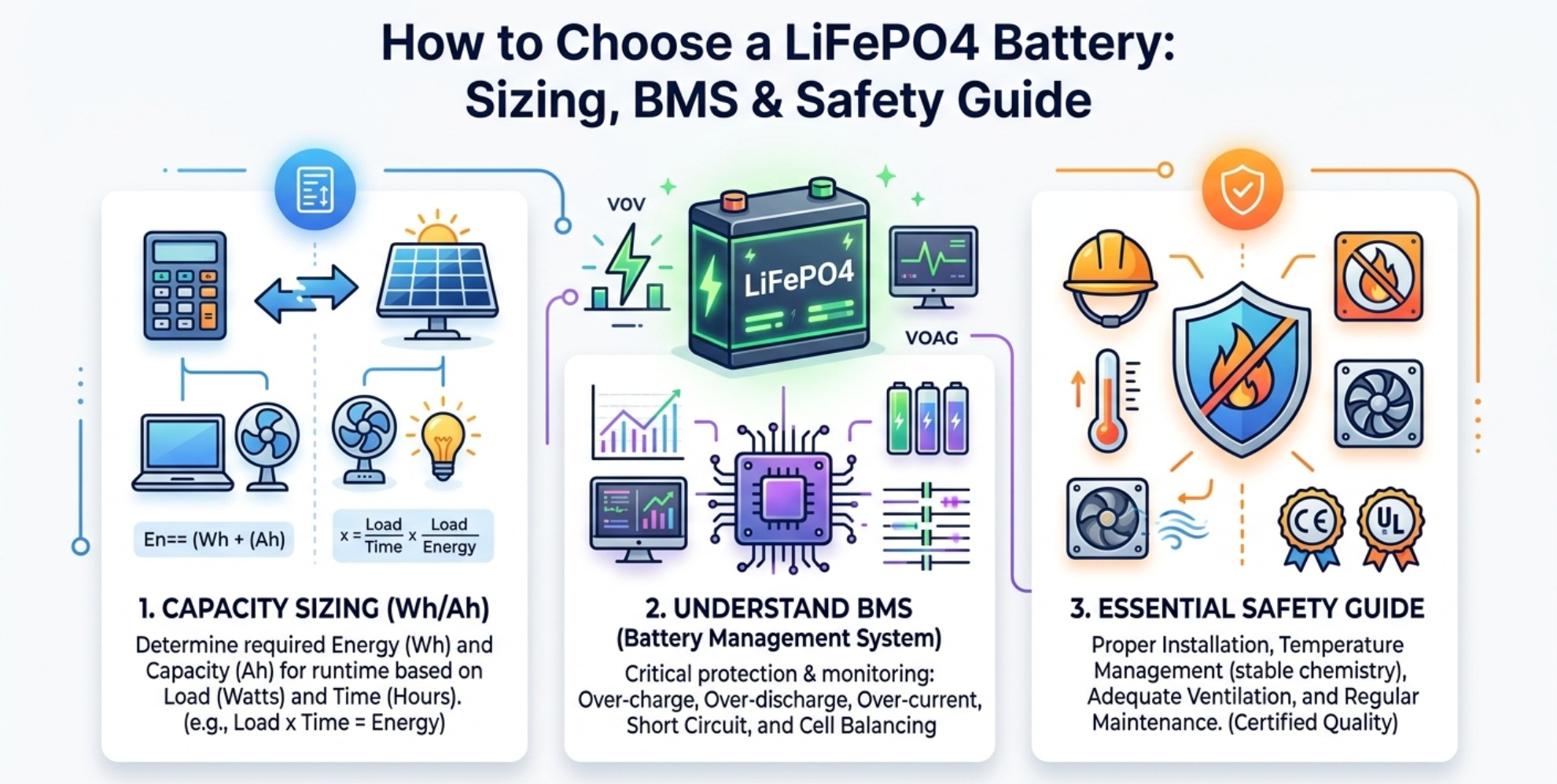
Stable off-grid power through winter relies on physical enclosure design paired with smart temperature controls. House deep-cycle LiFePO4 batteries inside a fully sealed insulated compartment to block wind chill, which accelerates heat loss far faster than static cold air alone. Pair the box with thermostat-triggered heating pads that only activate when the system detects incoming charge and cold cell readings, so you avoid wasting stored energy on unnecessary heating cycles.
If you shut your solar system down for seasonal storage, follow standard industry maintenance steps. Bring each cell bank to a 50% state of charge, then move the battery pack into a space with steady, moderate temperatures away from freezing conditions. Several small upgrades extend cell lifespan further: seal all cable entry holes with foam gaskets to stop cold air seepage, lift batteries off bare concrete floors (concrete rapidly pulls heat out of cell casings), and mount an affordable basic temperature monitor to check internal pack temperatures without opening the sealed box.
Never mount your insulated battery enclosure flush against exterior building walls, as cold transfers straight through wall material into the box. Storing LiFePO4 cells fully charged or completely empty over multiple winter months speeds calendar aging and creates unstable voltage drift across individual cells; the 50% mid-charge level balances long-term cell health best for seasonal idle storage.
Frequently Asked Questions
No. Charging cells below 0°C triggers lithium plating, causing permanent capacity loss and internal short risks. Always warm batteries to 5°C before charging.
Insulation only slows heat loss and cannot generate heat. Batteries left idle in sustained sub-zero temperatures will eventually match outdoor ambient temperature.
Store cells at 50% SOC in a temperature-stable space; fully charged or fully depleted storage speeds up long-term cell degradation.
Final Takeaway
When building winter-ready LiFePO4 storage, insulation and active heating are not an either-or pick for cold-climate off-grid systems. Passive foam insulation acts as a low-cost foundation that reduces how hard heating pads need to work. Self-heating batteries or standalone heating pads deliver reliable protection when temperatures plunge far below zero, eliminating full system shutdowns from cold-charge lockouts.
For homeowners relying on solar power through harsh winters, the hybrid insulated enclosure plus heating element setup strikes the best balance between low energy waste, consistent charging access, and long-term battery lifespan.
Passive vs Active BMS Balancing for LFP Batteries
LiFePO4 Battery Cold Weather Charging: Safe Solutions