


How Long Do Residential Solar Storage Batteries Last
Home Battery Lifespan: How Long Do Residential Solar Storage Batteries Last

Table of Contents
- 1. Average Service Lifespan of Household Energy Storage Batteries
- 2. Primary Factors Accelerating Home Battery Capacity Degradation
- 3. Cycle Life VS Calendar Life: Two Core Battery Aging Metrics
- 4. Depth of Discharge (DoD) Influence on Solar Battery Service Time
- 5. Battery Chemistry Comparison: LiFePO4, NMC & Lead-Acid Storage
- 6. Solar Home Battery Warranty Clauses & Official End-of-Life Standards
- 7. Practical Maintenance Tips to Prolong Residential Battery Lifespan
Average Service Lifespan of Household Energy Storage Batteries
The typical home battery storage lifespan ranges between 10 and 15 years under standard residential operating conditions. Unlike mechanical power systems that fail abruptly, stationary energy storage degrades gradually over time as electrochemical components age. Homeowners should view battery performance as a curve rather than a sudden drop-off, with capacity slowly tapering while the unit continues providing daily backup power. Benchmark guidelines from the U.S. Department of Energy highlight that modern lithium chemistry retains substantial functional utility long after initial installation.
Understanding overall solar battery life expectancy requires comparing storage duration against photovoltaic panel longevity. While high-grade solar panels routinely operate for 25 to 30 years, an energy storage unit undergoes active daily charge and discharge cycles that accelerate electrochemical wear. Consequently, most residential solar systems will require a battery replacement or module refresh at least once during the total service life of the rooftop solar array.
Cycle Life VS Calendar Life: Two Core Battery Aging Metrics

Cycle Life vs. Calendar Life Explained
A primary measurement of long-term performance is battery cycle life, which defines how many complete charge-and-discharge iterations a system can perform before its available energy capacity drops to a designated percentage—typically 70% to 80% of its original rating. A single full cycle represents using 100% of the battery's usable energy, whether consumed all at once or over multiple shallow discharges. Modern residential lithium storage systems generally deliver between 4,000 and 6,000 full cycles before reaching this standard end-of-life threshold.
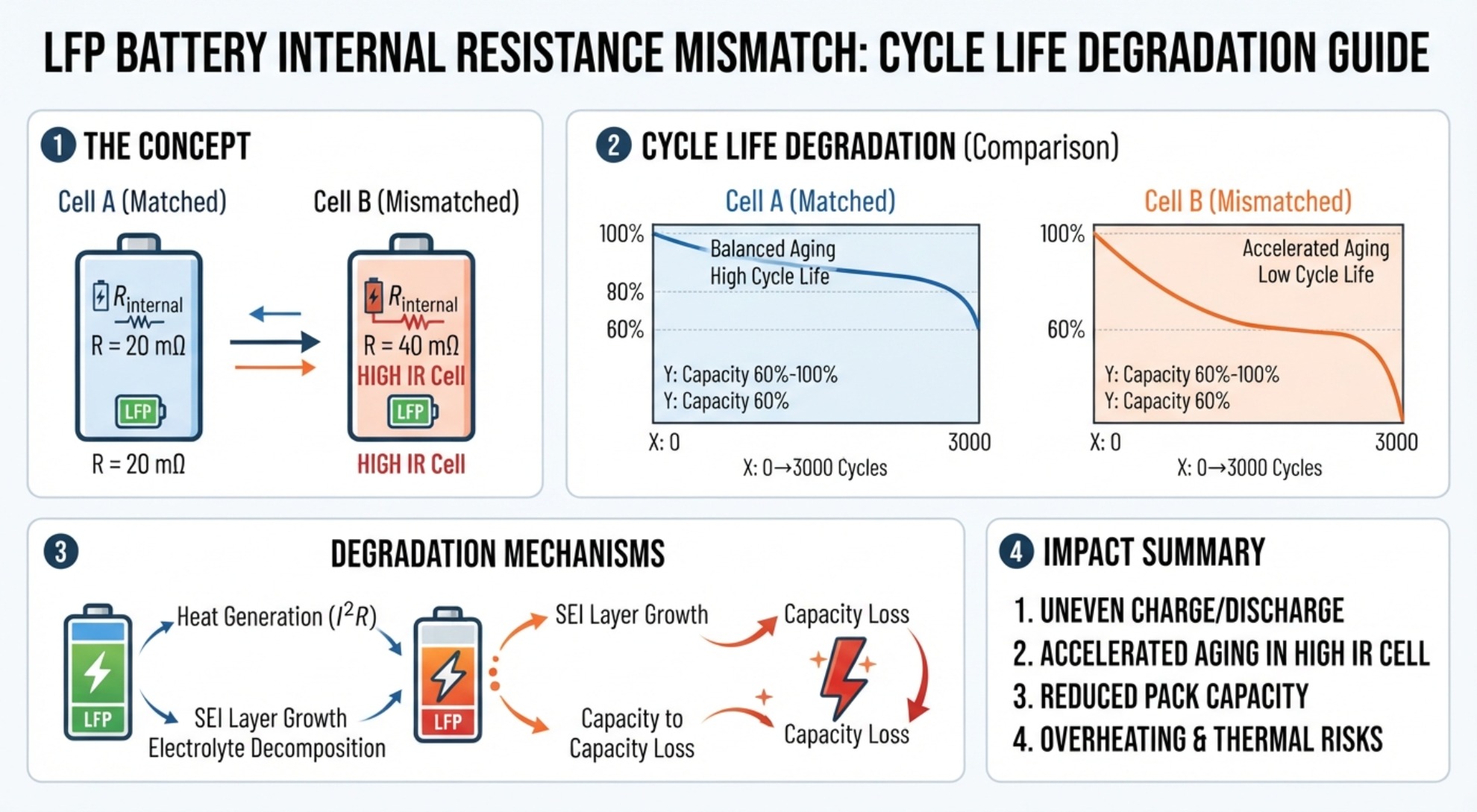
In contrast, calendar life aging refers to the natural loss of energy retention that occurs simply over time, regardless of how frequently the system is cycled. Even when standing idle, internal chemical reactions like solid-electrolyte interphase layer growth and passive oxidation gradually reduce total storage capacity. In typical residential setups that undergo one full charge cycle per day, calendar age and cycle wear progress at nearly equal rates toward the 10-to-15-year horizon.
Primary Factors Accelerating Home Battery Capacity Degradation
The baseline home energy storage degradation rate averages approximately 1.5% to 2.5% of total capacity loss per year under optimal operating conditions. However, this rate is not static; it fluctuates based on installation environment, charging speeds, ambient climate control, and routine depth of use. Identifying these variables allows system owners to mitigate unnecessary stress on the internal cells.
Thermal Environment’s Impact on Battery Degradation Speed
Environmental thermal management plays a massive role, as operating temperature impact directly governs internal reaction speeds. Exposing energy storage equipment to ambient temperatures consistently above 30°C (86°F) accelerates parasitic chemical side-reactions, causing faster electrode degradation. Conversely, operating in sustained freezing conditions increases internal resistance, temporarily reducing round-trip efficiency during charge cycles. Comprehensive field testing by the National Renewable Energy Laboratory confirms that maintaining ambient thermal stability is vital for preserving long-term cell health.
Depth of Discharge (DoD) Influence on Solar Battery Service Time

The specific battery depth of discharge (DoD)—representing the percentage of total stored energy drained during a discharge cycle—directly influences mechanical stress on internal cell electrodes. Deeply draining a battery to 0% state of charge forces significant crystal structure expansion and contraction within cathode materials, accelerating micro-cracking over time. Operating at an 80% DoD limit rather than exhausting 100% of available capacity can significantly expand total lifetime cycle counts.
Managing the everyday state of charge range helps buffer cells against extreme voltage stress. System controllers frequently enforce soft limits—such as capping top-end charging at 90% and bottom-end discharging at 10%—to prevent cells from dwelling at high voltage states where electrolyte oxidation occurs fastest.
| STATE OF CHARGE RANGE | ||
|---|---|---|
| [ 0% - 10% ] Deep Discharge Stress Buffer |
[ 10% --------------- 90% ] Optimal Operational Zone (Preserves Cell Integrity) |
[ 90% - 100% ] High Voltage Stress Buffer |
Battery Chemistry Comparison: LiFePO4, NMC & Lead-Acid Storage
The specific chemistry selected dictates baseline longevity, with lithium iron phosphate battery lifespan leading the stationary storage sector. Lithium Iron Phosphate ($LiFePO_4$ or LFP) utilizes robust iron-phosphate bonds that remain thermally stable even under high operational stress, providing intrinsic resistance against thermal runaway while delivering up to 6,000 to 10,000 operational cycles.
Evaluating NMC vs LiFePO4 for home storage reveals distinct design trade-offs between energy density and longevity. Nickel Manganese Cobalt (NMC) chemistries deliver high energy density in compact physical enclosures, making them popular for space-constrained installations. However, NMC chemistry generally exhibits a shorter cycle life (typically 2,000 to 3,000 cycles) and higher sensitivity to elevated temperatures compared to LFP alternatives.

LFP / NMC / Lead-Acid Core Parameter Contrast Table
| Feature | LiFePO4 (LFP) | NMC | Lead-Acid |
|---|---|---|---|
| Expected Lifespan | 10–15+ Years | 8–12 Years | 3–5 Yrs |
| Typical Cycle Life | 4,000–8,000+ | 2,000–3,000 | 500–800 |
| Recommended Max DoD | 80%–90% | 80% | 50% |
| Thermal Stability | Outstanding | Moderate | Moderate |
A quick lead-acid battery comparison underlines why legacy chemistries have largely been phased out for modern residential energy backup. Sealed AGM or Gel lead-acid batteries offer a brief service life of just 3 to 5 years, require strict limits on depth of discharge (rarely exceeding 50%), and suffer from heavy capacity loss under rapid discharge rates.
Solar Home Battery Warranty Clauses & Official End-of-Life Standards
Reviewing manufacturer solar battery warranty terms provides a realistic picture of guaranteed operational expectations. Most residential energy storage warranties span 10 to 12 years and guarantee that the system will retain a specific fraction of its initial nameplate capacity—usually 70%—at the conclusion of the warranty period.
In addition to calendar coverage, warranties incorporate a throughput energy limit clause to account for heavy daily usage patterns. Throughput measures the cumulative megawatt-hours (MWh) of electricity passed through the battery over its lifetime. A typical warranty guarantee promises coverage for 10 years or a total throughput equivalent to roughly 2.8 to 3.3 MWh per kilowatt-hour (kWh) of installed capacity, whichever milestone is reached first.
Practical Maintenance Tips to Prolong Residential Battery Lifespan
Knowing how to maximize solar battery life empowers equipment owners to protect their capital investment through proactive site design and load management. Installing energy storage enclosures in climate-controlled garages or shaded north-facing exterior locations protects cells from direct sunlight exposure and ambient heat spikes.

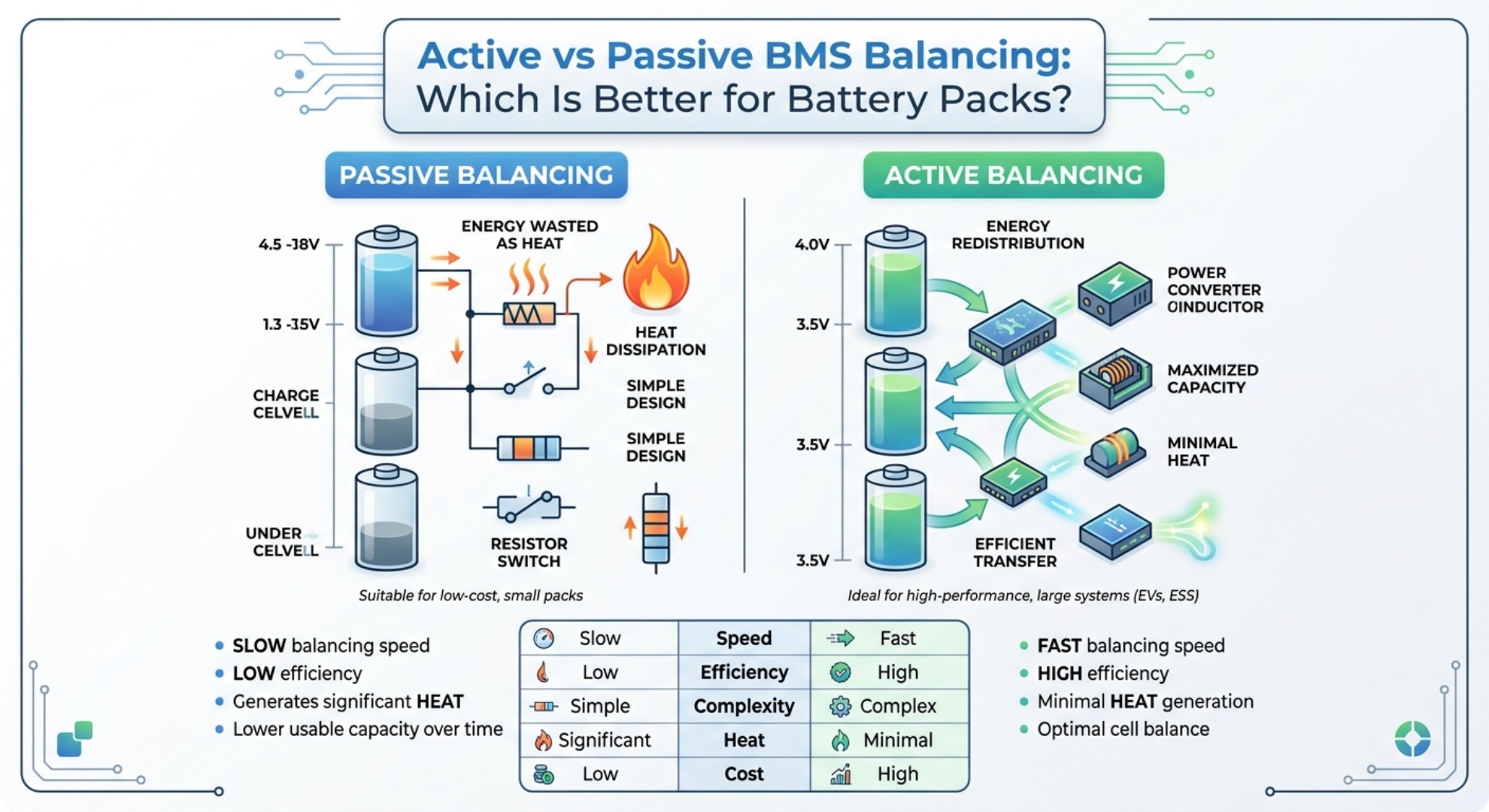
Integrating robust battery management system protection provides automated oversight of critical operating parameters. An intelligent management system continuously balances voltage across individual cell series, prevents current overloads, and adjusts thermal thresholds in real time. According to grid storage analysis from the U.S. Energy Information Administration, automated cell management and smart temperature monitoring remain the single most effective combination for maintaining long-term energy storage health.
Solar Battery Cost : Complete Home Energy Storage Price Guide
How to Choose the Best Home Solar Battery