


LiFePO4 Battery Not Charging: 7 Main Causes, Troubleshooting & Fixes
LiFePO4 Battery Not Charging: 7 Main Causes, Troubleshooting & Fixes

Article Navigation
- Introduction
- How BMS Works & Triggers LiFePO4 Charging Protection Modes
- Top 5 Root Causes Why LiFePO4 Battery Refuses to Charge
- Step-by-Step Diagnostic Workflow for Dead Charging LiFePO4 Batteries
- 3 Safe Methods to Wake Up Sleep Mode BMS on LiFePO4 Packs
- Long-Term Best Practices to Prevent LiFePO4 Charging Failures
Discovering that your lithium iron phosphate (LiFePO4) battery refuses to accept a charge can be concerning, especially when relying on it for off-grid power or renewable energy storage systems. In most cases, a non-charging battery is not permanently damaged; rather, its internal safety features or external charging equipment have paused current flow to prevent cell degradation. Understanding why this happens allows you to diagnose the root cause quickly and restore your energy storage system safely.
How BMS Works & Triggers LiFePO4 Charging Protection Modes

Unlike traditional lead-acid batteries, modern lithium energy storage units rely heavily on an integrated Battery Management System (BMS) to oversee cell health and operational safety. The BMS acts as an electronic shield, constantly monitoring parameters such as individual cell voltages, temperature ranges, and current levels. When operating conditions cross pre-set safety thresholds, the system engages its battery protection mode and disconnects the internal battery terminals from external circuits. To an external voltmeter or charger, a battery in protection mode may appear completely dead or show 0V at the terminals, even though the internal lithium cells remain healthy.
Top 5 Root Causes Why LiFePO4 Battery Refuses to Charge

1. BMS Entered Low-Voltage Sleep Mode (Over-Discharge)
When a battery undergoes deep discharge—often caused by continuous load drains, parasitic draws, or prolonged storage without maintenance—its terminal voltage drops below safe operating limits (typically below 2.0V to 2.5V per cell). To preserve cell chemistry and stop catastrophic capacity loss, the BMS activates its undervoltage protection switch and enters a sleep state. In this dormant state, standard automatic chargers cannot detect baseline voltage, leading them to report an error or refuse to initiate a charge cycle.
2. Low-Temperature or High-Temperature Cutoff Activated
Temperature extremes trigger strict thermal cutoff protocols inside the BMS to shield the battery from internal mechanical stress. Charging lithium cells at sub-freezing conditions (below 32°F or 0°C) causes irreversible lithium plating on the anode, which creates internal micro-short circuits and shortens overall battery lifespan. Conversely, excessive ambient heat or heavy high-current discharging pushes cell temperatures above 113°F (45°C), prompting thermal sensors to trigger a temperature protection cutoff until conditions cool down.
3. Incompatible Charger Profile or Incorrect Voltage Settings
Using a legacy lead-acid battery charger or incorrect charge controller configurations frequently prevents successful energy transfer. A proper lithium battery charger settings profile requires a two-stage Constant Current / Constant Voltage (CC/CV) algorithm without desulfation or high-voltage equalization phases. Standard lead-acid chargers often fail to deliver the necessary absorption voltage threshold (typically 14.2V–14.6V for a standard 12.8V pack), causing the charger to abort prematurely or fail to initiate power delivery.
4. Severe Cell Imbalance or Blown Terminal Fuses
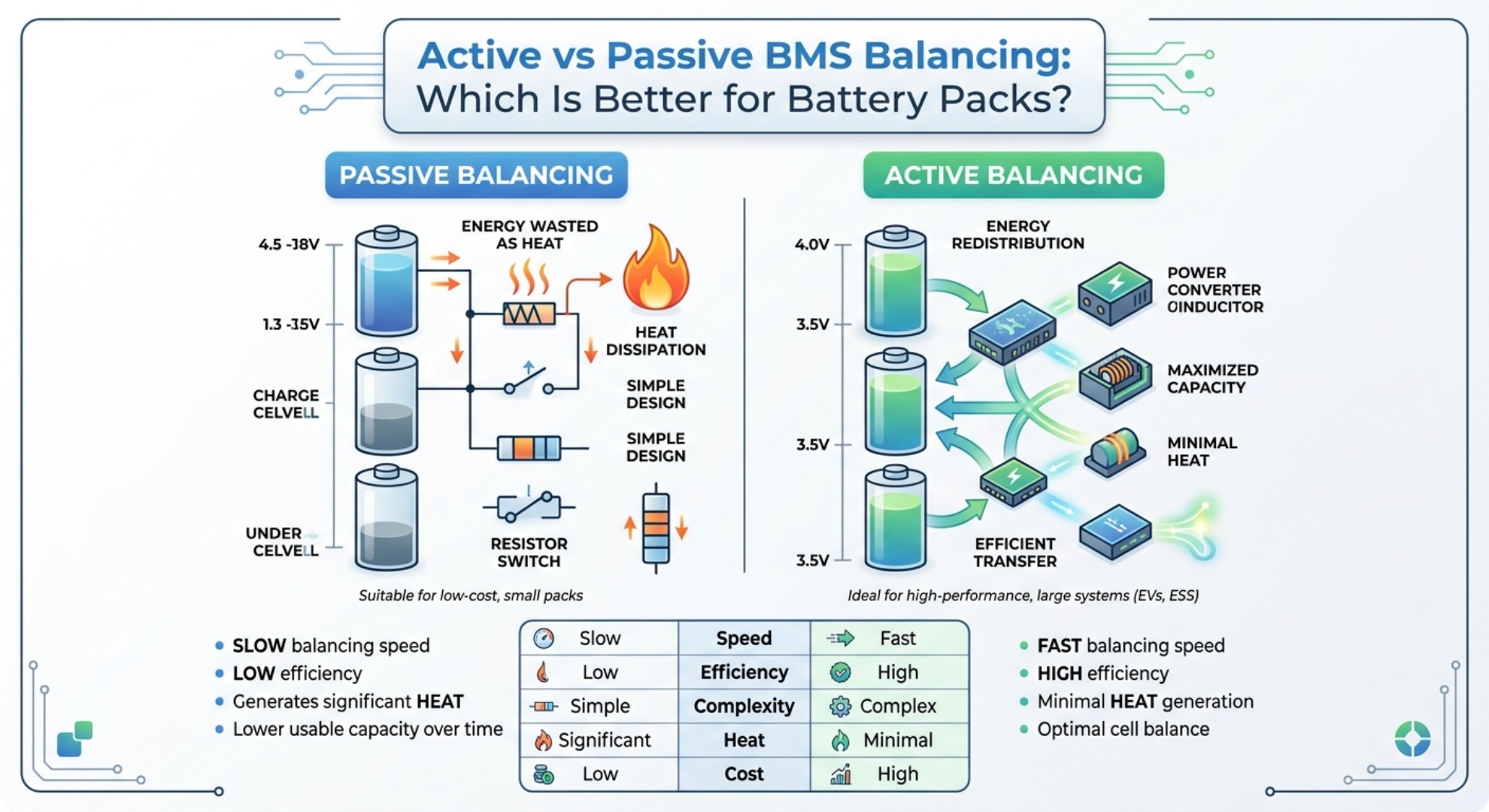
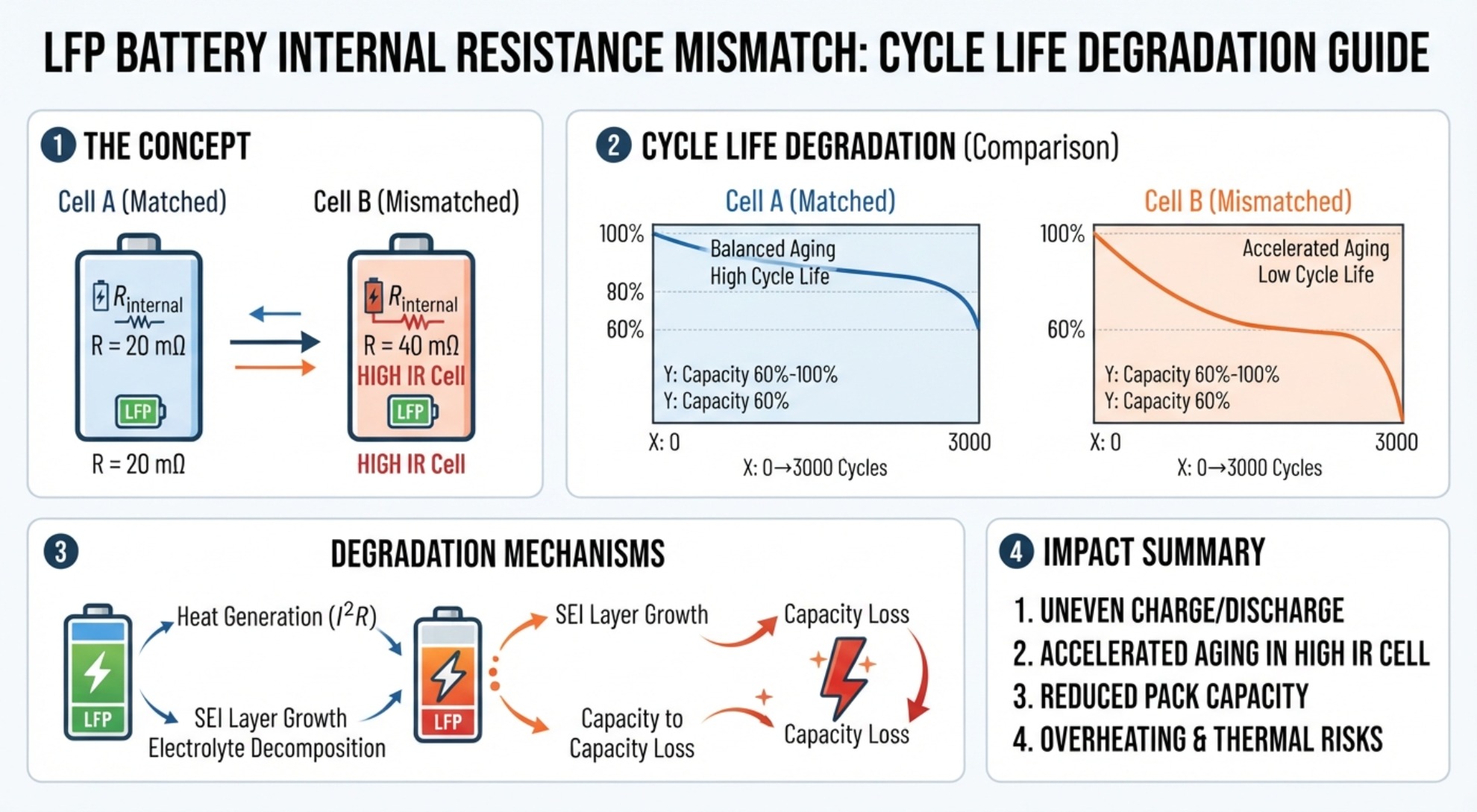
If individual series-connected cells become severely unbalanced, one cell may hit its maximum upper voltage limit long before the rest of the pack reaches full capacity. This triggers an immediate overvoltage protection limit, causing the BMS to shut off incoming current to prevent thermal runaway. Additionally, an unexpected current surge, reversed polarity connection, or short circuit can blow external fuses or trip inline breakers, creating an open circuit that blocks all incoming power.
5. High Wiring Resistance and Corroded Cable Lugs
Physical wiring flaws between the power source, charge controller, and battery terminals frequently mimic a total battery failure. Loose terminal bolts, oxidized copper lugs, or undersized conductor cables introduce severe electrical resistance and voltage drops. When the charger applies current, this resistance causes terminal voltage to artificially spike, tricking the charger into believing the battery is fully charged and terminating the charge cycle immediately.
Step-by-Step Diagnostic Workflow for Dead Charging LiFePO4 Batteries

Following a structured step-by-step troubleshooting protocol ensures safety and helps pinpoint whether the issue stems from external equipment or internal protection modes.
- Safety Isolation & Physical Inspection: Step 1.
Disconnect all active loads and isolate the battery from inverters or distribution blocks. Check terminal connections for signs of corrosion, melted wire insulation, or loose lugs, and tighten all terminal bolts to manufacturer torque specifications.
- Measure Open-Circuit Voltage: Step 2.
Use a calibrated digital multimeter set to DC voltage to measure directly across the battery terminals. A reading between 0V and 10V indicates that the BMS has likely tripped its undervoltage protection switch.
- Evaluate Temperature & Environment: Step 3.
Verify that the battery's ambient and internal temperatures fall within allowable charging limits (32°F to 113°F / 0°C to 45°C). If the pack is too cold or overheated, relocate it to a climate-controlled area and allow cell temperatures to normalize.
- Verify Charger Output & Settings: Step 4.
Confirm that your power source or charger is functioning properly and configured specifically for lithium iron phosphate chemistry. Verify that bulk/absorption charge setpoints match recommended specifications.
3 Safe Methods to Wake Up Sleep Mode BMS on LiFePO4 Packs
When over-discharge places the BMS into sleep mode, standard chargers cannot detect a closed circuit. Reactivating the system requires applying a voltage signal to re-engage the internal solid-state MOSFET switches.
| Wake-Up Method | Tool Required | How It Works |
|---|---|---|
| 0V Activation Charger | Smart Lithium Charger with 0V Mode | Delivers a low-current pulse signal to bypass open MOSFETs and safely raise cell voltage above undervoltage limits. |
| Solar Controller Wake-Up | MPPT Charge Controller | Uses incoming solar panel voltage to boost terminal potential and signal the BMS to exit sleep mode. |
| Parallel Battery Activation | Healthy Battery of Same Voltage |
Momentarily connects a fully charged battery in parallel to supply a baseline reference voltage to the sleeping BMS.
|

Long-Term Best Practices to Prevent LiFePO4 Charging Failures
Preventing future charging failures relies on maintaining optimal operating parameters and conducting periodic system maintenance.

- Avoid Deep Discharges: Maintain a conservative depth of discharge (DoD) by avoiding full capacity depletion to minimize BMS stress and prevent unexpected shutoffs.
- Implement Low-Temperature Cutoff Controls: Utilize chargers or charge controllers equipped with temperature sensors to automatically pause charging when temperatures drop below freezing.
- Proper Off-Season Storage: Store batteries in a cool, dry environment with a state of charge (SoC) around 50% to 80%, checking open-circuit voltage every 3 to 6 months to prevent self-discharge down to cutoff thresholds.
- Adhere to Certification Guidelines: Ensure all system cabling, fuses, and charge controllers meet internationally recognized lithium battery safety standards for long-term operational reliability.
LiFePO4 Home Energy Storage Guide 2026
Can You Add a New LiFePO4 to an Existing Battery Bank