



What Size Battery Does a 3 Bedroom House Need
What Size Battery Does a 3‑Bedroom House Need? (kWh Guide)
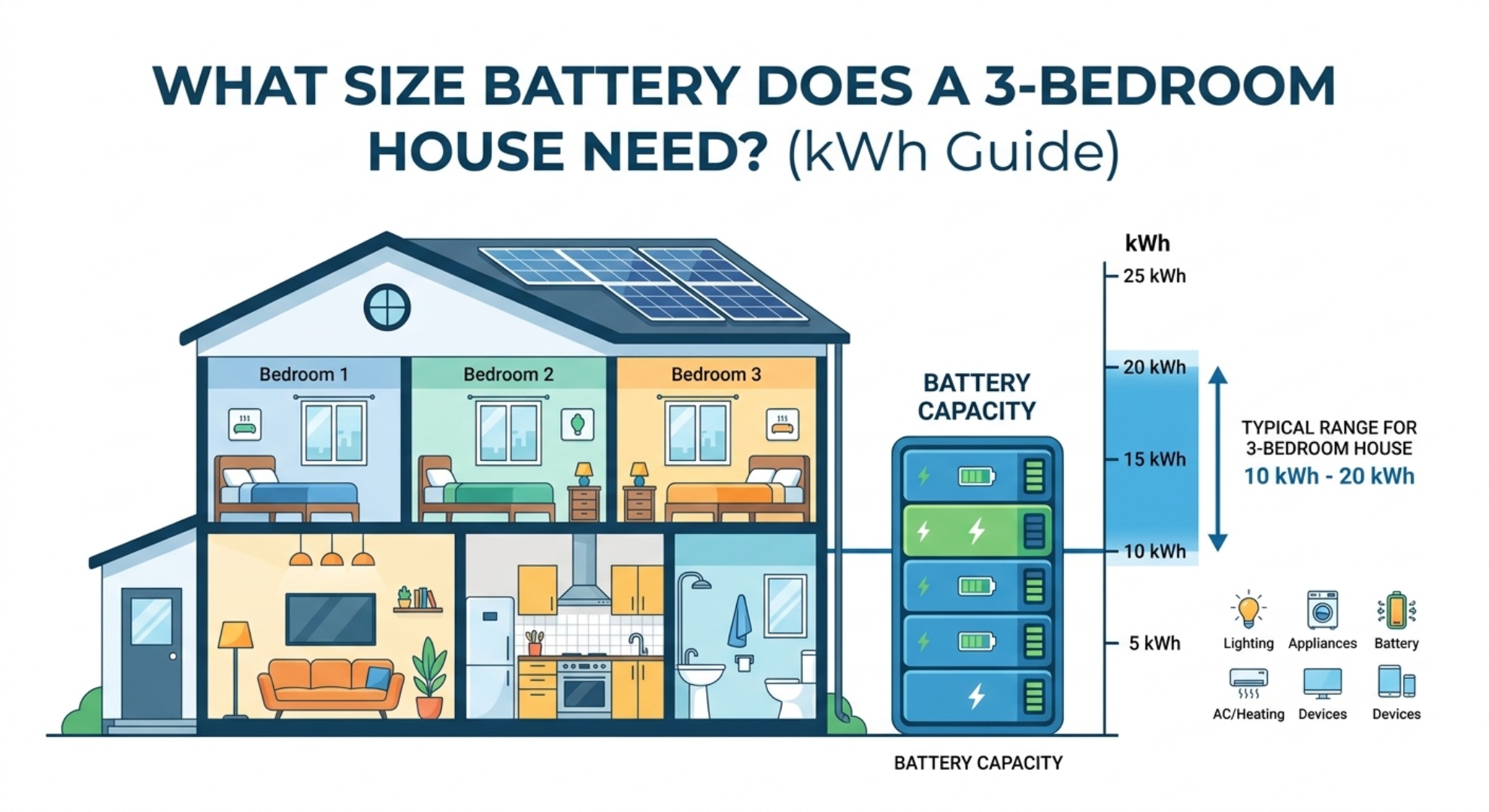
Table of Contents
- 1. How Much Electricity Does a 3‑Bedroom House Use?
- ‑ Average Daily kWh Usage (EIA Data)
- ‑ Essential Loads vs. Whole‑House Backup
- 2. Battery Size for 3‑Bedroom House: 10, 15 & 20 kWh Compared
- ‑ 10 kWh Battery: Best for Solar Self‑Consumption
- ‑ 15 kWh Battery: Standard for Daily Backup
- 3. LiFePO4 Home Battery: Chemistry & Cell Design
- ‑ Why LiFePO4 Chemistry Is Best for Home Storage
- ‑ Prismatic Cells: Compact 48V/51.2V Battery Design
- 4. Key Factors That Affect Your Home Battery Size
- ‑ Climate & Location Impact on Battery Sizing
- ‑ Pairing Battery Storage with Solar PV
- 5. Real‑World 3‑Bedroom Home Battery Case Studies
- 6. Frequently Asked Questions
Homeowners shopping for renewable energy or emergency power often ask how big their home battery should be for a typical three‑bed property. There’s no universal answer here. Your ideal battery size depends on how much power your household actually uses, your daily routines, and whether you only want partial backup or full energy independence. Most three‑bed homes get by with 10 kWh to 15 kWh for evening‑only loads or short grid blackouts. If you run heavy appliances or charge an electric vehicle, you’ll likely want 20 kWh or higher.
1. How Much Electricity Does a 3‑Bedroom House Use?
You have to know your real‑world power draw before picking a battery. Every home runs differently. Local weather, number of people living there, and power‑hungry gear like air conditioners, heat pumps and electric water heaters all shift your requirements.
Average Daily kWh Usage (EIA Data)
US Energy Information Administration numbers show an average single‑family home burns roughly 30 kWh each day. A lot of that power gets used while the sun is up, right when solar panels make their peak output. For battery sizing, we focus mostly on evening and night‑time consumption. That usually makes up 40 %‑50 % of total daily use, translating to around 12 kWh‑15 kWh you’ll need from stored energy after dark.
Essential Loads vs. Whole‑House Backup
You need to decide what you actually want to keep running when the grid fails. If you only need to keep fridges, Wi‑Fi, lights and medical gear online, a smaller 10 kWh battery works fine. But if you plan to fire up big‑surge devices such as central AC at the same time, you’ll need far more continuous power and storage capacity. Plan for 15 kWh‑20 kWh, otherwise your battery will drain very fast during an outage.
2. Battery Size for 3‑Bedroom House: 10, 15 & 20 kWh Compared
Picking hardware that matches your real needs helps you save money and gives you reliable backup over the battery’s lifespan.
10 kWh Battery: Best for Solar Self‑Consumption
If you’ve got rooftop solar panels, a 10 kWh residential lithium battery is a solid pick for cutting utility bills under time‑of‑use electricity rates. It catches excess solar power generated mid‑day and sends that stored energy out during expensive evening peak hours. This setup brings down your monthly power costs without you overspending on storage you won’t really use.
15 kWh Battery: Standard for Daily Backup
Many areas deal with unstable grid power. If you want more energy security, a 15 kWh storage unit makes good sense. It easily handles lighting, refrigerators, entertainment gear and occasional cooking‑related appliances through a full night or multi‑hour blackout. You won’t have to constantly ration power around the house.
3. LiFePO4 Home Battery: Chemistry & Cell Design
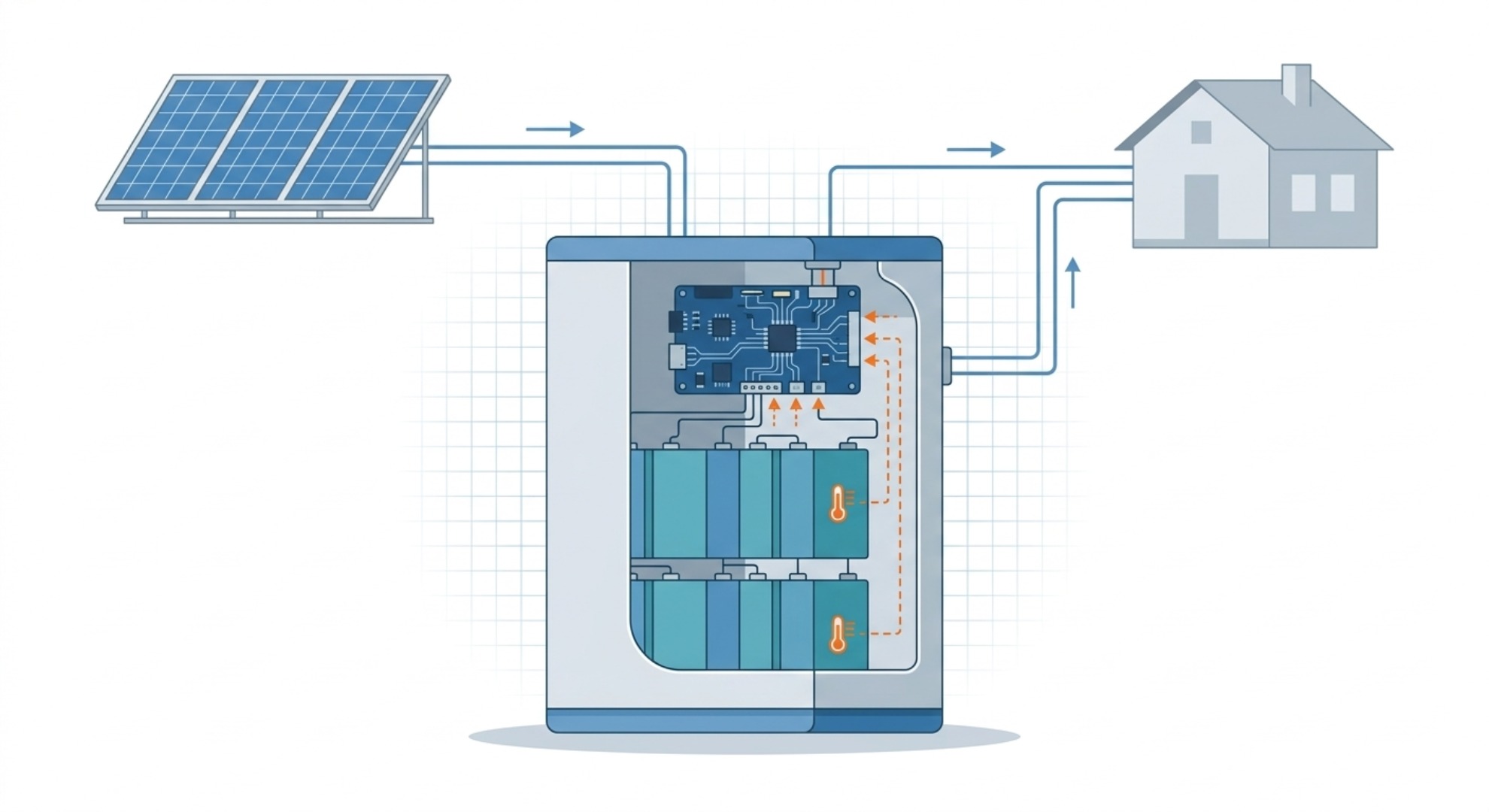
Raw kWh numbers only tell you part of the story. Battery chemistry and build shape real‑world performance, safety and how long your system lasts.
Why LiFePO4 Chemistry Is Best for Home Storage
LiFePO4 stands out for residential backup work. Compared to older lithium chemistries, these cells are far more stable and safer when temperatures rise. They won’t easily go into thermal runaway. They also handle thousands of deep charge‑discharge cycles, and most keep over 80 % of their original capacity after roughly ten years of regular use.
Prismatic Cells: Compact 48V/51.2V Battery Design
Today’s home battery cabinets favour prismatic square cells over older cylindrical formats. Their rectangular shape saves physical space and improves internal heat management. Manufacturers stack these cells into high‑density 48V or 51.2V modular packs. These fit neatly onto wall brackets or stand‑on‑the‑floor enclosures for household installations.
4. Key Factors That Affect Your Home Battery Size
Several real‑world variables push your ideal battery capacity higher or lower. Think these through before buying and installing anything.
Climate & Location Impact on Battery Sizing
Your local climate decides how hard heating and cooling systems run year‑round. Homes in places with brutal summer heat run AC heavily after sunset. Night‑time energy use jumps, so you need bigger battery storage to offset steep time‑of‑use utility charges.
Pairing Battery Storage with Solar PV
When you hook batteries up to correctly sized solar panels, sunlight recharges your storage each morning. Online solar‑battery calculators help you match solar peak output against your household power‑use peaks. This stops you buying a battery that sits mostly idle, or one that gets constantly overworked.
5. Real‑World 3‑Bedroom Home Battery Case Studies
Case Study 1: 10 kWh LiFePO4 Battery, California Suburban 3‑Bed Home (4‑person family)
This Los‑Angeles‑area three‑bed house runs a 6 kW rooftop solar array paired with a 10 kWh LiFePO4 battery. The four‑person household uses around 27 kWh total each day. Evening loads come from lights, the fridge, TVs and small kitchen gadgets. The family picked 10 kWh mainly to make better use of their solar power, plus basic emergency backup — they knew it wouldn’t run the air‑conditioning. During utility peak‑rate windows, stored solar covers most evening loads, cutting their monthly power bill by roughly 38 %. When the grid went down for four hours, the battery kept fridges, Wi‑Fi, lights and phone chargers online. They shut off AC to preserve stored power. From their experience, 10 kWh works great for bill savings, but you’d need more capacity if you want AC through blackouts.
Case Study 2: 15 kWh LiFePO4 Battery, Texas 3‑Bedroom House with Frequent Grid Failures
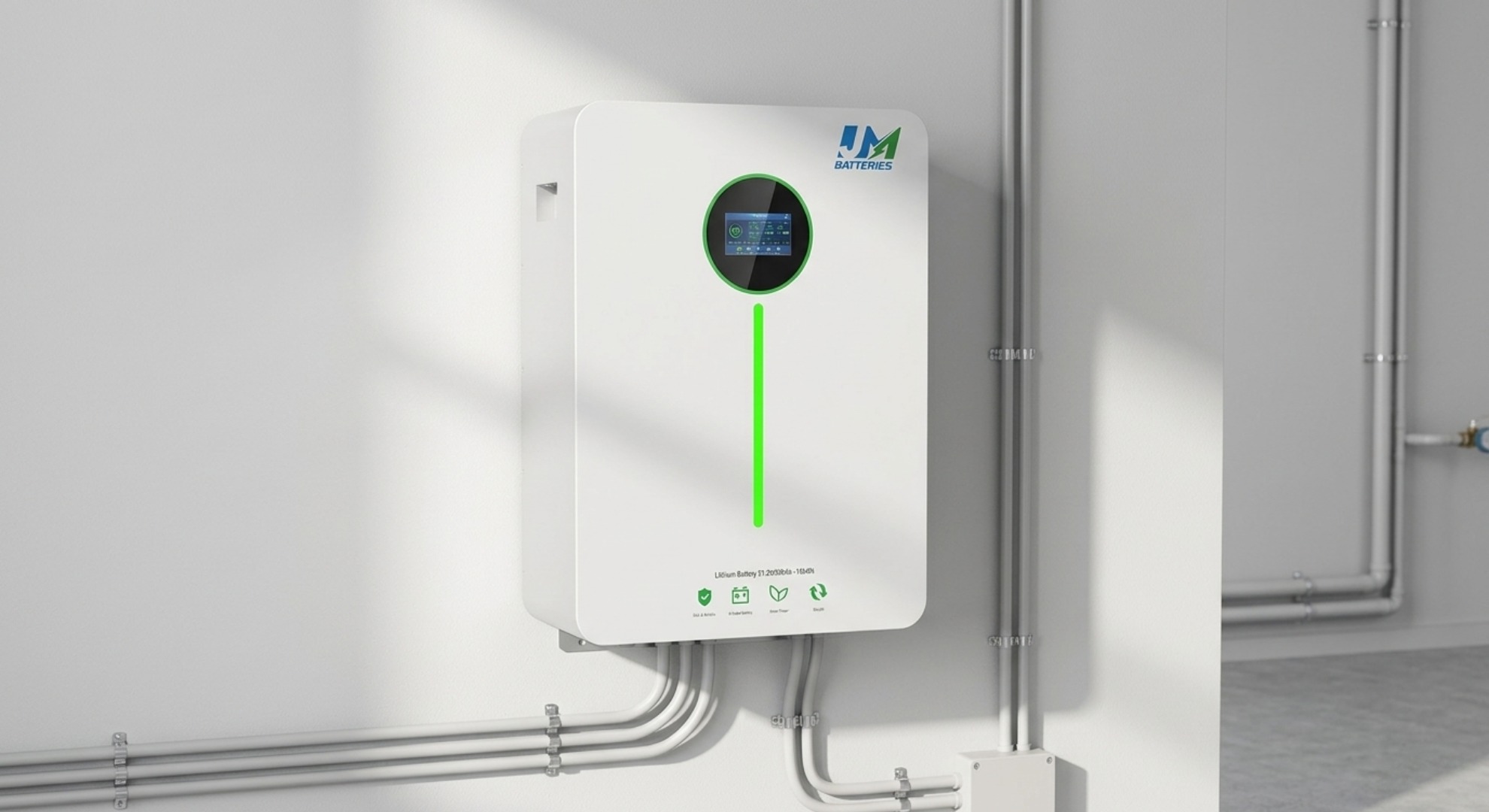
A Houston‑based three‑bed, four‑member household installed a 15 kWh prismatic‑cell LiFePO4 battery alongside an 8 kW solar setup. Winter‑storm‑driven blackouts and high evening power rates drove their buying decision. Their overnight power draw lands somewhere between 13 kWh and 14 kWh. In one real‑life two‑day grid outage, the battery plus daily solar top‑ups kept fridges, lights, home‑office electronics and their gas‑furnace blower running. They didn’t need strict power rationing. Most evenings they skip expensive grid‑supplied peak‑time power and save close to $85 per month on utility bills. For them, 15 kWh hits the sweet spot: enough storage for multi‑hour blackouts and night‑time solar use, without wasting money on unused capacity.
6. Frequently Asked Questions
Q: Can a 10 kWh battery run an entire 3‑bedroom house?
A: No. A 10 kWh unit can’t handle high‑draw gear such as air‑conditioners or heat pumps across the whole home. It works fine for core essentials: lights, fridge, Wi‑Fi and small electronics for short‑term outages.
Q: Do I need solar panels to use a home battery for my 3‑bedroom home?
A: You don’t have to have solar panels. Grid‑tied backup batteries work without them. Even so, solar PV lets you refill battery storage with free daytime sunlight, which delivers better long‑term savings.
Q: How long will a 15 kWh battery last for a three‑bedroom property?
A: Stick to essential loads only, and a 15 kWh LiFePO4 battery can hold up for a full night or multiple hours of blackout. Turn on AC or other heavy‑use gear, and runtime drops fast.
Q: Is LiFePO4 better than other lithium‑ion batteries for residential backup?
A: Yes. LiFePO4 gives better thermal safety, longer cycle counts and longer working life for home energy storage compared to older lithium‑ion cell types.
Q: What battery size is recommended if I own an EV for my 3‑bedroom house?
A: EV charging adds big energy demands. Three‑bed homes with an electric vehicle should look at 20 kWh or larger battery capacity to cover regular household loads plus vehicle charging.
What Can a 40kWh Battery Power


