


What Size Inverter for a 48V Battery? Sizing Guide
What Size Inverter for a 48V Battery? Sizing Guide
Having a 48‑volt battery doesn’t tell you which inverter you should buy. Too many people pick an inverter based only on battery voltage and run into shutdowns or hardware damage. Your inverter has to match real‑world limits: BMS discharge ratings, your actual AC loads, motor startup spikes, and site conditions. This guide walks you through practical sizing for 48V LiFePO4 battery systems, without leaning on oversimplified rules‑of‑thumb.
48V Battery Power Requirements: BMS and Load Limits
BMS Discharge Current Is a Key Limitation
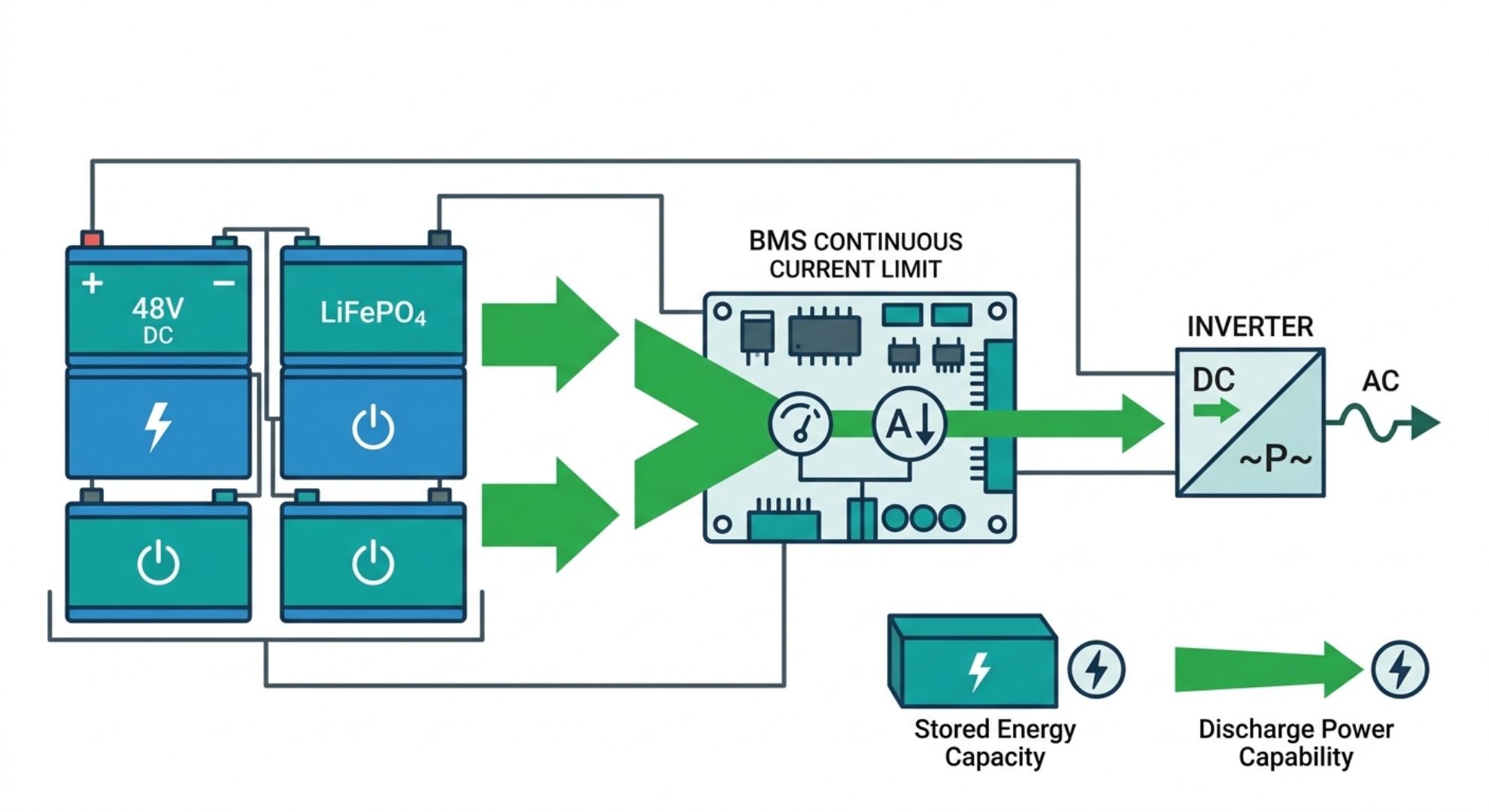
When shopping for LiFePO4 batteries you’ll see labels like 48V 100Ah. Many modern LFP packs actually run at 51.2V nominal, so always pull numbers from the manufacturer datasheet instead of just the sticker. A battery’s total kWh tells you storage capacity, but its BMS continuous discharge current sets the hard upper limit for how much power you can pull at once.
Approximate maximum DC battery power = battery voltage × allowed continuous BMS current
For example, a 48V battery with a 100A BMS tops out near 4,800W DC before accounting for inverter losses. Switch to a 51.2V pack with that same 100A limit and you get roughly 5,120W DC. Real usable AC output will sit lower. Voltage drop, operating temperature, cable resistance and manufacturer derating all pull down real‑world performance.
Appliance Loads and Motor Starting Surge
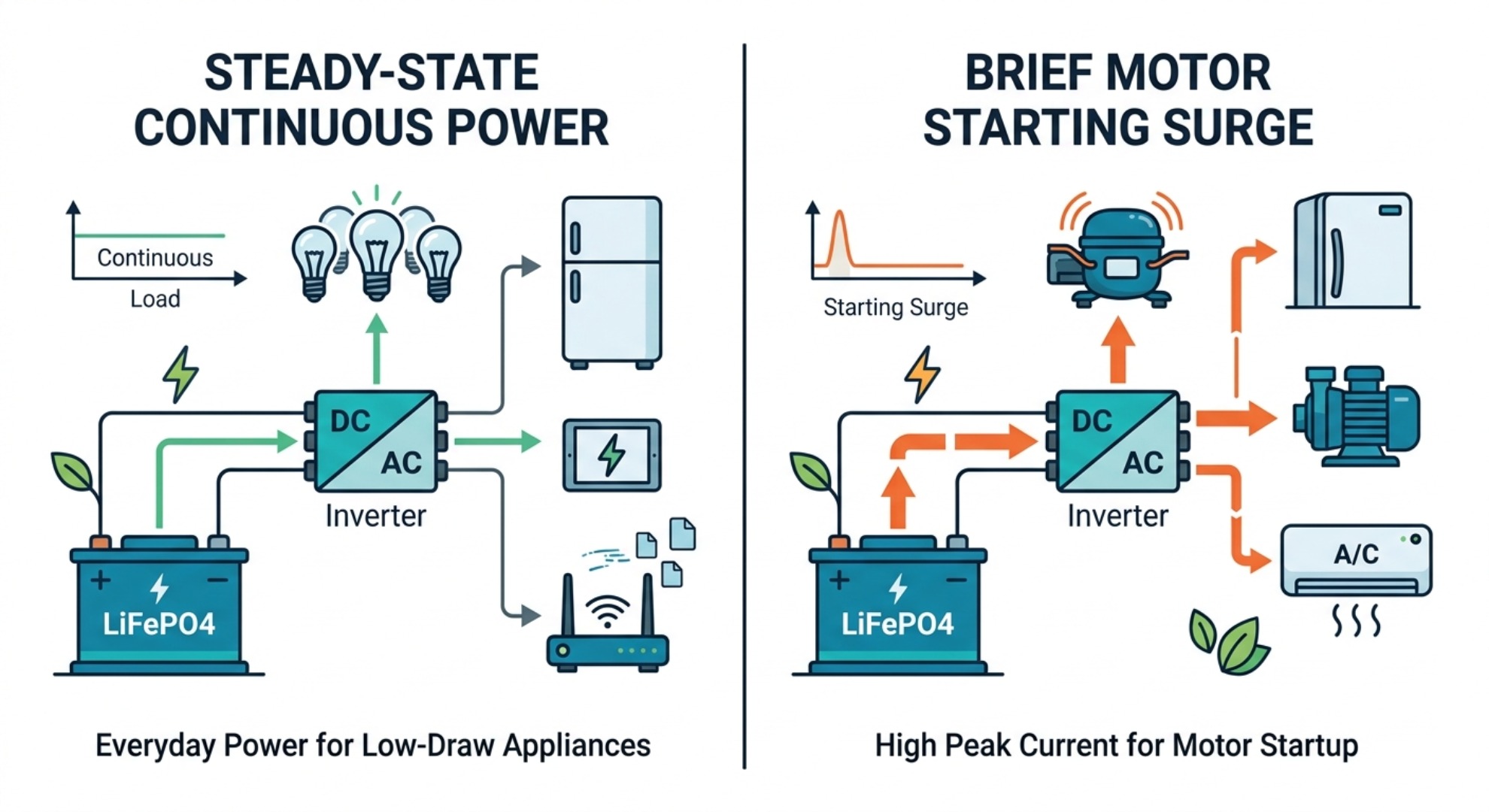
Before buying hardware, write down every appliance that might turn on at the same time. Add up their running wattage, then pay special attention to motors and compressors. Fridges, well pumps, air conditioners, washing machines and power tools draw brief but large startup surges far above their steady‑state power draw.
Don’t blindly apply the “three times running wattage” rule for every motor. Startup current shifts based on motor type, compressor design, ambient temperature and appliance model. Use nameplate data or measured startup values whenever you can.
How to Calculate Inverter Size for a 48V Battery Bank
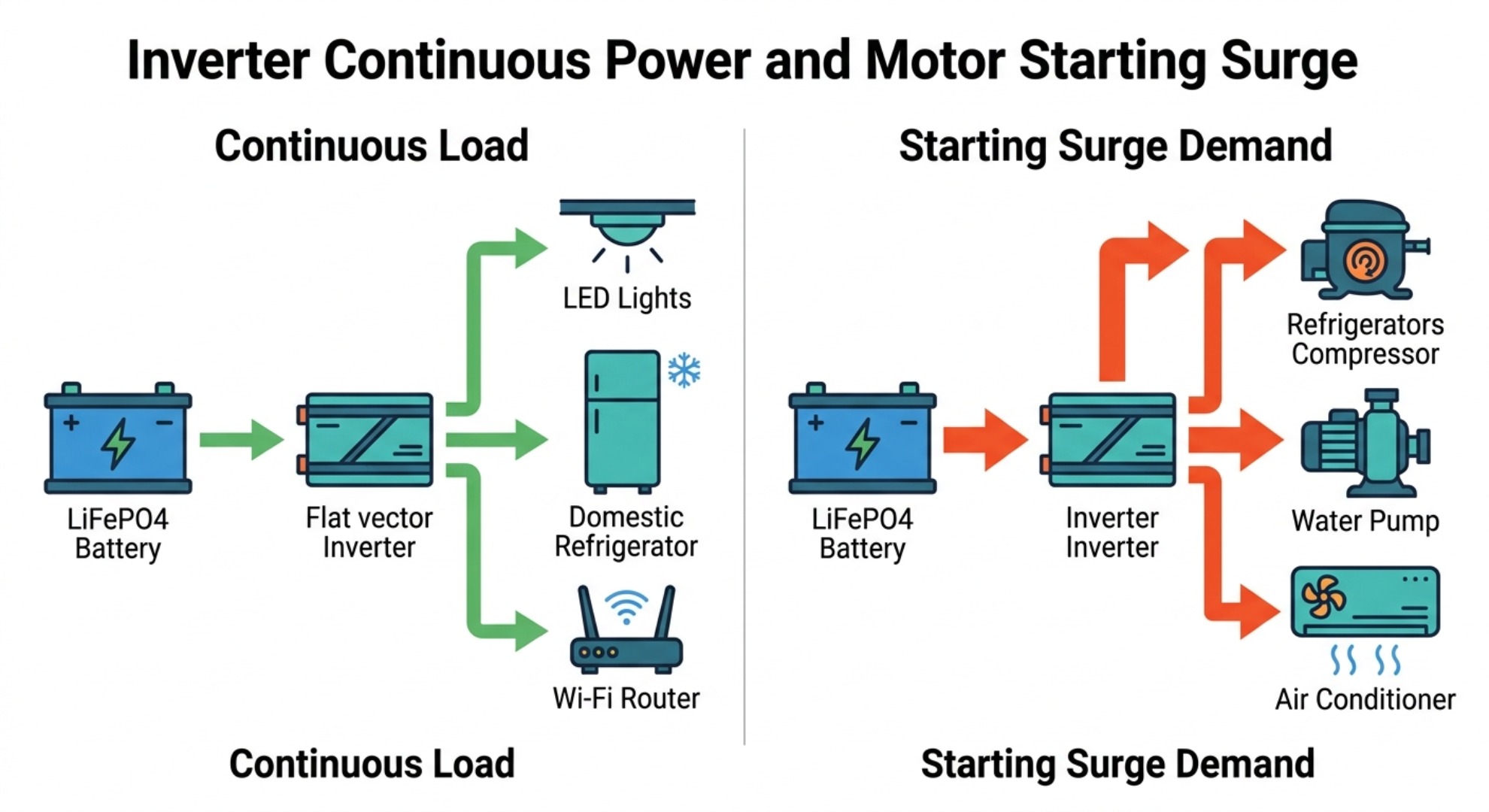
Step 1: Calculate the Required Continuous AC Output
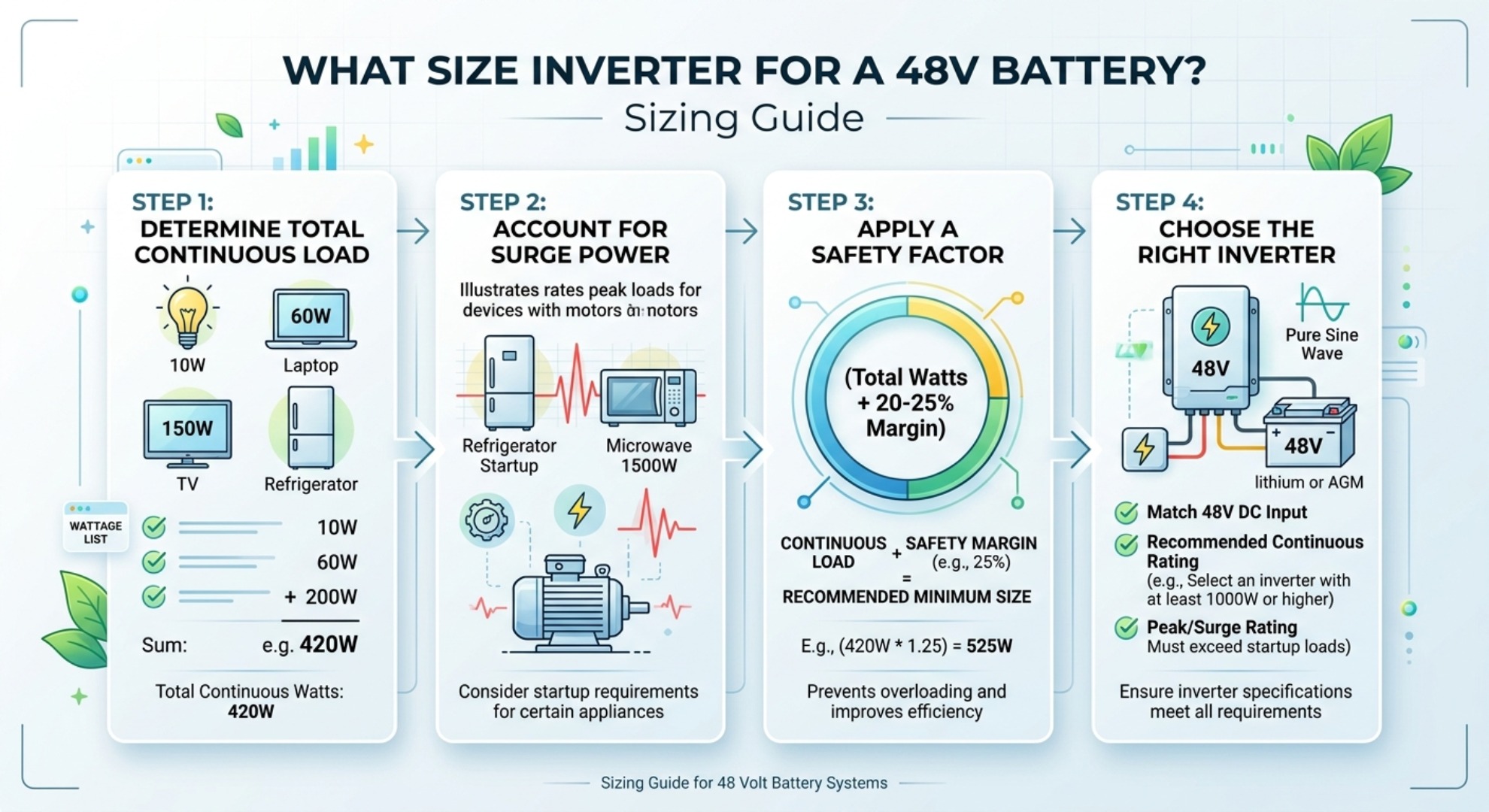
List every load you expect to run through an outage. Sum their running wattage to find your minimum continuous AC output. Do not size your inverter off daily energy use alone. kWh tells you runtime; kW tells you whether your hardware can actually run your gear right now.
Required continuous inverter output ≥ maximum simultaneous running load × design margin
A safety margin keeps you from running the inverter flat‑out 100% of the time. That well‑known 80% guideline isn’t a code requirement though. How much margin you need depends on your load profile, heat at the install location, thermal derating, future loads and the official inverter datasheet.
Step 2: Check Battery‑Side Current
AC power coming out of your inverter creates DC current draw on your battery bank. You can estimate it quickly with this formula:
Approximate battery current = AC output ÷ (battery voltage × inverter efficiency)
Take a 5,000‑watt AC load paired with a 51.2V battery and 93% inverter efficiency. That setup pulls roughly 105A from the battery. Even though your pack says “48V‑100Ah”, a 100A BMS will hit its limit here. Always use real manufacturer voltage ranges, efficiency curves and current limits for final calculations.
Step 3: Check Surge Rating and Duration
Match the inverter’s surge power and how long it can hold that surge against the largest motor or compressor startup draw in your system. Also confirm your battery and BMS can supply that short‑term burst. Even an inverter with plenty of continuous wattage can trip if surge capacity or allowed battery peak current falls short.
Step 4: Separate Inverter Size from Battery Runtime
Inverter power rating and battery energy work together but measure two different things. A 5kWh battery can run a 3kW load for under two hours once you account for usable depth‑of‑discharge, inverter losses and temperature. Actual runtime depends on your real‑world load mix, not just component labels.
Estimated runtime = usable battery energy × inverter efficiency ÷ average AC load
Inverter Size Examples: Backup vs. Whole‑Home Loads
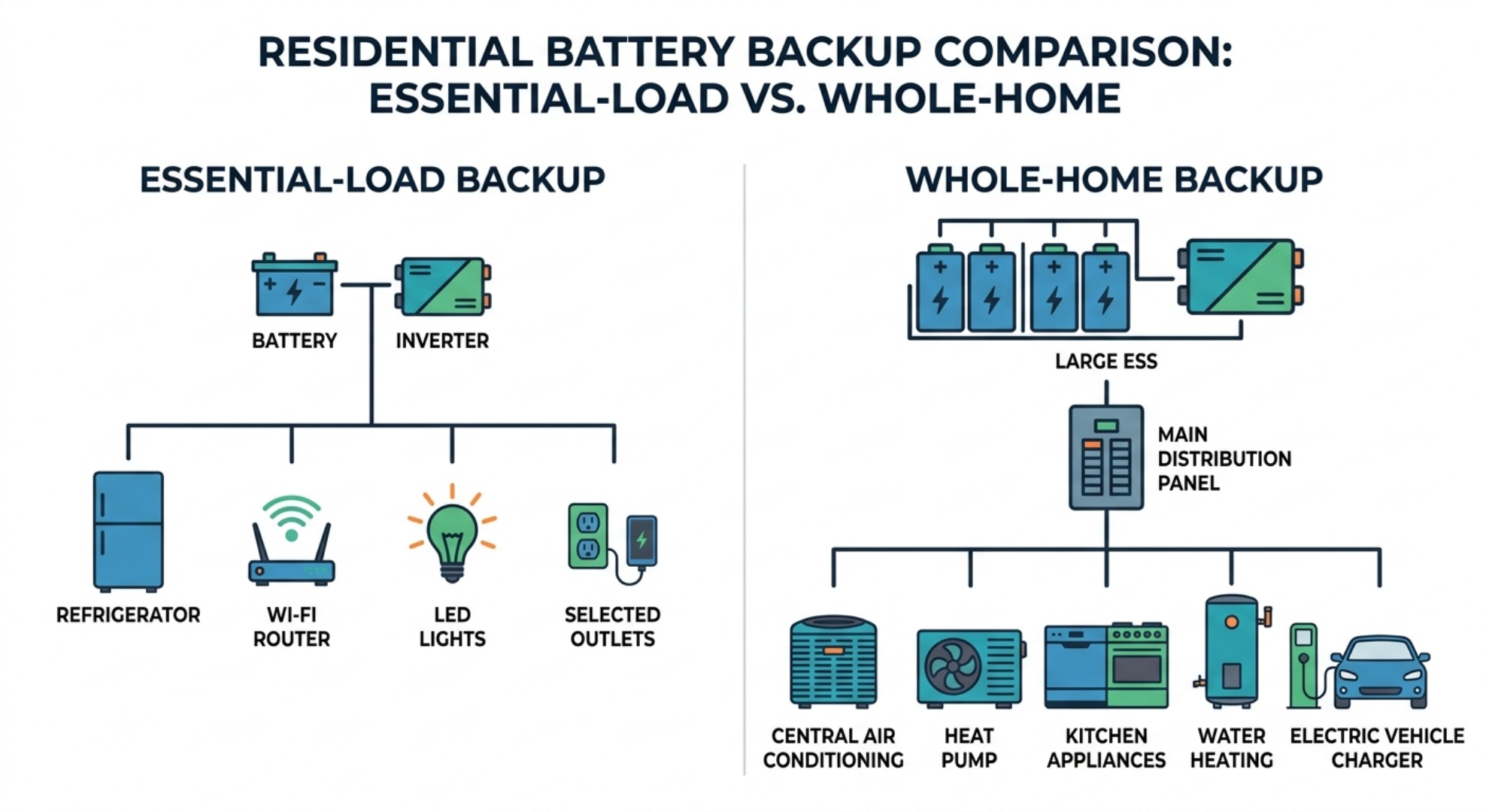
These examples show typical sizing ranges only. Never treat them as universal recommendations. Final component choices must come from measured loads plus battery, inverter and wiring datasheets.
| Backup objective | Typical loads to assess | Illustrative inverter range | Key limitation to check |
|---|---|---|---|
| Essential‑load backup | Refrigerator, lighting, Wi‑Fi, small electronics, selected outlets | About 2‑3kW when the measured simultaneous load and startup surge fit within the ratings | BMS current, refrigerator startup surge, and desired runtime |
| Expanded partial‑home backup | Essential loads plus a pump, microwave, or selected kitchen circuits | About 3‑5kW when supported by the battery and transfer equipment | Whether multiple loads can start together and whether the service panel is correctly configured |
| Whole‑home or high‑load backup | Central HVAC, electric water heating, pumps, large kitchen loads, or EV charging | Must be calculated from the actual load profile; one 8‑10kW inverter may not be sufficient | Peak demand, compressor surge, EV charger rating, service limits, and whether load shedding is required |
Example: Essential‑Load Backup
Imagine your combined running loads hit 1,600W and your fridge pulls a 2,800W startup surge. Your inverter needs to handle both the steady load and that short surge for the required time. A 3kW inverter might work here — but only if its surge specs, battery current draw, wiring and transfer gear all stay within manufacturer limits.
Example: Whole‑Home Backup
Whole‑home backup isn’t just adding appliance wattages together. Central air, heat pumps, electric water heaters, well pumps, induction stoves and EV chargers create heavy overlapping power draws. You may need larger or multiple inverters, automatic load shedding, bigger battery banks or a mix of these fixes. Don’t assume a single 8kW or 10kW inverter can cover every device in your house.
48V Inverter Selection Checklist
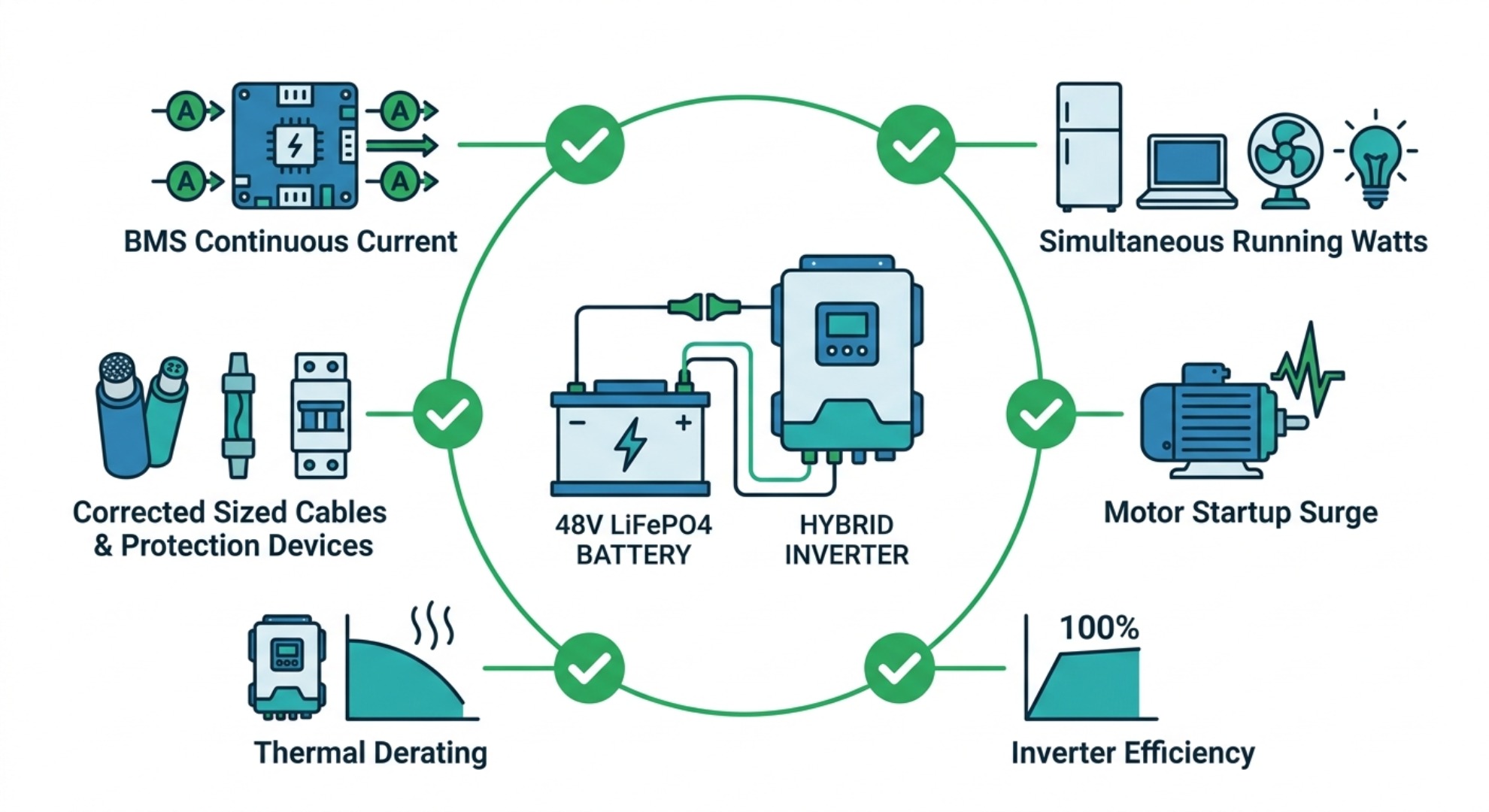
- Confirm the battery's nominal voltage, operating‑voltage range, and chemistry.
- Check the BMS continuous and peak discharge‑current ratings.
- Calculate maximum simultaneous running watts.
- Check motor and compressor starting watts and surge duration.
- Use the battery‑side current formula to check DC current demand.
- Review inverter efficiency and thermal‑derating curves.
- Confirm communication compatibility between the inverter and BMS where required.
- Size fuses, breakers, cables, disconnects, and busbars for the actual current and installation conditions.
- Confirm local electrical, fire, permitting, and installation requirements with a qualified professional.
Frequently Asked Questions
Can a 48V 100Ah battery run a 5kW inverter?
Not automatically. A 48V‑100Ah battery holds roughly 4.8kWh nominal energy, but its BMS current limits may not keep up with a 5kW AC load after inverter losses. Look over battery continuous/peak current numbers, inverter DC input specs and manufacturer compatibility notes before pairing them.
Is an 80% inverter sizing rule mandatory?
No. Staying below maximum inverter output gives you operating headroom, but 80% is just a practical design hint. It does not apply to every battery‑inverter setup. Always follow equipment datasheets, local codes, thermal‑derating data and your real‑world load profile.
How many 48V batteries are needed for a 10kW inverter?
There is no universal answer. Divide the inverter’s required battery current by one battery’s allowed continuous current. Next look up manufacturer rules for parallel batteries, cable layout, fusing, communications and how much runtime you want. You may need extra battery capacity for long run times or heavy surge‑type loads.
All numerical examples in this guide are illustrative calculations. Verify final inverter, battery, BMS, protection, wiring, and installation requirements against the applicable manufacturer documentation and local electrical requirements.
Home Battery Backup for Power Outages