


Prismatic vs Cylindrical LFP Cells: Which Is Better for Home Storage?
Prismatic vs Cylindrical LFP Cells: Which Is Better for Home Storage?
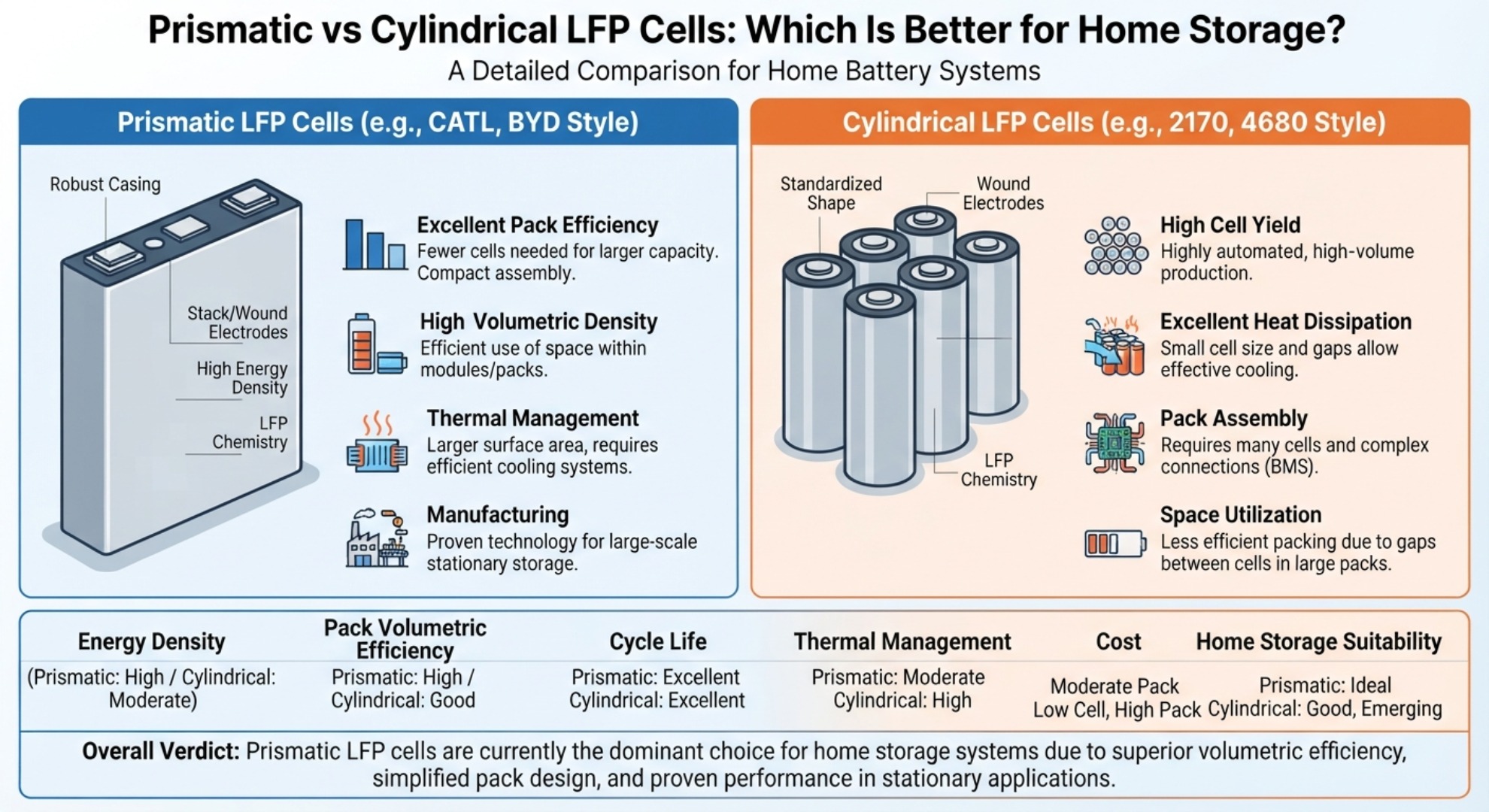
Table of Contents
Picking the right hardware for residential battery storage directly impacts real‑world reliability, thermal safety, and how fast your system pays itself back. Anyone building home‑scale LFP storage will run into a core decision: prismatic or cylindrical cell formats. Both rely on lithium iron phosphate’s well‑known safety benefits and low‑fire risk, yet their physical build creates meaningful gaps in packing efficiency, heat handling, and overall system assembly work.
Large‑format prismatic cells with rigid rectangular housings now dominate many high‑capacity indoor and outdoor home‑storage cabinets. Knowing their mechanical differences helps installers and homeowners build more robust backup power setups.
LFP Cell Design and Structure: Prismatic vs Cylindrical
Prismatic Cell Architecture: Large‑Format LFP Stacking
Prismatic cells use flat‑stacked or flattened jelly‑roll cathode‑anode‑separator layers locked inside stiff steel or aluminum enclosures. Heavy‑duty terminal posts and built‑in burst‑proof vents come as standard hardware. Individual prismatic units can hit 100Ah all the way to 300Ah and higher, so far fewer cells are needed to build typical 48V / 51.2V home‑storage modules. One practical downside: these flat‑format cells must be held under consistent mechanical compression inside their enclosure. Without proper clamping, deep charging cycles can pull internal layers apart and hurt long‑term performance.
Cylindrical Cell Design: Wound Electrodes and Pressure Control
Cylindrical LFP cells wind electrode material into tight continuous spirals, sealed within seamless metal cans. Common sizes include 18650, 21700 and 32700. The round shape naturally spreads internal gas and hydraulic stress evenly across the metal shell. Every single cell ships with its own top‑side PTC safety resistor and mechanical pressure‑release vent for local over‑pressure protection. Individual cell capacity sits roughly between 3Ah‑15Ah, which means residential storage banks need hundreds, sometimes thousands of cells wired together in mixed series‑parallel arrangements.
Performance Comparison: Prismatic vs Cylindrical LFP Cells

| Performance Feature | Prismatic LFP Cells | Cylindrical LFP Cells |
|---|---|---|
| Volumetric Efficiency | High (eliminates air gaps between cells) | Moderate (inherent gaps between round tubes) |
| System Energy Density | 160–210 Wh/kg (at module level) | 140–180 Wh/kg (at module level) |
| Thermal Management | Requires liquid plates or contact cooling fins | Excellent natural air dissipation between gaps |
| Expected Cycle Life | 4,000–8,000 cycles (under proper compression) | 2,000–4,000 cycles |
| Interconnect Complexity | Low (16 cells per 51.2V pack) | High (hundreds of welded busbar joints) |
Volumetric Efficiency and Space Utilization Compared
Wall‑mounted and rack‑mount home batteries need to pack as much usable energy into limited physical cabinet space. Prismatic cells stack flat faces against each other with almost zero wasted air space, delivering strong volumetric packing density. Round cylindrical cells will always leave empty gaps between adjacent cans. These gaps help airflow for cooling, yet they lower total energy density per‑liter of cabinet volume. For equal kWh ratings, cylindrical‑based battery cabinets end up noticeably bulkier.
Thermal Management and Heat Dissipation in LFP Cells
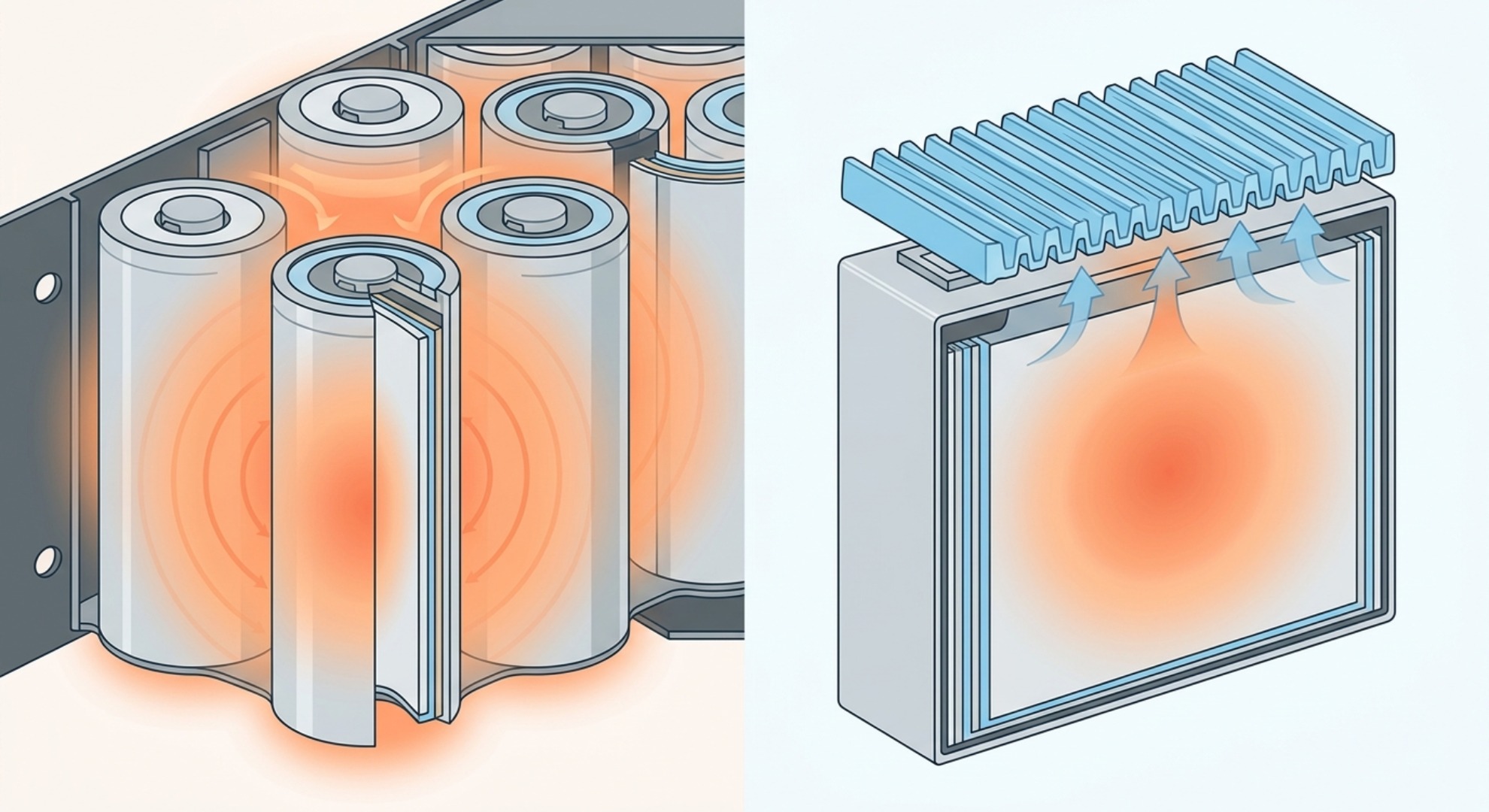
Heat control directly slows cell degradation and keeps operating temperatures within safe bounds. Cylindrical formats have favorable surface‑to‑volume ratios. Heat generated inside the cell moves quickly out to the metal can, and the gaps between cans let ambient air carry heat away. Large‑size prismatic blocks (280Ah, 300Ah) behave differently. Their large internal volume paired with relatively smaller outer surface can trap core heat during high‑rate charge or discharge. Well‑built prismatic home‑storage packs therefore rely on thermal interface pads paired with cold plates or aluminum heat sinks to balance temperatures across all internal layers.
LFP Battery Cycle Life, Degradation, and Swelling Control
Stationary‑grade prismatic LFP cells commonly pass 6,000+ deep‑discharge cycles before capacity drops to 80% of original value. Mechanical end‑plates in the module assembly hold graphite‑anode expansion in check during lithium absorption — this physical restraint is critical for hitting those long‑cycle numbers. However, any physical degradation or swelling inconsistency across cells can eventually manifest as parallel battery voltage gap problems that compromise the entire system's longevity.
LFP Battery Manufacturing, Safety, and Cost Compared
Cell Assembly Complexity and BMS Interconnection Reliability
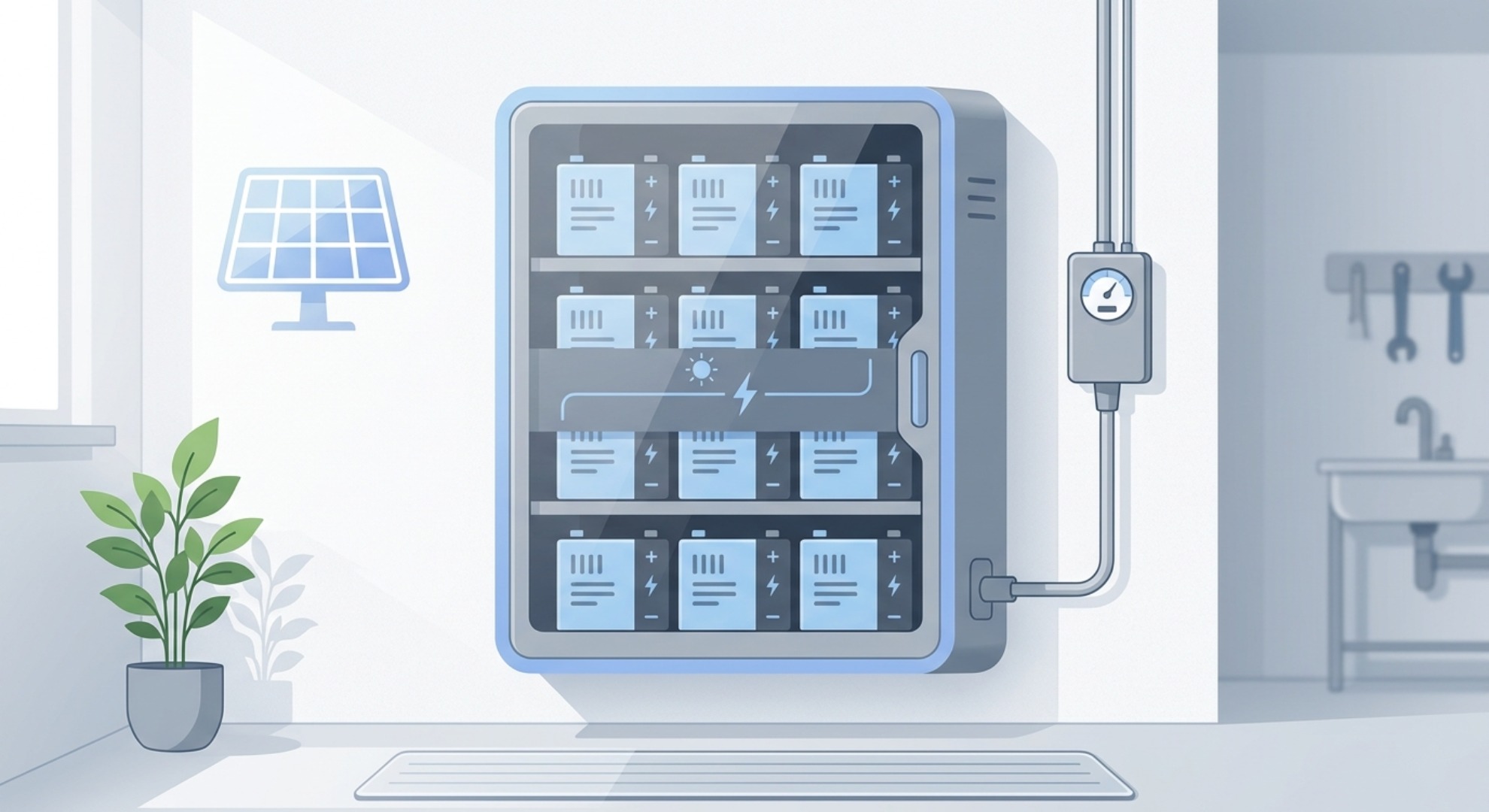
A typical 51.2V /10kWh home‑storage battery built around prismatic technology only needs 16 cells wired in series. Fewer cells mean far fewer electrical connection points, and simpler work for the battery management system to monitor. Build the same capacity with cylindrical cells and you need well over 1 000 individual units. Every cell requires two precise wire‑bond or laser‑welded joints. That creates thousands of potential contact points that must survive thermal cycling plus physical vibration over a 10‑15‑year service window.
Battery Safety: Thermal Runaway Containment Compared
A single large 300Ah prismatic cell stores close to 960 Wh inside one housing. Should internal short‑circuit happen, energy release is much larger than small cylindrical cells. Good module design needs flame‑retardant barriers between cells plus strict adherence to safety standards. For a deeper dive into system‑level protection, read our full technical guide on LFP battery thermal runaway prevention.
Which LFP Cell Type Is Best for Home Battery Storage?
For modern whole‑house backup‑power deployments, prismatic LFP cells deliver solid space‑efficiency, high energy capacity, and better long‑term value. Their capability to handle 6 000+ full charge‑discharge cycles makes them well‑suited for daily solar cycling and stable off‑grid operation.
Cylindrical LFP cells remain a solid fit for compact portable power stations, high‑drain DIY custom builds, or modular setups where single‑cell replacement and high pulse‑current output matter. For full‑home battery walls and rack‑mount stationary energy‑storage hardware though, prismatic construction yields cleaner physical footprint, fewer potential electrical‑failure points, and better real‑world long‑term reliability.
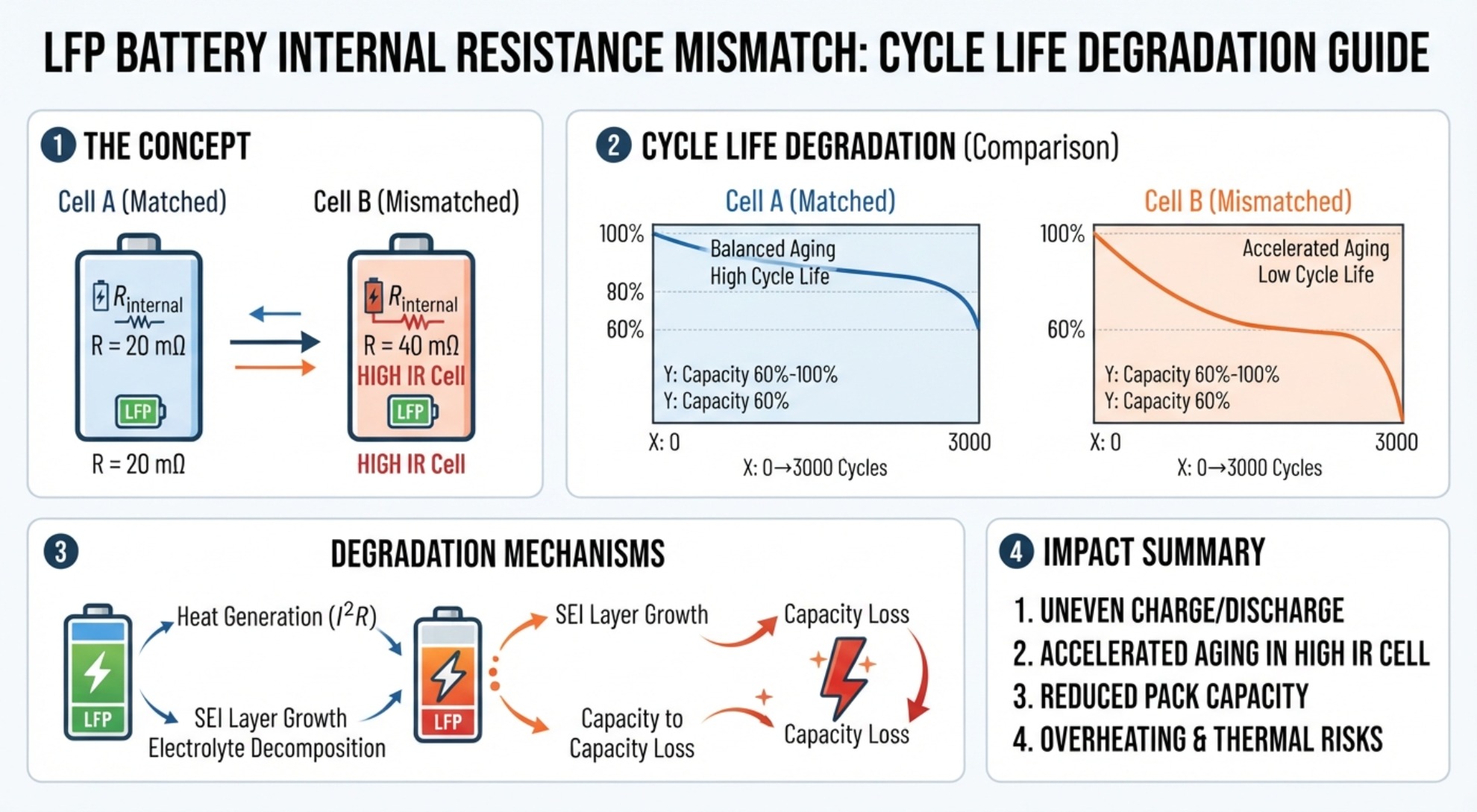
LFP Battery Internal Resistance Mismatch Cycle Life Guide
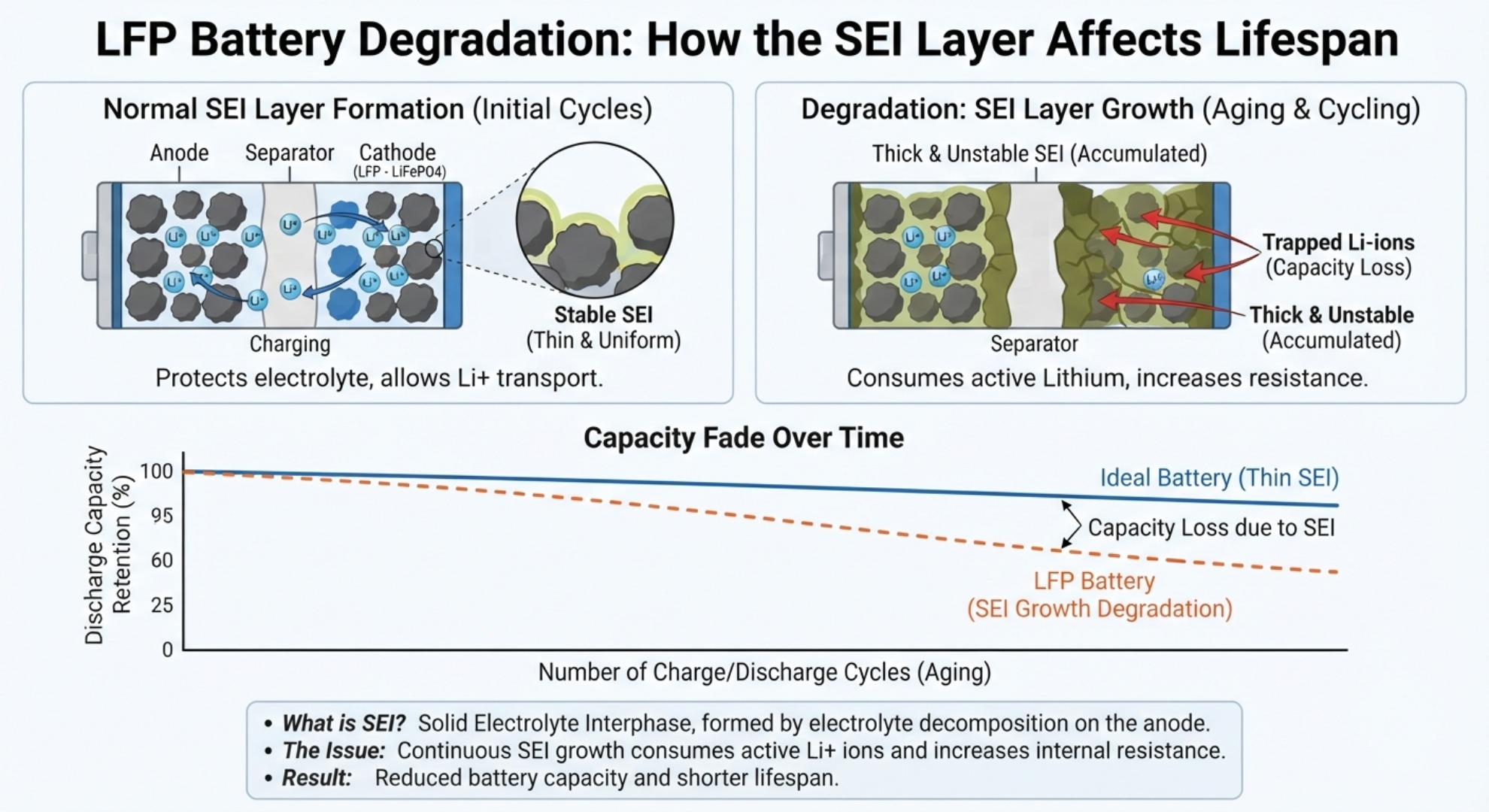
LFP Battery Degradation: How the SEI Layer Affects Lifespan