


Home Battery Backup Payback Period: How Lifespan Affects ROI
JM 51.2V 100Ah 5.12kWh LiFePO₄ Battery: The Smart Choice for Home Battery Backup

📖 Table of Contents
- Why 5.12kWh is the Sweet Spot for Home Battery Backup
- JM 51.2V 100Ah Battery: Technical Specifications
- LFP vs NMC: Why LiFePO₄ Wins for Home Storage
- What Can a 5.12kWh Solar Battery Power?
- Return on Investment: How This Battery Pays for Itself
- Expandable, Stackable Design for Future Growth
- Safety First: Built-in BMS and LFP Stability
- Why JM Energy Technology?
The U.S. residential energy storage market is booming. In 2025 alone, installations surged 52% year-over-year, with homeowners increasingly turning to home battery backup solutions to combat rising electricity costs and grid instability. At the heart of this shift is a simple question: Which battery delivers the best combination of capacity, longevity, and value?
For millions of American households, the answer is a 5.12kWh LiFePO₄ battery — specifically, the JM 51.2V 100Ah domestic battery bank. This home battery backup solution offers an ideal balance of affordability, safety, and cycle life. Let me explain why it's the perfect solar battery for most homes.
Why 5.12kWh is the Sweet Spot for Home Battery Backup

Not every home needs a massive 15kWh or 20kWh system. For many homeowners, 5.12kWh hits the perfect balance:
- Affordable entry point — Lower upfront cost makes home battery backup accessible.
- Covers essential loads — Refrigerator, lights, internet, phone charging, and medical devices.
- Stackable — Add more units as your energy needs grow.
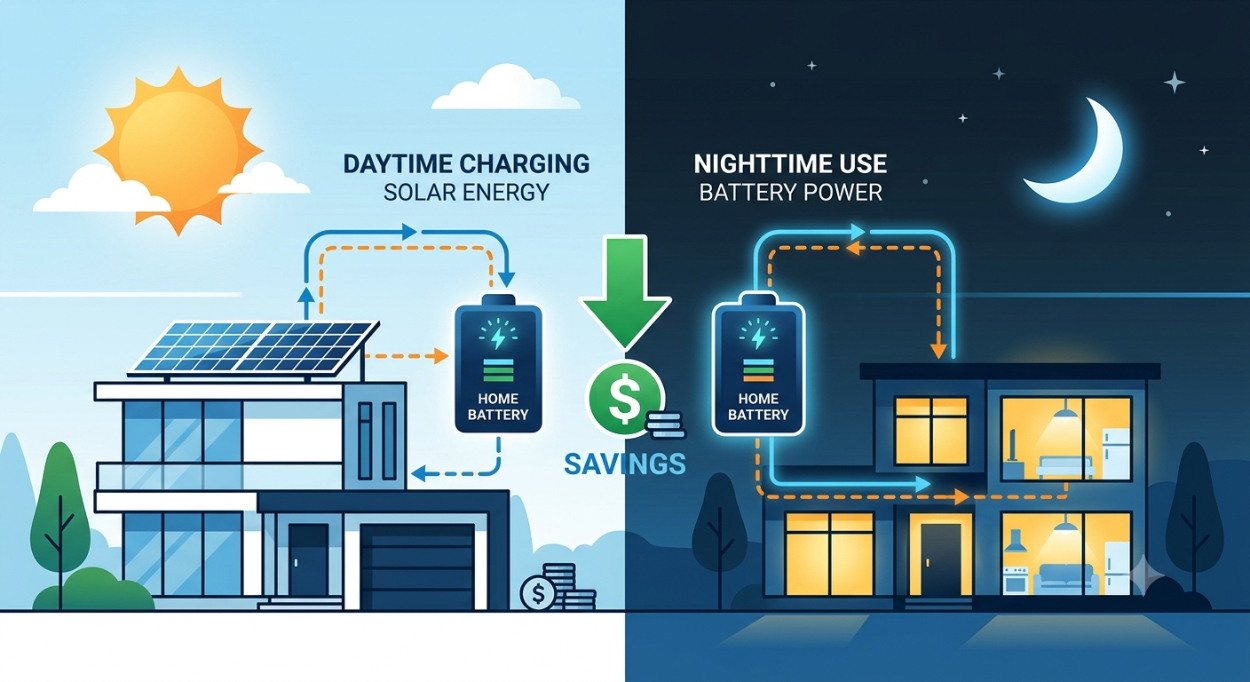
- Perfect for solar self-consumption — Store excess daytime solar power for evening use.
According to market data, 5–10kWh systems are the most common configuration for U.S. homes, representing the majority of residential battery installations in 2025.
JM 51.2V 100Ah Battery: Technical Specifications
Manufactured in our Dongguan, China facility with over a decade of lithium battery expertise, the JM 51.2V 100Ah domestic battery is built for reliability and performance.
| Specification | Details |
|---|---|
| Nominal Voltage | 51.2V |
| Nominal Capacity | 100Ah |
| Total Energy | 5.12kWh |
| Battery Chemistry | LiFePO₄ (Lithium Iron Phosphate) |
| Cycle Life | >6,000 cycles @ 80% Depth of Discharge |
| Built-in BMS | Overcharge, over-discharge, short circuit, temperature protection |
| Operating Temperature | Charge: 0°C–40°C, Discharge: -20°C–40°C |
| Warranty | 10 years |
Each unit includes a sophisticated Battery Management System (BMS) that actively monitors cell voltage, temperature, and current — ensuring safe operation and maximizing solar battery lifespan.
LFP vs NMC: Why LiFePO₄ Wins for Home Storage

Not all lithium batteries are created equal. The JM 51.2V 100Ah uses LiFePO₄ (LFP) chemistry — and for home energy storage, LFP is superior to NMC in almost every way.
| Comparison | LFP (LiFePO₄) | NMC |
|---|---|---|
| Cycle Life | 4,000 – 10,000+ cycles | 1,000 – 5,000 cycles |
| Calendar Life | 10 – 20 years | 6 – 10 years |
| Safety (Thermal Runaway) | ~500°F threshold | ~300°F threshold |
| Depth of Discharge | 90–100% daily OK | Best kept above 20–30% |
| Cost per kWh (material) | ~$35/kWh | ~$40/kWh |
For a home battery backup that gets cycled daily (solar self-consumption) or weekly (backup), LFP delivers 2–4x longer life than NMC. That means one battery instead of two or three over a 15-year period.
For a deeper dive, check out our detailed comparison: LFP vs NMC: Which Battery Lasts Longer for Home Battery Backup?
What Can a 5.12kWh Solar Battery Power?
A 5.12kWh home battery backup is surprisingly capable. Here's what you can run during a grid outage:
- Refrigerator (150W): 20+ hours of continuous operation
- LED lights (50W): Several days
- Internet router & modem (20W): 200+ hours
- Phone & laptop charging: Dozens of cycles
- TV (100W): 30+ hours
- Medical equipment (CPAP ~50W): 3+ nights
For whole-home backup, you can stack multiple units. Two units = 10.24kWh, three = 15.36kWh — enough for most American homes.
Return on Investment: How This Battery Pays for Itself
The average U.S. household can save $1,200–$2,500 annually with a properly sized home battery backup through time-of-use (TOU) arbitrage and increased solar self-consumption.
Payback calculation:
- JM 51.2V 100Ah battery: ~$2,500–$3,500 (depending on quantity)
- Annual savings: $1,500 (conservative estimate with TOU rates)
- Simple payback: 2–3 years
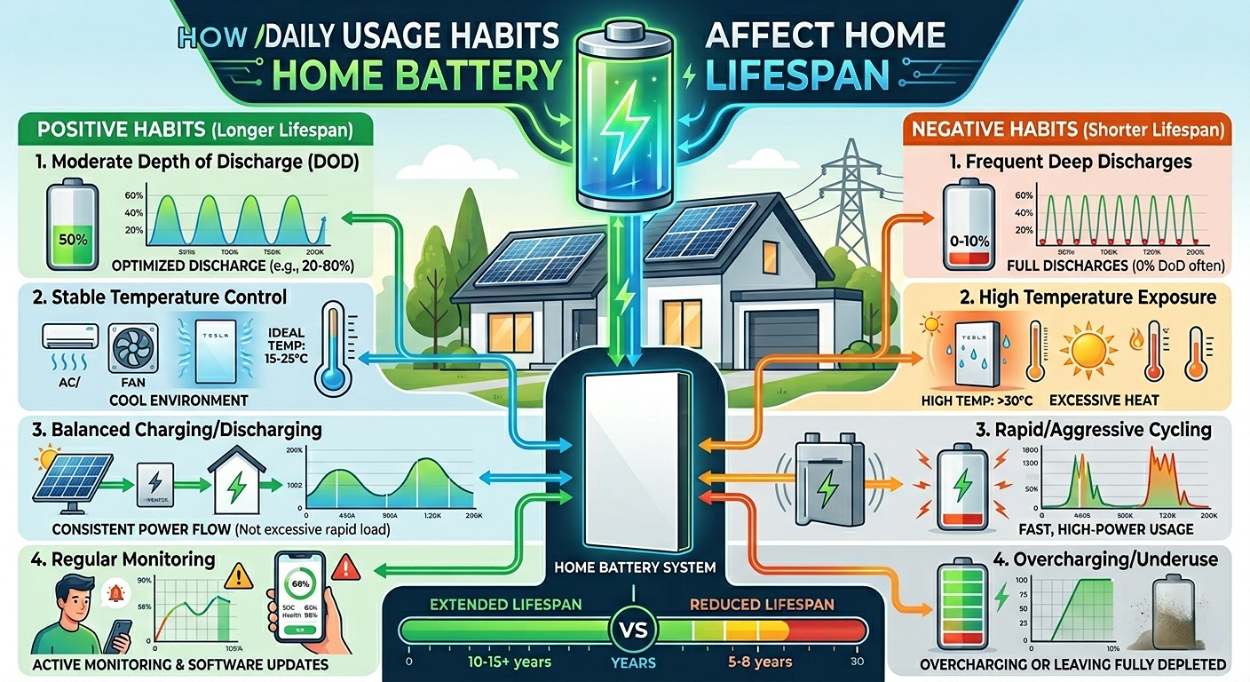
- Lifespan: 10–15 years → 8–12 years of pure savings
With the 30% federal Investment Tax Credit (ITC) available for batteries paired with solar, your effective cost drops even further — shortening payback to as little as 1.5–2 years.
Expandable, Stackable Design for Future Growth
Energy needs change. Maybe today you just want to power essentials during outages. Next year, you might add more solar panels or an EV. The JM 51.2V 100Ah battery is wall-mounted — connect up to 15 units in parallel to scale from 5.12kWh to over 75kWh.
This modular approach means you never overbuy or underbuy. Start with one unit, add more as your budget and energy needs grow.
Safety First: Built-in BMS and LFP Stability

Safety is non-negotiable for home battery backup. The JM 51.2V 100Ah includes a comprehensive Battery Management System that provides:
- Overcharge protection — Prevents voltage exceeding safe limits
- Over-discharge protection — Shuts down before cells are damaged
- Short circuit protection — Immediate disconnect on fault
- Temperature monitoring — Adjusts charging/discharging based on cell temperature
- Cell balancing — Ensures all cells age evenly
Combined with LiFePO₄ chemistry's inherent thermal stability (no thermal runaway risk below 500°F), the JM domestic battery is safe for indoor installation in garages, basements, or utility rooms.
Why JM Energy Technology?
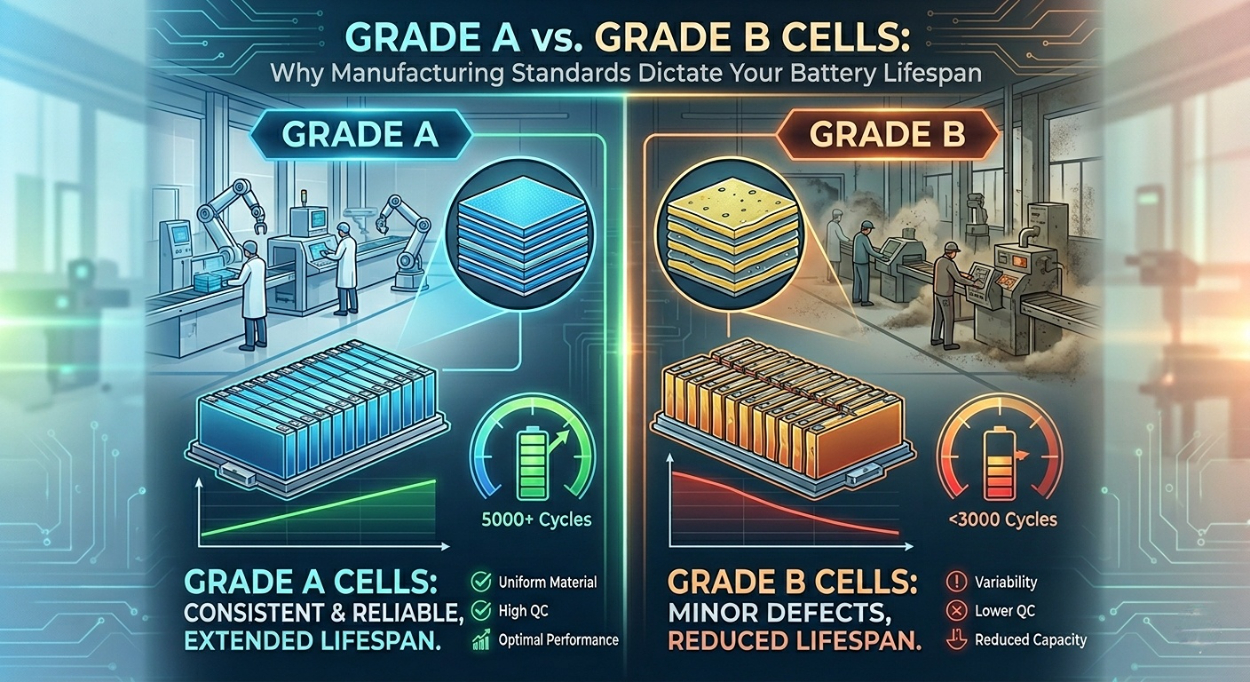
With over a decade of experience manufacturing lithium-ion and sodium-ion batteries in Dongguan, China, JM Energy Technology brings precision engineering and rigorous quality control to every home battery backup we produce. Our 51.2V 100Ah LiFePO₄ domestic battery is the result of 10+ years of continuous improvement, using Grade A cells and advanced BMS technology.
We also manufacture high-quality AA batteries and other portable power solutions — but our passion is helping American homeowners achieve energy independence with reliable, long-lasting LFP storage.
Final Thoughts
The JM 51.2V 100Ah 5.12kWh LiFePO₄ domestic battery is more than just a product — it's a pathway to energy independence. With LFP chemistry delivering >6,000 cycles, a built-in BMS for safety, and stackable design for expansion, it's the smart choice for homeowners investing in home battery backup and solar battery storage.
Ready to take control of your energy future? Contact us for a free consultation, volume pricing, or technical support.
Related resources:
- How Long Do Rechargeable AA Batteries Last? — Pillar Guide (Learn about AA batteries lifespan)
- LFP vs NMC: Which Battery Lasts Longer for Home Battery Backup?
- Home Battery Backup Payback Period: How Lifespan Affects ROI
JM Energy Technology – Dongguan, China. 10+ years in lithium and sodium-ion batteries. Proud makers home battery backup systems, and solar battery storage for homes around the world.

How Long Do Rechargeable AA Batteries Last?
Complete guide to AA battery lifespan, degradation, and best practices.
Read Guide →LFP vs NMC: Which Lasts Longer?
Detailed chemistry comparison, cycle life data, and real U.S. case studies.
Read Comparison →Home Battery Payback Period
How lifespan affects your return on investment — real math inside.
Read Analysis →⚡ Free consultation for US homeowners
JM Energy Technology — Dongguan, China
10+ years manufacturing expertise
Does Partial Charging Extend Home Battery Life
LFP vs. NMC for Home Battery Backup: Which Lasts Longer? (2026)