


How LFP Affects 2026 Home Battery Placement and Fire Codes
How LFP Affects 2026 Home Battery Placement and Fire Codes

On this page
- 🏡 Why should you even care about battery placement?
- 📜 What changed in the 2026 fire code?
- ⚡ LFP vs NMC – the real difference (no science degree needed)
- 📏 Wait, NMC needs 30% more space?
- 🔬 That UL 9540A test – why it matters for your garage
- ✅ Where LFP shines (and NMC struggles)
- 🏠 So what does this mean for you, a homeowner?
- 🌍 One more thing – UK, Australia, Europe
- 📌 Bottom line: just pick LFP
Alright, real talk. You're thinking about a home battery – maybe for your solar panels, maybe just to keep the lights on when the grid goes down. Good call. But here's something most installers don't tell you upfront: where you can put that battery depends on fire codes. And those codes changed in 2026.
The good news? If you go with LFP (lithium iron phosphate) – the safest battery chemistry out there – you've got way more options. No weird extra clearances, no "sorry, you can't put it in the garage" nonsense. Let me break it down like I'd explain to a neighbor over coffee.
🏡 Why should you even care about battery placement?
Imagine buying a $10k battery system, then finding out your town's fire inspector won't let you install it in your garage. Or they demand a 4-foot clearance on all sides – which you don't have. That sucks, right?
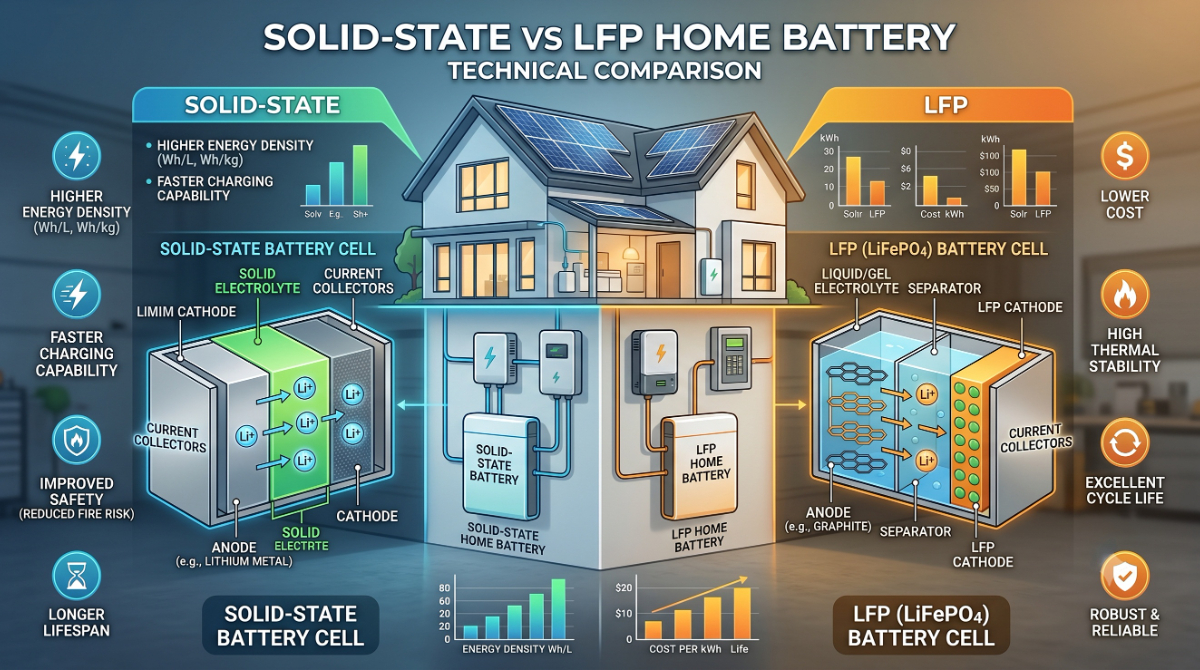
Fire codes aren't there to annoy you. They exist because old lithium batteries (like NMC) can catch fire if they overheat. But LFP is different. Way different. And the 2026 code update finally treats LFP like the safer option it is.
📜 What changed in the 2026 fire code?
The National Fire Protection Association releases a new edition of NFPA 855 every few years. The 2026 version? It now clearly separates battery chemistries. LFP gets a lighter touch because it's way less likely to go into thermal runaway.
Bottom line: LFP batteries can be placed in more spots with fewer restrictions compared to older NMC batteries. That's a win for homeowners.
Where are batteries actually allowed? (the short list)
| Location | Max capacity (most homes won't hit this) |
|---|---|
| Garage (attached or detached) | 80 kWh |
| Exterior wall (3 ft from doors/windows) | 80 kWh |
| Utility closet / storage space | 40 kWh |
| Inside living area (like a mudroom) | 40 kWh |
Most home batteries are 10–30 kWh, so the capacity limits aren't a problem. The real issue is clearance and room type. That's where LFP helps.
⚡ LFP vs NMC – the real difference (no science degree needed)

You don't need to understand electrochemistry. Just know this: batteries can get into a bad state called "thermal runaway" – basically a chain reaction where they overheat, catch fire, and spread to neighboring cells. It's rare, but it happens.
Here's the kicker: NMC batteries start thermal runaway at around 210°C (410°F). LFP? 270–346°C (520–655°F). That's a huge safety margin. And once they do go, NMC burns five times faster and gets almost twice as hot. LFP is slower, cooler, and easier to stop.
Think of it like cooking oil vs water. NMC is like oil – goes up fast. LFP is more like water – takes way more heat to get angry.
Thermal runaway in plain English
Let's say something goes wrong inside a battery (manufacturing defect, damaged cell, whatever). With NMC, that single cell hits 210°C and sets off its neighbor, then the neighbor's neighbor – boom, a chain reaction. Fire spreads through the whole battery in minutes.
With LFP, that first cell needs to get a lot hotter. And even when it fails, it doesn't pass the heat along as easily. You've got time. The fire stays smaller. That's why fire marshals like LFP.
📏 Wait, NMC needs 30% more space?
Yeah, that's what a 2023 NFPA study found. Because NMC burns hotter and faster, the code requires 30% more clearance around the battery – from walls, other batteries, combustibles.
In a cramped garage or a small utility closet, 30% can be the difference between "fits perfectly" and "impossible". With LFP, you don't need that extra buffer. That's a huge deal if your house is anything like mine (older, tight spaces, no room to breathe).
🔬 That UL 9540A test – why it matters for your garage
UL 9540A is the industry's fire propagation test. They basically try to force a battery into thermal runaway and see what happens. How far do flames shoot? How hot does it get? Does it spread to the next battery?
LFP systems consistently ace this test. Low flame distance, low heat release, slow spread. NMC? Not so much – often needs heavy metal enclosures just to pass.
When your local inspector sees "LFP + UL 9540A passed", they're way more likely to approve your permit without extra requirements. That's less hassle for you.
✅ Where LFP shines (and NMC struggles)
Short version: LFP can go almost anywhere the code allows – garage, attached garage, exterior wall, utility closet, even some basements. NMC often gets pushed outside or needs extra fire-rated drywall and more space.
🏠 So what does this mean for you, a homeowner?

Let's make it real. You've got a two-car garage. You want to put a 15 kWh battery on the side wall, near the water heater.
- With LFP: No problem. Standard 3-ft clearance from doors/windows is easy. Inspector checks the UL report, nods, approves.
- With NMC: Inspector might ask for 4-ft clearance, a metal shield, or force you to move it outside. Suddenly that $10k battery needs another $2k in modifications – or you lose parking space.
I've talked to installers who say permit rejections in 2026 are mostly about missing Hazard Mitigation Analysis (HMA) or incorrect clearances. LFP doesn't erase the paperwork, but it makes the whole process smoother because the fire test results are better. Less back-and-forth. Fewer headaches.
Oh, and one more thing – NEC 706 (electrical code) just wants a visible disconnect switch and clear labels. Any good installer can handle that.
🌍 One more thing – UK, Australia, Europe
UK: New 2026 wiring rules ban batteries from lofts and narrow cupboards. LFP is the go-to because it fits tighter spaces safely.
Australia: AS/NZS 5139 has strict placement rules. Many failed inspections are due to clearance issues – LFP's smaller required buffer makes compliance way easier.
Europe: LFP has been the dominant home battery chemistry since 2022. They figured this out years ago.
📌 Bottom line: just pick LFP
Look, I'm not saying NMC batteries are death traps. They're not. But if you're buying a battery for your home in 2026, why make life harder? LFP gives you:
- ✅ Higher heat tolerance (270°C+ vs 210°C)
- ✅ Slower, cooler thermal runaway
- ✅ 30% less clearance needed – fits where NMC won't
- ✅ Easier permit approvals
- ✅ Better insurance vibe (some companies literally ask now)
So yeah. When you shop for a home battery in 2026 – whether it's for solar, backup, or just saving money on time-of-use rates – get LFP. Your garage (and your sanity) will thank you.
Still not sure about your specific house? Call a local installer or your building department. And for deeper dives, check out our main guides below.
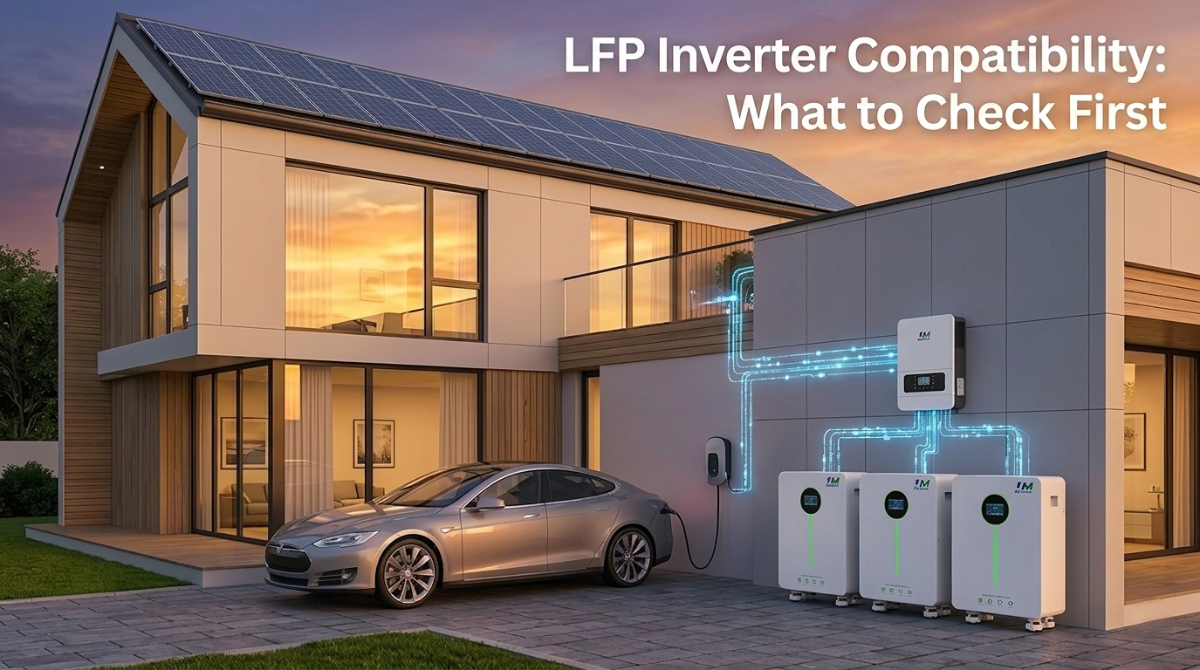
LFP Inverter Compatibility:What to Check First
LFP Thermal Safety and Home Battery Fire Prevention