


BMS Deep Dive: How It Protects Your LFP Battery
BMS Deep Dive: How It Protects Your LFP Battery

On this page
- 🧠 What is a BMS? The brain inside your battery
- 🔋 Overcharge & overdischarge: The two big killers
- ⚖️ Cell balancing: Why 16 cells must play nice
- 🌡️ Temperature protection: Heat is the enemy
- ⚡ Overcurrent & short circuit – instant shutdown
- 📡 BMS communication: Talking to your inverter
- ✅ BMS certifications & functional safety standards
- 📖 What happens when a BMS fails?
- 🔍 What to look for in a good BMS
- 📌 Bottom line
When you buy an LFP battery for your home, you're buying a big metal box with cells inside. But the real magic is a tiny circuit board called the Battery Management System – the BMS. Without it, your fancy LFP battery is just a dangerous pile of lithium.
Let me take you inside. I'll explain what a BMS actually does, why it matters for your safety, and what to look for when you're shopping. No engineering degree required.
🧠 What is a BMS? The brain inside your battery
A Battery Management System is exactly what it sounds like – a computer that constantly watches over every cell in your battery pack. It monitors voltage, temperature, and current, and makes decisions to keep everything safe. Think of it like an air traffic controller for electrons.
In a typical 48V LFP battery, you have 16 individual cells wired in series. The BMS tracks each one separately. If any cell gets too high or too low, the BMS steps in. If things get hot, the BMS reacts. If you try to pull too much power too fast, the BMS says "nope" and cuts off. For LFP packs specifically, a BMS typically includes protection against overcharging, over-discharging, overcurrent, short circuits, and cell balancing. That's the core list.

🔋 Overcharge & overdischarge: The two biggest killers
Lithium cells are picky. They want to stay between about 2.5V (empty) and 3.65V (full). Push them above that, and you risk plating lithium metal – which can lead to internal shorts and fires. Pull them below that, and the cell chemistry starts to break down permanently, killing capacity.
The BMS watches voltage constantly. When the battery is charging, the BMS will disconnect if any cell exceeds the maximum safe voltage. When it's discharging, the BMS will shut things down if any cell drops below the minimum safe threshold. This is the most basic, non-negotiable job of any BMS. Over-discharge protection halts discharge when the voltage drops below a safe threshold to avoid permanent damage.
One note: LFP cells don't need maintenance charges like equalization or pulse charging that lead-acid batteries require. So don't let anyone tell you otherwise.
⚖️ Cell balancing: Why 16 cells must play nice
Imagine you have 16 buckets in a row. Some fill faster, some slower. If you stop filling when the fastest bucket is full, the slower ones never get full. Your total capacity suffers. That's exactly what happens inside a battery pack.
Manufacturing variations and temperature differences mean each cell charges and discharges slightly differently. Over time, without balancing, some cells become "stuck" – full while others are empty, or vice versa. The BMS fixes this with cell balancing. It's a core protective function.
Passive vs active balancing – what's the difference?
There are two ways to balance cells, and you want to know which one your BMS uses.
Passive balancing: This is the cheaper, more common method. The BMS bleeds excess energy from high-voltage cells through resistors, turning it into heat. The full cells lose a little charge while the low cells catch up. It works fine for most home batteries, especially if you don't deeply cycle them every day.
Active balancing: This is fancier and more efficient. Instead of burning off extra energy as heat, the BMS moves energy from high cells to low cells using capacitors or inductors. Energy gets reused rather than wasted. For large capacity banks or daily deep cycling (off-grid systems), active balancing can extend battery life noticeably.
🌡️ Temperature protection: Heat is the enemy
LFP is more heat-tolerant than NMC, but extreme temperatures still kill batteries. Charging below freezing (0°C / 32°F) can cause lithium plating that permanently damages cells. Discharging above 60°C (140°F) accelerates aging dramatically.
The BMS uses NTC thermistors – little temperature sensors attached to key spots in the battery pack. These sensors allow the BMS to monitor cell temperatures in real time. If things get too hot or too cold, the BMS will stop charging or discharging. In some designs, the BMS will shut down completely if the thermal management system fails unless it can be proven that failure doesn't create a hazardous situation.
Good BMS designs include temperature sensors, overcharge protection, overdischarge protection, overcurrent protection, and short-circuit protection all working together. Cold climates? Make sure your battery has a BMS that can either heat the cells or just refuse to charge until it's warm enough.
⚡ Overcurrent & short circuit – instant shutdown
Ever plugged in something that immediately tripped a circuit breaker? That's overcurrent protection. The BMS does the same thing at the battery level.
If you try to pull too much current from the battery – maybe your inverter is pulling more than the BMS allows – the BMS will disconnect. Same thing if there's a short circuit. Overcurrent protection cuts off when current exceeds safe limits. Some BMS designs automatically reset after a time delay, but if the fault happens multiple times in quick succession, the BMS may lock out entirely.
For a typical home setup, a good BMS will have overcurrent detection delays of around 50–500 milliseconds, giving it time to react without tripping on harmless short spikes. After a protection event, remove the load and the BMS will auto-recover.
📡 BMS communication: Talking to your inverter
This is where good batteries separate from great batteries. Your inverter wants to know what's happening inside the battery. How full is it? What's the temperature? Is everything okay?
The BMS communicates this information through data ports – usually CAN bus or RS485. The CAN/RS485 interface enables seamless data exchange between the BMS and the inverter. That communication lets your inverter make smart decisions: when to stop charging, when to reduce load, when to send an alert.
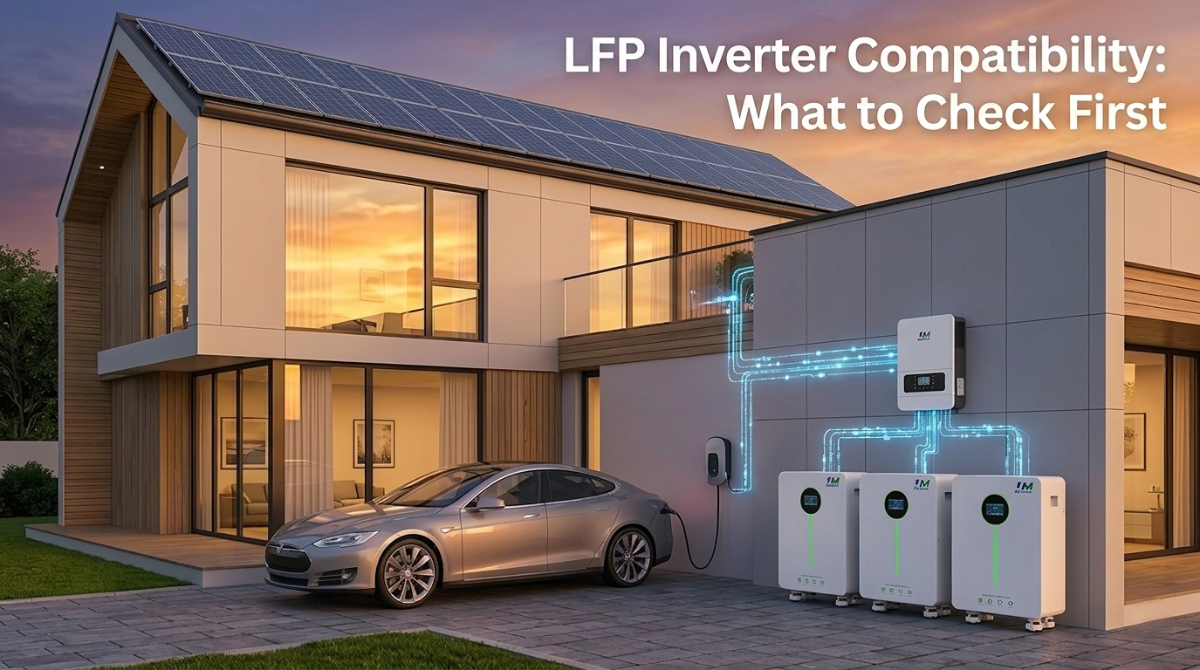
Without communication, your inverter runs in "voltage mode" – guessing based only on voltage, which isn't accurate for LFP cells that have a very flat voltage curve. I covered this in detail in my LFP Inverter Compatibility guide. If your battery and inverter can talk to each other, you'll get longer battery life and fewer surprises.
Some BMS systems even support custom protocols. For DIYers, there are open-source efforts to reverse-engineer closed BMS protocols so third-party inverters can talk to them. But for most homeowners, just buy a battery and inverter that are listed as compatible by the manufacturer.

✅ BMS certifications & functional safety standards
You'll see terms like "SIL" and "ASIL" thrown around in battery marketing. These refer to functional safety standards. IEC 61508 is the foundational international standard for functional safety, governing safety requirements for electronic systems from design through maintenance. For automotive applications, ISO 26262 defines Automotive Safety Integrity Levels (ASILs).
But here's an important reality check. Rich Byczek from Intertek, a global safety certification leader, explains that a certified BMS system with functional safety certifications "doesn't necessarily address" the actual cell-level protection functions. Most certifications evaluate the controller hardware against general integrity standards like IEC 61508 or ISO 26262. They verify that the electronics are reliable. They don't verify that the controller monitors individual cell voltages, manages cell-level temperature limits, or handles the specific failure modes of lithium-ion chemistry.
In other words, a certified controller is a starting point, not a finish line. A pack-level fuse can stop a major overcurrent, but it's blind to a single cell being driven beyond its voltage limits. That requires active, per-cell monitoring.
How do you know your BMS is actually good? The experts recommend starting with an FMEA (Failure Mode and Effects Analysis) that covers every safety-critical function your BMS must perform at the cell level: overvoltage, undervoltage, overcharge, overdischarge, over‑temperature, under‑temperature, short circuit, and excessive current. For home storage battery systems, you're typically looking at SIL 2 or equivalent levels of functional safety.
📖 What happens when a BMS fails?
A homeowner in Arizona bought a cheap LFP battery from an online marketplace. The BMS was ... let's say "minimal." One day, during a heatwave, the battery was sitting in a hot garage. The BMS didn't have temperature sensors on every cell. One cell overheated while the BMS kept charging. The cell swelled, ruptured, and the resulting short caused a small fire. The garage was damaged. The battery was destroyed.
This is not an LFP problem – this is a bad BMS problem. A proper BMS with per-cell temperature monitoring would have shut down charging long before things got dangerous. LFP is safe, but only when the BMS does its job. Don't cheap out on the brain of your battery.
🔍 What to look for in a good BMS
| Feature | What to check | Why it matters |
|---|---|---|
| Per-cell voltage monitoring | Monitors all 16 cells, not just pack voltage | Catches single-cell issues before they escalate |
| Overcharge cutoff | ~3.65V per cell, with hysteresis | Prevents lithium plating and fire risk |
| Overdischarge cutoff | ~2.5V–2.8V per cell | Prevents permanent capacity loss |
| Cell balancing | Passive (≥1A) or active (premium) | Keeps all cells at same level, maximizes usable capacity |
| Temperature monitoring | Multiple NTC sensors, per cell or per module | Prevents charging in freezing temps, protects from overheating |
| Overcurrent protection | Cuts off at safe thresholds (e.g., 150A for 5kW system) | Prevents damage from inverter overloads or short circuits |
| Communication | CAN bus or RS485 with open protocol or verified pairing | Enables smart inverter integration and real-time data |
| Functional safety | IEC 61508 certification or equivalent FMEA documentation | Shows the BMS was designed with safety in mind at every stage |

📌 Bottom line
The BMS is the unsung hero of your home battery. It works silently in the background, making thousands of decisions per second to keep your LFP cells safe, balanced, and healthy. When you're shopping for a battery, don't just look at the cells – look at the BMS. Ask the manufacturer: what protection features does it have? Does it have per-cell monitoring? What's the balancing current? Does it communicate with my inverter? Does it have functional safety certification?
A good BMS can turn a decent LFP battery into a great one that lasts 15 years. A bad BMS can turn an expensive LFP battery into a paperweight – or worse, a fire hazard. LFP chemistry is inherently safe, but it still needs a competent brain to stay that way. Choose wisely.
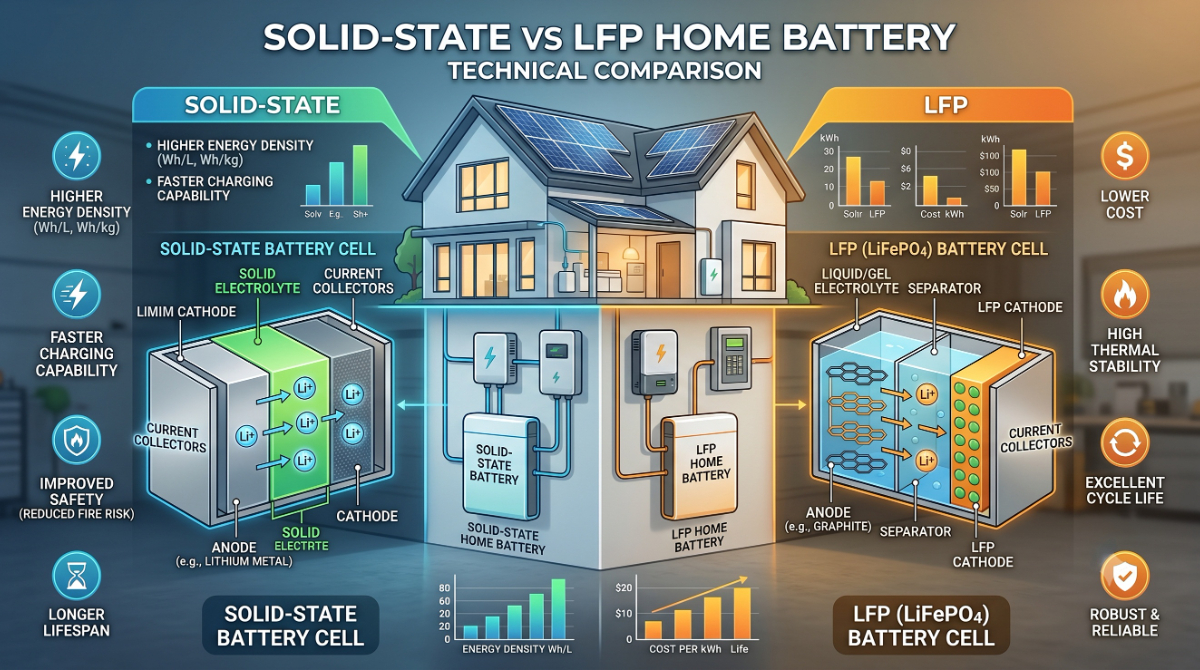
Solid State vs LFP 2026 Home Battery Safety
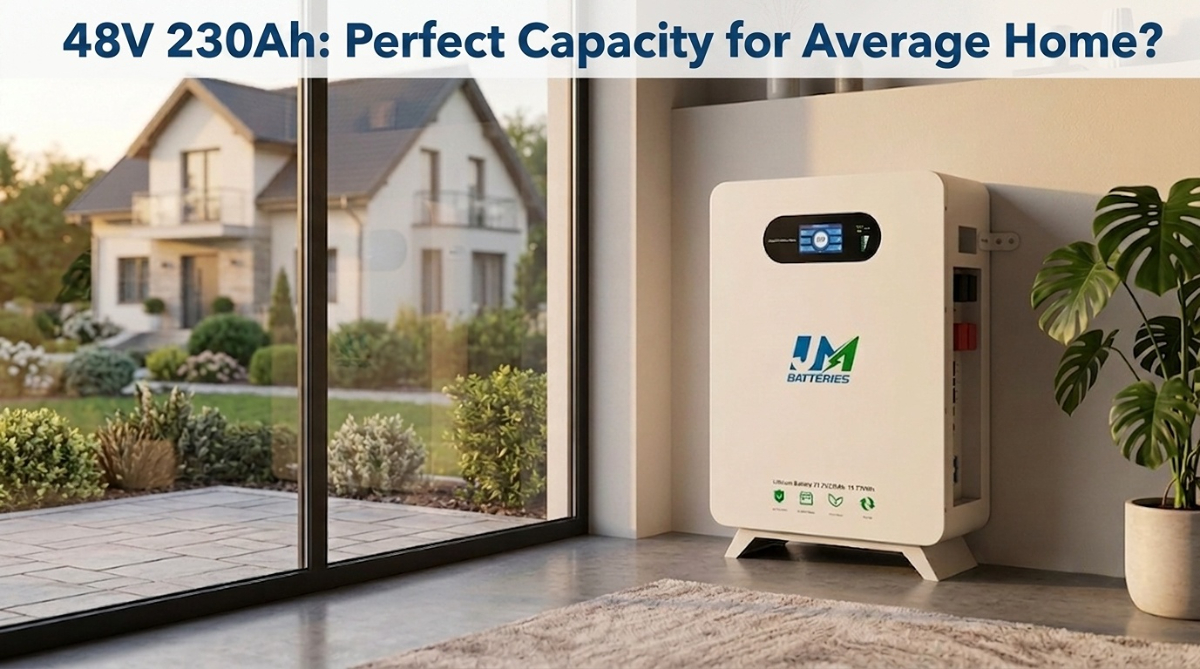
48V 230Ah: Perfect Capacity for Average Home?