


Solid State vs LFP 2026 Home Battery Safety
Solid-State vs. LFP in 2026: Why Iron Phosphate is Still the Safest Bet for Residential Storage

In the rapidly evolving energy landscape of 2026, a fundamental question persists: Should homeowners chase the experimental promise of Solid-State Batteries (SSB) or stick with the proven safety of Lithium Iron Phosphate (LFP)? For those deploying large-scale 20kWh systems, the engineering data reveals why LFP remains the superior choice for home infrastructure.
1. Molecular Stability: The Chemical Reality
Safety starts at the atomic level. The LFP (LiFePO4) chemistry utilizes a covalent phosphorus-oxygen (P-O) bond. This bond is inherently stronger than the metal-oxide bonds found in Ternary or early-generation Solid-State architectures. While SSBs attempt to mitigate fire risk by removing liquid electrolytes, the LFP cathode itself resists oxygen release even under extreme temperatures (up to 270°C). This makes LFP uniquely stable during physical damage or electrical overstress.
2. 400Ah Prismatic Cells: Scaling for Reliability

While Solid-State promises high energy density, weight is a non-factor for stationary home storage. What matters is Cell Simplicity. By using 400Ah Prismatic Cells, JM Energy Tech reduces the number of internal connections compared to the hundreds of small pouch cells required for Solid-State. Fewer connections mean lower electrical resistance and a lower probability of catastrophic failure in whole-home backup configurations.
3. ROI Analysis: Cost-per-Cycle under NEM 3.0
Economic efficiency is the driver for the 2026 market. Under NEM 3.0 policies, batteries must cycle daily to provide value. LFP’s manufacturing maturity results in a drastically lower "Cost-per-Cycle" (CpC).
| Technical Metric | LFP (400Ah Solution) | Solid-State (Gen 1) |
|---|---|---|
| Service Life | 8,000 - 10,000 Cycles | 2,000 - 3,500 Cycles |
| Cost per kWh | Industrial Efficiency | High R&D Premium |
| ROI Metric | $0.05 / Cycle | $0.40 - $0.60 / Cycle |
4. Fire Compliance: UL 9540 & NFPA 855

Regulatory compliance is the "hidden" cost of home storage. NFPA 855 standards dictate that residential installations must prevent flame propagation between units. LFP is currently the only high-capacity chemistry that consistently meets these standards without requiring expensive external fire suppression systems. Solid-State, while promising in labs, lacks the decades of field data required by most US insurance providers and fire marshals in 2026.
5. Surge Capacity: Powering HVAC & Well Pumps
The engineering bottleneck for Solid-State is "Interface Impedance"—the speed at which ions can move through solid barriers. This limits peak discharge. For homes with HVAC systems or well pumps, the "Surge Power" required for startup is immense. LFP systems, particularly those using 400Ah cells, offer the high C-ratings necessary to handle these inductive loads without voltage drops or BMS shutdowns.
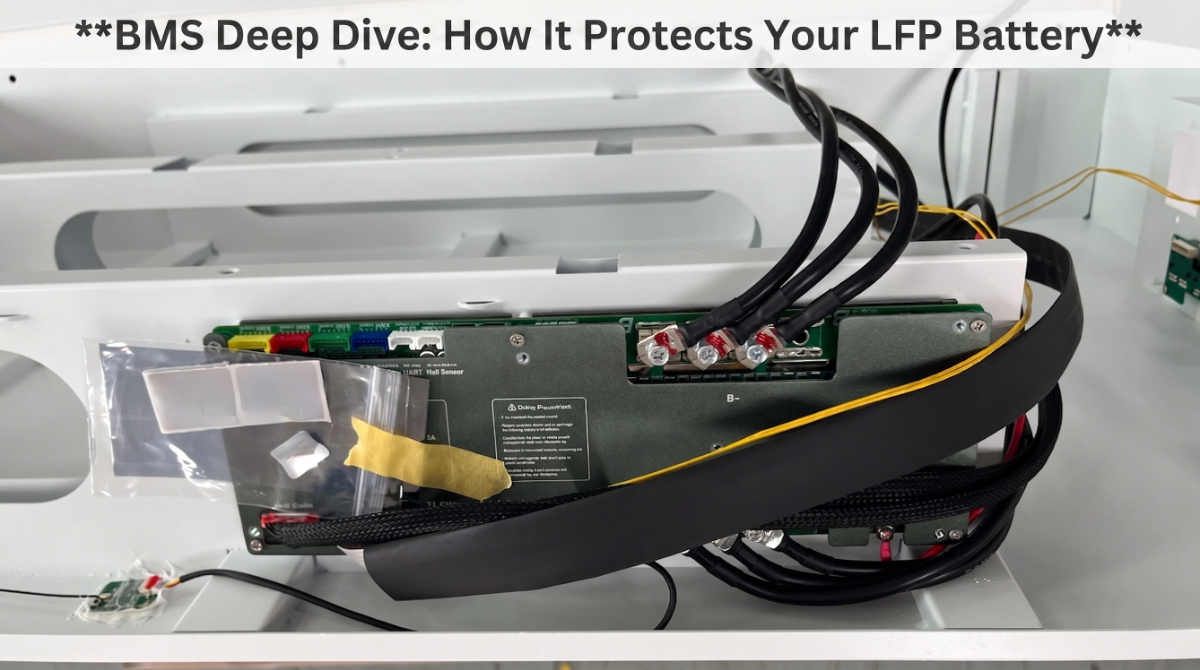
BMS Deep Dive: How It Protects Your LFP Battery