


How to Calculate Solar Battery Amp Hours
How to Calculate Amp Hours for Solar Battery (Complete 2026 Guide)

Introduction
If you're building a home solar system, upgrading battery storage, or comparing lifepo4 battery 15kWh models, you must know how to calculate amp hours. Amp hours directly define how much power your battery can store, how long your home runs during outages, and which solar battery fits your actual energy needs.
Many homeowners buy undersized or oversized batteries because they skip accurate Ah calculations — wasting money or suffering insufficient power.
We are JM Energy, a professional lithium-ion and sodium-ion battery manufacturer based in Dongguan, China, with 10 years of R&D and manufacturing experience. Our 28,000㎡ workshop produces 2.8GWh+ of storage batteries yearly, exporting to 138+ countries. Our 51.2V 300Ah 15kWh LiFePO4 solar battery is engineered for American home energy storage, with stable performance, high safety, and plug-and-play usability.
This article explains how to calculate amp hours step by step, shows real use cases in US households, and helps you choose the best solar batteries for home with confidence.
What Are Amp Hours (Ah) & Why They Matter for Solar Battery
Amp hours (Ah) measure the total electrical charge a battery can supply over time. For solar batteries, Ah is the bridge between battery voltage, total energy (kWh), and real home load demands.
For any solar battery — especially a LiFePO4 battery 15kWh residential model — Ah determines:
- Backup runtime for lights, fridge, HVAC, and electronics
- Usable energy you can store from solar panels
- Number of batteries needed for off-grid or backup use
- Compatibility with inverters and charge controllers
Without correct amp-hour calculation, you cannot build a cost-effective, reliable home energy system.
Core Formulas: How to Calculate Amp Hours
These three formulas solve 99% of home solar battery sizing tasks.
1. Basic Amp Hour Calculation
Example: A 5A load running for 6 hours needs 5 × 6 = 30 Ah.
2. Convert kWh to Amp Hours (Most Useful for Homeowners)
Example — JM Energy 51.2V 300Ah 15kWh solar battery:
Ah = (15 × 1000) ÷ 51.2 ≈ 293 Ah
We rate it 300Ah for real-world efficiency margin and manufacturing tolerance.
3. Real-World Home Battery Ah Calculation
This formula accounts for inverter loss and safe depth of discharge (DoD).

| Parameter | Recommended Value | Notes |
|---|---|---|
| Battery Voltage | 51.2V | Standard for home storage systems |
| Inverter Efficiency | 0.90 | Typical pure-sine wave inverter |
| Depth of Discharge (DoD) | 0.80 – 0.90 | LiFePO4 supports up to 90%; use 0.80 for conservative sizing |
Key Factors That Affect Amp Hour Calculation
These factors change real battery performance and must be included in your calculation:
- Battery Voltage: 12V / 24V / 48V / 51.2V. Higher voltage = lower current, higher system efficiency.
- Depth of Discharge (DoD): LiFePO4 supports 80–90% DoD; lead-acid only 50%.
- Temperature: Extreme cold or heat reduces usable capacity. JM Energy solar batteries operate from −20°C to 60°C.
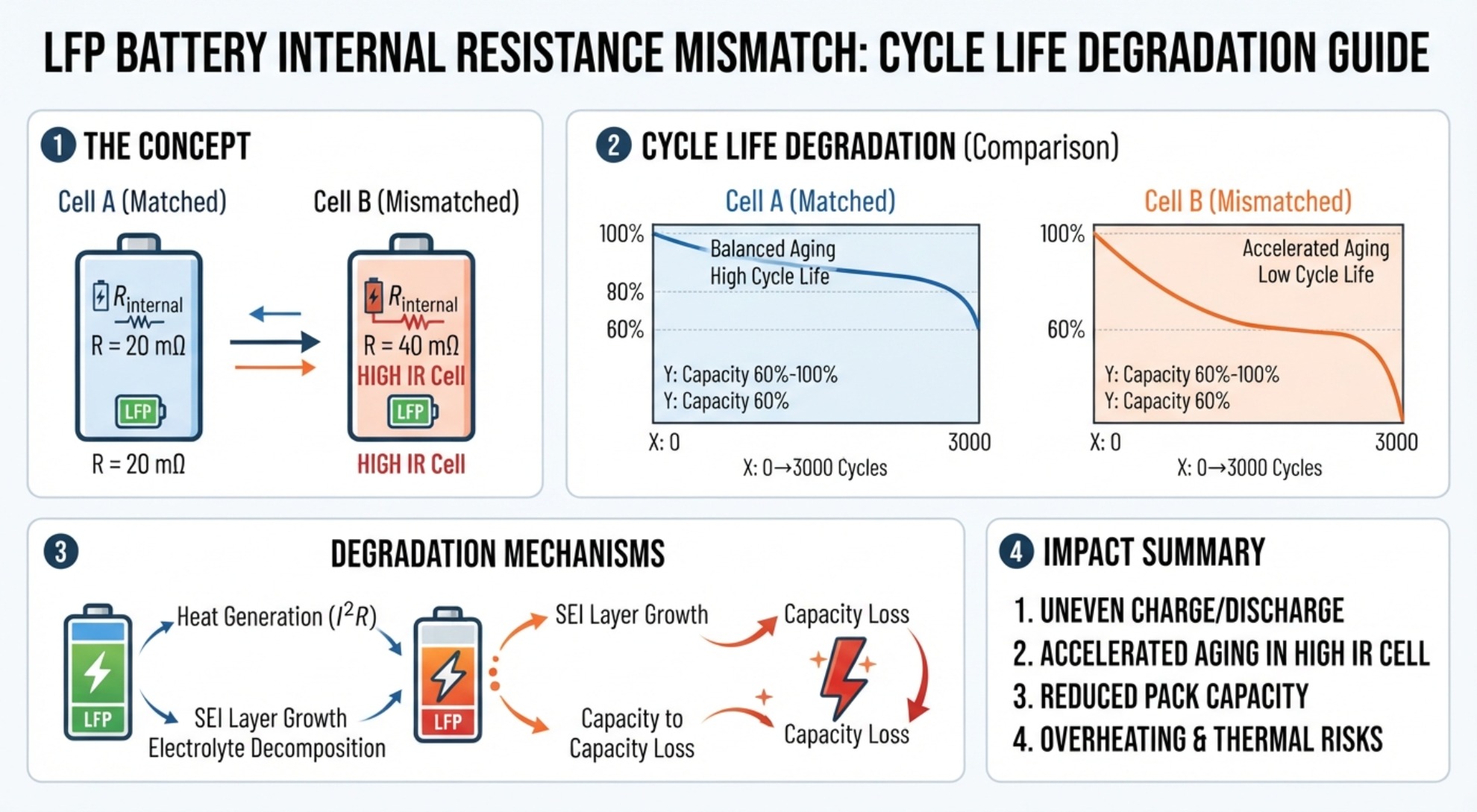
- Discharge Rate (C-rate): High continuous loads reduce effective Ah slightly due to internal resistance.
- Cycle Life: Premium LiFePO4 cells maintain stable capacity for 8,000+ cycles (≈15–20 years at 1 cycle/day).
Once your system is running, knowing the real-time charge level is just as important as the initial calculation. Learn how to find battery percentage to accurately monitor your solar battery's state of charge at any time.

JM Energy 51.2V 300Ah 15kWh LiFePO4 Solar Battery
As a 10-year experienced factory in Dongguan, China, we design this battery specifically for solar batteries for home use in the American market.
Key advantages:
- True 51.2V 300Ah, delivering stable 15kWh usable energy
- Grade-A LiFePO4 cells, 8,000+ deep cycles (no capacity degradation below 80% at cycle life)
- Intelligent BMS: overcharge, over-discharge, short circuit, and overheating protection
- IP65-rated option for indoor & outdoor installation
- Parallel-expandable up to 15 units (up to 225kWh total)
- Compatible with most mainstream solar inverters (Growatt, Deye, Sol-Ark, SolarEdge, etc.)
- 10-year warranty support with dedicated after-sales engineering team
Every unit passes strict capacity testing before shipment, ensuring the rated amp-hour capacity you calculated is what you actually receive.
Two Real American Household Case Studies
Case 1: 3-Bedroom Home in Los Angeles, California
- Residents: 4 people
- Daily energy use: 12 kWh
- System: Grid-tie solar + backup
Solution: 2 × JM Energy 51.2V 300Ah 15kWh solar batteries connected in parallel (total: 600Ah / 30kWh), providing comfortable headroom above the 326Ah requirement.
Result: Powers the home through evening peak demand, supports 12+ hours of blackout backup, and cuts the electricity bill by approximately 35%.

Case 2: Off-Grid Cabin in Austin, Texas
- Daily energy use: 8 kWh
- System: Full off-grid solar
Runtime estimate: 300Ah × 51.2V × 0.9 (inverter) = 13,824Wh usable ÷ 8,000Wh daily load ≈ 1.7 days (41 hours) on a full charge with no solar input.
Solution: 1 × JM Energy 51.2V 300Ah 15kWh LiFePO4 battery (300Ah > 217Ah required, 38% safety headroom).
Result: Supports 40+ hours runtime on cloudy days with no solar generation, stable performance in Texas heat and cold, zero maintenance for 2+ years.
How to Use Amp Hour Calculation to Choose Solar Battery
Follow these 5 steps to pick the perfect solar battery for your home:
- Calculate your daily household energy consumption (Wh) from utility bills or appliance audit.
- Choose system voltage — 51.2V is recommended for residential home storage.
- Apply the real-world formula:
Required Ah = Daily Load (Wh) ÷ (Voltage × 0.9 × 0.8) - Add a 10–20% safety margin to cover cloudy days and load spikes.
- Match with a reliable LiFePO4 battery 15kWh or stack multiples for larger needs.
Our 51.2V 300Ah 15kWh model fits most American homes' amp-hour calculation results. For larger homes exceeding 350Ah, simply connect two units in parallel — no extra hardware required.
Frequently Asked Questions
What Are Amp Hours (Ah) & Why They Matter for Solar Battery?
Amp hours (Ah) measure the total electrical charge a battery can supply over time. For home solar batteries, Ah determines backup runtime, usable energy, battery quantity, and compatibility with inverters and charge controllers.
How to Convert kWh to Amp Hours for Solar Batteries?
Use the formula: Ah = (kWh × 1000) ÷ Battery Voltage (V). For a 15kWh 51.2V battery: Ah = (15 × 1000) ÷ 51.2 ≈ 293Ah. We rate it 300Ah to include efficiency margin.
How many amp hours do I need for a home solar battery system?
Use: Required Ah = Daily Load (Wh) ÷ (Voltage × Inverter Efficiency × DoD). A typical 3-bedroom US home using 12kWh/day at 51.2V needs approximately 326Ah, which two JM Energy 51.2V 300Ah batteries in parallel can fully cover.
What is the lifespan of a LiFePO4 solar battery?
A quality LiFePO4 solar battery like the JM Energy 51.2V 300Ah supports 8,000+ deep charge/discharge cycles. At one full cycle per day, this equates to approximately 15–20 years of service life — far outlasting lead-acid alternatives.
Conclusion
Mastering how to calculate amp hours is the foundation of a successful home solar energy system. Accurate Ah calculation helps you select the right solar battery, avoid unnecessary cost, and ensure stable power for your family.
JM Energy, your trusted 10-year battery factory from Dongguan, China, provides high-quality lithium-ion and sodium-ion batteries — including our industry-leading LiFePO4 battery 15kWh and solar batteries for home. Our 51.2V 300Ah 15kWh model combines precisely calculated capacity, long service life, and robust safety for American households.
For a complete overview of battery performance metrics, read our pillar guide: How to Measure Battery Capacity.
If you need support with amp-hour calculation, custom battery sizing, or wholesale & OEM cooperation, contact our team today.
How to Test Solar Battery Health: A Complete Guide
how to find battery percentage