


How to Test Solar Battery Health: A Complete Guide
How to Test Solar Battery Health: A Complete Guide

Introduction
Your solar battery is the heart of your home energy storage system. Whether you rely on it for daily self-consumption, grid backup, or full off-grid living, knowing how to test solar battery health is essential to protect your investment and ensure your home never goes dark when it matters most.
Unlike a car battery that fails suddenly and obviously, a degrading solar battery loses capacity gradually — often unnoticed until a blackout reveals that your system only delivers half the backup time you expected.
This complete guide explains every proven method to test solar battery health, identify early warning signs of degradation, and introduces JMEnergyTech's newly developed 51.2V 400Ah 20kWh wall mounted battery — engineered by our Dongguan, China-based lithium-ion and sodium-ion battery factory with 10 years of R&D experience — to show what a truly healthy, high-performance battery pack looks like in real residential energy storage applications.
Why Testing Solar Battery Health Matters
All batteries degrade over time. Even the best LiFePO4 solar battery gradually loses usable capacity through charge/discharge cycling, temperature stress, and age. Regular health testing helps you:
- Detect early-stage degradation before it becomes a serious problem
- Accurately predict backup runtime during grid outages
- Maximize the return on your residential energy storage investment
- Know when it is time to replace or expand your battery pack
- Maintain warranty validity — many manufacturers require documented maintenance
For homeowners with a wall mounted battery system, skipping health checks is like never servicing your car engine — the consequences are expensive and often avoidable.
Warning Signs Your Solar Battery May Be Failing

Before running a formal test, watch for these red flags that indicate your solar battery health may be declining:
- Shorter backup runtime: Your system used to last 12 hours but now only manages 7–8 hours on the same loads.
- Slower charging: The battery takes noticeably longer to reach full charge from the same solar panel output.
- Voltage irregularities: Resting voltage reads lower than expected, or drops sharply under light loads.
- BMS alerts: Frequent over-discharge or cell imbalance warnings on your battery management system.
- Physical changes: Swelling, unusual heat during charging, or corrosion on terminals.
- Unexpected shutdowns: The system cuts off power earlier than the State of Charge (SOC) display suggests.
4 Proven Methods to Test Solar Battery Health
Method 1: Resting Voltage Test (Quickest)
A resting voltage test is the fastest way to get a snapshot of your solar battery health. After the battery has been idle for at least 2 hours (neither charging nor discharging), use a digital multimeter to measure the terminal voltage.
For a 51.2V LiFePO4 battery pack:
- 51.2V – 52.4V: Fully charged, excellent health
- 49.0V – 51.2V: Good health, 50–80% charge
- 46.0V – 49.0V: Low charge, may indicate capacity loss
- Below 44.0V: Critical — possible cell degradation or deep discharge damage
Method 2: Full Capacity Discharge Test (Most Accurate)
This is the gold standard for testing solar battery health. It directly measures how much energy your battery can actually deliver compared to its rated capacity.
- Fully charge the battery to 100% SOC.
- Apply a consistent, known load (e.g., a resistive load bank or your typical household appliances).
- Record the total energy delivered (kWh) until the BMS triggers low-voltage cutoff.
- Compare with rated capacity: SOH = (Measured kWh ÷ Rated kWh) × 100%
Example: If your JMEnergyTech 51.2V 400Ah 20kWh wall mounted battery delivers 18.2kWh during the test, SOH = (18.2 ÷ 20) × 100% = 91% — Excellent.
Method 3: BMS App / Smart Monitor Reading (Easiest for Modern Systems)
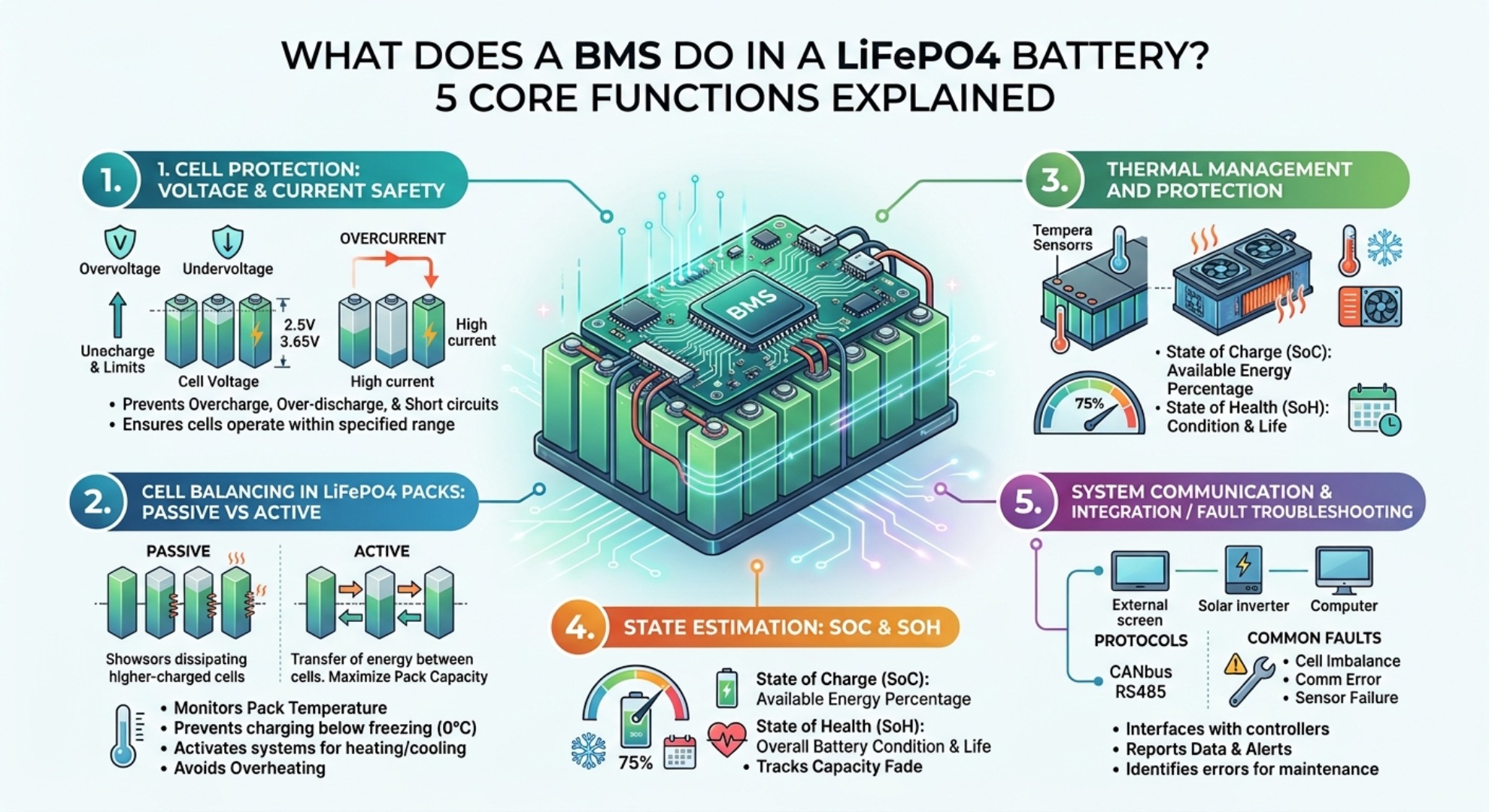
Most modern residential energy storage systems — including JMEnergyTech's wall mounted battery — come with an intelligent BMS that tracks and displays key health metrics in real time. Simply connect via the BMS app or display panel to read:
- State of Health (SOH): Overall capacity retention as a percentage
- State of Charge (SOC): Current charge level
- Cycle Count: Total number of completed charge/discharge cycles
- Cell Voltage Balance: Individual cell voltages — large imbalances signal degradation
- Temperature History: Thermal stress records that affect long-term health
Method 4: Professional Battery Analyzer Test (Most Detailed)
For the most detailed solar battery health report, use a dedicated battery analyzer (such as a Hioki BT3554 or similar professional tool). This device measures:
- Internal resistance (IR) — rising IR is a direct indicator of aging
- Impedance spectroscopy data for cell-level health analysis
- Capacity fade curve compared to factory baseline
For a healthy LiFePO4 battery pack, internal resistance per cell should remain below 0.5mΩ. Values above 1.0mΩ indicate significant degradation.

Solar Battery Health Rating Table
Use this reference table to interpret your test results and decide on the appropriate action for your residential energy storage system:
| SOH Range | Health Status | Expected Runtime | Recommended Action |
|---|---|---|---|
| 90% – 100% | Excellent | Full rated runtime | Continue normal use, test every 12 months |
| 80% – 90% | Good | Slightly reduced | Monitor every 6 months, check cell balance |
| 70% – 80% | Fair | Noticeably reduced | Investigate cause, consider adding parallel unit |
| Below 70% | Poor | Significantly reduced | Plan replacement, contact manufacturer |
JMEnergyTech 51.2V 400Ah 20kWh Wall Mounted Battery
As a 10-year experienced lithium-ion and sodium-ion battery manufacturer based in Dongguan, China, JMEnergyTech has developed our most powerful wall mounted battery yet — the 51.2V 400Ah 20kWh LiFePO4 battery pack — specifically engineered for demanding residential energy storage applications in the American market.
Key specifications and advantages:
- Capacity: True 51.2V 400Ah, delivering a stable 20kWh of usable energy
- Output Power: Supports 15kW, 20kW, and 30kW inverter configurations
- Cell Chemistry: Grade-A LiFePO4 cells with 6,000+ deep cycles (>80% SOH at end of cycle life)
- Intelligent BMS: Real-time SOH, SOC, cell balance monitoring with overcharge, over-discharge, short circuit, and thermal protection
- Installation: Wall mounted design, space-saving, suitable for garage, utility room, or outdoor enclosure
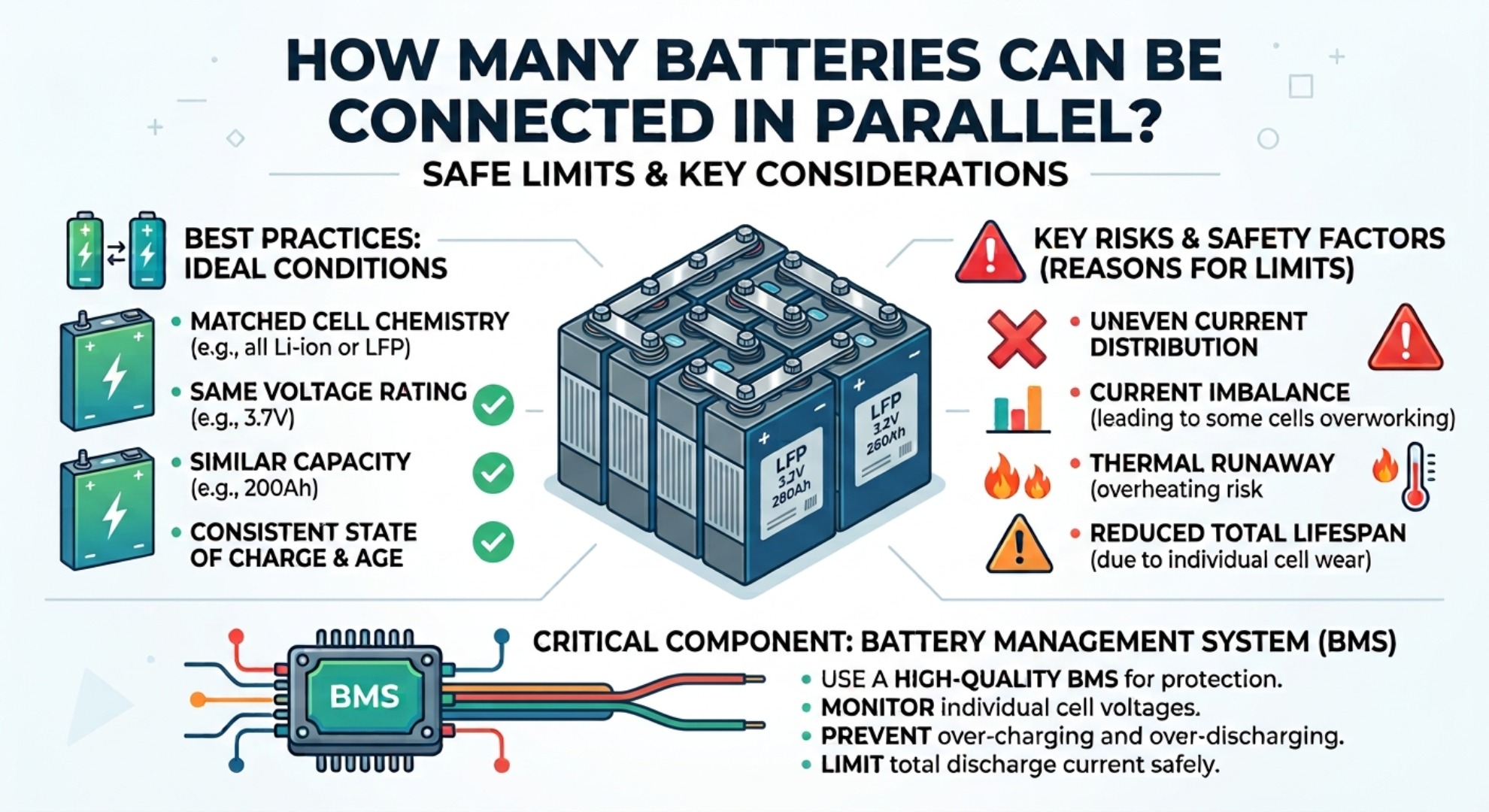
- Expandability: Parallel connection supports up to 15 units (300kWh total system capacity)
- Compatibility: Works with mainstream solar inverters including Growatt, Deye, Sol-Ark, SolarEdge, and Victron
- Warranty: 10-year warranty with dedicated after-sales engineering support
Because of its intelligent BMS, testing solar battery health on this unit is as simple as checking the app — SOH, SOC, cycle count, and cell voltages are all displayed in real time, making it the ideal battery pack for homeowners who want transparency and control over their energy system.
Two Real American Household Case Studies
Case 1: 4-Bedroom Home in Phoenix, Arizona
- Residents: 5 people including 2 work-from-home adults
- Daily energy use: 18 kWh (high AC usage due to desert climate)
- System: 10kW solar array + 1 × JMEnergyTech 51.2V 400Ah 20kWh wall mounted battery
- Installation: Garage wall mount, paired with Growatt 10kW hybrid inverter
Health Test Result after 18 months:
Using BMS app monitoring, SOH read 97%. Full discharge test confirmed 19.4kWh delivered vs. 20kWh rated — well within expected performance range. Cell voltage balance was excellent at ±0.02V across all cells.
Real-world outcome: The family comfortably runs through Arizona summer evenings (peak grid hours 4PM–9PM) entirely on stored solar energy. During a 2025 monsoon-season grid outage lasting 14 hours, the system powered all essential loads — refrigerator, Wi-Fi, lighting, two laptops, and one window AC unit — without interruption. Electricity bill reduced by 42% year-over-year.
Case 2: 3-Bedroom Home in Seattle, Washington
- Residents: 3 people, EV owner
- Daily energy use: 22 kWh (includes partial EV charging)
- System: 8kW solar array + 2 × JMEnergyTech 51.2V 400Ah 20kWh wall mounted batteries in parallel (40kWh total)
- Installation: Utility room wall mount, paired with Deye 12kW hybrid inverter
Health Test Result after 24 months:
Professional battery analyzer test showed internal resistance at 0.28mΩ per cell — well below the 0.5mΩ healthy threshold. SOH reading from BMS: 95%. Delivered capacity in full discharge test: 38.2kWh vs. 40kWh rated.
Real-world outcome: Seattle's frequent cloudy winter days — sometimes producing only 2–3 hours of usable solar — are no longer a concern. The dual-battery 40kWh residential energy storage system stores excess summer solar energy and carries the household through multi-day overcast periods. The family charges their EV overnight using stored solar power, reducing combined home and transportation energy costs by over 55%.
How to Maintain Solar Battery Health Long-Term
Testing is only half the equation. Proper maintenance ensures your solar battery stays healthy for its full rated cycle life:
- Avoid frequent deep discharges: Keep your battery pack above 10% SOC whenever possible. LiFePO4 chemistry tolerates deep discharge but repeated deep cycles accelerate capacity fade.
- Control operating temperature: Keep your wall mounted battery in a location where ambient temperature stays between 10°C and 35°C. Avoid direct sunlight or uninsulated outdoor exposure in extreme climates.
- Keep firmware updated: BMS firmware updates often include improved cell balancing algorithms that extend battery life. Check with your manufacturer every 6 months.
- Maintain cell balance: Run a full charge cycle (100% SOC) at least once a month to allow the BMS to balance all cells. Chronic partial charging can lead to cell imbalance over time.
- Log and track SOH: Record your BMS SOH reading every 6 months. A steady downward trend of more than 3% per year is a signal to investigate further.
- Clean terminals annually: Check battery terminals and cable connections for corrosion or looseness. Poor connections increase internal resistance and accelerate degradation.
For a complete understanding of how battery capacity is measured and tracked, read our pillar guide: How to Measure Battery Capacity. You may also find it useful to learn how to find battery percentage to monitor your solar battery's real-time state of charge on a daily basis. You may also want to learn how to test solar battery health to ensure your system continues performing at full capacity over time.
Frequently Asked Questions
How do I know if my solar battery is healthy?
Test resting voltage, run a full charge-discharge cycle test, and check your BMS app for SOH data. A SOH above 80% with stable cell voltage balance indicates a healthy solar battery.
What is a good State of Health (SOH) for a solar battery?
A SOH above 80% is considered healthy. Premium LiFePO4 battery packs like the JMEnergyTech 51.2V 400Ah maintain above 80% SOH for 6,000+ cycles under normal operating conditions — equivalent to 15+ years of daily use.
How often should I test my solar battery health?
Test every 6 months for residential energy storage systems. Also test after extreme weather events, after a deep discharge below 5% SOC, or whenever you notice reduced backup runtime.
Can a wall mounted battery be tested without removing it?
Yes. Most modern wall mounted batteries with a built-in BMS — including JMEnergyTech's 51.2V 400Ah model — allow full health monitoring through a display panel or app without disconnecting the unit from the wall.
Conclusion
Knowing how to test solar battery health is not a technical luxury — it is a practical necessity for every homeowner with a residential energy storage system. Regular health checks protect your investment, maximize backup reliability, and give you the data needed to make smart decisions about your energy future.
From a simple voltage test to a professional discharge analysis, the four methods in this guide give you a complete toolkit to assess any solar battery or battery pack — regardless of brand or size.
JMEnergyTech's 51.2V 400Ah 20kWh wall mounted battery is designed with health transparency at its core. Our intelligent BMS provides real-time SOH monitoring out of the box, so you always know exactly how healthy your residential energy storage system is — no guesswork required.
If you need expert guidance on battery health testing, system sizing, or wholesale and OEM cooperation, contact the JMEnergyTech today.
How to Extend Solar Battery Life: 7 Proven Maintenance Tips
How to Calculate Solar Battery Amp Hours