


LiFePO4 Battery Charging Problems: Causes & Fixes
LiFePO4 Battery Charging Problems: Causes, Diagnosis & Solutions
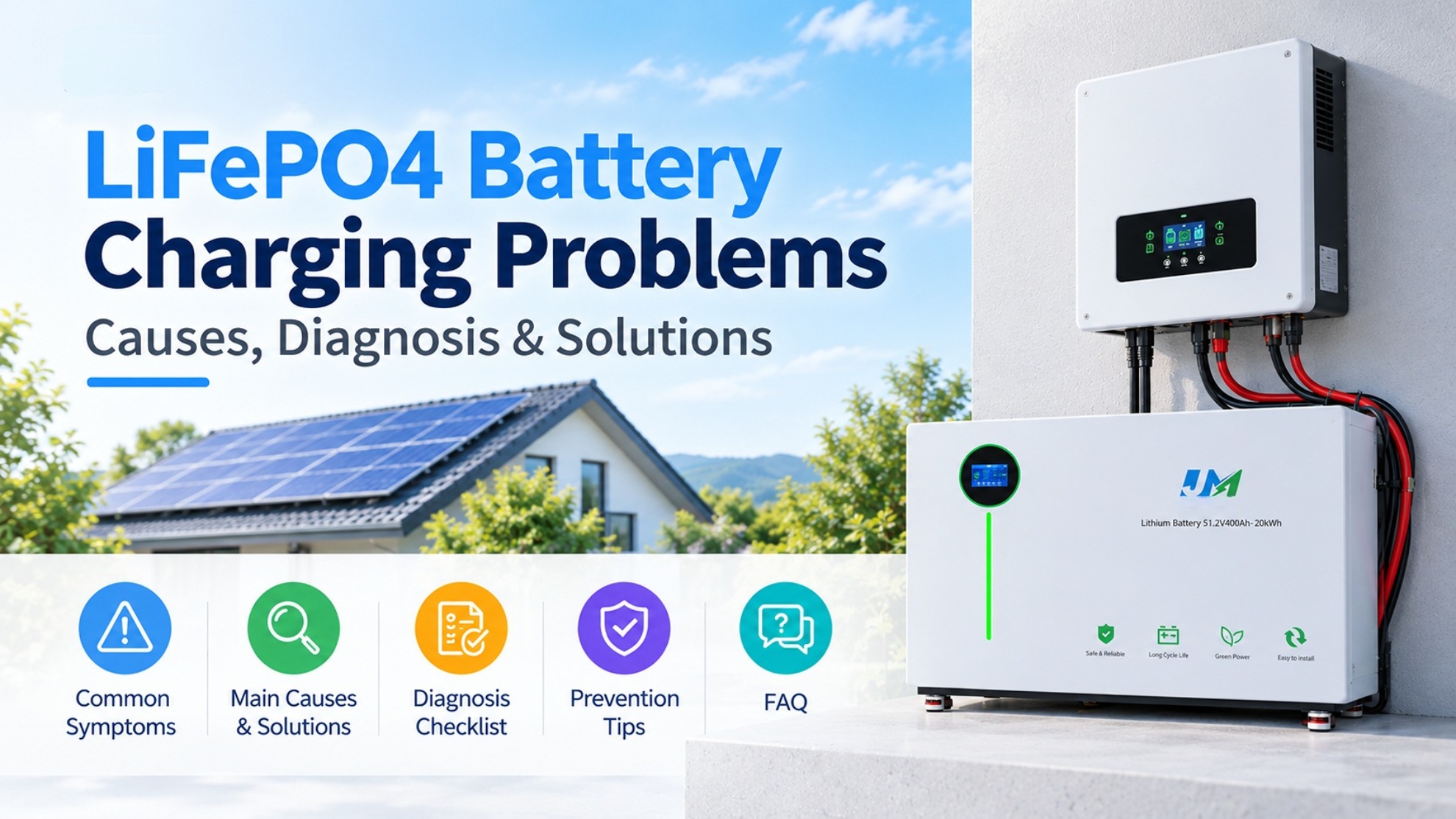
LiFePO4 batteries are widely used in residential solar energy storage because of their long cycle life and stable performance. However, charging problems can occur because of incorrect settings, battery management system (BMS) protection, wiring issues, or inverter incompatibility.
Understanding the symptoms can help installers identify the cause and restore normal charging without risking battery damage.
Table of Contents
1. Common LiFePO4 Battery Charging Problems
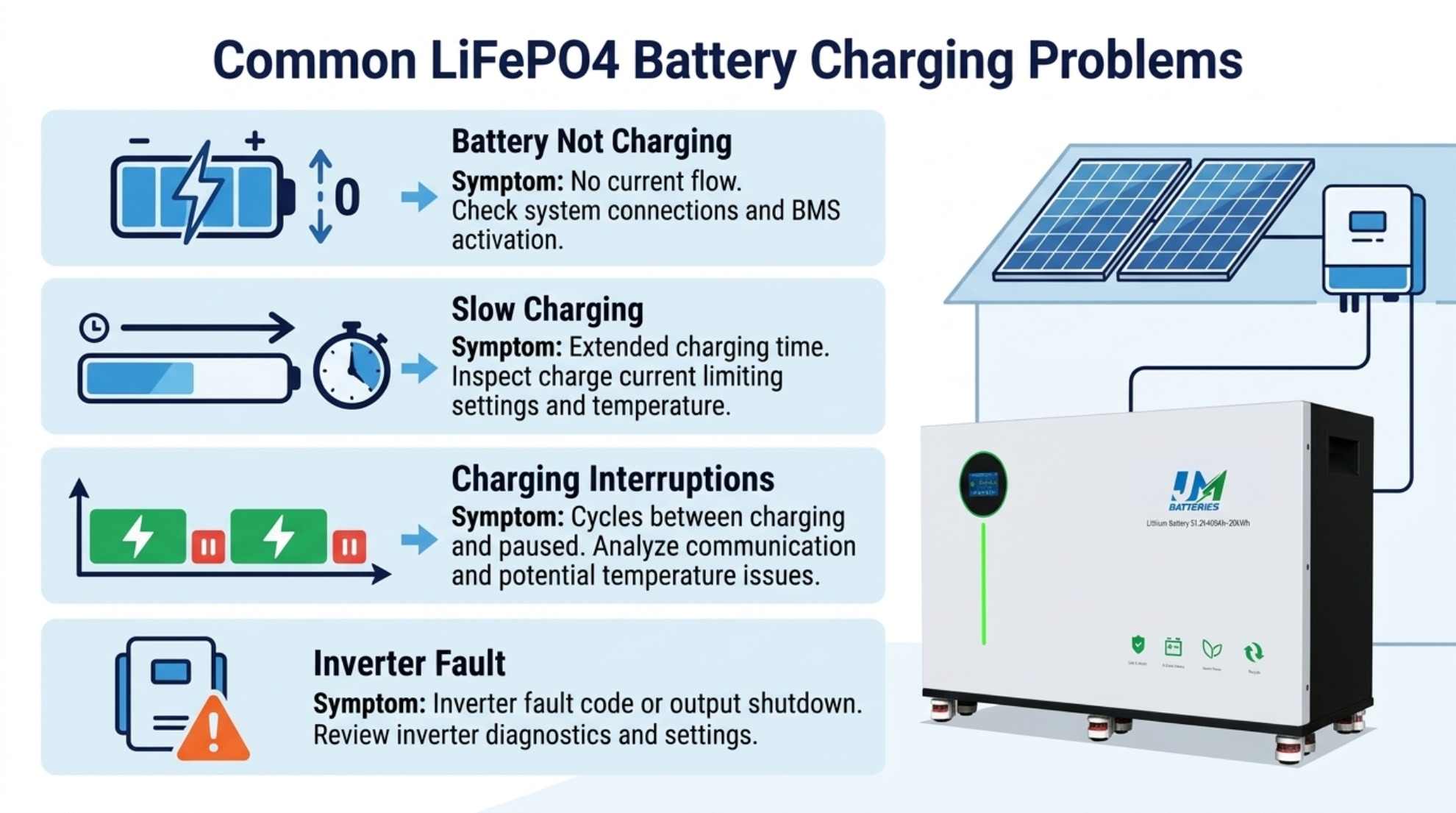
Charging problems usually appear in one of the following ways:
- Battery will not charge: The charger or inverter supplies no charging current.
- Charging is too slow: Charging current is lower than expected.
- Battery stops charging early: The battery does not reach the expected state of charge.
- Charging starts and stops repeatedly: Protection limits, unstable connections, or communication problems may be involved.
- Inverter reports a battery fault: Settings, communication, or compatibility may need to be checked.
These symptoms can have several causes. Check the complete system rather than assuming the battery itself is defective.
2. Main Causes and Solutions
Incorrect Charging Settings
The inverter or charger may use settings that do not match the battery manufacturer's requirements. Incorrect voltage limits, charging current, or battery type settings can prevent proper charging.
Solution: Check the battery datasheet and configure the charger according to the specified voltage, current, and operating limits. Do not copy settings from another battery model without verification.
BMS Protection
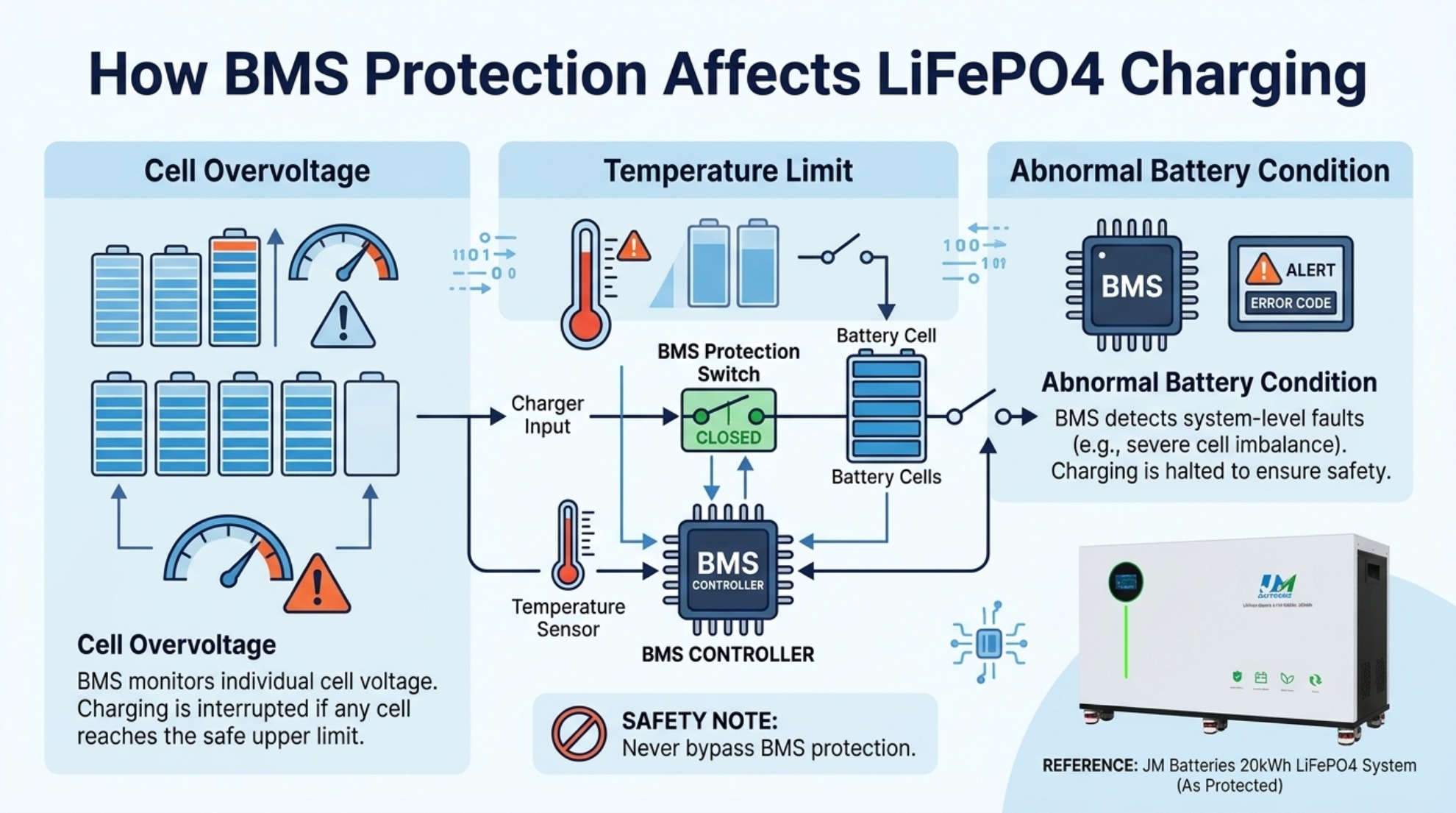
The battery management system may stop charging when it detects conditions such as excessive cell voltage, unsuitable temperature, or another protection event.
Solution: Check the BMS status, fault codes, cell data, and temperature readings if available. Correct the underlying condition before attempting to resume charging.
Low Temperature
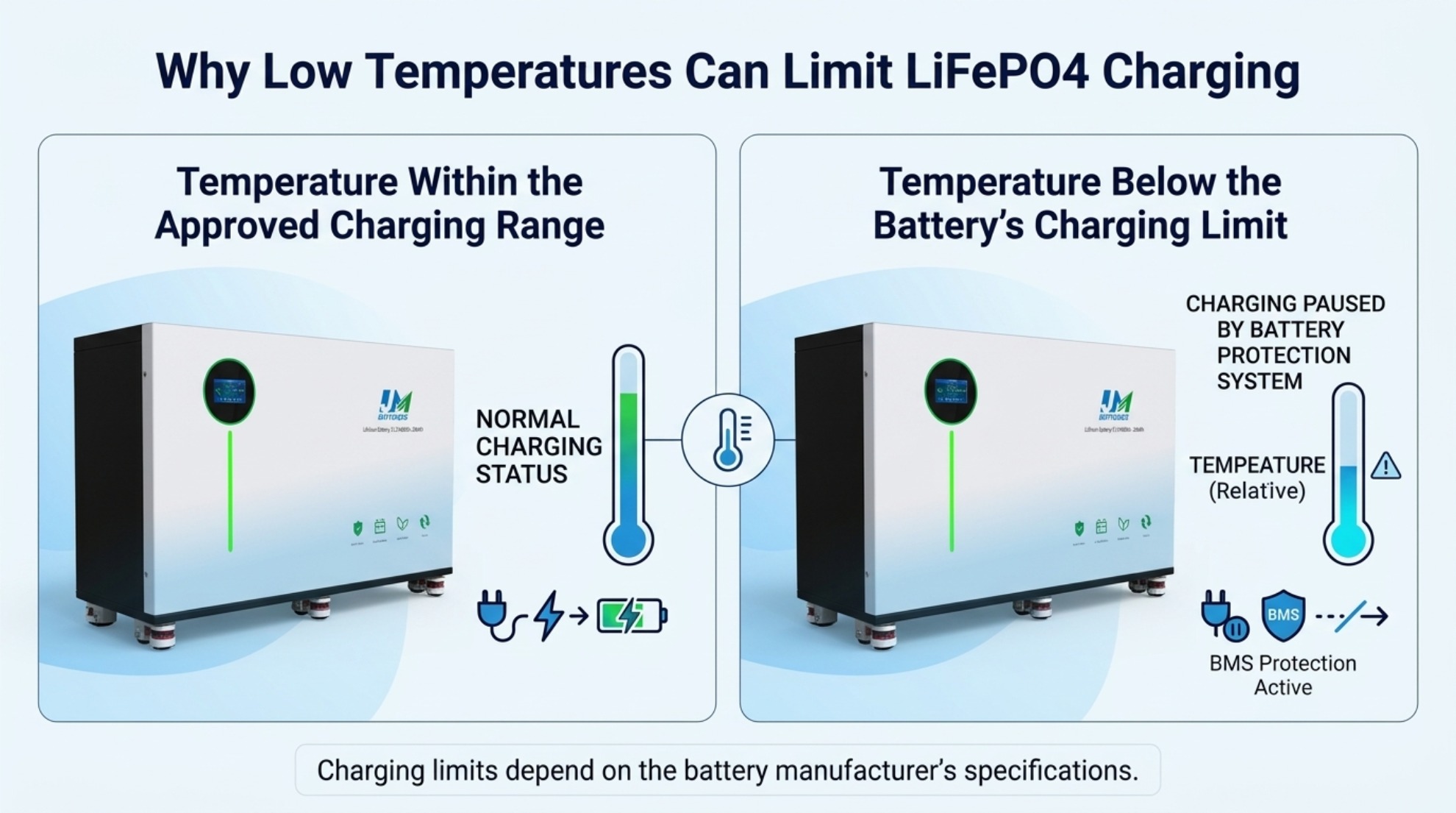
Many LiFePO4 batteries restrict or stop charging below a specified temperature. The permitted charging range varies by battery model.
Solution: Check the manufacturer's temperature limits and allow the battery to return to an approved charging temperature. Never bypass low-temperature protection.
Insufficient Solar Power
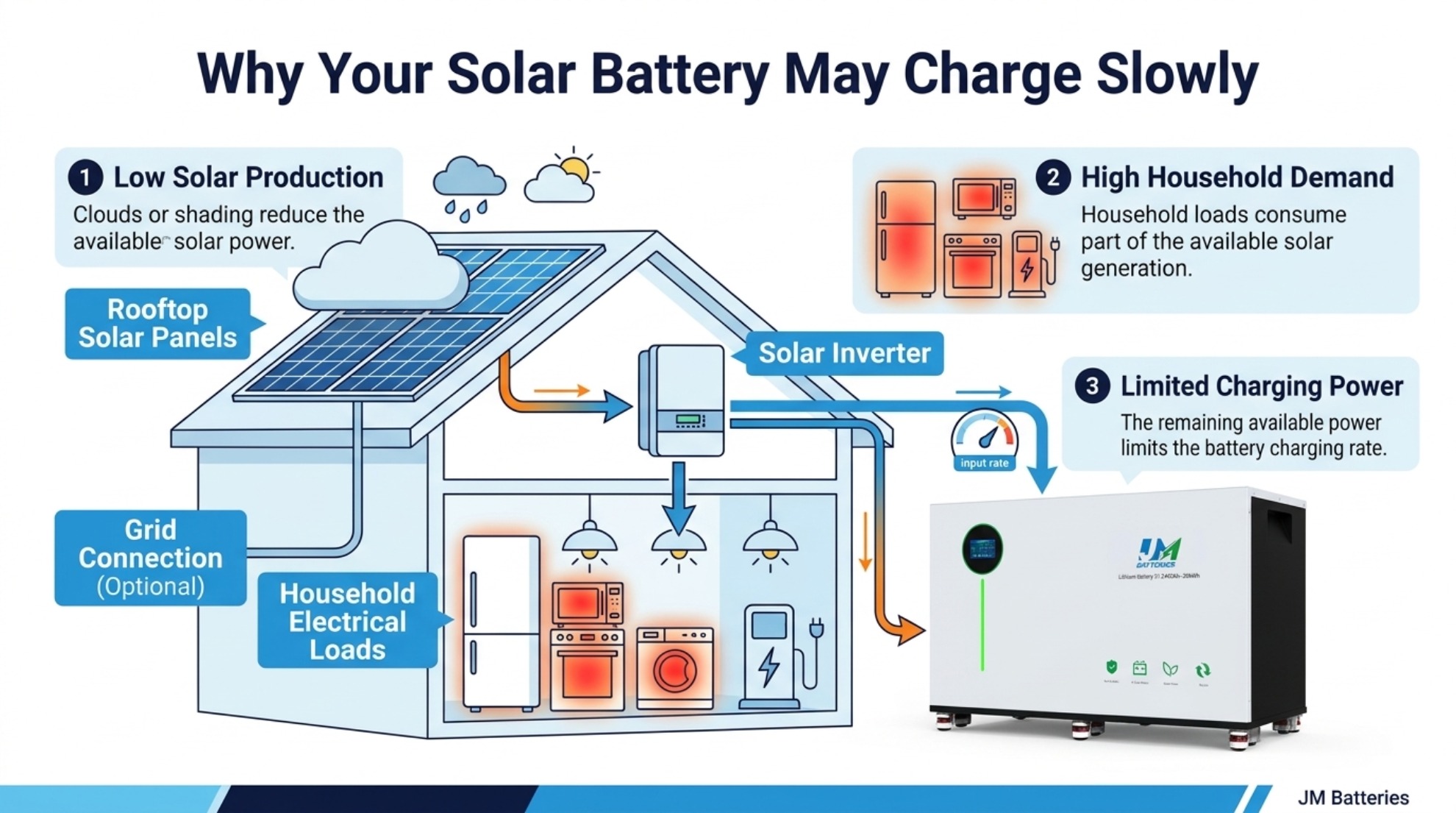
Cloudy weather, shading, dirty panels, or a solar system fault can reduce the power available for charging. Household loads may also consume much of the solar energy being generated.
Solution: Check solar production, inverter readings, shading, and current household consumption before diagnosing a battery fault.
Wiring or Connection Problems
Loose terminals, damaged cables, incorrect polarity, or unsuitable cable sizing can interrupt charging or cause excessive voltage drop.
Solution: Follow the manufacturer's shutdown procedure before inspecting connections. Check cable sizing, terminal condition, polarity, and connection torque according to the equipment specifications.
Battery and Inverter Compatibility
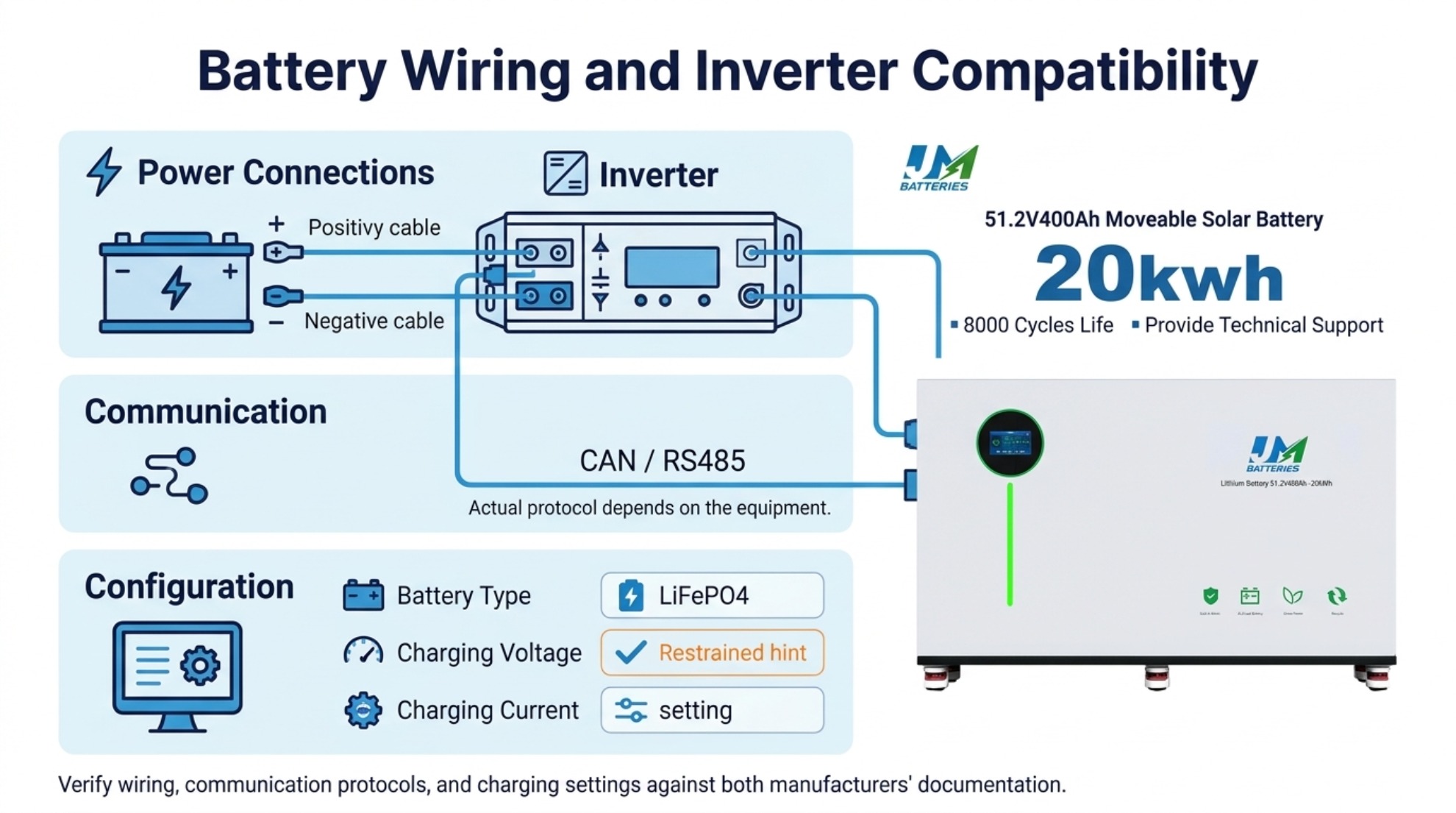
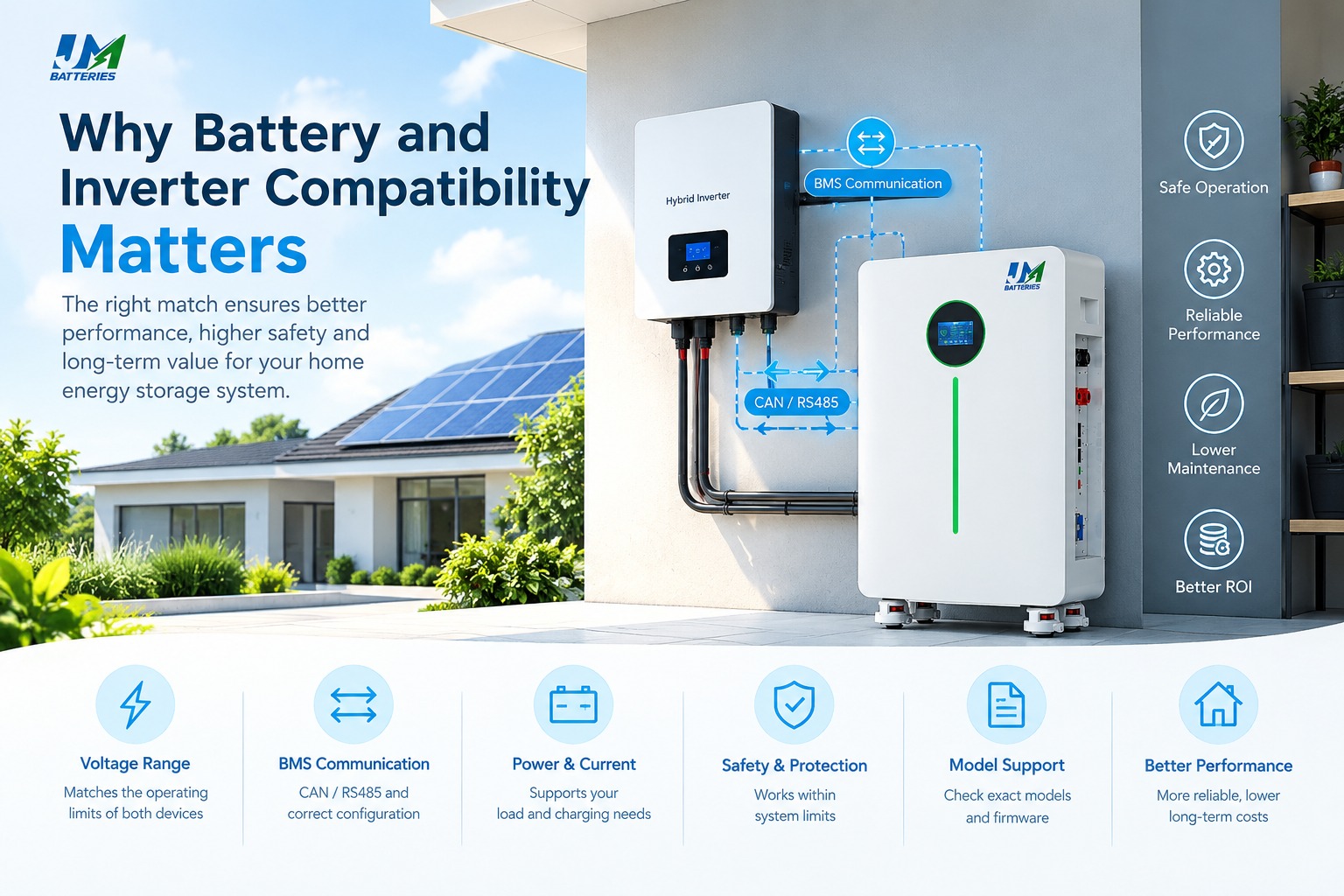
Some battery-inverter systems require communication through CAN or RS485. Incorrect protocols, wiring, or configuration may prevent normal operation even when the power connections appear correct.
Solution: Confirm that the battery and inverter are compatible, use the correct communication cable and protocol, and check the configuration instructions.
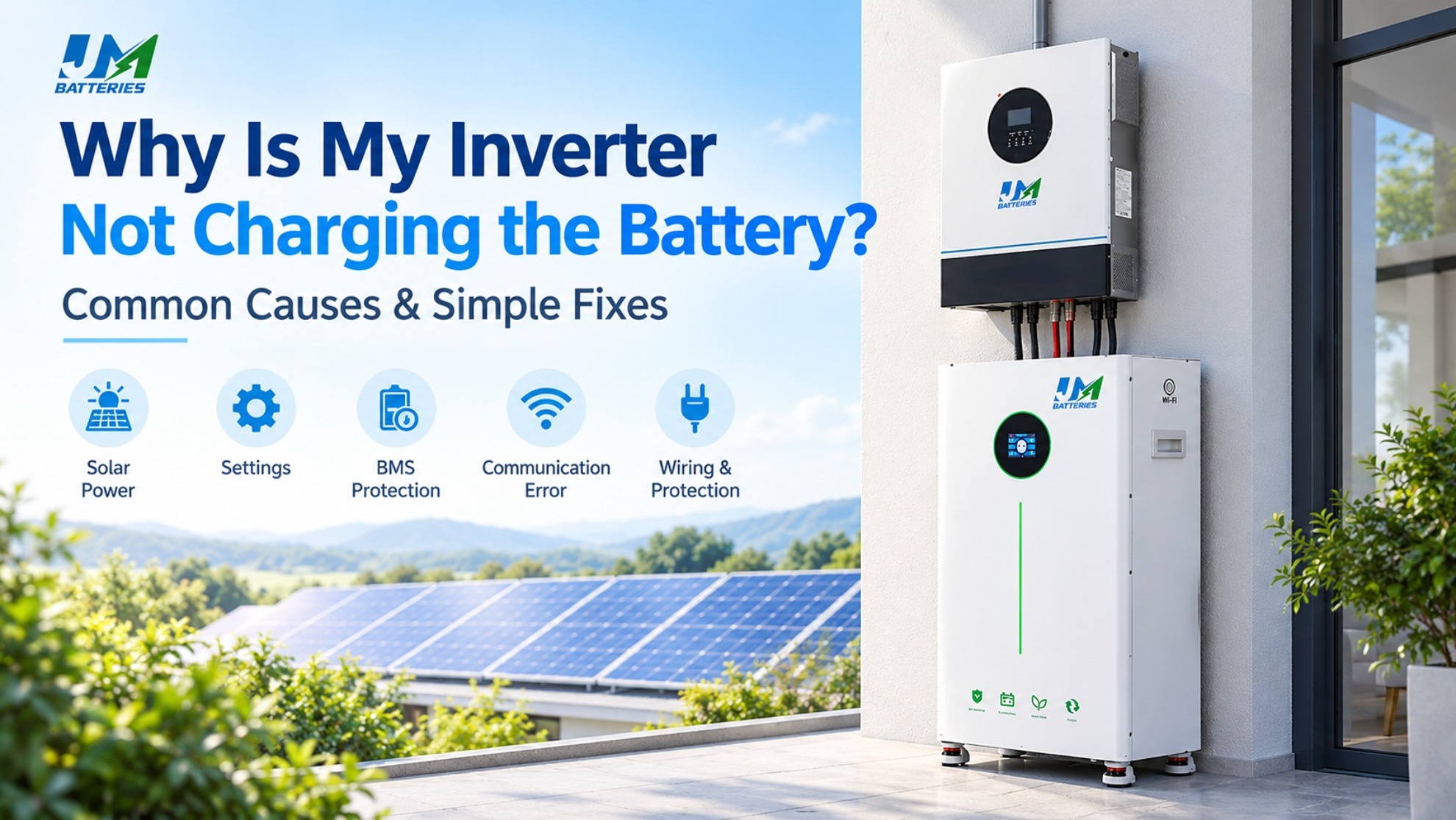
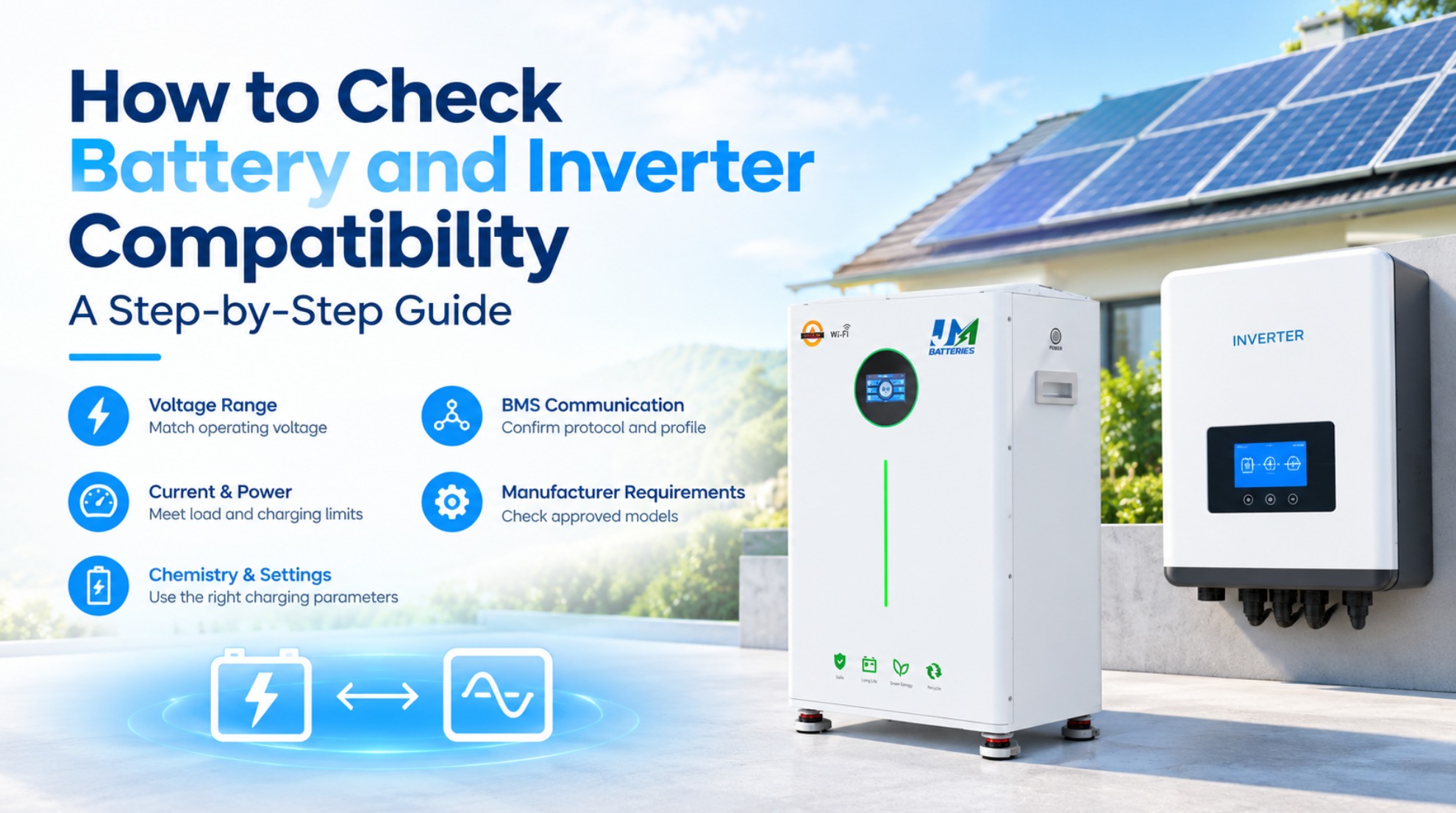
For more guidance, read why battery and inverter compatibility matters and how to match a battery and inverter.
3. How to Diagnose Charging Problems
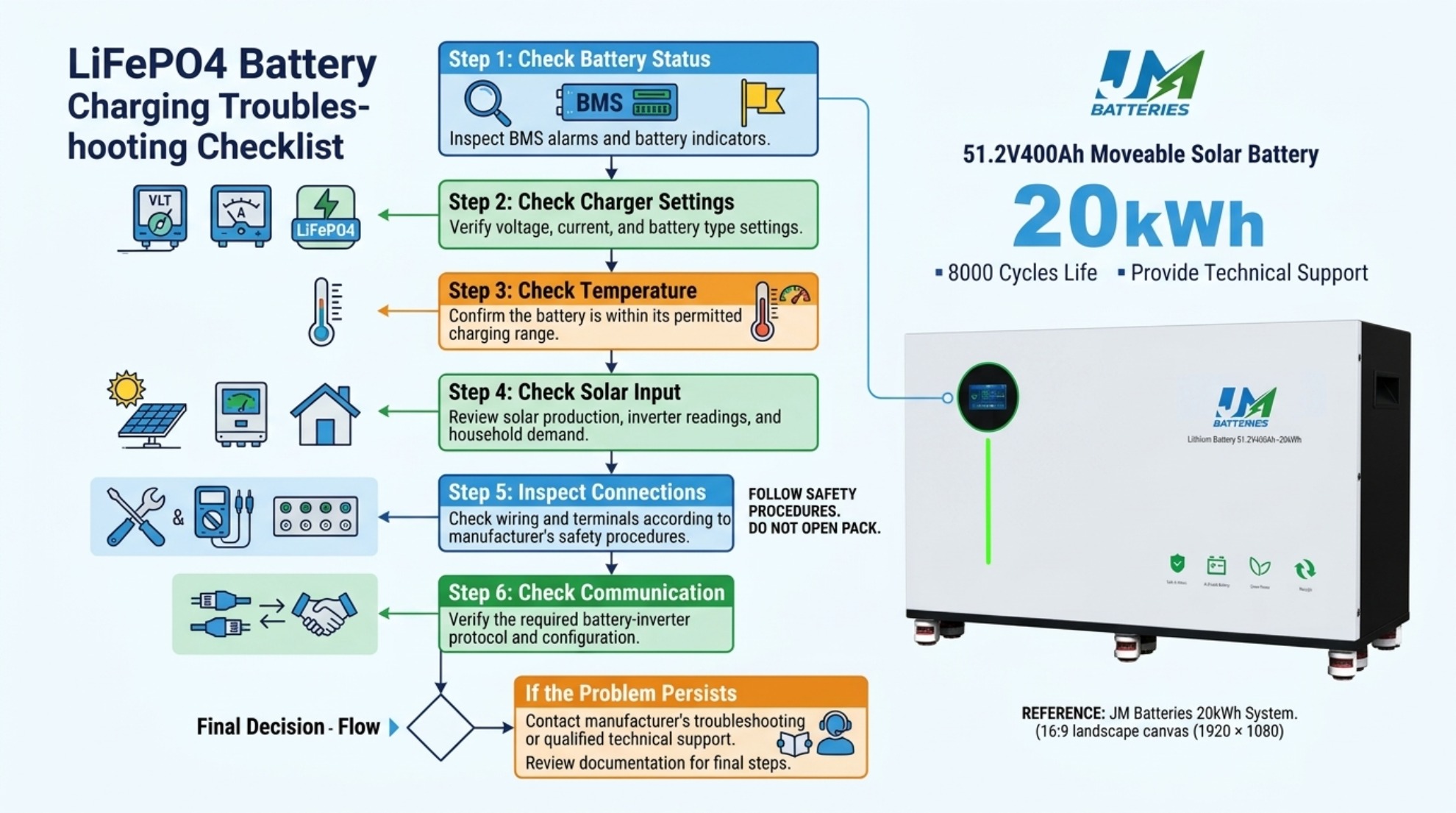
Installers can use the following checklist to narrow down the cause.
| Check | What to Look For | Next Step |
|---|---|---|
| Battery status | BMS alarms or protection events | Identify and correct the reported condition |
| Charger settings | Incorrect voltage or current limits | Compare with the battery datasheet |
| Temperature | Temperature outside the permitted charging range | Restore an approved operating temperature |
| Solar input | Low PV production or inverter warnings | Inspect the solar system and inverter readings |
| Wiring | Loose, damaged, or incorrectly installed connections | Inspect safely according to the manufacturer's procedure |
| Communication | CAN/RS485 errors or incorrect protocol | Verify the cable, protocol, and configuration |
Record the battery voltage, charging current, temperature, inverter warnings, and BMS fault codes where available. These measurements help distinguish a configuration problem from a hardware fault.
If the battery still will not charge, follow the manufacturer's troubleshooting instructions or contact technical support. You can also review this guide: Why Is My LiFePO4 Battery Not Charging?
4. How to Prevent Charging Problems
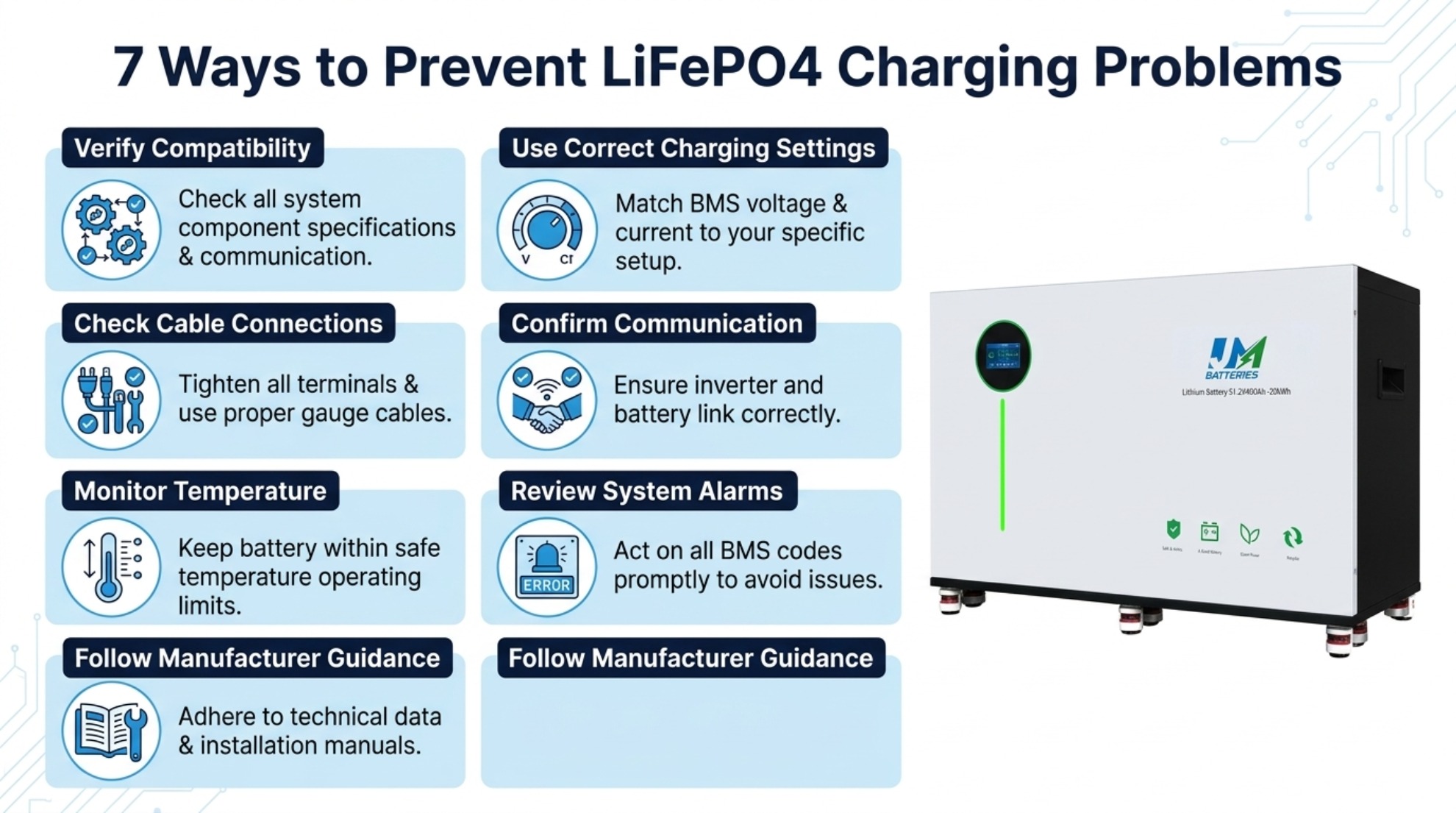
- Verify battery and inverter compatibility before installation.
- Use the manufacturer's recommended charging settings.
- Size cables and protective devices according to system requirements.
- Confirm communication settings before commissioning.
- Keep battery temperature within the permitted operating range.
- Review alarms and system data during routine maintenance.
For installers, a documented commissioning checklist can reduce troubleshooting time and help identify configuration errors before the system enters service.
5. FAQ
1. Why is my LiFePO4 battery not charging?
Common causes include BMS protection, incorrect charger settings, low temperature, wiring faults, insufficient charging power, or inverter communication problems.
2. Can a LiFePO4 battery be completely discharged?
The battery may stop supplying power when it reaches its low-voltage protection limit. Follow the manufacturer's recovery and charging instructions rather than repeatedly attempting to force it to charge.
3. Why does my battery charge slowly?
Possible causes include limited solar production, high household demand, a configured current limit, temperature restrictions, or voltage drop in the wiring.
4. Can cold weather prevent charging?
Yes. Many LiFePO4 batteries restrict charging at low temperatures. The exact limit depends on the battery model and its protection system.
5. Can an inverter cause charging problems?
Yes. Incorrect charging parameters, incompatible communication protocols, or inverter faults can interrupt or limit charging.
6. Should I bypass the BMS to restore charging?
No. The BMS provides essential protection. Identify the cause of the protection event and follow the manufacturer's approved recovery procedure.
Conclusion
LiFePO4 battery charging problems are often related to configuration, temperature, solar input, wiring, BMS protection, or inverter compatibility. A systematic inspection of these areas is the best starting point.
Always use the battery manufacturer's specifications and safety procedures when diagnosing a fault. For residential energy storage solutions and technical support, visit JM Energy Tech.
Why Is My LiFePO4 Battery Not Charging