


What Damages Batteries Most
What Damages a Battery the Most? Causes of Battery Degradation

Table of Contents
- Primary Causes of Lithium Battery Capacity Loss
- How Temperature Affects Lithium Battery Life
- How Deep Discharge (DoD) Reduces Battery Cycle Life
- Why Overcharging Damages Lithium Batteries
- How a BMS Protects Battery Life and Performance
- Why LiFePO4 Batteries Last Longer
- How to Protect Home Energy Storage Batteries
- Conclusion: Key Factors That Damage Batteries
- Frequently Asked Questions
Primary Causes of Lithium Battery Capacity Loss
As of 2026, many modern residential LiFePO4 battery systems can achieve up to 98% round-trip efficiency under recommended operating conditions, yet battery lifespan is still primarily determined by operating temperature, charging voltage, and depth of discharge (DoD).
The most common causes of lithium battery degradation include:
- High operating temperatures, which accelerate electrolyte decomposition and increase internal resistance.
- Repeated deep discharge (100% DoD), which increases electrode degradation and reduces cycle life.
- Overcharging, which exposes battery cells to excessive voltage and accelerates cathode degradation.
- Charging below 0°C (32°F), which may cause lithium plating and permanent capacity loss.
- Poor battery management, which increases the risk of overheating, cell imbalance, and abnormal charging.
Battery degradation is a gradual process caused by irreversible chemical and mechanical changes inside lithium-ion cells. Although all rechargeable batteries experience calendar aging and cycle aging, the degradation rate depends on operating conditions and system design.
For readers who are new to residential battery systems, understanding how home energy storage works provides helpful context for why operating conditions have such a significant impact on battery lifespan.
Understanding these factors helps homeowners maximize battery lifespan, maintain high energy efficiency, and improve the long-term reliability of residential energy storage systems.
Battery capacity gradually decreases as internal materials age. Unlike temporary power loss caused by low State of Charge (SoC), battery degradation permanently reduces the amount of energy a battery can safely store and deliver.
The primary mechanisms responsible for lithium battery degradation include:
| Cause | Primary Effect | Long-Term Result |
|---|---|---|
| High temperature | Electrolyte decomposition | Capacity loss |
| Deep discharge | Electrode degradation | Shorter cycle life |
| Overcharging | Cathode damage | Increased safety risk |
| Low-temperature charging | Lithium plating | Permanent capacity reduction |
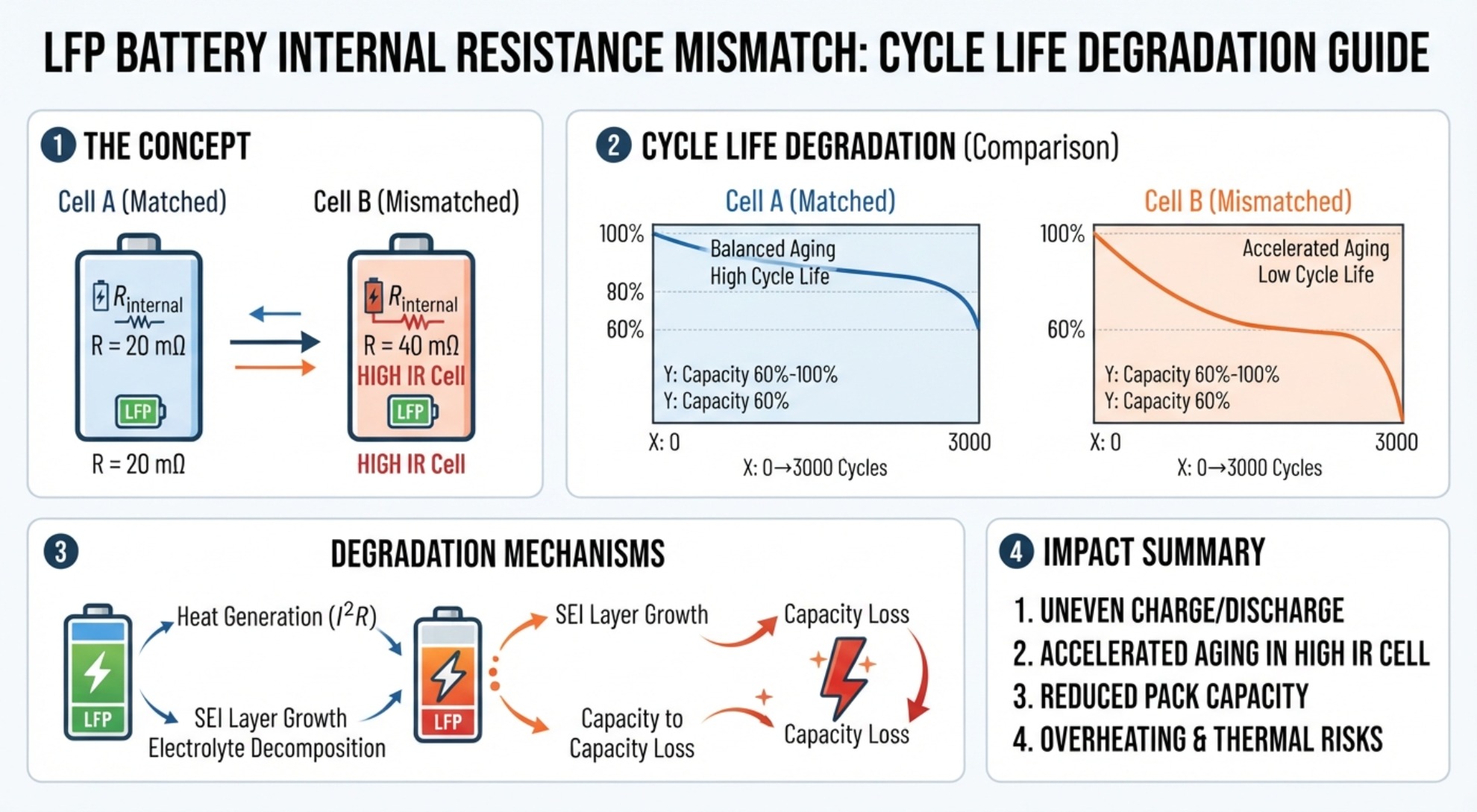
| Cell imbalance | Uneven aging | Reduced pack performance |
These degradation mechanisms often occur simultaneously. For example, frequent charging in high-temperature environments accelerates both electrolyte aging and internal resistance growth, reducing battery efficiency more rapidly than either factor alone.
According to the U.S. Department of Energy (DOE), maintaining recommended operating temperatures and charging parameters is one of the most effective ways to extend lithium battery service life.
How Temperature Affects Lithium Battery Life

Temperature is one of the most influential factors affecting lithium battery performance and longevity.
High Temperature
Excessive heat accelerates several irreversible chemical reactions inside battery cells, including:
- Electrolyte decomposition
- Growth of the Solid Electrolyte Interphase (SEI) layer
- Increased internal resistance
- Loss of active lithium
- Faster electrode aging
These reactions reduce battery capacity while increasing heat generation during subsequent charging and discharging cycles.
For most residential lithium battery systems, manufacturers recommend operating within approximately 15°C to 35°C (59°F to 95°F) whenever possible. Prolonged exposure to temperatures above 45°C (113°F) can significantly accelerate degradation.
Proper ventilation, thermal management, and installation away from direct sunlight help maintain stable battery temperatures and improve long-term performance.
Low Temperature
Cold environments affect batteries differently.
While lithium batteries can generally discharge at sub-zero temperatures, charging below 0°C (32°F) presents a greater risk.
Low-temperature charging slows lithium-ion movement within the electrolyte. Instead of intercalating into the graphite anode, lithium metal may deposit on the anode surface, a process known as lithium plating.
Lithium plating can:
- Permanently reduce battery capacity.
- Increase internal resistance.
- Shorten battery cycle life.
- Increase the possibility of internal short circuits.
Many modern LiFePO4 batteries incorporate low-temperature charging protection through an integrated Battery Management System (BMS). If charging temperatures fall below the manufacturer's specified range, the BMS automatically limits or disconnects charging until safe operating conditions are restored.
For residential solar battery systems installed in cold climates, battery heating functions or temperature-controlled installation environments help maintain safe charging conditions throughout winter.
How Deep Discharge (DoD) Reduces Battery Cycle Life

Depth of Discharge (DoD) describes how much of a battery's total usable capacity has been discharged during a cycle. For example, discharging from 100% to 30% state of charge (SoC) represents a 70% DoD.
Battery cycle life decreases as DoD increases because deeper discharge cycles place higher mechanical and electrochemical stress on the electrodes.
Key effects of deep discharge include:
- Increased expansion and contraction of electrode materials
- Accelerated degradation of active lithium inventory
- Higher internal resistance over time
- Reduced total cycle life
Lithium-ion batteries experience significantly longer cycle life when operated within moderate DoD ranges rather than full 0–100% cycles. This is because shallower cycling reduces structural stress on the anode and cathode materials.
In residential energy storage systems, many manufacturers recommend avoiding frequent full-depth discharge cycles to extend operational lifespan.
LiFePO4 batteries are generally more tolerant of deep discharge compared to nickel-based lithium chemistries such as NMC, which makes them widely used in home energy storage applications.
Why Overcharging Damages Lithium Batteries
Overcharging occurs when battery cells are charged beyond their recommended upper voltage limit. This condition introduces excessive electrochemical stress within the cell.
The main degradation mechanisms caused by overcharging include:
- Cathode structural instability
- Electrolyte decomposition
- Gas generation inside the cell
- Increased heat production
- Risk of swelling or venting in extreme cases
At the electrochemical level, overcharging disrupts lithium-ion balance and accelerates irreversible reactions at the cathode surface. These reactions reduce usable capacity and increase internal resistance.
Modern lithium battery systems prevent overcharging through a Battery Management System (BMS), which continuously monitors individual cell voltage and disconnects charging when thresholds are exceeded.
Stable charging voltage control is essential for maintaining long-term battery health, particularly in residential solar energy storage systems where daily cycling is common.
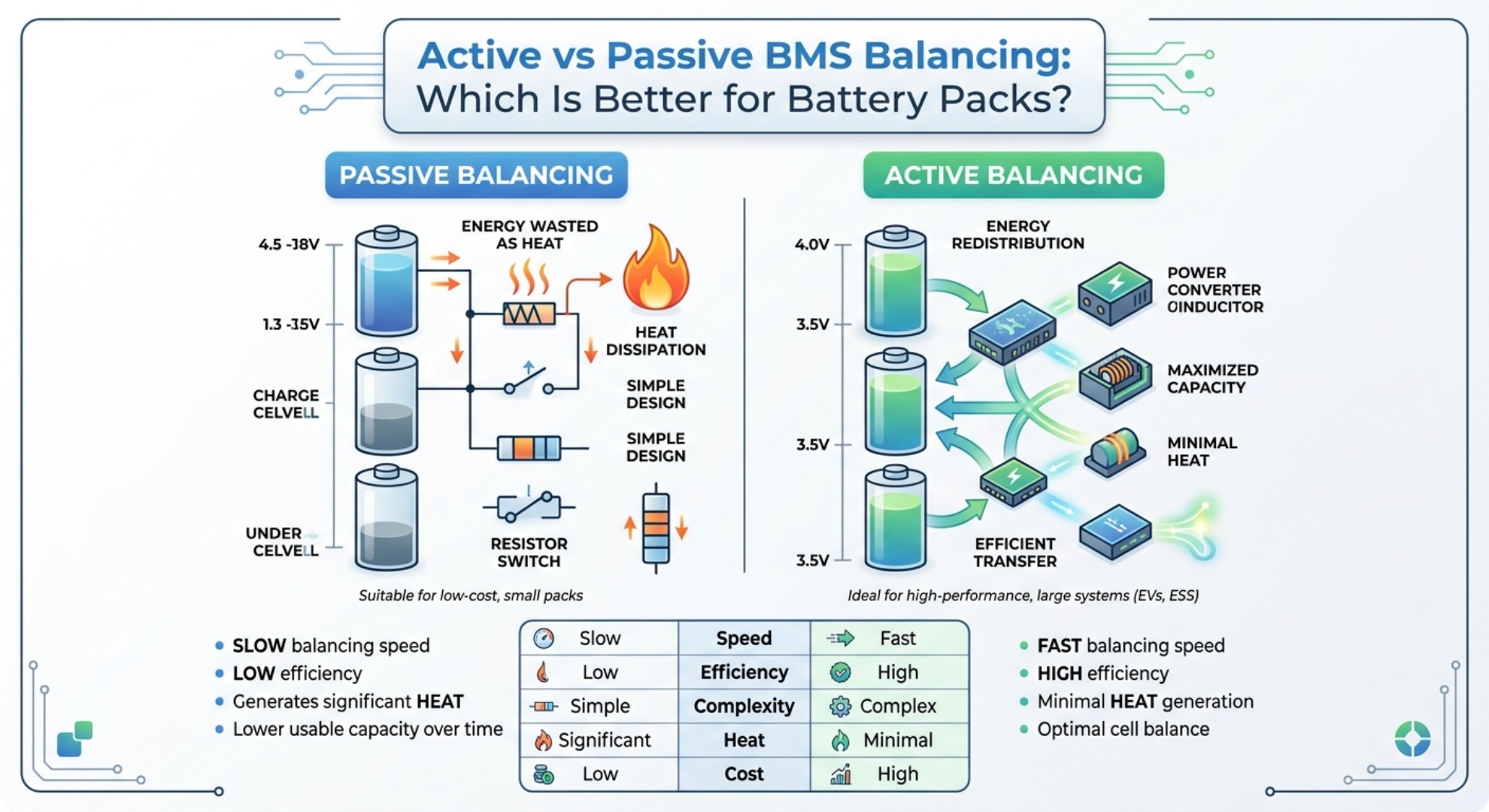
How a BMS Protects Battery Life and Performance
A Battery Management System (BMS) is an electronic control system responsible for monitoring and protecting lithium battery packs.
The BMS continuously tracks:
- Cell voltage
- Charge and discharge current
- Battery temperature
- State of Charge (SoC)
- Cell balancing status
When abnormal conditions are detected, the BMS responds by limiting current flow or disconnecting the battery to prevent damage.
Typical protection functions include:
- Overcharge protection
- Over-discharge protection
- Overcurrent protection
- Short-circuit protection
- High and low temperature protection
- Cell balancing during charging
Cell balancing is particularly important in multi-cell battery packs used in residential energy storage systems. Without balancing, small voltage differences between cells can accumulate over time, leading to uneven aging and reduced overall pack capacity.
By maintaining all cells within safe operating limits, the BMS helps stabilize performance and extend overall cycle life.
Why LiFePO4 Batteries Last Longer
Lithium Iron Phosphate (LiFePO4) is widely used in residential energy storage systems due to its thermal and chemical stability.
Compared with nickel-based lithium chemistries such as NMC, LiFePO4 offers:
- Higher thermal stability under elevated temperatures
- Lower risk of thermal runaway
- Longer cycle life under comparable operating conditions
- Improved tolerance to partial deep discharge cycles
Under standard test conditions, many LiFePO4 battery systems achieve more than 6,000 charge-discharge cycles before reaching approximately 80% of original capacity.
LiFePO4 also demonstrates slower calendar aging, making it suitable for long-term stationary storage applications such as home solar systems, off-grid installations, and backup power systems.
Because of its stable crystal structure, LiFePO4 is less prone to oxygen release at high temperatures, which reduces the likelihood of thermal runaway compared to other lithium-ion chemistries.
How to Protect Home Energy Storage Batteries
Battery lifespan is primarily determined by four controllable factors: operating temperature, depth of discharge (DoD), charging voltage, and battery management system (BMS) performance. Maintaining these parameters within recommended ranges reduces irreversible chemical degradation and improves long-term system stability.
Key practices for reducing battery degradation include:
- Operating within manufacturer-recommended temperature ranges
- Avoiding repeated full-depth discharge cycles
- Using correct charging voltage profiles
- Ensuring active BMS monitoring and protection
- Preventing prolonged storage at extreme state of charge (SoC)
In residential energy storage systems, uncontrolled environmental conditions are one of the most common causes of accelerated battery aging. Temperature fluctuations, especially in rooftop or poorly ventilated installations, can significantly increase internal resistance and reduce usable capacity over time.
Conclusion: Key Factors That Damage Batteries

Battery degradation is primarily caused by high temperatures, deep discharge, and overcharging, which accelerate electrolyte decomposition, electrode degradation, lithium plating, and internal resistance growth.
These processes are irreversible and gradually reduce usable capacity across the battery's service life. While all lithium-ion batteries experience both calendar aging and cycle aging, the degradation rate is strongly influenced by operating conditions and system design.
To maximize battery lifespan in residential energy storage applications, the following conditions are critical:
- Stable thermal environment
- Controlled charging voltage
- Moderate depth of discharge (DoD)
- Effective Battery Management System (BMS)
Among available lithium chemistries, Lithium Iron Phosphate (LiFePO4) offers improved thermal stability, longer cycle life, and lower risk of thermal runaway, making it suitable for long-term stationary energy storage.
To get the longest possible battery lifespan, it is also important to understand how the entire residential energy storage system operates. Read our complete guide on How Does Home Energy Storage Work? to learn how solar panels, inverters, and LiFePO4 batteries work together to maximize energy efficiency.
Frequently Asked Questions
What damages lithium batteries the fastest?
High temperature, overcharging, and deep discharge are the three main factors that accelerate lithium battery degradation.
Does heat permanently damage batteries?
Yes. High temperatures accelerate electrolyte decomposition and increase internal resistance, leading to permanent capacity loss.
Is 100% discharge bad for batteries?
Yes. Repeated full-depth discharge increases electrode stress and reduces cycle life.
What is the safest lithium battery chemistry?
LiFePO4 (Lithium Iron Phosphate) is considered one of the most thermally stable lithium chemistries for residential energy storage.

JM New Energy Technology



Final Insight: Battery degradation is not caused by a single factor but by the interaction of thermal stress, electrochemical cycling depth, and voltage control. Proper system design and battery management are the most effective methods for extending service life in residential energy storage applications.
What Is a BESS Battery Energy Storage System
How does home energy storage work