


What Is Battery State of Health
What Is Battery State of Health (SoH)? Complete Guide for Residential LiFePO4 Home Energy Storage

Table of Contents
- Quick Overview: What Is Battery SoH for Home Batteries
- Full Definition of Battery State of Health (SoH)
- Why Tracking Battery SoH Matters for Home Energy Storage
- How BMS Calculates & Measures Battery State of Health (SoH)
- SoH vs SoC: Key Differences for Residential Storage Batteries
- Main Factors That Degrade LiFePO4 Battery State of Health
- Practical Tips to Preserve & Extend Home Battery SoH
- FAQ: Common Questions About LiFePO4 Battery SoH
- Final Takeaways on Monitoring Home Battery State of Health
Quick Overview: What Is Battery SoH for Home Batteries
State of Health (SoH) shows how well a rechargeable battery holds up next to its factory-new performance. We mark this value as a percentage, which tells owners how much capacity and power the battery’s kept after months of use. Every new battery ships at 100% SoH; this number slowly drops as you charge, drain and run the system daily.
Anyone with home solar storage should keep an eye on SoH. It lets you spot battery wear early, work out how many usable years you’ve got left, and count on steady backup power when the grid cuts out. If you want more hands-on battery knowledge, head over to our official site JM Energy Tech.
Full Definition of Battery State of Health (SoH)
SoH tracks long-term battery wear, and it’s not the same as State of Charge (SoC). SoC only shows how much power you’ve got available right now, while SoC tracks how much original capacity’s left after years of regular operation. If you’re still unclear on how SoC works, check our dedicated write-up here: What Is Battery State of Charge (SoC).
Take a standard 10 kWh LiFePO₄ battery as an example. Straight out of the box, its SoH sits at 100%. After thousands of charge-discharge cycles, it might only hold 9.2 kWh usable power, putting its SoH at roughly 92%.
Lithium cells wear down naturally over time. Internal chemical reactions eat away at storage capacity and push internal resistance higher. This decline still happens even if you follow all manufacturer operating rules closely.

Why Tracking Battery SoH Matters for Home Energy Storage
Checking SoH regularly gives you a true read on your battery’s real condition, instead of just seeing how full its charge level sits.
It’s easy to get fooled by a high SoC reading on a worn battery. The unit might read fully charged, yet it holds far less power than it did when new.
Keeping track of SoC helps homeowners with several key tasks:
- Figure out how much service life the battery still has left.
- Schedule maintenance or plan for future battery replacement.
- Count on consistent backup power when grid blackouts hit.
- Confirm your battery meets all warranty capacity requirements.
- Run smarter long-term home energy planning.
For residential solar storage setups, regular SoH checks keep performance consistent across the whole battery service life. All our residential storage gear and technical guides live at //www.jmenergytech.com/.
How BMS Calculates & Measures Battery State of Health (SoH)
Modern Battery Management Systems (BMS) don’t rely on one single metric to calculate SoH. They pull data from multiple running system values to build an accurate estimate.
The core metrics every BMS uses to gauge SoH are listed below:
- Remaining Capacity: Compares current usable storage against the battery’s factory rated capacity.
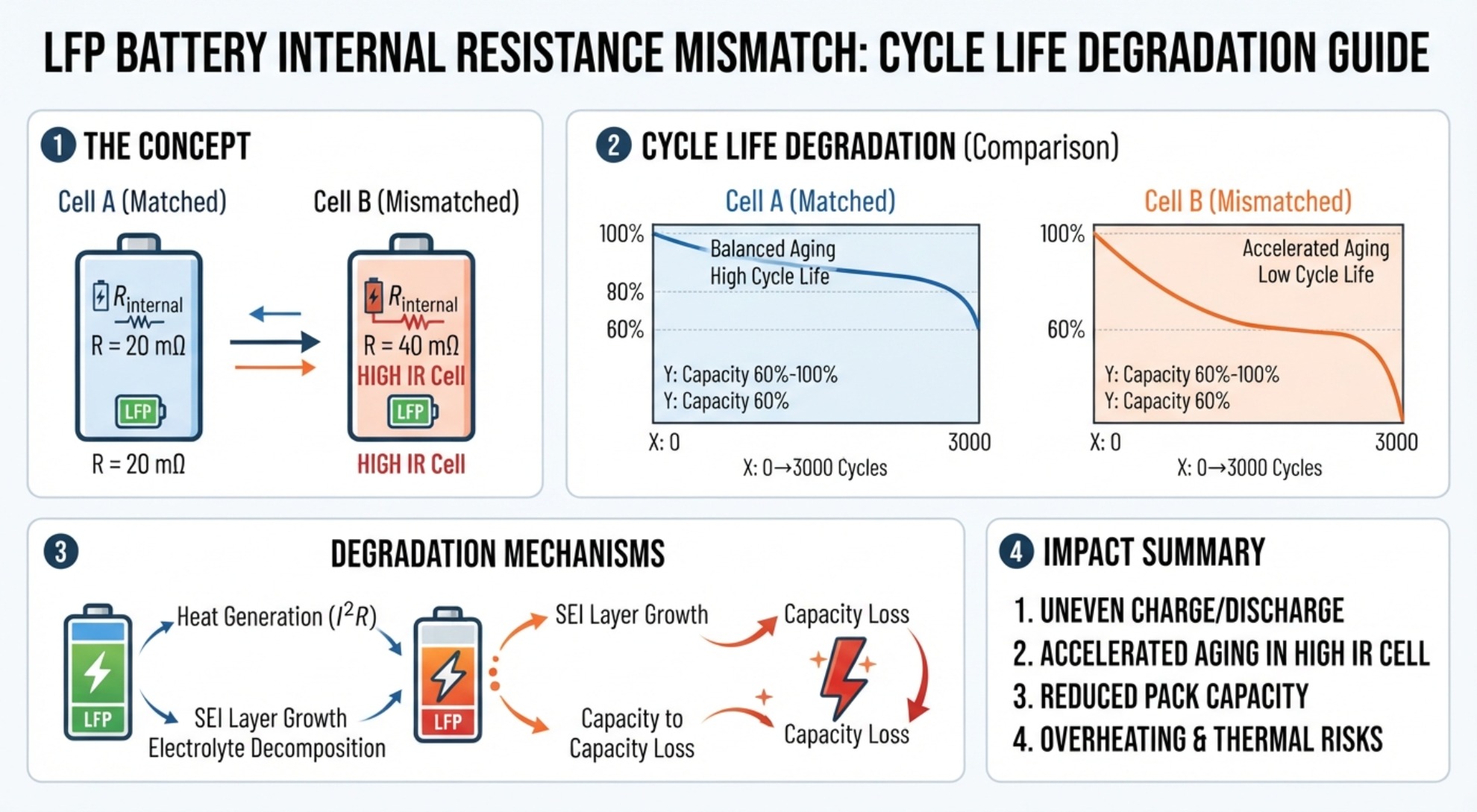
- Internal Resistance: Higher resistance usually signals cell aging and lower overall efficiency.
- Charge and Discharge Cycles: All lithium batteries have a limited cycle lifespan. The BMS logs cycle counts to estimate long-term capacity loss.
- Operating Temperature: Running the battery in extreme hot or cold speeds up wear and drags down SoH over time.
The system blends all these data points together to give you a trustworthy reading of full battery health.

SoH vs SoC: Key Differences for Residential Storage Batteries
| State of Health (SoH) | State of Charge (SoC) |
|---|---|
| Shows overall long-term battery condition | Shows leftover available battery energy |
| Moves very slowly across months and years | Shifts constantly while charging or draining power |
| Tells you how worn the battery’s become | Tells you how much power you can use right now |
| Used to judge remaining service lifespan | Used for day-to-day home energy management |
| Common working range: 70–100% | Common working range: 0–100% |

To put it simply: SoC tells you how full your battery is today, while SoH shows how well it’s held up through years of use. You can dive deeper into SoC fundamentals through our full SoC breakdown article.
Main Factors That Degrade LiFePO4 Battery State of Health
A handful of everyday operating choices speed up how fast a battery’s SoH drops over time.
High Temperature
Too much heat speeds internal chemical wear and cuts the battery’s usable lifespan short.
Deep Discharge
Draining the battery down to extremely low levels over and over adds extra stress to each cell pack.
Overcharging
Leaving the battery sitting at full charge for weeks at a time will make capacity fade faster.
Fast Charging
High-current rapid charging generates extra heat, which wears down long-term battery health.
Battery Age
Lithium cells lose capacity slowly with time, even if you barely charge or discharge the unit at all.

Practical Tips to Preserve & Extend Home Battery SoH
Sticking to solid daily operating habits lets you stretch out the full service life of LiFePO₄ home storage batteries.
- Keep battery units inside the manufacturer’s recommended safe temperature window.
- Avoid regular deep discharges whenever your energy setup lets you.
- Fit your storage bank with a reliable, high-grade Battery Management System (BMS).
- Stick to the charging limits and settings laid out in the product manual.
- Store unused battery packs at around 40%–60% SoC for long idle periods.
- Do routine battery checks, and update inverter or BMS firmware if the brand releases new stable versions.
LiFePO₄ cells stand out for their long cycle life. Most models clear 6,000 full charge cycles when operated within suggested limits. Consistent battery care keeps your SoH higher for every year you own the unit. Browse our full range of durable LiFePO4 storage solutions on JM Energy Tech official website.

FAQ: Common Questions About LiFePO4 Battery SoH

What counts as good battery State of Health?
Nearly all lithium battery packs run in great condition when their SoH stays above 90%.
Is 80% SoH still usable for home storage?
Absolutely. Most battery brands set 80% State of Health as their warranty end capacity threshold, and systems still deliver steady, usable performance at this level.
Can you restore lost State of Health on worn batteries?
You can’t reverse battery aging; it’s a permanent natural chemical shift. That said, careful charging and regular maintenance will slow capacity loss significantly.
Does lower SoH cut down battery backup runtime?
It does. As SoH falls, the battery holds less usable power, so backup time during power failures gets shorter over time.
Final Takeaways on Monitoring Home Battery State of Health
State of Health (SoH) ranks among the most useful metrics to judge long-term home battery performance. SoC only shows your immediate available power, while SoH reveals how much factory capacity’s still left after years of daily use.
When you track SoH via a smart BMS, you get clear visibility into cell wear, can tune your storage system for better efficiency, and plan maintenance or replacements well in advance. Picking a well-built LiFePO₄ battery paired with advanced BMS hardware also extends overall lifespan and delivers stable power for residential solar storage setups. Find more battery technical guides and complete product lines at our site //www.jmenergytech.com/, and cross-reference our supporting resource What Is Battery State of Charge (SoC) to fully grasp all core battery monitoring metrics.


JM New Energy Technology



Home Energy Storage Battery Safety Guide
What Is Battery SoC