


7 Pro Tips to Double LiFePO4 Solar Battery Life
7 Solar Battery Maintenance Tips to Extend Lifespan & Maximize ROI

Table of Contents
- Why Solar Batteries Degrade & How to Maintain Efficiency
- 7 Proven Solar Battery Maintenance Tips for Longer Lifespan
- Optimize Depth of Discharge (DoD) for Maximum Battery Cycles
- Maintain Ideal Temperature for Solar Battery Health
- Avoid Extreme State of Charge (SoC) to Protect Battery Cells
- Clean Terminals & Inspect for Optimal Battery Performance
- Update BMS Firmware for Smarter Battery Management
- Manage High-Wattage Loads to Reduce Battery Stress
- Schedule Annual Professional Solar Battery Inspections
- Maximize Solar Battery ROI with Proactive Maintenance
Investing in a home energy storage solution requires proactive care to maximize your return on investment. Many homeowners overlook regular upkeep and end up replacing their solar batteries 3–5 years ahead of the expected service life. Most residential solar energy storage systems adopt LiFePO4 (LFP) cells due to outstanding thermal stability and long cycle performance, yet irreversible chemical degradation will severely shorten pack service life without standardized operation rules. Applying proper solar battery maintenance routines can double your system's operational lifespan, helping you prevent solar battery degradation over time and cut costly replacement expenses. To dive deep into internal aging mechanisms, environmental triggers and field-proven LFP protection rules, read our pillar technical guide: LiFePO4 Battery Degradation: Key Factors & Lifespan Extension Guide.
Why Solar Batteries Degrade & How to Maintain Efficiency

All lithium-ion solar storage units degrade due to chemical wear during charge and discharge cycles. Every time power flows in and out of battery cells, tiny structural damage accumulates, gradually lowering total usable capacity. Research from the National Renewable Energy Laboratory (NREL) indicates that managing thermal stress and charge parameters preserves cell health, ensuring long-term solar energy storage efficiency. For LiFePO4 packs, capacity fade mainly stems from continuous thickening of the SEI passivation film on graphite anodes and mechanical micro-cracking inside cathode crystal lattices, both of which are drastically accelerated by improper daily operation.
Uncontrolled high temperatures, full deep discharges, long-term full charge states, and irregular heavy power draws are the four biggest accelerators of degradation. Without consistent maintenance, most residential lithium solar batteries lose 20%–30% of original capacity within 6–8 years, well below the advertised 10–15 year design life. Two separate aging modes impact your LFP storage simultaneously: cycle aging generated by repeated daily charging and discharging, and silent calendar aging that occurs passively even when the battery sits idle for months. Our dedicated comparison article breaks down their differences, stressors and real-world impacts: LiFePO4 Cycle Life vs Calendar Life: Battery Lifespan Guide. Simple daily and seasonal adjustments can slow chemical aging significantly.
7 Proven Solar Battery Maintenance Tips for Longer Lifespan

1. Optimize Depth of Discharge (DoD) for Maximum Battery Cycles
Configuring the appropriate depth of discharge DoD is critical to protecting internal battery chemistry. Depth of discharge refers to the percentage of stored energy you drain before the system stops drawing power. Draining your battery completely to 0% accelerates capacity loss drastically, breaking down electrode materials inside each cell and creating severe lattice strain on LFP cathode particles.
Industry test data shows lithium solar batteries cycled to 80% DoD deliver roughly 3,000 usable cycles, while units limited to 50% DoD achieve over 6,000 cycles. Restricting daily working SoC between 10% and 90% minimizes mechanical stress on electrode particles and quadruples total lifetime energy throughput compared to full 0–100% cycling. Setting a conservative discharge threshold significantly extends overall battery cycle life. For daily residential use, experts recommend locking your inverter or BMS to a maximum 70–80% DoD limit to balance usable power and long-term cell health.
2. Maintain Ideal Temperature for Solar Battery Health
Extreme thermal conditions represent a leading cause of premature failure in home storage systems. Lithium battery chemistry operates best within a narrow temperature window of 15°C to 25°C (59°F–77°F). Continuous exposure to temperatures above 30°C speeds up electrolyte breakdown and permanent cell damage; freezing temperatures below 0°C slow charging efficiency and create internal expansion risks, plus unheated low-temperature charging triggers irreversible lithium plating on anodes.
Installing your energy bank in a climate-controlled environment mitigates thermal stress and maintains stable solar battery charge controller performance. Avoid placing battery banks in uninsulated garages, attic spaces, or direct outdoor sunlight. If your installation location cannot maintain steady temperatures, add passive ventilation fans, thermal insulation panels, or low-wattage heating pads for cold seasons to suppress heat-driven calendar aging.
3. Avoid Extreme State of Charge (SoC) to Protect Battery Cells
State of Charge (SoC) tracks how much energy remains stored in your battery. Holding a continuous 100% state of charge SoC creates high voltage stress on battery cells, forcing unstable chemical reactions that erode internal components over weeks and months — this is the primary trigger of passive calendar aging for idle LFP packs. Many off-grid users leave batteries fully topped off for days when solar generation exceeds household consumption, unaware of the long-term harm to cathode materials.
Adjusting system parameters to operate within a balanced 10% to 90% range optimizes chemical stability and slows down battery capacity loss. Program your charge controller to halt charging once the battery hits 90%, and only discharge down to the pre-set DoD limit instead of draining to near-zero. For long vacations with minimal power use, manually adjust storage levels to sit at 40–60% SoC to minimize chemical strain during idle periods and slow SEI layer growth.
4. Clean Terminals & Inspect for Optimal Battery Performance
Dust accumulation and terminal corrosion increase electrical resistance across connection points. Corrosion creates voltage drops that force the battery to work harder to deliver the same wattage, generating extra heat and wasting stored solar energy. Excess heat further accelerates both cycle aging and calendar aging, forming a harmful feedback loop for LFP packs. Loose or dirty terminals also introduce safety hazards including overheating, sparking, and minor fire risks in enclosed battery cabinets.
Performing periodic visual inspections and wiping connections clean ensures smooth current flow and improves overall off-grid solar power storage safety. Complete a quick visual check every 3 months: wipe metal terminals with a dry anti-corrosion cloth, tighten loose terminal bolts to manufacturer torque specifications, and coat clean metal surfaces with terminal protectant spray to block moisture and rust buildup.
5. Update BMS Firmware for Smarter Battery Management
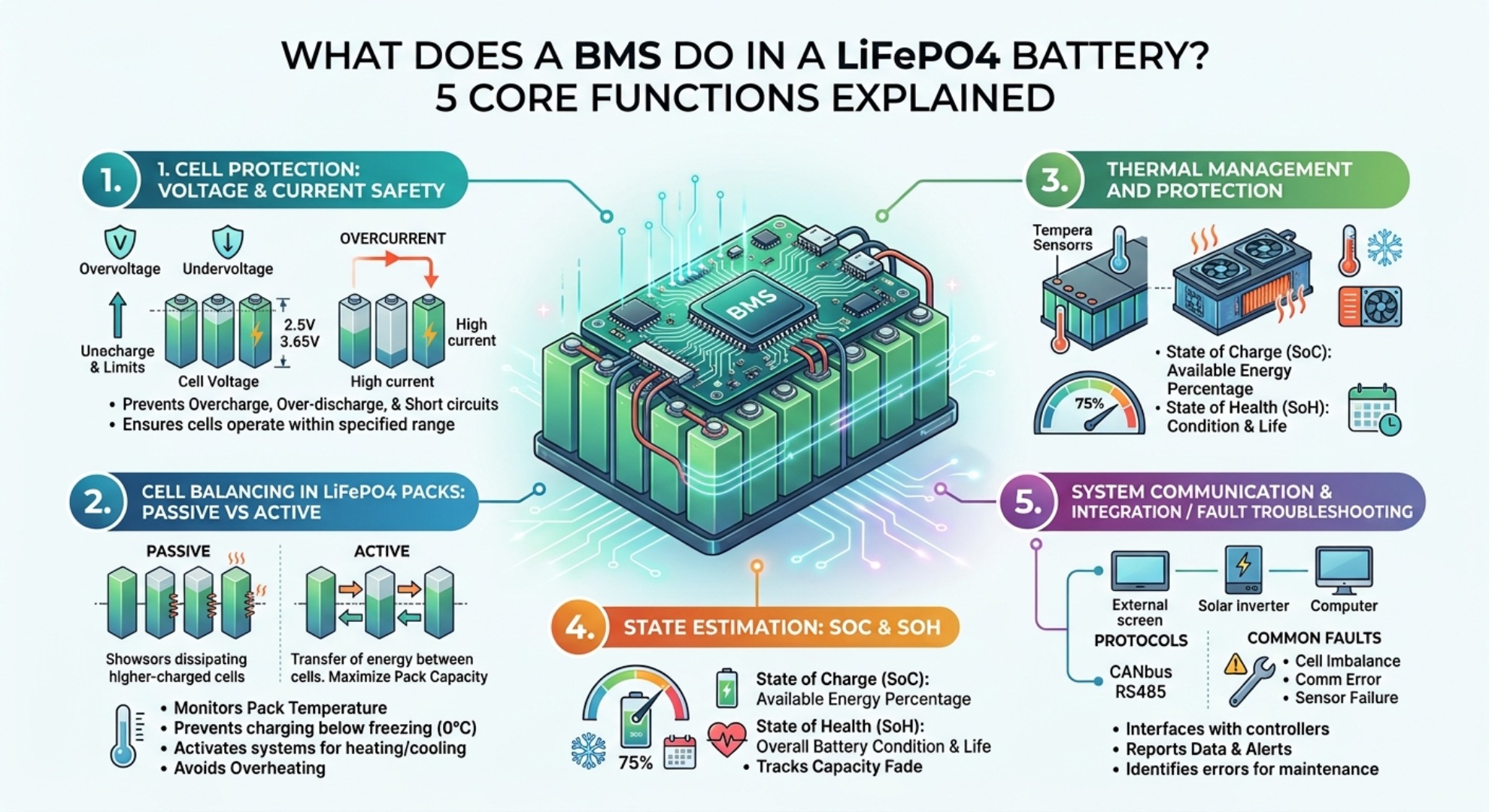
Modern residential systems rely on an integrated battery management system BMS to balance cell voltages and monitor thermal levels in real time. The BMS acts as the central brain of your storage bank, automatically limiting charging speed, cutting power during overheating, and balancing uneven cell charge levels across the battery pack to prevent single-cell overstress that speeds up degradation.
Manufacturers regularly release firmware patches to fix efficiency bugs, refine thermal protection algorithms, and add compatibility updates for new solar inverters. Skipping these updates leaves your battery running on outdated logic that cannot fully protect cell longevity or suppress SEI thickening and cathode micro-cracking. Installing manufacturer software updates ensures your BMS algorithms apply the latest efficiency protocols tailored for LiFePO4 chemistry. Schedule firmware checks every 6 months via the brand’s mobile app or local system dashboard.
6. Manage High-Wattage Loads to Reduce Battery Stress
Drawing high surge currents forces rapid discharge rates that heat internal components far faster than slow, steady power draw, generating high C-rate stress that damages LFP cell structures. Large household appliances including electric water heaters, air conditioners, ovens, and power tools create massive wattage spikes when switching on, sending sudden heavy current through battery particles and accelerating cathode micro-cracking from volumetric expansion strain.
Staggering heavy appliance usage prevents amperage spikes, protecting long-term renewable energy storage health by lowering peak discharge C-rates. Create a simple household usage schedule: run high-power devices one at a time during midday peak solar generation, and avoid stacking multiple heavy loads overnight when your battery is the sole power source. Adding small energy storage buffers or dedicated small backup batteries for surge-heavy equipment further reduces cycle aging strain on your main solar battery bank.
7. Schedule Annual Professional Solar Battery Inspections
Basic visual cleaning and setting adjustments are tasks homeowners can complete independently, but hidden internal degradation such as uneven cell voltage, rising internal resistance from SEI growth, and subtle cathode damage cannot be detected without specialized diagnostic equipment. Partnering with a certified solar technician ensures comprehensive diagnostic testing of wiring integrity, individual cell voltage balance, and gradual cell degradation caused by combined cycle and calendar aging.
Maintenance recommendations from the U.S. Department of Energy highlight that professional annual inspections identify minor electrical imbalances before they permanently damage your system. Certified technicians run capacity tests to measure true remaining battery health, check for hidden wiring corrosion inside cabinets, calibrate misaligned BMS charge limits, and spot ventilation failures that cause invisible thermal stress. Catching small faults in yearly service avoids full battery pack replacement down the line.
Maximize Solar Battery ROI with Proactive Maintenance

By applying these proactive maintenance strategies, home power producers can prolong system usability and secure dependable power backup for blackouts, off-grid living, and seasonal energy shortages. Each low-effort maintenance step delays capacity degradation triggered by both cycle wear and passive calendar aging, stretching your LiFePO4 battery’s usable service life from 6–8 years to the full 12–15 year manufacturer rating for high-quality LFP storage packs.
Consistent system monitoring guarantees reliable clean energy independence for years to come. Pair regular DIY monthly checks with yearly professional audits to lock in maximum return on your solar storage investment, reduce long-term replacement costs, and maintain consistent energy efficiency from your home solar setup. For complete technical background on LFP aging mechanisms and lifespan optimization, revisit our two core supporting articles linked earlier in this guide.
LiFePO4 Battery Cold Weather Charging: Safe Solutions
LiFePO4 Cycle Life vs Calendar Life