


How Long Does It Take to Charge a Solar Battery
How Long Does It Take to Charge a Solar Battery? Factors, Examples & What to Expect
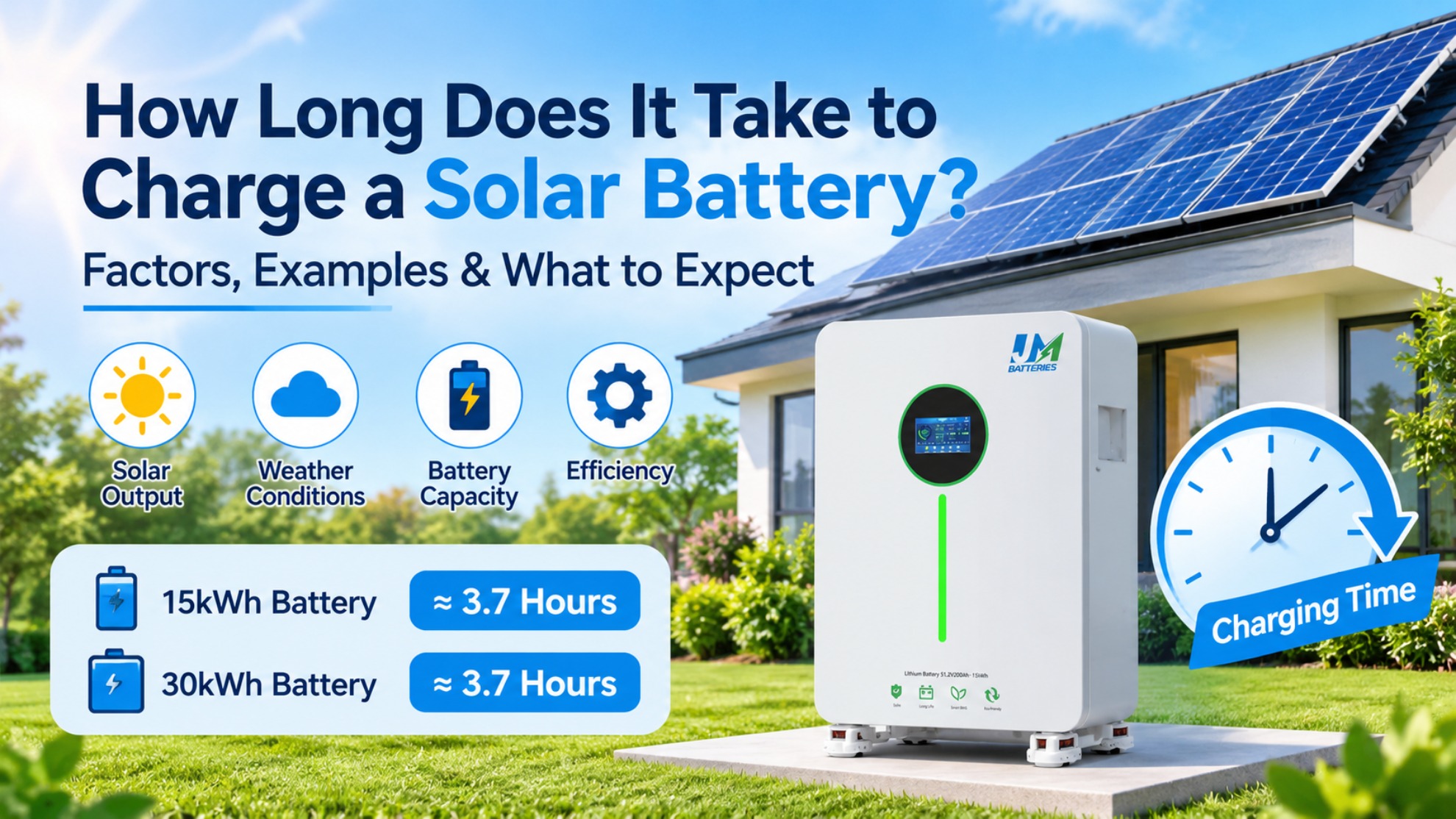
How long does it take to charge a solar battery? The answer depends on more than battery capacity. Solar panel output, weather conditions, the battery's current state of charge, inverter efficiency, and charging limits all affect the time required.
A small residential battery may recharge within a few hours under favorable conditions. Larger systems, such as 15kWh and 30kWh home batteries, need more energy and sufficient solar generation to reach full charge within the same period.
This guide explains how solar battery charging works, which factors influence charging time, and what homeowners and solar installers should consider when planning a residential energy storage system.
1. How Long Does It Take to Charge a Solar Battery?
There is no single charging time that applies to every solar battery system. A battery's capacity determines how much energy it can store, while the available charging power determines how quickly that energy can be replenished.
For example, a 5kWh battery connected to a suitable solar array may recharge much faster than a 30kWh battery connected to the same array. However, a larger solar installation can supply more charging power and shorten the charging period for a larger battery.
The starting state of charge also matters. Recharging a battery from 50% to 100% requires less energy than recharging it from 10% to 100%.
As a general planning principle, charging time depends on the relationship between:
- Battery capacity and current state of charge.
- Available solar generation.
- Power consumed by household appliances during charging.
- Inverter and charging-system efficiency.
- Maximum charging current permitted by the battery and inverter.
Actual charging time can change throughout the day because solar output is not constant. Therefore, an estimated charging time should be treated as a planning reference rather than a guaranteed result.
2. What Factors Affect Solar Battery Charging Time?
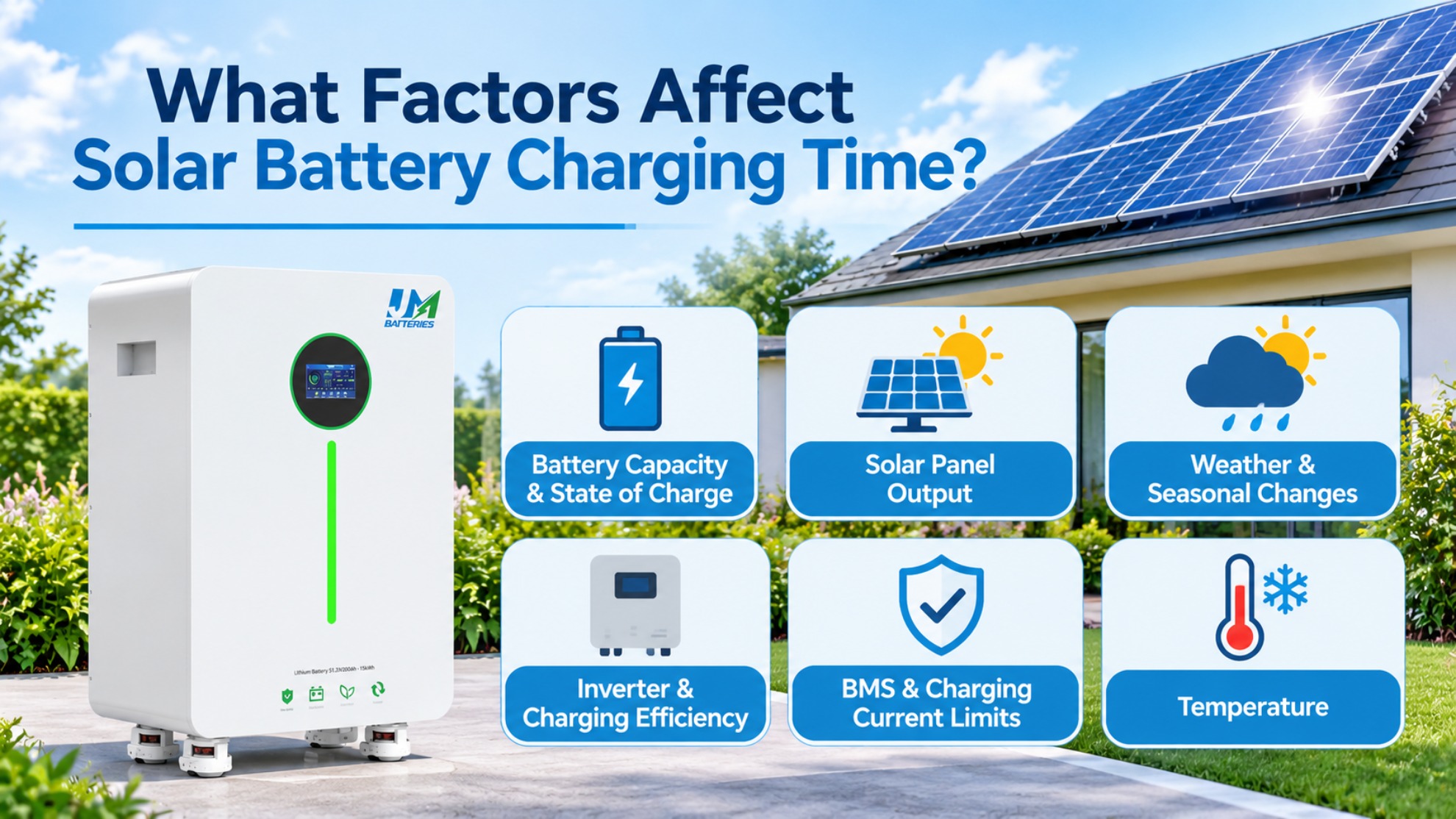
Battery Capacity and State of Charge
Battery capacity is one of the most important factors. A larger battery stores more energy and generally requires more charging energy to reach full capacity.
The starting state of charge, or SOC, determines how much energy needs to be restored. A battery that is already 70% charged will normally require less time to recharge than one starting at 20%, assuming the same charging conditions.
Solar Panel Output
The solar array's actual output directly affects charging speed. A larger solar array can generally provide more energy, but its rated capacity is not the same as the power available at every moment.
Panel orientation, shading, temperature, sunlight intensity, and system configuration all influence actual generation. The inverter or MPPT controller must also be capable of handling the available solar power.
Weather and Seasonal Conditions
Sunny weather usually provides better solar generation than cloudy conditions. On overcast days, solar panels can still produce electricity, but their output may be substantially lower.
Winter can also reduce daily solar energy production because daylight hours are shorter and the sun's position changes. In some climates, snow covering the panels can further reduce generation.
Battery temperature matters as well. Many LiFePO4 batteries restrict or stop charging when cell temperatures fall below the manufacturer's permitted charging range.
Learn more about how temperature affects battery performance and why operating conditions matter for residential energy storage.
Inverter and Charging Efficiency
Solar energy passes through the system's power electronics before it is stored in the battery. Conversion losses mean that not all available solar energy reaches the battery.
The inverter, MPPT controller, wiring, and other system components can affect the energy delivered for charging. The efficiency figure used in a calculation should therefore be treated as an assumption unless it comes from measurements of the actual system.
BMS and Charging Current Limits
The battery management system (BMS) monitors battery conditions and helps protect the cells. It may limit charging current according to cell voltage, temperature, and other operating conditions.
Even if the solar array can generate substantial power, the battery may not accept all of it. The inverter's maximum battery charging current and the battery manufacturer's permitted charging current must both be considered.
For a reliable installation, check the battery and inverter specifications rather than assuming that a larger solar array will always produce faster charging.
3. How Does Solar Battery Charging Work?
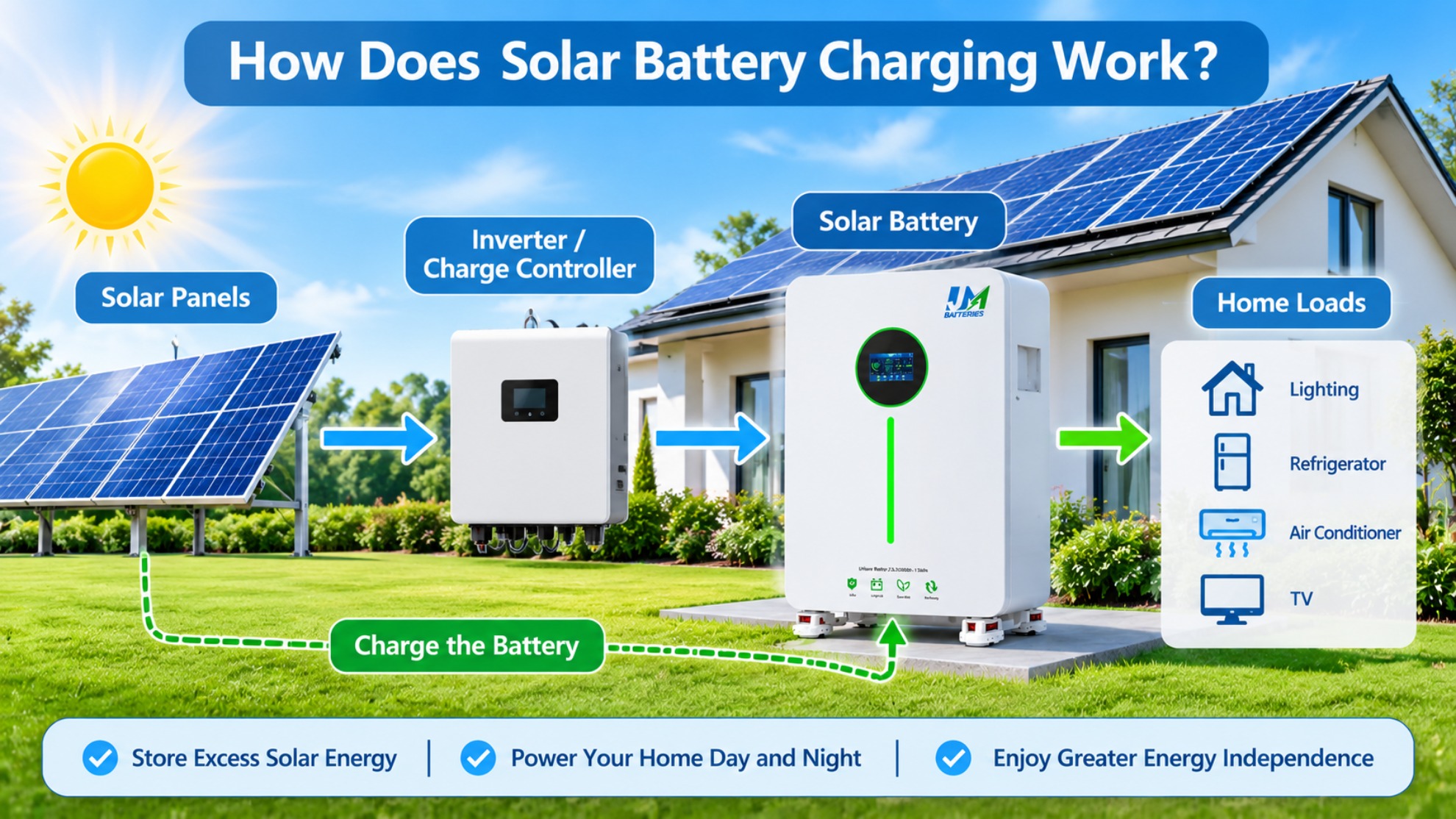
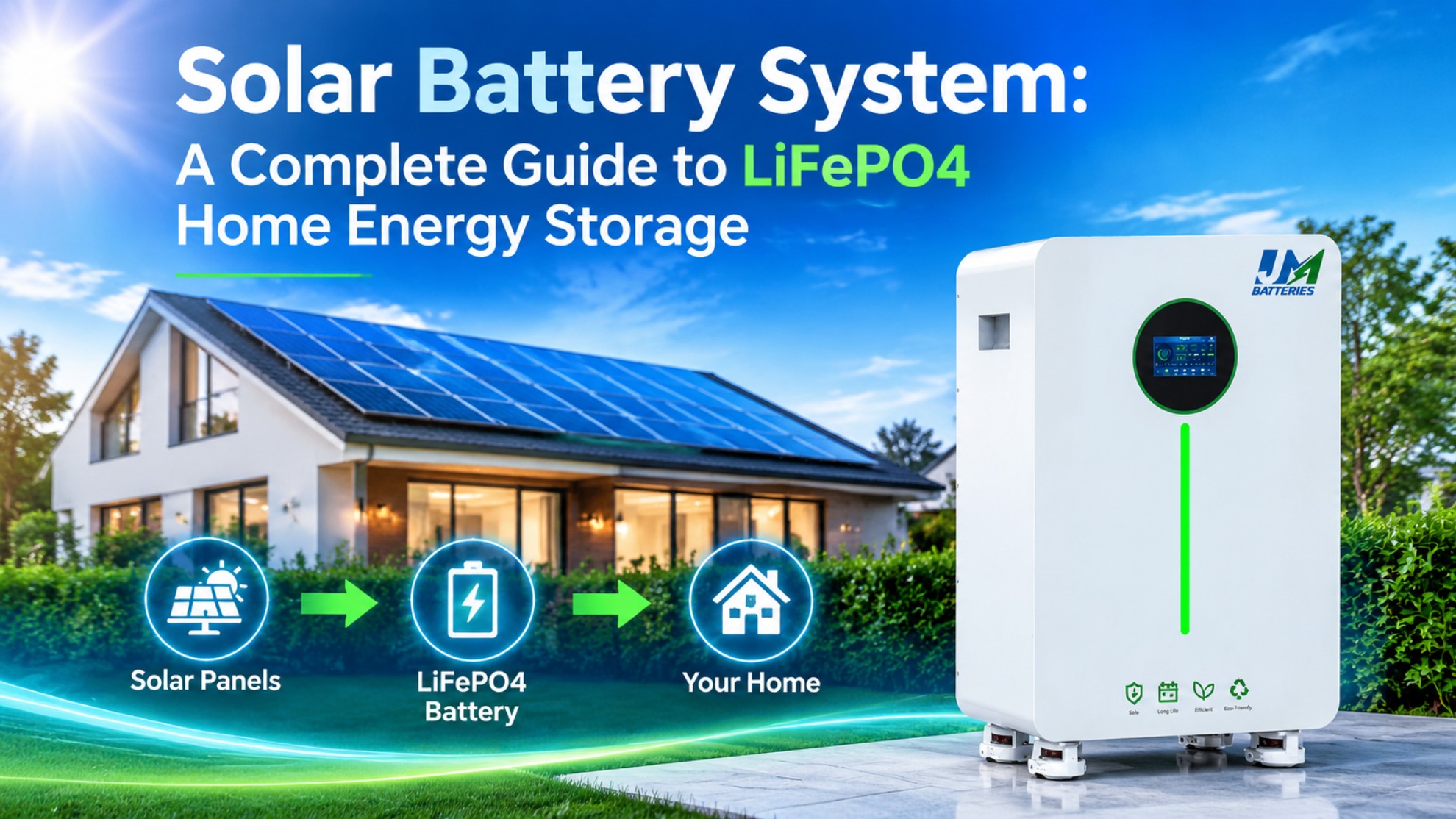
A typical residential solar battery system uses solar panels, an inverter or charge controller, a battery, and the home's electrical loads.
During daylight hours, solar panels generate DC electricity. The inverter or MPPT charging equipment manages the available energy and directs suitable power toward household consumption and battery charging.
When solar generation exceeds the electricity being used by the home, the available surplus can charge the battery. When solar generation is insufficient, the system may use stored battery energy or draw electricity from the grid, depending on its configuration.
The BMS continuously monitors battery conditions and communicates with compatible equipment where supported. It helps keep charging within the battery's permitted operating limits.
To understand the underlying process in more detail, read how lithium-ion batteries work.
Correct system configuration is important. Battery voltage, inverter charging settings, communication protocols, and current limits should all be checked before installation.
4. 15kWh vs. 30kWh Solar Battery Charging Time
Battery capacity makes a noticeable difference when planning a home solar storage system. The following examples compare two residential LiFePO4 battery configurations: a 15.36kWh system and a 30.72kWh system.
These are simplified planning examples, not actual JM Energy Tech laboratory measurements or guaranteed charging times.
Example 1: 5kWh Battery with a 2kW Solar Array
Battery capacity: 5kWh
Starting SOC: 20%
Solar array rating: 2kW
Assumed effective charging power: 1.2kW
Assumed charging efficiency: 95%
Estimated effective charging time: Approximately 3.5 hours
This example assumes that the system can maintain the stated effective charging power during the charging period. In practice, changing sunlight and household electricity use may extend the time required.
Example 2: 15kWh LiFePO4 Battery with a 5kW Solar Array
A 51.2V 300Ah LiFePO4 battery has a nominal capacity of 15kWh. It is a common capacity range for residential solar energy storage applications.
Battery capacity: 15kWh
Starting SOC: 20%
Solar array rating: 5kW
Assumed effective charging power: 3.5kW
Assumed charging efficiency: 95%
Estimated effective charging time: Approximately 3.7 hours
This estimate assumes sufficient solar generation and a charging system capable of delivering the stated power. The actual result depends on the battery's permitted charging current, inverter settings, household loads, and weather conditions.
Example 3: 30kWh LiFePO4 Battery with a 10kW Solar Array
A 51.2V 600Ah battery has a nominal capacity of 30kWh. Compared with a 15kWh system, it provides approximately twice the nominal energy storage capacity.
Battery capacity: 30kWh
Starting SOC: 20%
Solar array rating: 10kW
Assumed effective charging power: 7kW
Assumed charging efficiency: 95%
Estimated effective charging time: Approximately 3.7 hours
The larger solar array supplies more charging power, which is why the estimated charging time is similar to the 15.36kWh example. The battery and inverter must both support the required charging rate.
Example 4: Charging a 15kWh Battery on a Cloudy Day
Weather can significantly change the charging result. Consider the same 15kWh battery, but with lower available solar generation due to cloudy conditions.
Battery capacity: 15kWh
Starting SOC: 20%
Assumed effective charging power: 1.2kW
Assumed charging efficiency: 95%
Estimated effective charging time: Approximately 10.8 hours
This example illustrates why a battery that charges quickly on a sunny day may take much longer when solar generation is limited.
5. How to Make a Solar Battery Charge Faster
If your solar battery takes longer to charge than expected, review the entire system rather than focusing only on the battery.
Use an Adequately Sized Solar Array
Make sure the solar array can provide enough energy for both household consumption and battery charging. A system designed only around daytime appliance loads may not have sufficient surplus power to recharge a large battery quickly.
Reduce Unnecessary Daytime Loads
Household appliances consume part of the solar energy that could otherwise charge the battery. Running high-power appliances at different times may leave more available solar power for charging.
Check Inverter and Battery Charging Limits
Confirm that the inverter and battery support the intended charging current. A mismatch between equipment limits can prevent the system from using all available solar power.
Keep Solar Panels Clear of Shade and Dirt
Dust, leaves, snow, and shading can reduce panel output. Regular inspection and appropriate maintenance help the solar array operate as expected.
Follow Battery Temperature Requirements
Charging outside the manufacturer's permitted temperature range can trigger BMS protection or reduce charging performance. Always follow the battery datasheet and installation instructions.
6. How to Choose the Right Solar Battery and Solar Panel System
Choosing a solar battery involves more than selecting the largest capacity available. The battery, solar array, inverter, and household energy requirements should be considered together.
Match Battery Capacity to Household Energy Use
Start by reviewing daily electricity consumption and identifying which appliances need backup power. A household that only needs to support essential loads may require a smaller battery than one seeking to operate multiple high-power appliances during an outage.
Check Voltage and Inverter Compatibility
Battery voltage, charging current, communication protocols, and inverter configuration must be compatible. A communication port alone does not guarantee that two products will work together.
Before purchasing, review battery and inverter compatibility, including the exact inverter model and supported communication settings.
Review Battery Protection and Safety Features
Look for a suitable BMS, temperature protection, overcharge protection, and clear installation requirements. System-level safety also depends on correct wiring, suitable protective devices, and professional installation.
For more information, see this guide to home energy storage battery safety.
Consider Long-Term Battery Performance
Cycle life, depth of discharge, operating temperature, and charging conditions all influence long-term performance. Compare product specifications under clearly stated test conditions instead of relying on cycle-count claims alone.
You can also learn more about LiFePO4 battery degradation and the factors that influence battery capacity over time.
Work with a Reliable Battery Manufacturer
For installers, distributors, and solar equipment wholesalers, supplier selection is also important. Consider product documentation, cell quality, BMS configuration, communication support, customization options, warranty terms, and technical assistance.
LiFePO4 batteries are widely used in residential solar storage because of their stable chemistry and suitability for repeated charge and discharge cycles. To explore their characteristics in more detail, read about the advantages of lithium solar batteries.
JM Energy Tech focuses on residential LiFePO4 energy storage solutions, including 51.2V battery configurations for home solar applications. When evaluating a system, confirm the specific model's capacity, charging limits, BMS functions, inverter compatibility, and warranty documentation.
7. FAQs
1. How long does it take to charge a solar battery?
Charging time depends on battery capacity, current state of charge, solar panel output, weather conditions, and system efficiency. A small home battery may recharge within a few hours under favorable conditions, while larger 15kWh or 30kWh systems may require more solar input and a longer charging period.
2. How many solar panels are needed to charge a solar battery?
The number of solar panels depends on their individual wattage, total battery capacity, daily energy consumption, and available sunlight. A larger battery generally requires a larger solar array if you want to recharge it within the same period.
3. Can solar panels charge a battery on a cloudy day?
Yes. Solar panels can still generate electricity in cloudy weather, but their output is usually lower than on a sunny day. As a result, charging a solar battery may take significantly longer, especially when sunlight is limited.
4. Does a larger solar battery take longer to charge?
Generally, yes. If two batteries receive the same charging power and start at the same state of charge, the battery with greater capacity will usually take longer to recharge. However, a larger solar array and a higher permitted charging current can reduce the difference.
5. How long does it take to charge a 15kWh solar battery?
A 15.36kWh LiFePO4 battery may take approximately 3.7 hours of effective charging time under the simplified example conditions in this article. This estimate assumes a 20% starting state of charge, 3.5kW of effective solar charging power, and 95% assumed charging efficiency. Actual elapsed time depends on changing solar output, household loads, equipment limits, and battery charging behavior.
6. How long does it take to charge a 30kWh solar battery?
A 30.72kWh battery may also take approximately 3.7 hours of effective charging time in the example, provided it receives around 7kW of effective charging power under the same simplified assumptions. A larger solar array is needed to achieve this charging rate, and the actual time may vary.
7. Does cold weather affect solar battery charging time?
Yes. Low temperatures can affect battery charging performance. Many LiFePO4 batteries restrict or stop charging when cell temperatures fall below the manufacturer's permitted charging range. Always check the battery datasheet and BMS temperature protection settings before charging in cold conditions.
8. How can I make my solar battery charge faster?
You can improve charging performance by ensuring the solar array provides sufficient power, selecting a compatible inverter and MPPT controller, checking battery charging-current limits, reducing unnecessary daytime loads, and keeping panels clear of shade and dirt. The battery's BMS and temperature limits must always be respected.
8. Conclusion
The time required to charge a solar battery depends on the complete energy storage system, not just the battery's capacity. Solar panel output, weather, starting SOC, inverter efficiency, charging-current limits, and battery temperature all influence the result.
For homeowners, the best approach is to match battery capacity with daily energy needs and available solar generation. For installers and distributors, checking the battery's technical specifications and inverter compatibility is essential before recommending a system.
A properly matched solar battery system can make better use of available solar energy and provide more dependable residential energy storage.

JM New Energy Technology



Home Energy Storage System: Costs, Savings & ROI
Home Battery Storage: Costs, Benefits & How to Choose a System