


Lithium Solar Batteries: Types, Benefits, Lifespan and How to Choose
Lithium Solar Batteries: Types, Lifespan and How to Choose
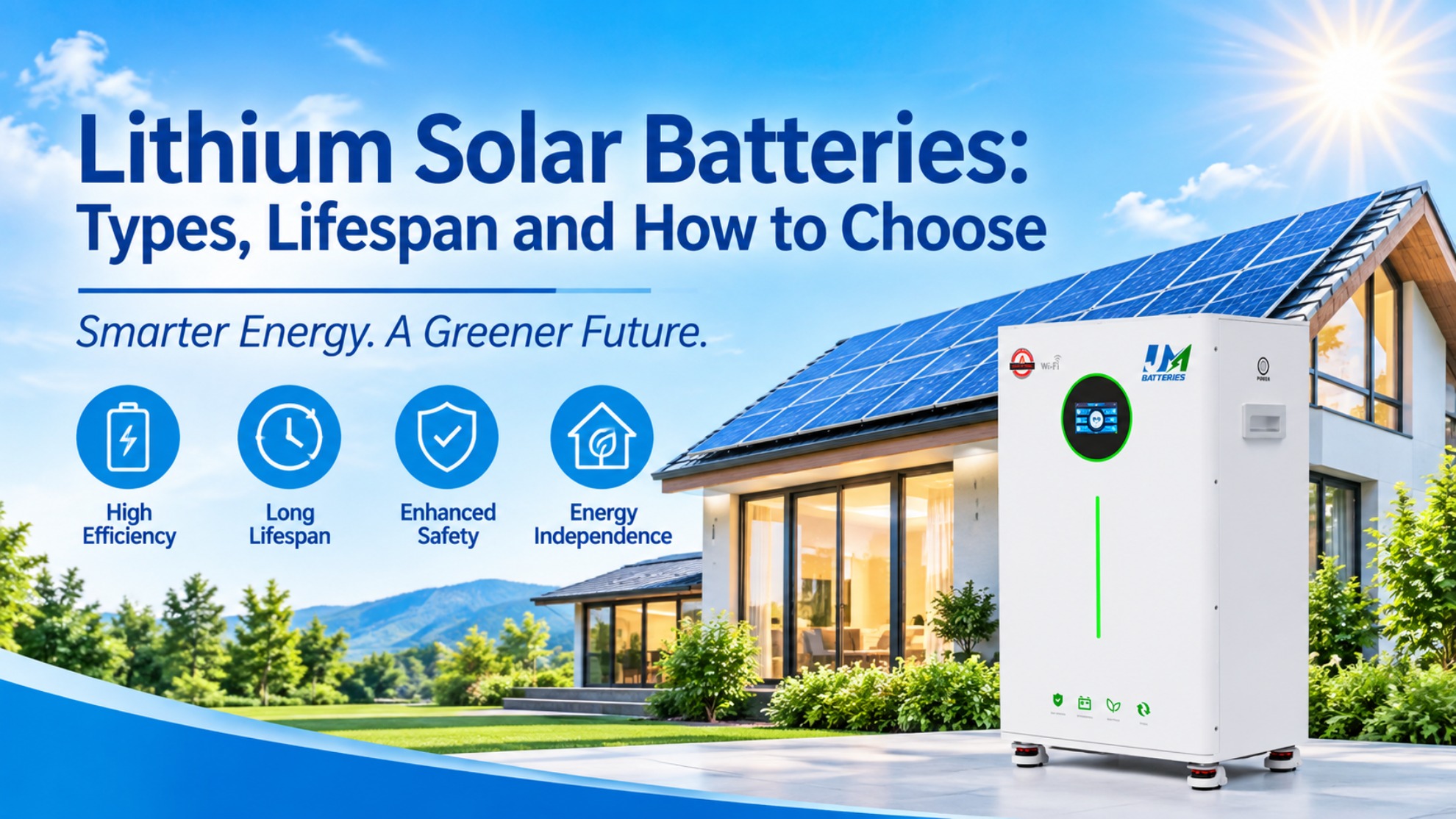
Lithium solar batteries store electricity generated by solar panels for use when sunlight is unavailable. They are widely used in residential energy storage because they offer high usable capacity, efficient charging, and relatively long service life. However, choosing the right battery involves more than comparing capacity or price. Chemistry, voltage, inverter compatibility, safety, and operating conditions all matter.
This guide explains the main types of lithium solar batteries, their benefits, expected lifespan, and what to check before buying one.
Table of Contents
- What Are Lithium Solar Batteries?
- Types of Lithium Solar Batteries
- Benefits and Limitations of Lithium Solar Batteries
- How Long Do Lithium Solar Batteries Last?
- How Much Battery Capacity Do You Need?
- Battery Voltage and Inverter Compatibility
- BMS and Battery Safety
- What Affects Lithium Solar Battery Performance?
- How to Choose the Right Lithium Solar Battery
- FAQ
- Conclusion
1. What Are Lithium Solar Batteries?
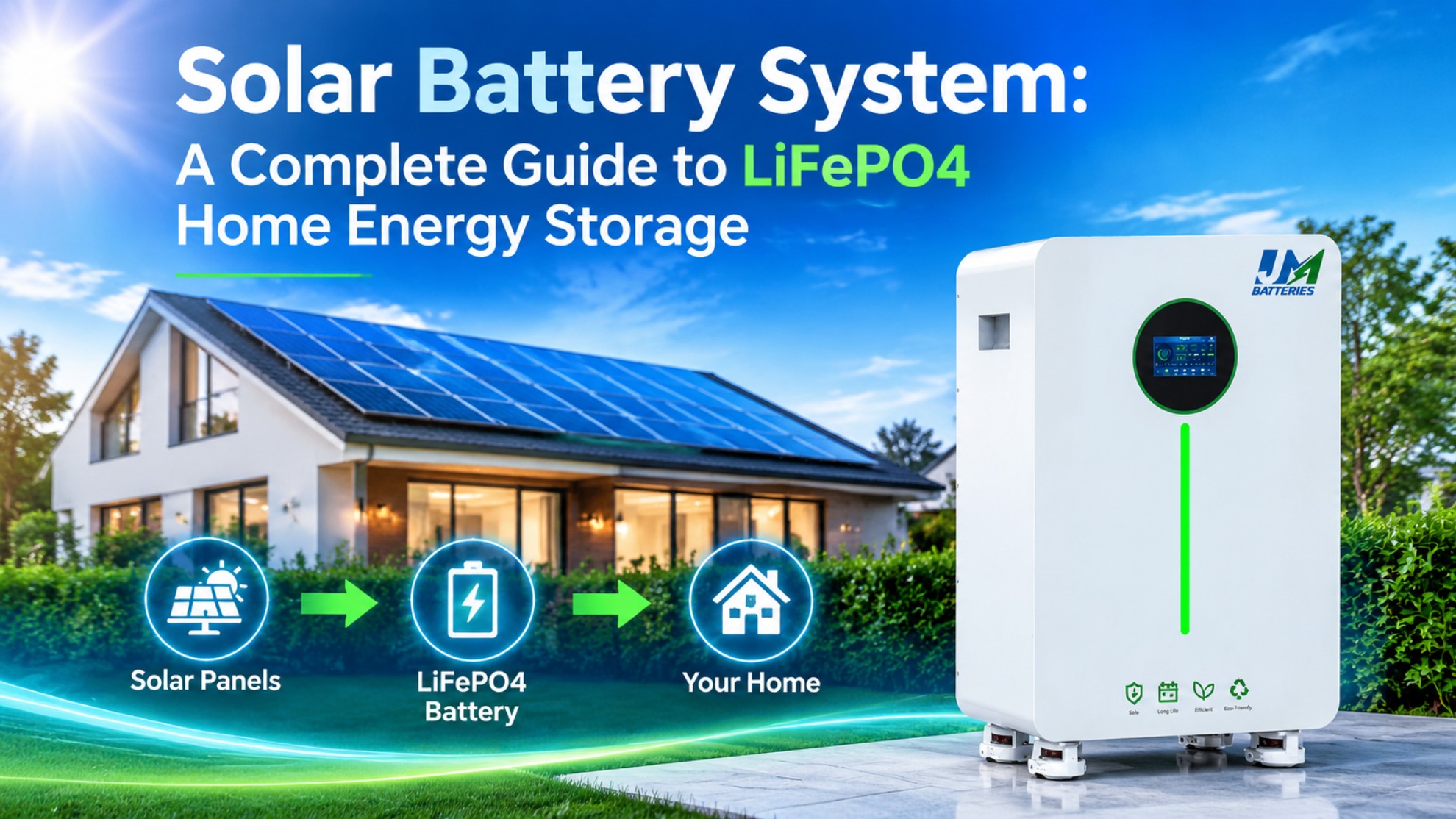
Lithium solar batteries store electrical energy through reversible chemical reactions. During the day, solar panels generate electricity that can power household appliances, charge the battery, or feed energy into the grid, depending on the system configuration.
When solar production falls, the stored energy can supply household loads. To understand the basic process, see our guide to how batteries work.
A typical residential solar storage system includes:
- Solar panels
- A solar or hybrid inverter
- A lithium battery
- A battery management system (BMS)
- Protection devices and electrical connections
The battery stores energy, while the inverter manages power conversion and system operation.
2. Types of Lithium Solar Batteries
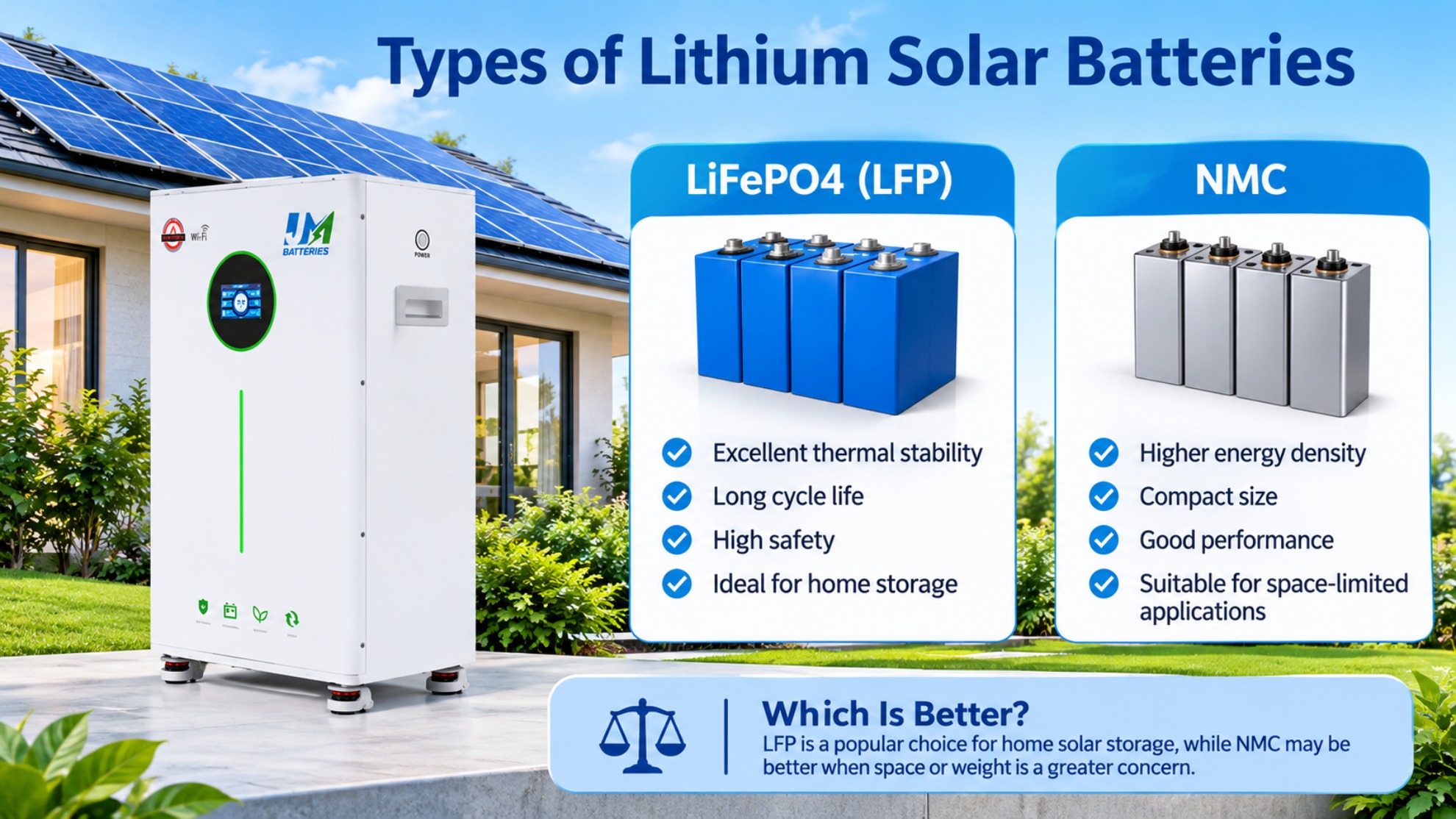
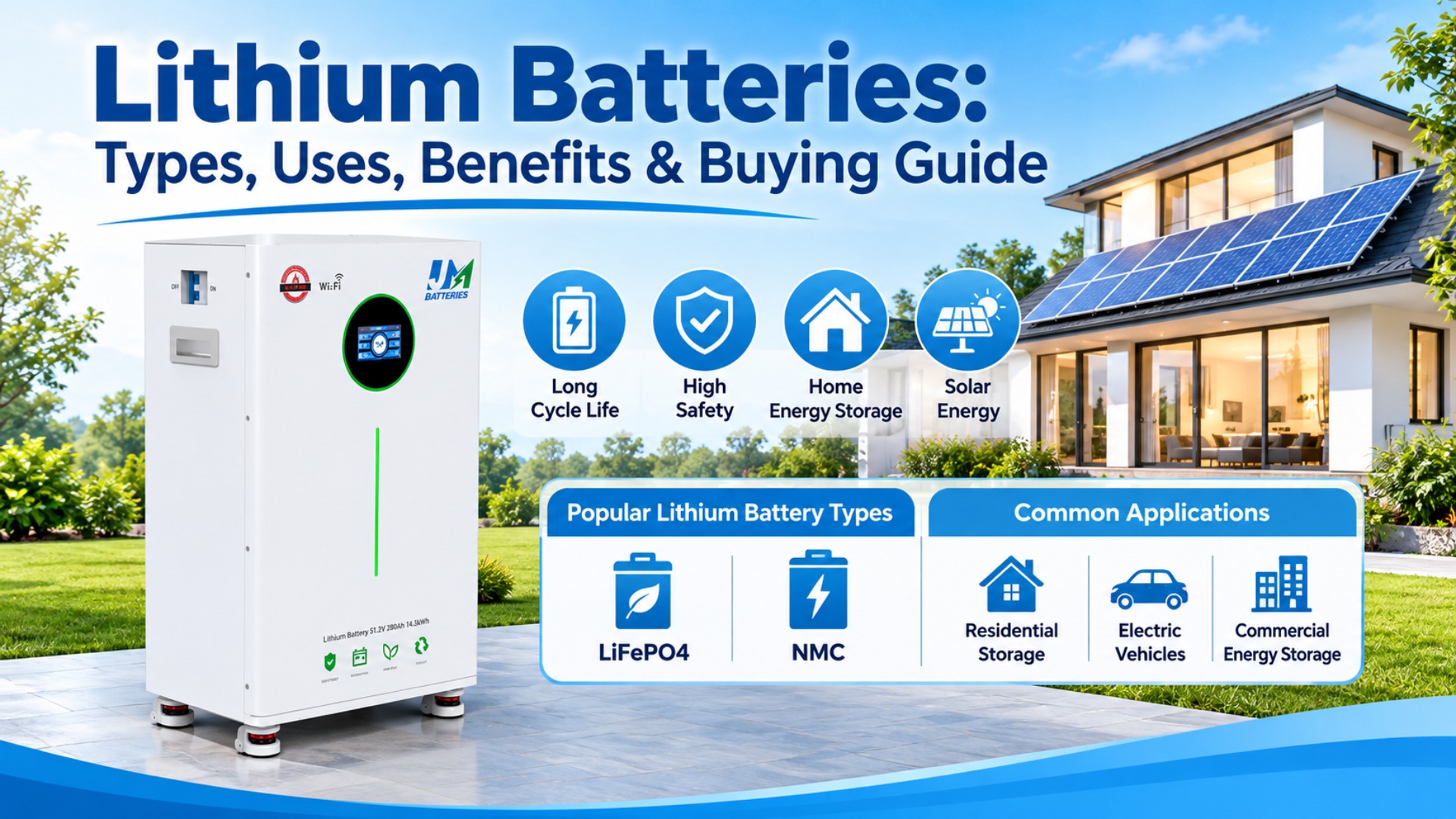
Not all lithium batteries use the same chemistry. The two common types in solar energy storage are lithium iron phosphate (LFP) and nickel manganese cobalt (NMC).
LiFePO4 Batteries
LiFePO4, also called LFP, is widely used in stationary energy storage. It offers good thermal stability and strong cycle-life potential. These characteristics make it suitable for systems that charge and discharge regularly.
Many residential LFP batteries use a nominal voltage of 51.2V, typically based on 16 cells connected in series.
NMC Batteries
NMC batteries use nickel, manganese, and cobalt in their cathode material. They generally provide higher energy density than LFP, making them useful where compact size and weight are important.
However, energy density is only one selection factor. Thermal management, system design, operating conditions, and product specifications also affect suitability.
LFP vs. NMC: Which Is Better?
For many home storage applications, LFP is a practical choice because of its thermal stability and cycle-life potential. NMC may be appropriate when space or weight is a greater concern.
Neither chemistry is automatically the best option for every project. Compare verified product specifications and intended operating conditions before making a decision.
3. Benefits and Limitations of Lithium Solar Batteries
Lithium solar batteries offer several advantages for residential energy storage:
- High usable capacity: Many lithium batteries support a relatively high depth of discharge.
- Efficient operation: They generally have good charge and discharge efficiency.
- Long cycle-life potential: Properly designed batteries can support repeated daily cycling.
- Low routine maintenance: They do not require the same maintenance procedures as conventional flooded lead-acid batteries.
- Flexible system design: Different capacities and configurations can support different household requirements.
There are also limitations. Lithium batteries usually have a higher initial purchase cost than basic lead-acid alternatives. They require compatible charging equipment, appropriate BMS protection, and installation within specified temperature and electrical limits.
For more detail, read our article on the advantages of lithium solar batteries.
4. How Long Do Lithium Solar Batteries Last?
Lithium solar batteries commonly serve residential systems for around 10–15 years, but actual lifespan depends on chemistry, temperature, charge and discharge rates, depth of discharge, and operating conditions.
Cycle-life figures should not be compared without checking their test conditions. A rating of 8,000 cycles, for example, is meaningful only when the depth of discharge, temperature, charging rate, and end-of-life capacity threshold are also stated.
Battery capacity gradually declines with use and age. This process is known as degradation. Our guide to LiFePO4 battery degradation explains the factors that influence long-term performance.
A long warranty can provide additional protection, but buyers should read its capacity-retention requirements, exclusions, and operating conditions.
5. How Much Battery Capacity Do You Need?
The right battery size depends on how much electricity you need to store and how long you want to operate essential appliances without solar generation or grid power.
Start by identifying the loads that must remain available, such as:
- Refrigerators
- Lighting
- Internet equipment
- Fans
- Essential household electronics
Then estimate their daily energy consumption and consider the battery's usable capacity.
For example, a 15kWh battery operated at 80% depth of discharge provides approximately 12kWh of nominal usable battery energy before inverter and auxiliary losses. The actual energy delivered to household appliances will be lower.
Do not confuse battery capacity with output power. Capacity, measured in kWh, describes stored energy. Power, measured in kW, describes how much electricity the system can deliver at a given moment.
6. Battery Voltage and Inverter Compatibility
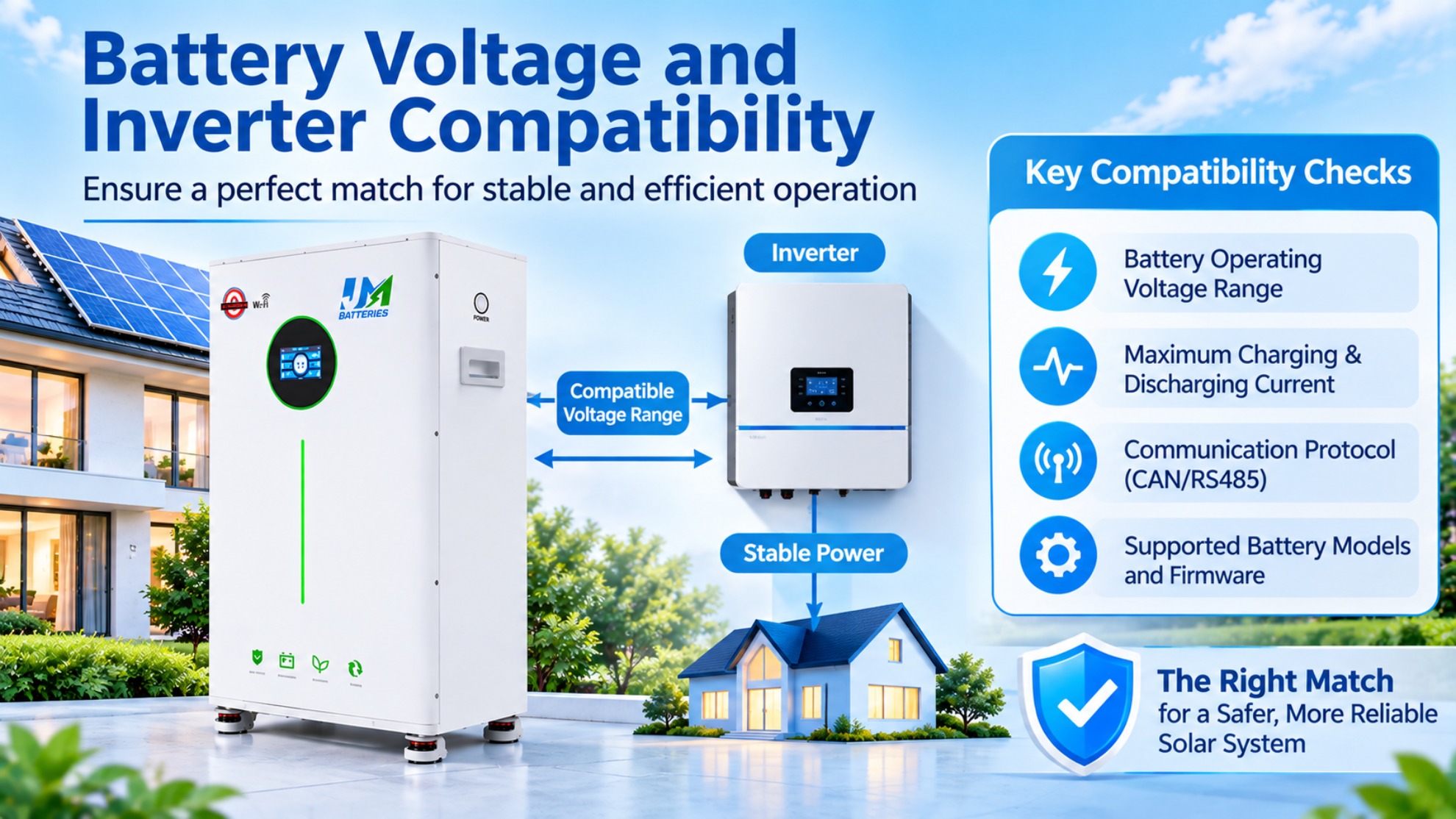
A battery must operate within the inverter's supported voltage and current range. Residential systems commonly use low-voltage batteries, including 51.2V LFP models, while some systems use high-voltage battery configurations.
Compatibility involves more than matching the voltage label. Check:
- Battery operating voltage range
- Maximum charging and discharging current
- Communication protocol
- CAN or RS485 wiring and pinout
- Supported battery models and firmware
A communication port does not guarantee compatibility. Always confirm the exact battery and inverter models against the manufacturers' documentation.
See our guide to battery and inverter compatibility before connecting a system.
7. BMS and Battery Safety
A battery management system monitors important operating parameters and helps protect the battery. Depending on its design, the BMS may provide protection against overvoltage, undervoltage, overcurrent, short circuits, and abnormal temperatures.
However, a BMS cannot replace correct system design or installation. Safe operation also depends on cell quality, wiring, electrical protection, enclosure design, inverter settings, and installation conditions.
Buyers should review relevant test reports and certifications. For example, UN38.3 relates to lithium battery transport testing, while IEC 62619 addresses safety requirements for industrial secondary lithium cells and batteries. Different standards have different scopes and should not be treated as interchangeable.
For additional guidance, read our article on home energy storage battery safety.
8. What Affects Lithium Solar Battery Performance?
Several factors influence how a battery performs over time.
Temperature: High temperatures can accelerate battery aging. Low temperatures can restrict charging, particularly for LFP batteries. Follow the manufacturer's permitted charging and discharging temperature limits.
Depth of discharge: Regularly using a greater proportion of battery capacity can affect cycle life. The recommended operating range depends on the battery design.
Charge and discharge rates: Operating beyond specified current limits can cause excessive heating and trigger protection.
Installation conditions: Ventilation, moisture protection, cable sizing, and electrical connections all influence system reliability.
Learn more about how temperature affects battery performance.
9. How to Choose the Right Lithium Solar Battery
Before purchasing a lithium solar battery, consider these points:
- Capacity: Match usable energy to your household's backup requirements.
- Chemistry: Compare LFP and NMC based on application, safety requirements, and operating conditions.
- Voltage: Confirm that the battery's voltage range matches the inverter.
- Power rating: Check continuous and peak discharge current against household loads.
- BMS and communication: Verify protection functions and inverter communication support.
- Warranty: Read the coverage period, capacity-retention terms, and exclusions.
- Manufacturer support: Review technical documentation, installation guidance, and after-sales service.
For installers, distributors, and wholesalers, it is also important to evaluate production consistency, quality-control procedures, customization capabilities, and the availability of technical support.
10. FAQ
How long do lithium solar batteries last?
Many residential lithium solar batteries are designed for approximately 10–15 years of service. Actual lifespan depends on temperature, usage, chemistry, and operating conditions.
Are lithium solar batteries better than lead-acid batteries?
Lithium batteries generally offer higher usable capacity, better efficiency, and longer cycle-life potential. Lead-acid batteries may still suit projects with lower upfront budgets.
Can lithium solar batteries work with any inverter?
No. Voltage range, current limits, communication protocols, wiring, and firmware must be compatible. Check the exact models before installation.
Can lithium solar batteries be connected in parallel?
Some models support parallel operation, but only under manufacturer-approved conditions. Check model compatibility, BMS settings, wiring, and connection limits.
Can lithium solar batteries be installed outdoors?
Some batteries are designed for outdoor use, while others are intended for indoor installation. Check the IP rating, temperature limits, enclosure requirements, and installation manual.
Conclusion
Lithium solar batteries can provide reliable energy storage for homes when the battery chemistry, capacity, inverter, and installation are properly matched. LFP is a popular option for residential storage, but the right choice depends on actual energy needs and product specifications.
Before purchasing, compare usable capacity, power ratings, BMS functions, compatibility, warranty terms, and manufacturer support. A well-matched system is more important than choosing a battery based on capacity or price alone.
LiFePO4 Batteries for Solar Energy Storage: Benefits, Applications & How to Choose
How to Choose the Best Home Battery Backup System