


LFP Battery Winter Performance: Cold Weather Case Study
LFP Battery Winter Performance: Cold Weather Case Study
Lithium iron phosphate batteries keep popping up in more places—stationary storage, commercial fleets, residential backup—and a lot of those systems now spend part of the year below freezing. LFP earns its popularity with solid thermal safety and long cycle life, but an unheated pack still takes a hit when the temperature drops. Field tests consistently put sub-zero battery capacity loss at 15% to 30% under normal winter driving or discharge loads. The National Renewable Energy Laboratory has made the same point more than once: thermal management is what keeps an LFP pack performing through winter instead of just surviving it.
How Cold Weather Degrades LFP Battery Performance
Electrochemical Causes of Low-Temp Capacity Loss
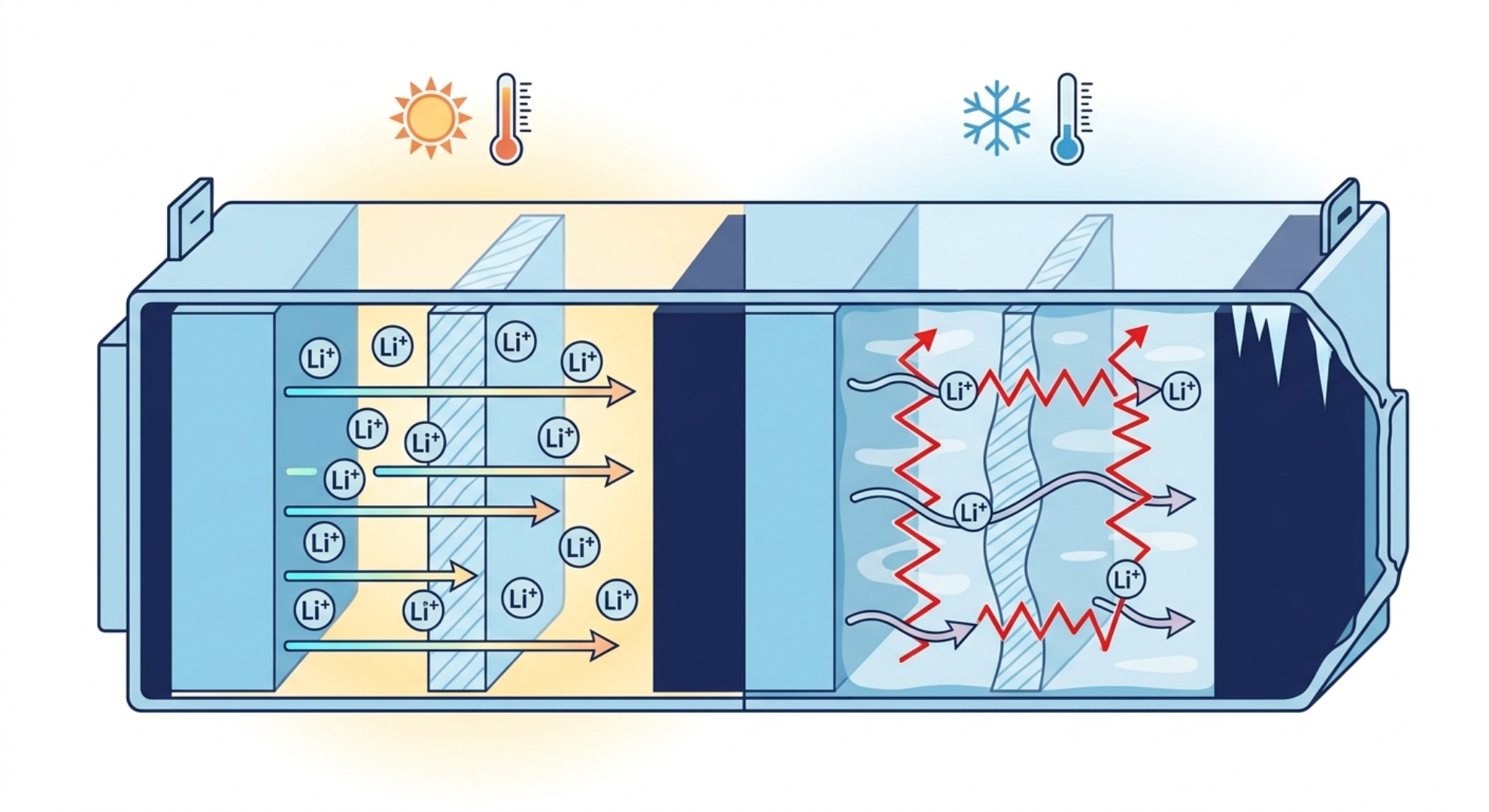
Inside each cell, cold weather slows the chemistry down. The electrolyte gets thicker as temperatures fall, and that directly raises internal resistance in low temperature batteries. Pull a pack from 25°C down to -20°C, and the viscous electrolyte makes it far harder for lithium ions to cross the SEI layer. Diffusion through the graphite anode can fall by as much as two orders of magnitude. The energy is still there—the cell just can't move it fast enough, so voltage drops sharply the moment you draw current.
Charging vs Discharging in Sub-Zero Conditions
Discharging an LFP cell in freezing weather is generally safe, just less efficient. Charging is where the damage happens. Push high current into a cold cell without preheating and you get lithium plating at freezing temperatures—metallic lithium builds up on the anode surface instead of intercalating into the graphite. The safe cold weather charging threshold is simple: stay above 0°C, or if you must charge below freezing, cap the rate at 0.05C to 0.1C. A decent battery management system handles this automatically, reading internal temperatures and locking out fast charging until cells are back in a safe zone.
Winter Case Study: LFP Capacity Retention at -20°C
Range Loss and Voltage Sag in Extreme Cold
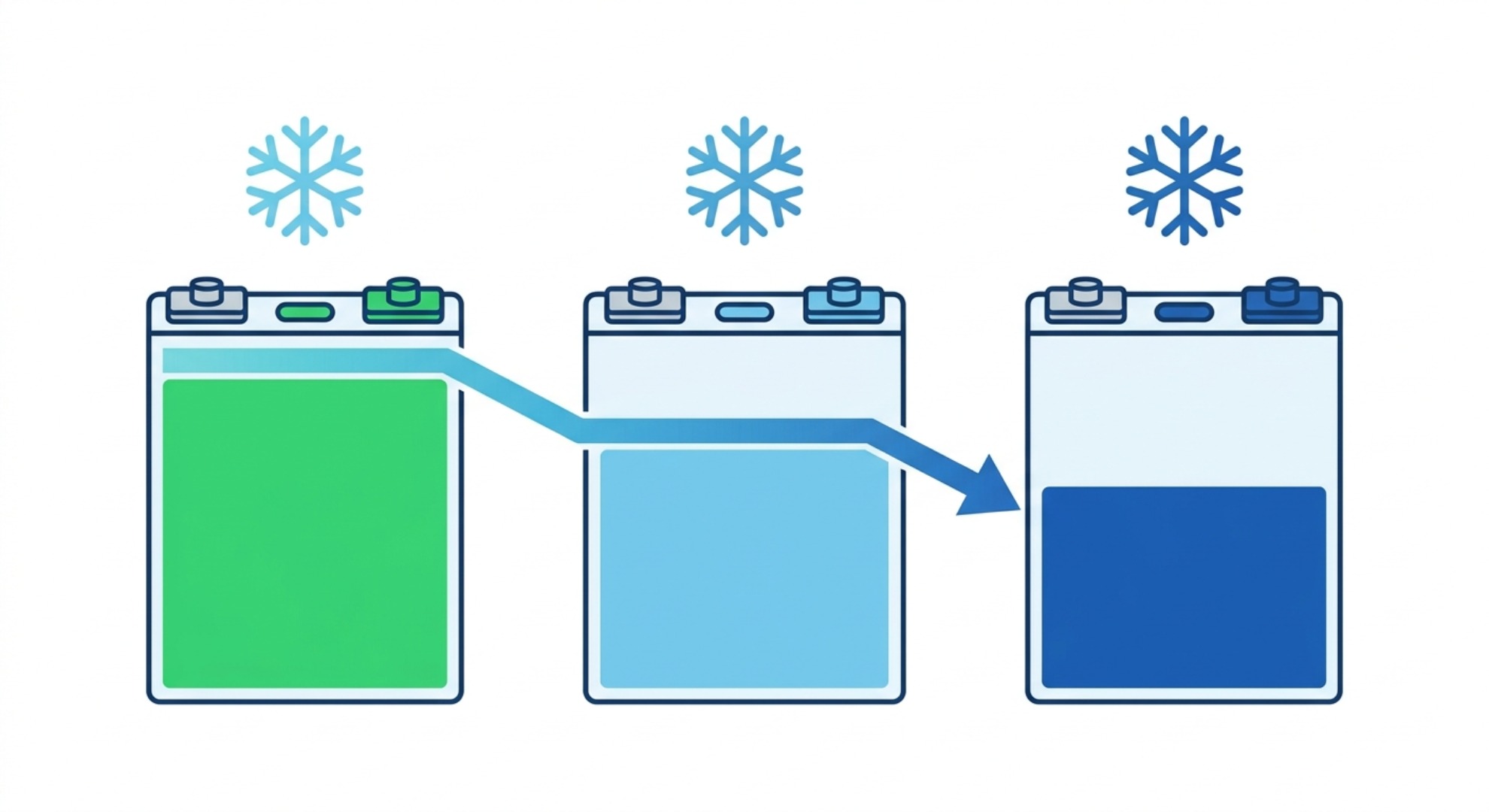
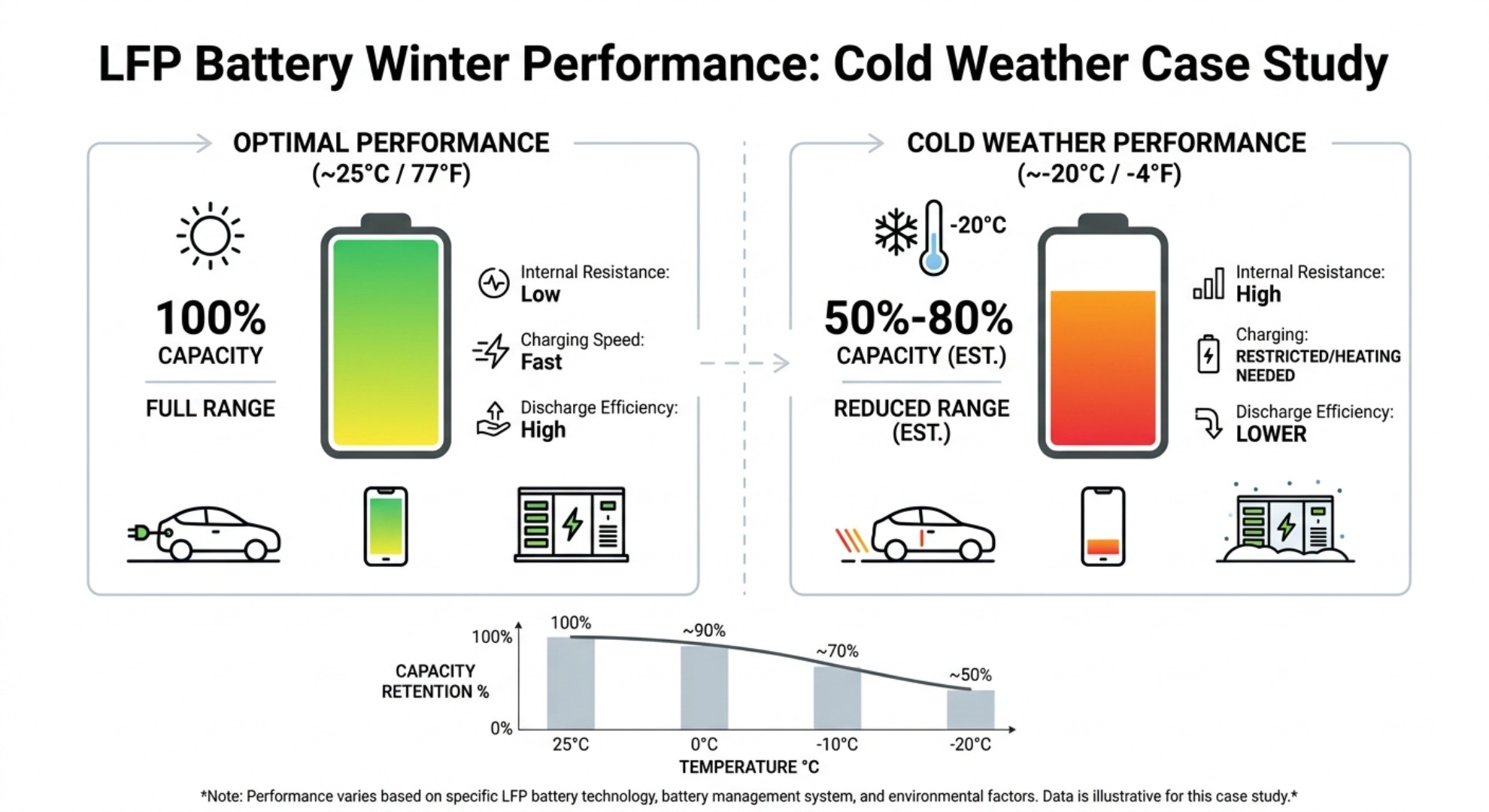
Fleet and stationary storage data shows clear performance tiers as the temperature falls. At 0°C, most packs retain 88% to 95% of nominal capacity. Drop to -20°C and the decline steepens—unheated cells typically deliver 65% to 80% of rated capacity, depending on discharge rate. There's a catch beyond lost range: under heavy load, voltage can sag so fast that the system registers an empty state of charge and cuts out, even though the cells still hold chemical energy. If these unexpected cutoffs throw BMS faults, our BMS reset and troubleshooting guide walks through the common recovery steps.
| Temperature | Capacity Retention | Primary Risk |
|---|---|---|
| 25°C (77°F) | 100% | Optimal Operation |
| 0°C (32°F) | 88% - 95% | Increased Resistance |
| -20°C (-4°F) | 65% - 80% | Voltage Sag / Plating |
Preventing Lithium Plating and Thermal Runaway
Temporary range loss is the visible problem. Repeated unconditioned cold-weather charging is the one that does lasting harm. Studies indexed in IEEE Xplore show that dendrite growth from plating can eventually pierce the separator, and that's when thermal runaway risk in cold conditions becomes serious. For dendrite growth prevention, the protocol has to restrict incoming current until the electrolyte is warm and fluid. Lab tests also confirm that flammable gas builds up faster in cells stressed by repeated sub-zero charging, pushing the thermal stability threshold down by more than 10°C.
Engineering Solutions for Cold-Climate LFP Batteries
Battery Thermal Management and Preheating
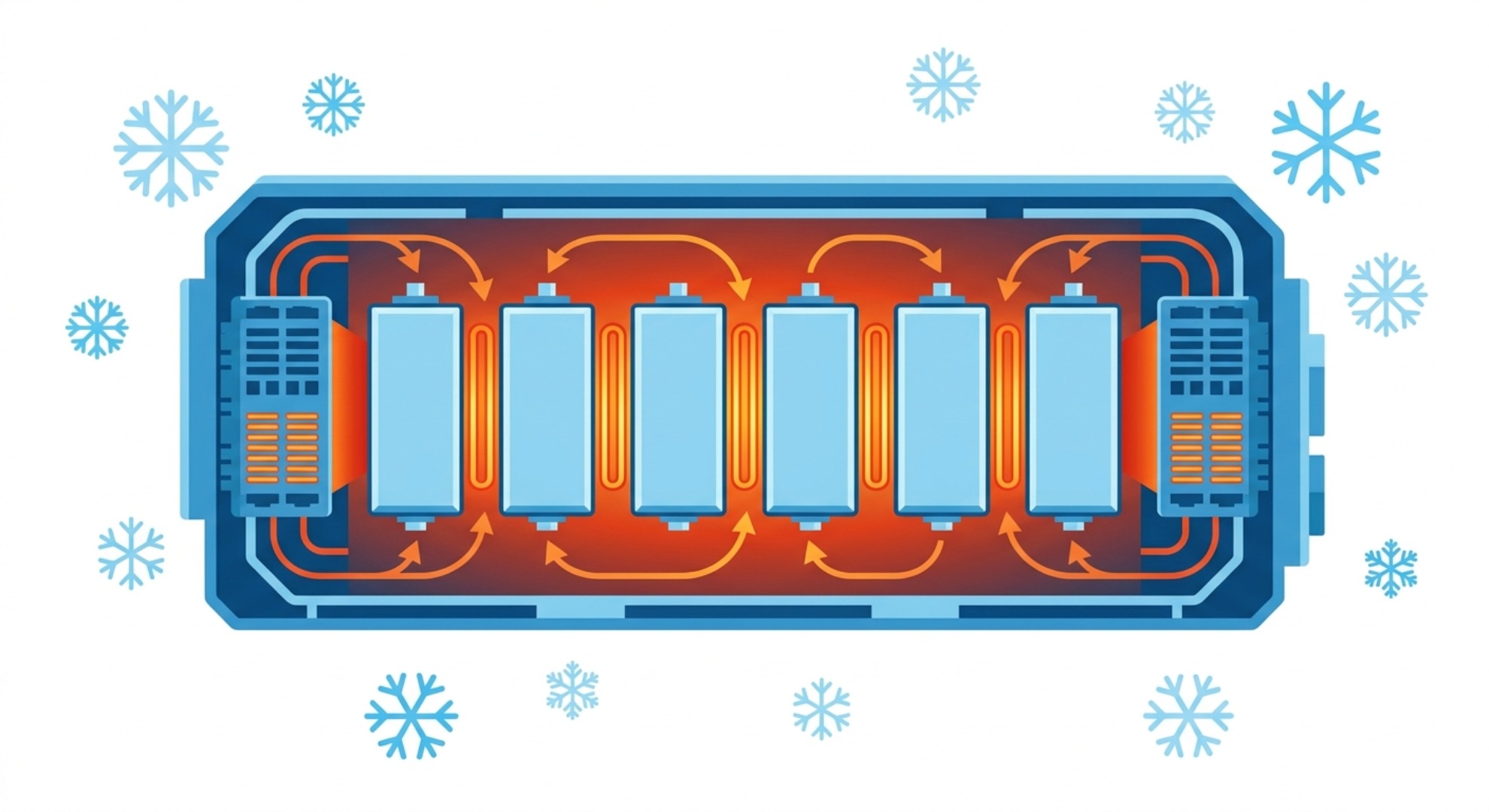
Modern packs rely on active thermal engineering, and two methods are common. Internal AC pulse heating sends high-frequency pulses through the cells to generate heat from within—uniform and quick, warming a pack from -20°C to 15°C in minutes. External PTC heaters are simpler but draw 2% to 5% of pack capacity; even so, they can recover up to 20% in net discharge capacity. The tradeoff favors preheating: spend a little energy warming the cells, get noticeably more usable output back.
Low-Temp Electrolyte and BMS Firmware Tuning
Materials and software are the other two levers. Low-temperature electrolyte additives—low-viscosity organic co-solvents, for example—can depress the electrolyte freezing point down to -40°C. Pair that with improved separator technology and you get cells that keep ionic mobility in the cold without giving up high-temperature safety. On the control side, BMS firmware tuned for low-temperature compensation adjusts voltage thresholds on the fly, preventing premature cutoffs and letting the pack accept charge more readily when it's cold.
Winter LFP Battery Maintenance Best Practices
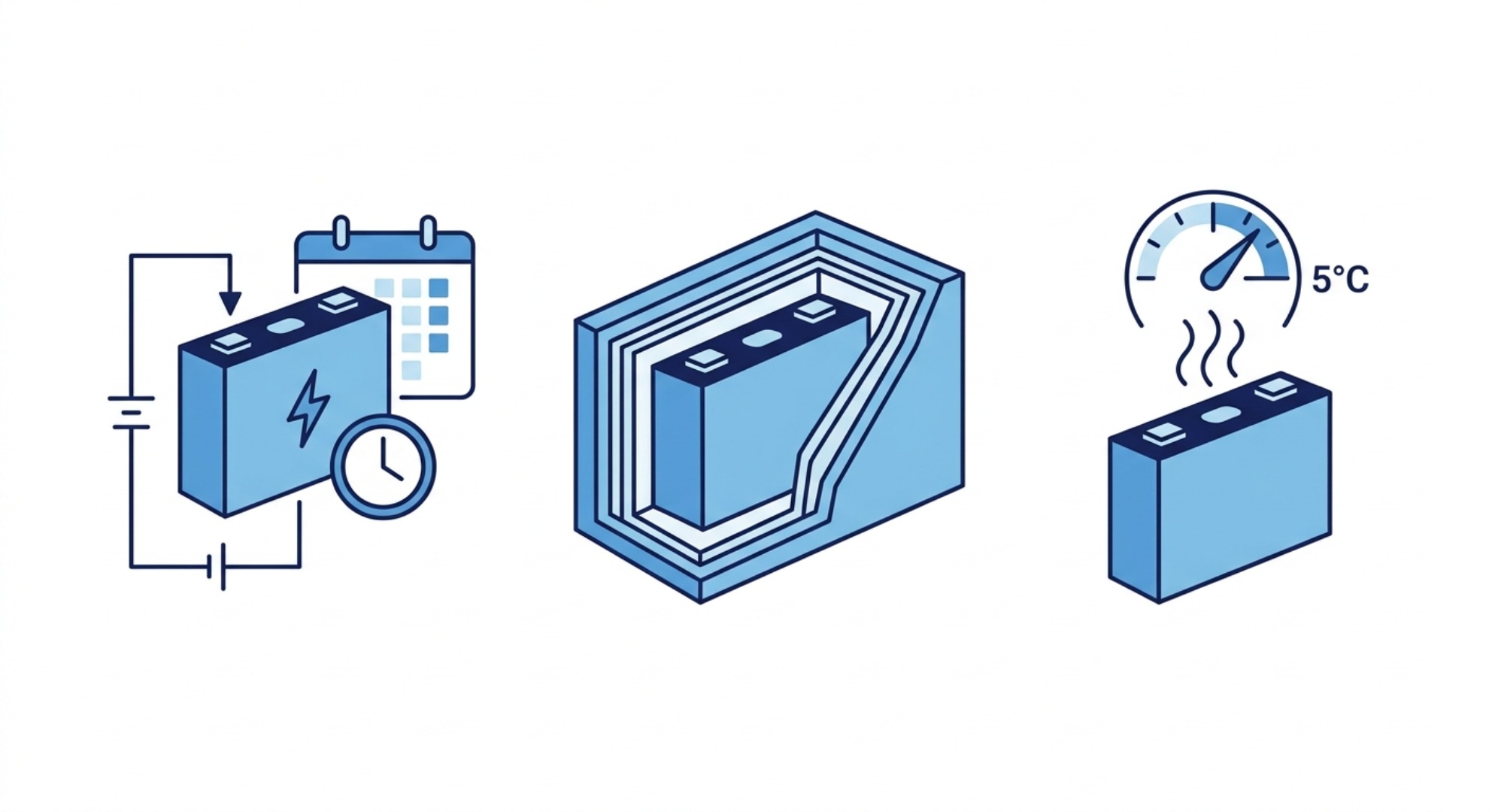
If you're running fleets or stationary storage through winter, a few operational habits meaningfully cut degradation. The US Department of Energy's own guidance points to environmental controls as one of the biggest factors in extending battery lifespan.
- Optimize Daily Charging Schedules
Schedule main charging sessions during the warmest part of the day, or right after operation when the core is still warm. It's the simplest winter battery maintenance habit and costs nothing. - Deploy Protective Thermal Enclosures
Upgrade battery enclosure thermal insulation to cut passive heat loss by up to 60%, keeping the pack warmer overnight with no active power draw. - Initiate Pre-Conditioning Protocols
Always run pre-conditioning before charging—engage internal heaters and bring cell cores above 5°C before allowing standard charge rates.

JM New Energy Technology



Commercial Industrial Battery Storage Sizing Guide
LiFePO4 BMS Reset & Troubleshooting Guide