


Microgrid and Offgrid Battery System Design
Microgrid & Off‑Grid Battery System Design: Complete Guide
Introduction: Beyond Simple Grid‑Tied Systems
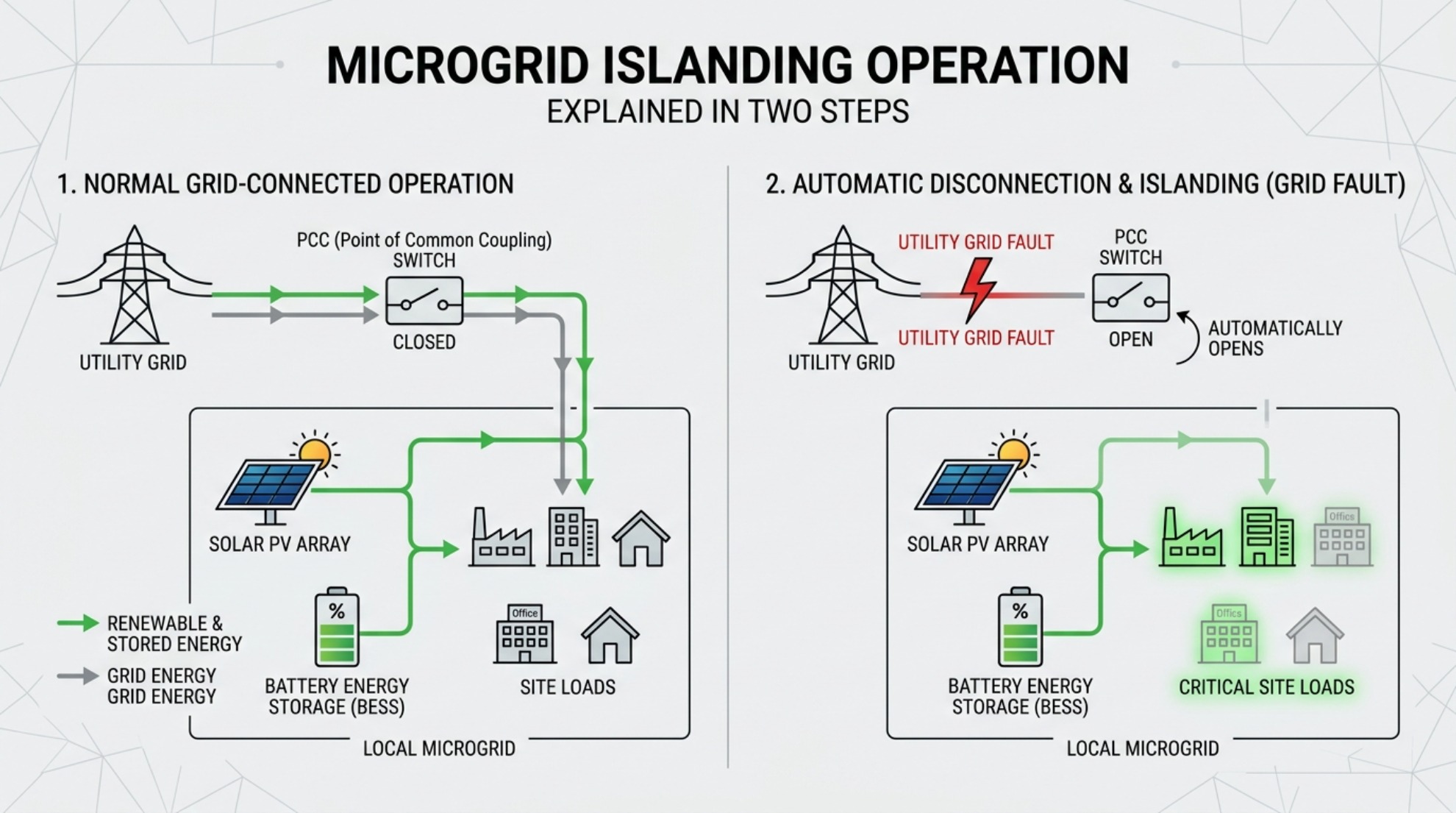
A microgrid is a localised energy network capable of autonomous standalone operation, with the ability to enter islanding mode the moment utility grid faults or outages occur. Unlike standard grid‑tied solar‑only installations that shut down when mains power fails, a properly built microgrid keeps critical loads running independent of the public grid supply. Project financial evaluation for microgrids does not rely on completely unique formulas; microgrid ROI calculation follows the base model used for Peak Shaving ROI, with adjustments added for islanding hardware and off‑grid reserve overhead.
AC Coupling vs. DC Coupling — Pros and Cons
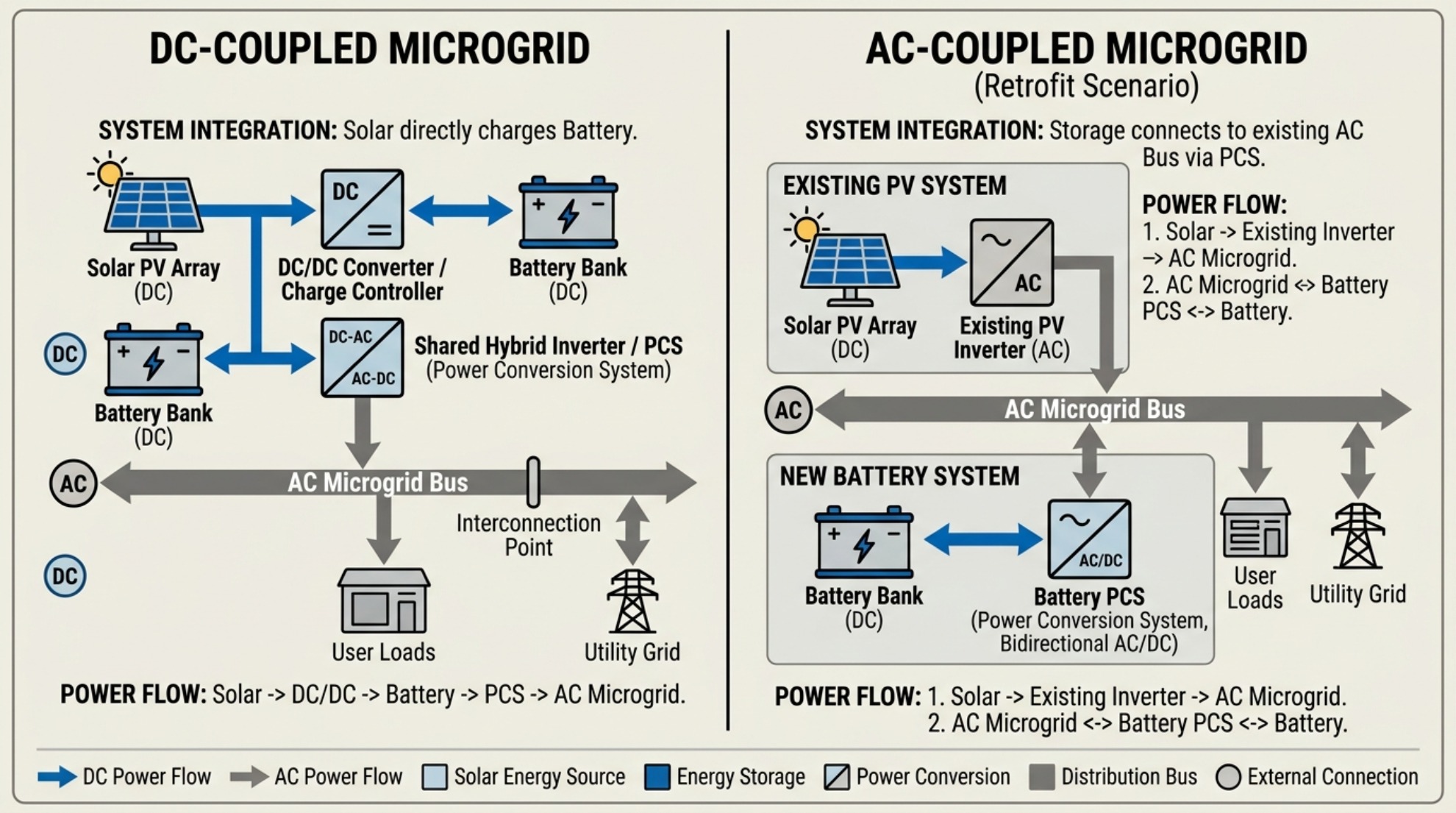
DC Coupling
DC‑coupled architectures work best for brand‑new solar plus energy‑storage builds. This configuration delivers higher round‑trip efficiency and simpler wiring layouts because photovoltaic DC output feeds directly into the battery bank without intermediate AC conversion steps. It fits well for green‑field sites where solar panels and batteries are specified together from project start.
AC Coupling
AC coupling is the practical choice when retrofitting battery storage onto an existing operational PV array. It brings high system flexibility and is widely adopted for large commercial and industrial (C&I) retrofits where solar hardware is already in place and cannot be reworked easily.
It is important to separate kW and kWh when evaluating coupling options. kWh represents total stored energy capacity, while kW defines real‑time power response speed. The coupling topology directly impacts system kW performance. DC‑coupled setups can react very quickly to sudden load changes; AC‑coupled systems add inverter processing latency which can limit instantaneous power response under heavy transient conditions.
Core Components of a Microgrid BESS
LFP Battery Bank
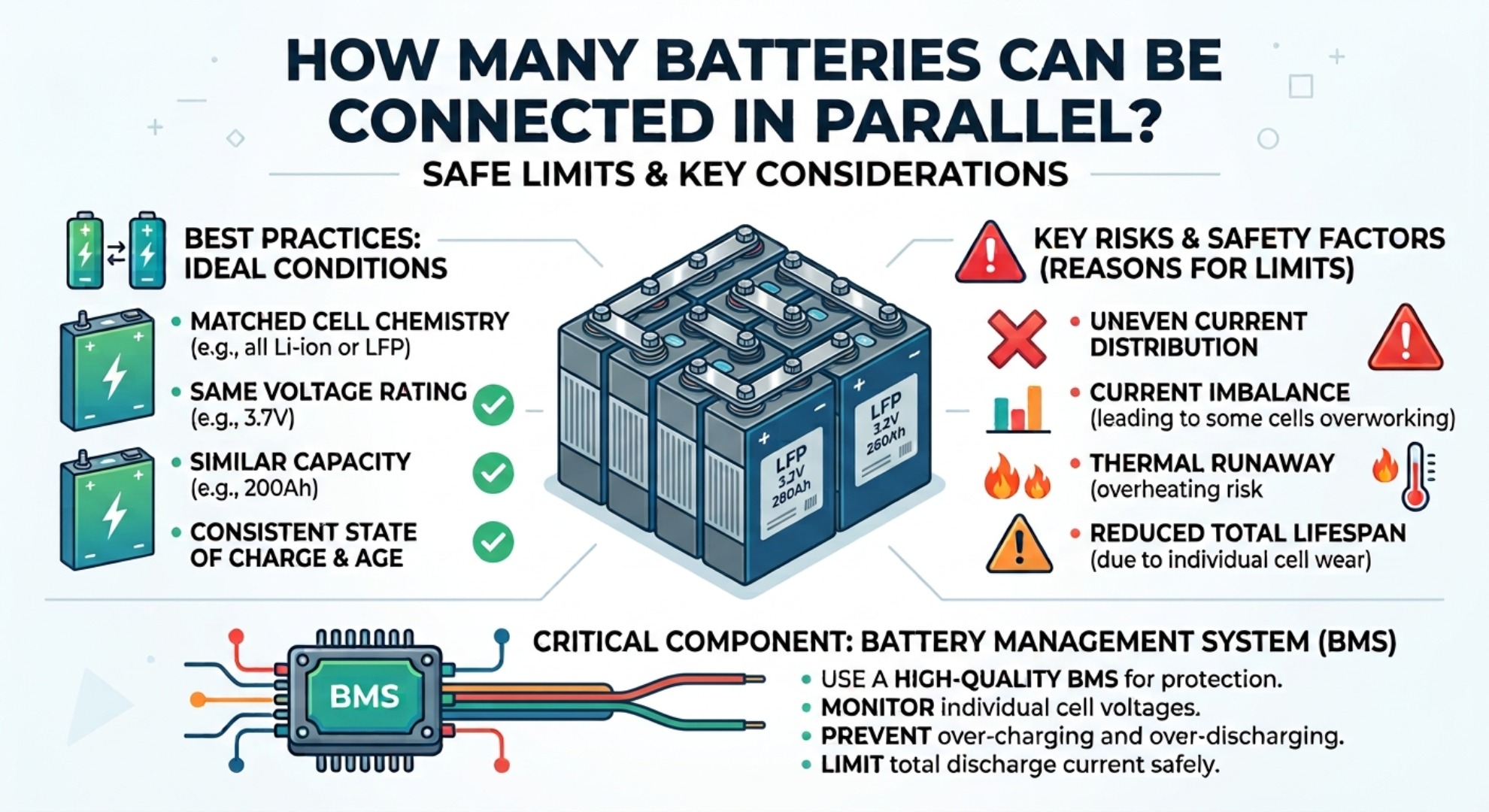
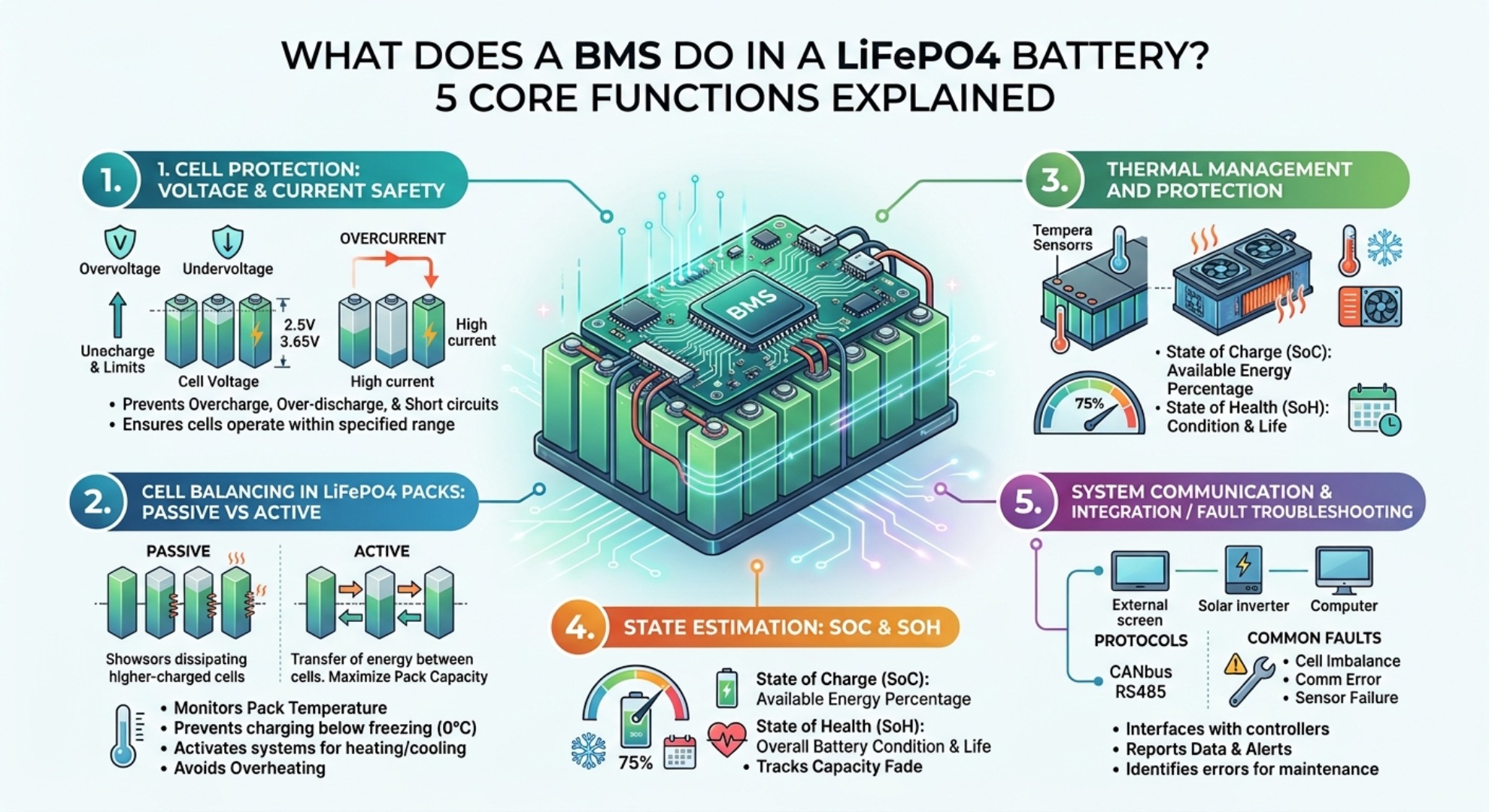
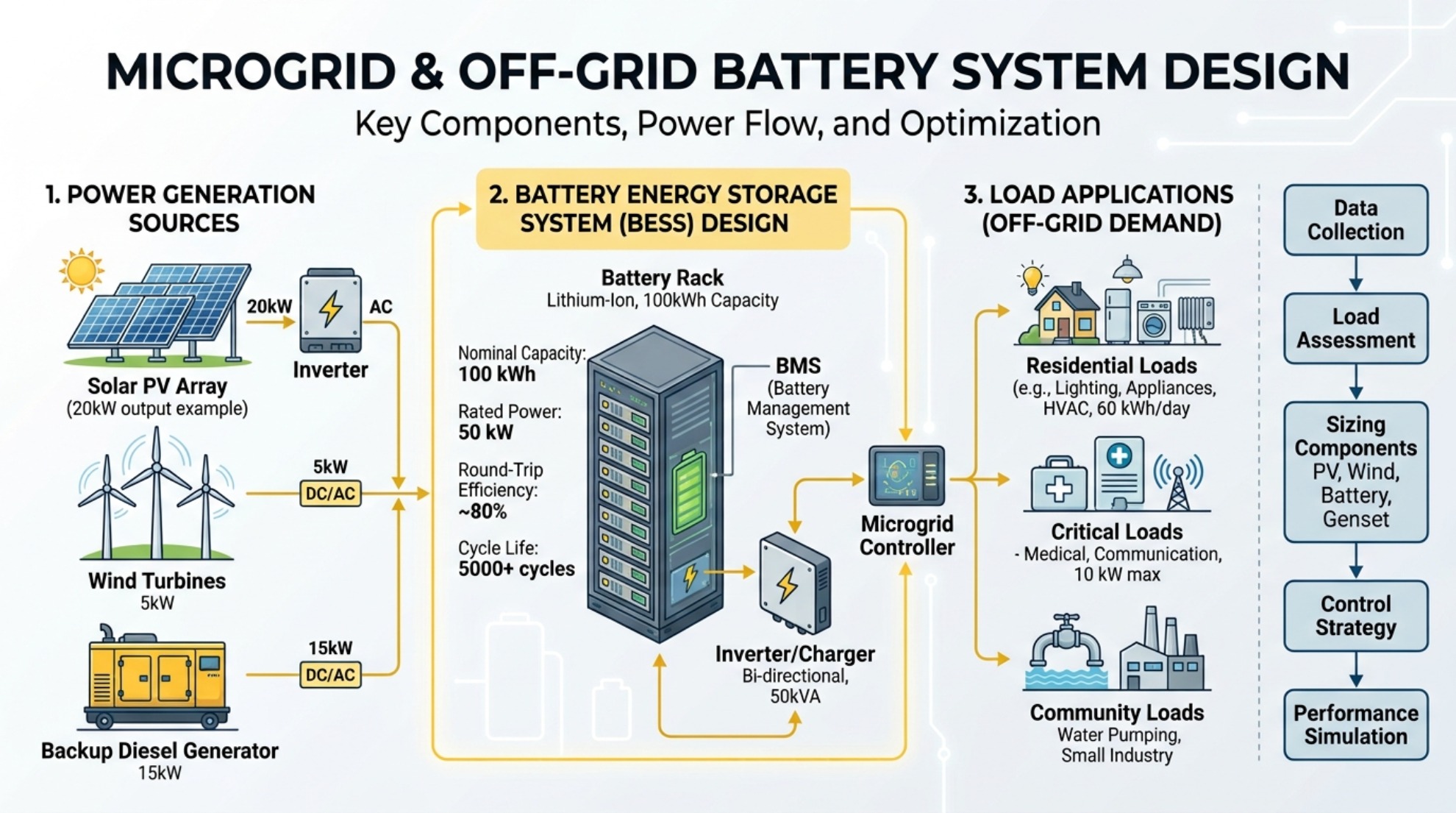
Lithium‑iron phosphate battery banks form the main energy reservoir for most modern microgrid BESS deployments. For high‑voltage system builds, careful attention must be paid to LiFePO4 battery degradation management across series‑connected cell strings, as small imbalances compound quickly in higher‑voltage stacks if monitoring and balancing are not correctly configured.
PCS (Power Conversion System)
The power conversion system acts as the bidirectional inverter heart of the microgrid. It converts DC power from batteries or solar into usable AC for site loads, and also converts incoming AC back to DC to charge battery storage. Without a properly rated PCS, switching between grid‑connected and island operation cannot function reliably.
EMS (Energy Management System)
The energy management system serves as the microgrid’s central brain. It continuously monitors grid status, battery state‑of‑charge, real‑time load demand and PV generation. It makes real‑time decisions to trigger grid‑island mode transitions, schedule battery charging and discharging, and prioritise which loads receive power during low‑energy conditions.
Static Transfer Switch (STS)
The static transfer switch delivers near‑instant, millisecond‑range switching between utility grid supply and local microgrid output. This hardware is critical to avoid momentary blackouts for sensitive equipment during islanding or re‑connection back to the main grid.
Key Challenges in Off‑grid Design
Inrush Current Management
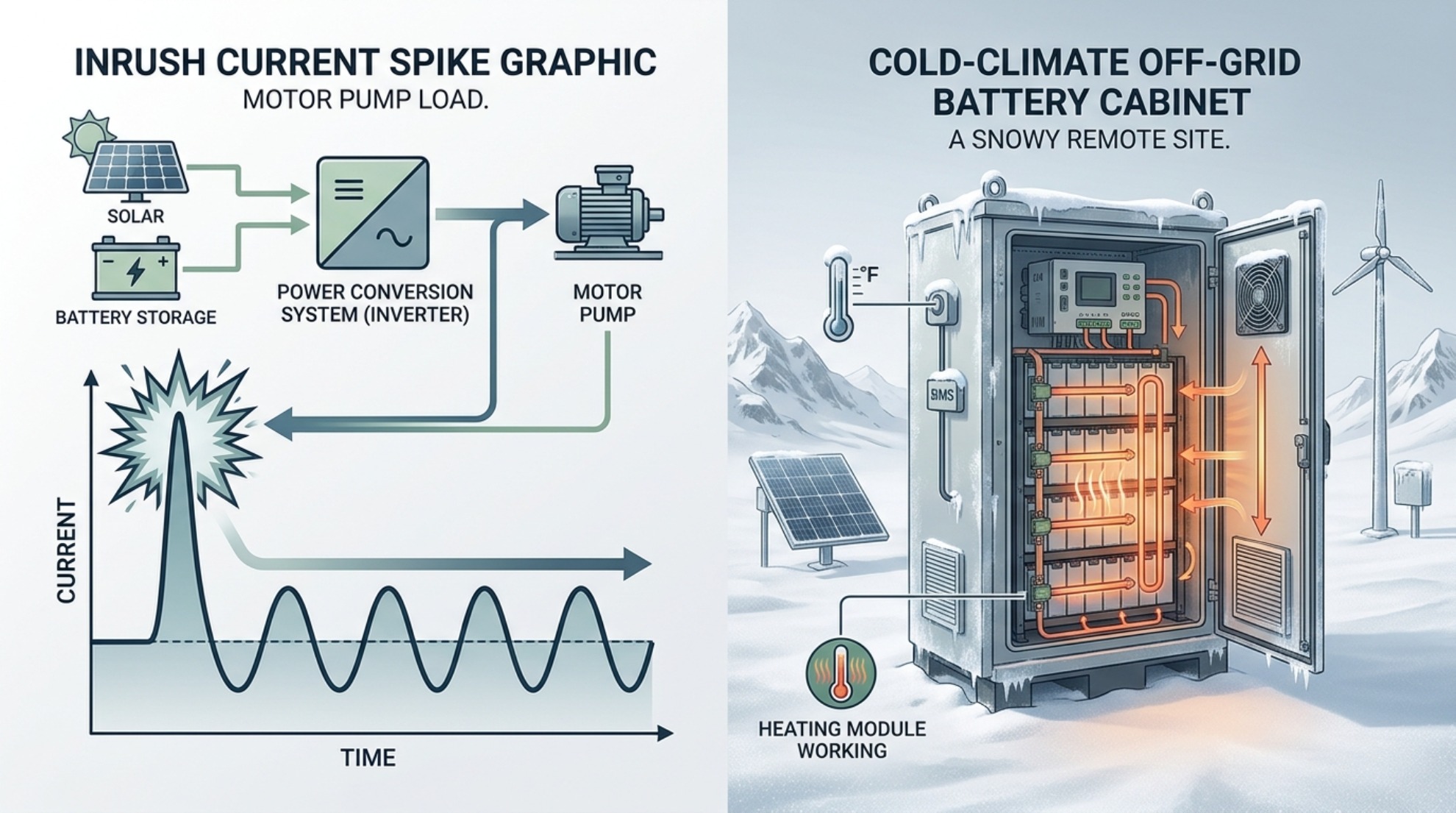
One common pain point in real‑world off‑grid deployments is handling inrush current created at motor startup. Large inductive loads such as pumps, compressors and refrigeration equipment draw many times their rated operating power for brief fractions of a second. If the battery and PCS cannot handle this short‑duration surge, users will face unexpected shutdowns or hardware trips even if average load values sit well within system ratings.
Cold Start Capability
Cold‑start or black‑start capability describes the system’s ability to power itself up from a fully powered‑down state with no external grid support. This is essential for remote sites that suffer full system shutdown after extended low‑sun periods. Cold‑climate sites add further complexity; designers need to account for cold weather charging risks. Battery thermal heating becomes mandatory for reliable winter operation, as low temperatures restrict charge acceptance and can permanently harm lithium‑ion cells.
Sizing for Reliability (The Safety Margin)
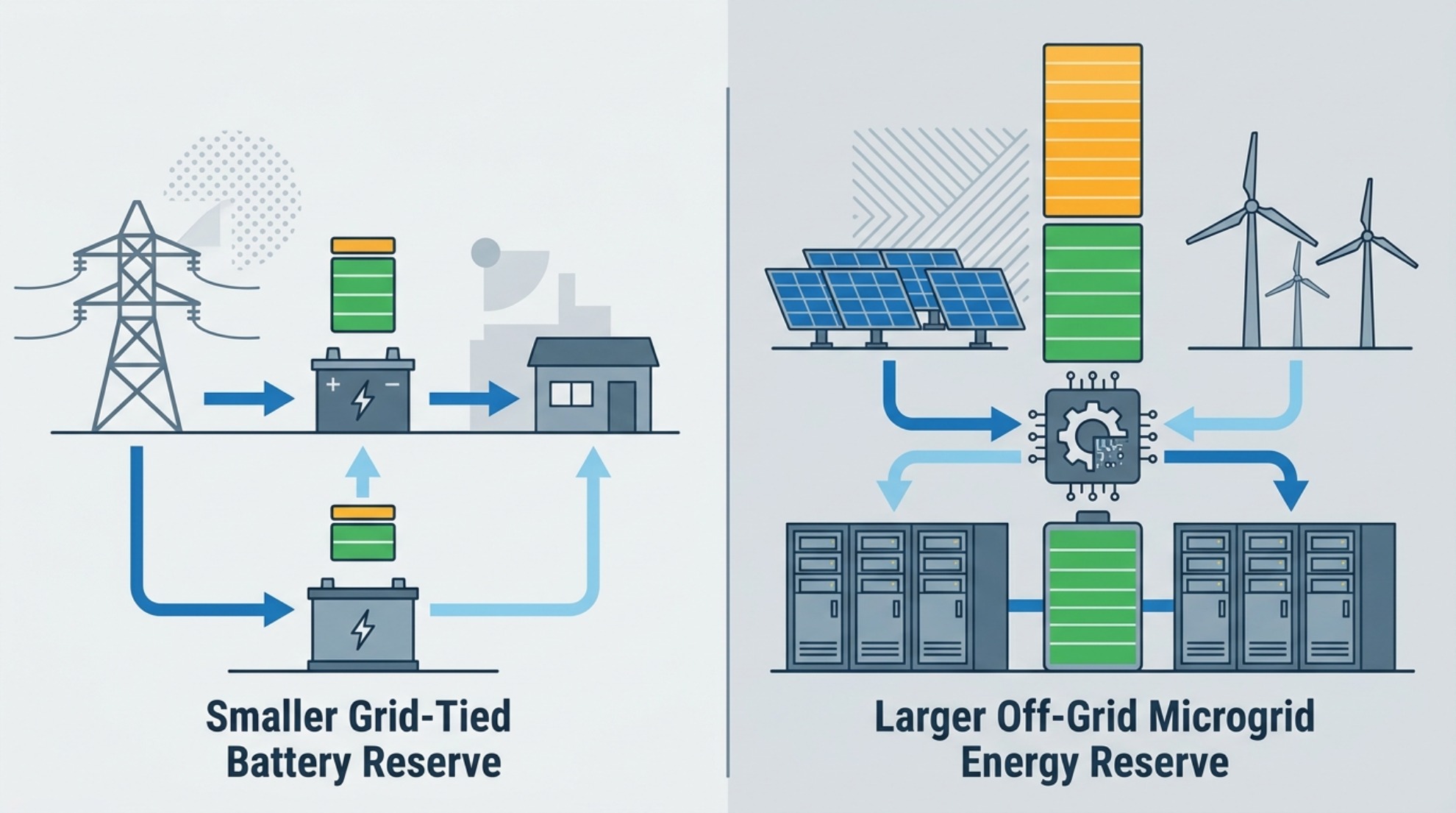
Grid‑tied systems can lean on public utility supply as unlimited backup. Off‑grid and island‑ready microgrids have no fallback safety net. This is why off‑grid designs require substantially larger energy reserve compared to purely grid‑connected projects. Energy reserve accounts for unanticipated load spikes, multi‑day poor solar irradiance, gradual battery capacity fade over years of service, and minor unplanned site load growth. Cutting safety margins to lower upfront cost is a frequent source of field reliability issues once the system enters real‑world operation.
Designing a reliable standalone power architecture requires balancing daily consumption, solar PV generation, and surge protection. High‑performing microgrid battery storage systems ensure energy resilience for remote industrial sites and off‑grid residential facilities by capturing excess renewable power during peak production hours. A well‑engineered offgrid system design prevents power interruptions while extending the operational lifespan of energy storage assets.
Most real‑world off‑grid deployments face real‑world site constraints: limited roof or ground space for solar panels, fluctuating seasonal sun hours, and unplanned load increases after commissioning. Many field failures trace back to oversimplified load calculations that ignore real‑world operating conditions, rather than component defects. Practical design work always starts from site survey data instead of theoretical spreadsheet values alone.
Off‑Grid Battery System Sizing: Key Considerations
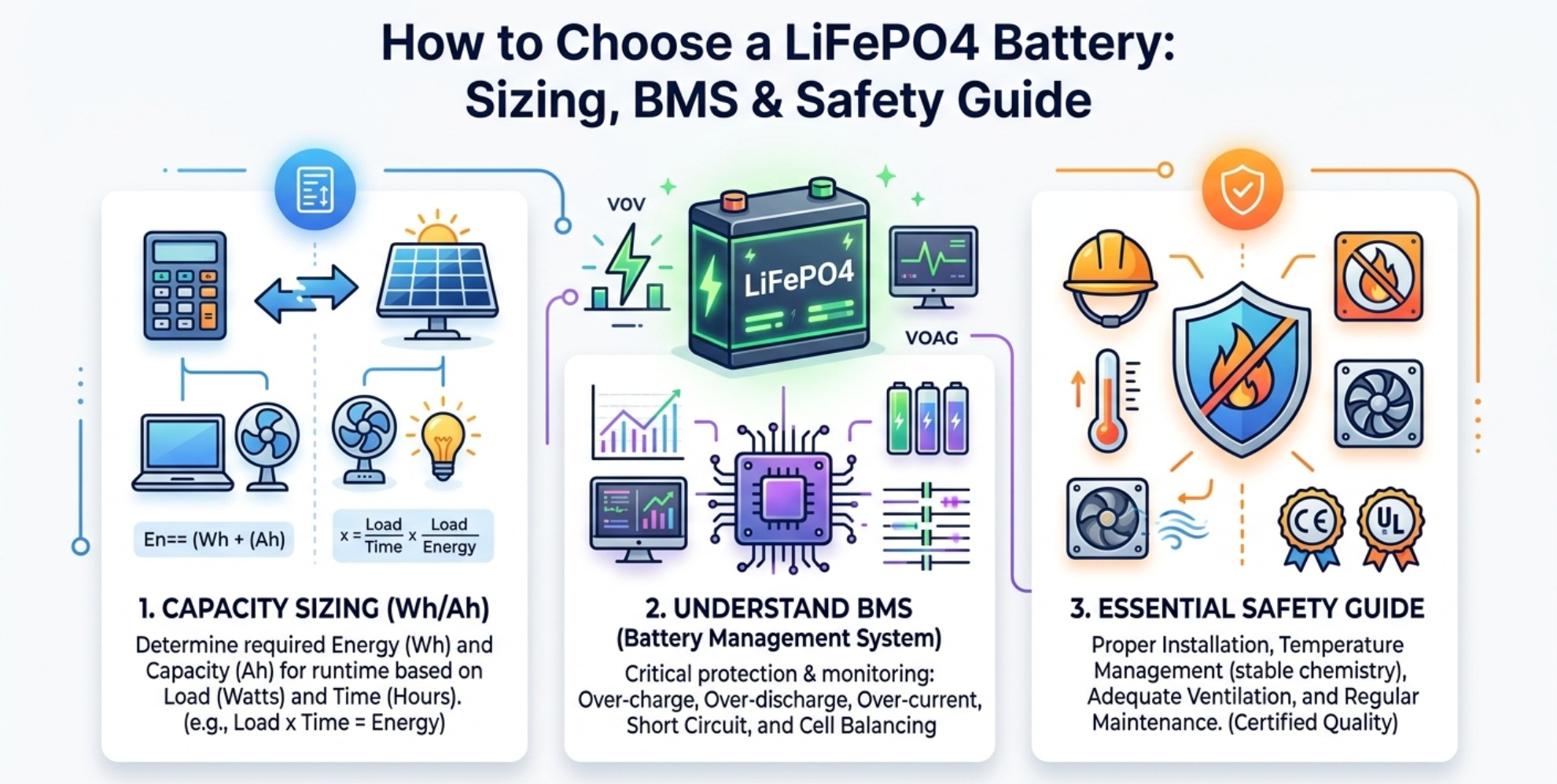
Determining correct storage capacity starts with assessing total daily kilowatt‑hour load alongside continuous operational draw. Engineers evaluate autonomy days—how long the facility must operate without solar generation—to establish necessary reserve margins without over‑investing in equipment. Referencing design guidelines from the National Renewable Energy Laboratory helps establish reliable baseline sizing metrics for seasonal solar variability.
On‑site practice often reveals gaps between nameplate load values and actual consumption. Motors, pumps, and ageing equipment draw higher real‑world power than datasheet figures suggest. Setting autonomy days too low creates risk of blackouts during extended cloudy weather; setting them too high drives unnecessary hardware cost and excess idle battery capacity that rarely gets used. Field engineers typically cross‑check sizing results against local historical weather records before finalising bill‑of‑material lists.
Calculating Usable Capacity and Depth of Discharge
System lifecycle directly correlates with operational voltage thresholds. Defining usable battery capacity requires factoring in safe operating limits, as running energy storage units at a controlled depth of discharge drastically extends cycle performance. Modern energy management designs configure automated low‑voltage cut‑offs within the solar storage inverter to prevent deep discharge degradation and thermal stress.
It is common to see project teams confuse nominal battery capacity with real usable capacity during early design phases. Even identical battery banks deliver different usable output under cold temperatures or heavy continuous discharge. Site technicians must avoid manually overriding low‑voltage protection settings to squeeze more energy out of batteries; this shortcut will accelerate cell wear and reduce overall system service life significantly.
Best Battery Chemistry for Microgrid Architectures
Battery chemistry governs both initial capital expenditure and the long‑term levelized cost of storage across decade‑long project lifespans. Modern deployments prioritize safety, footprint efficiency, and ambient temperature stability to ensure continuous uptime under harsh field conditions.
No single battery type fits every project. Designers need to weigh upfront budget, expected site ambient temperature range, available physical installation space, and local maintenance capacity. Remote sites with limited scheduled service access tend to favour low‑maintenance chemistries, while short‑term temporary installations may lean toward lower‑cost alternatives regardless of cycle life performance.
Lithium Iron Phosphate vs Traditional Lead‑Acid
Selecting a lithium iron phosphate battery over classic lead‑acid yields higher energy density, faster charge acceptance, and significantly greater round‑trip efficiency. Standardizing on chemical safety protocols verified by IEC energy standards protects infrastructure investments against thermal runaway events while delivering stable performance over thousands of continuous operational cycles.
Lead‑acid units still appear on budget‑constrained projects, but they demand regular maintenance including electrolyte checks and equalisation charging. In cold remote locations, lead‑acid capacity drops sharply, and their large physical footprint adds transport and installation labour cost. LFP systems carry higher upfront purchase price, yet reduce recurring site visits and replacement frequency, which often makes them cheaper across full project lifecycles.
BMS Integration and Peak Load Management
An intelligent battery management system regulates cell balancing, tracks state‑of‑charge, and communicates directly with power conversion hardware. Effective peak load management strategies smooth out transient surge demand from heavy inductive loads, minimizing system strain and stabilizing local microgrid frequency. Engineers align system protection parameters with established IEEE smart grid standards to safeguard distribution topologies and ensure power reliability.
Many field issues stem from poor communication between BMS and inverter hardware. Mismatched communication protocols or misconfigured threshold settings can trigger unplanned system shutdowns even with plenty of remaining battery capacity. For large motor‑driven loads, soft‑start controls help damp inrush surges instead of letting full starting current hit the battery bank directly. During commissioning, technicians should run full peak load testing to catch coordination faults before handing over the site to end users.
15kWh LFP Industrial Battery Storage Case Study
Peak Shaving Battery Storage ROI