


Fire Safety and Thermal Management for 51.2V High Capacity Lithium Systems
Fire Safety & Thermal Management: The Engineering Behind 51.2V High-Capacity Lithium Systems

When American homeowners invest in a large-scale energy storage system, the first question isn't always about price—it's about safety. In a world of high-density energy, fire safety and thermal management are the two pillars that separate a "professional grade" system from a potential hazard. At JM Energy Tech, our 10-year journey in Dongguan has taught us that safety isn't an add-on; it is engineered into the very DNA of our 51.2V architecture.
Just as we’ve explored how long rechargeable batteries last in lower-stakes applications, the stakes for a 15kWh or 20kWh home system are significantly higher. Protecting your home requires a multi-layered engineering approach.
Preventing Thermal Runaway: The LFP Advantage
The first line of defense is chemistry. In the ongoing debate of LFP vs NMC for home battery backup, LFP (Lithium Iron Phosphate) is the clear winner for safety. LFP cells have a much higher thermal runaway temperature (around 270°C) compared to NMC. Even under extreme stress or puncture, LFP is far less likely to catch fire or explode, making it the only chemistry we recommend for high-capacity 300Ah and 400Ah systems.
BMS: The Brain Behind Fire Suppression

If chemistry is the heart, the Battery Management System (BMS) is the brain. A professional-grade BMS doesn't just monitor voltage; it manages the thermal health of every individual cell. Our proprietary 51.2V BMS is designed to:
- Prevent Overcharging: The leading cause of lithium fires.
- Active Thermal Throttling: If a cell detects a temperature spike, the BMS automatically reduces current to allow for cooling.
- Short-Circuit Protection: Instantaneous disconnection if an electrical fault is detected.
This level of precision is why single high-capacity units are often safer than complex modular stacks, where communication errors between multiple BMS units can create safety blind spots.
Physical Engineering: Busbars and Insulation
In high-performance 15kWh and 20kWh systems, current flows can be massive. Standard wiring isn't enough. We use thick, polished copper busbars to minimize resistance and heat generation. Furthermore, the physical format matters. Choosing between wall-mounted vs floor-standing units can impact how the system dissipates heat into the surrounding environment.
Safe Usage: DoD and Charging Impact
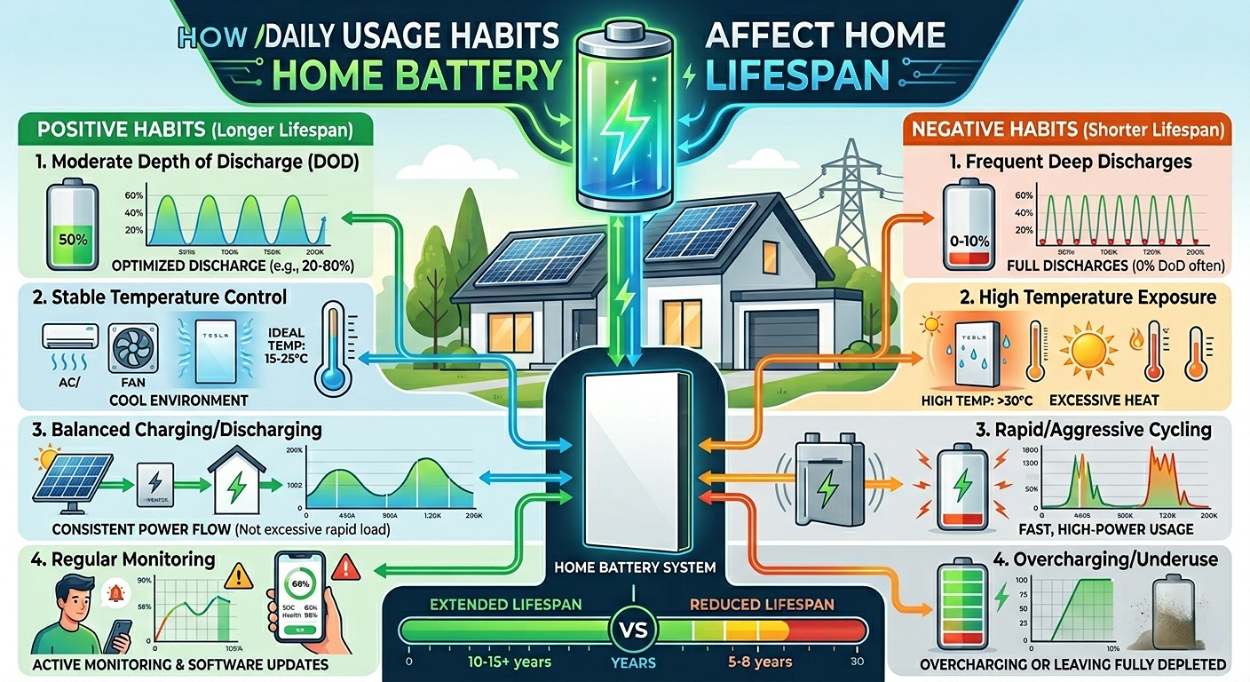
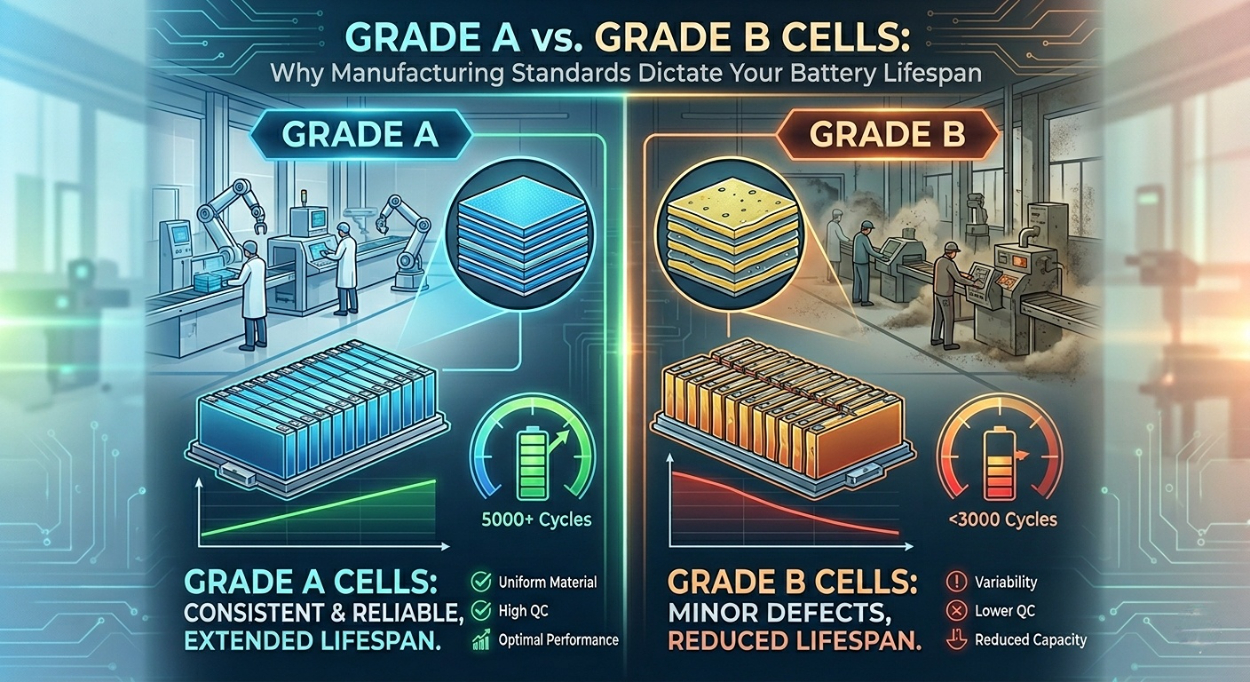
Safety is also linked to how you treat your battery. Excessive heat is generated when a battery is pushed to its absolute limits. By managing your Depth of Discharge (DoD) and adopting partial charging habits, you reduce the chemical and thermal stress on the internal Grade A prismatic cells. Furthermore, as we noted in our guide on ambient conditions, keeping your battery in a temperature-controlled environment is the best way to ensure a safe home battery backup payback period.
Case Studies: High-Temperature Safety in Action

Case Study 1: The Phoenix, Arizona Garage Test
The Scenario: A 20kWh (400Ah) system installed in a garage where temperatures hit 115°F in the summer.
The Engineering: Our industrial-grade thermal sensors detected the ambient rise and optimized the charging rate during peak heat hours. The LFP chemistry remained stable, and the thick aluminum casing acted as a massive heat sink, keeping internal cell temperatures well within the safety margin.
Case Study 2: High-Surge Backup in Florida
The Scenario: A home powering a large central AC during a post-hurricane power outage.
The Engineering: The startup surge of an HVAC system creates a brief but intense heat spike in the battery. Because the owner used our high-capacity 300Ah single-unit, the heat was distributed across larger cell surfaces, preventing the localized "hot spots" that often plague smaller modular stacks.
The 10-Year Factory Commitment
At JM Energy Tech, we believe that a home battery should be something you never have to worry about. Our 10 years of manufacturing expertise go into every weld, every sensor, and every line of BMS code. We prioritize fire safety so you can enjoy energy independence with peace of mind. Explore our safety-first 51.2V 300Ah & 400Ah series today.
Inverter Compatibility and Protocol for 51.2V Home Battery
Which 15kWh Battery Form Factor is Best for Your Home and Climate